

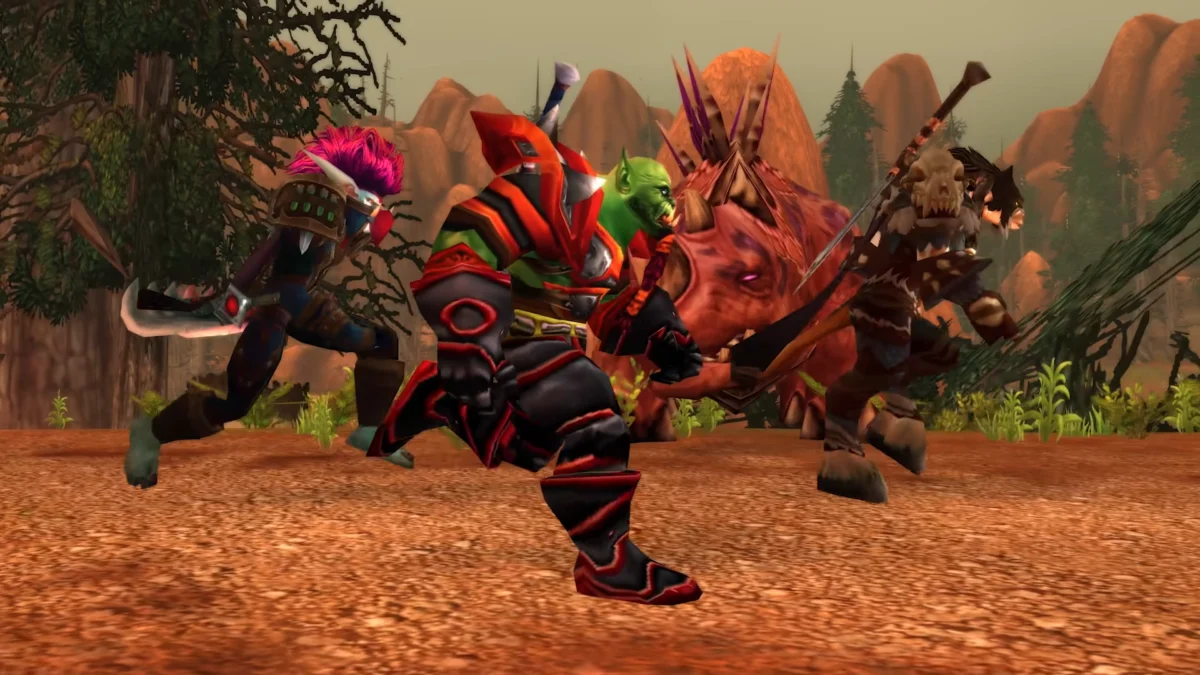
For millions of players across the globe, Blizzard Entertainment’s World of Warcraft is not merely a video game; it is a digital home, a shared cultural touchstone, and a sprawling virtual ecosystem that has continuously evolved over two decades. Yet, for an entire generation of modern gamers, stepping into the legendary MMORPG for the first time in its classic iterations can feel like stepping onto an alien planet.
Free from the modern conveniences, quality-of-life updates, and streamlined design philosophies of contemporary live-service games, classic experiences like WoW Forever offer an unfiltered, rugged look into the past. For one novice adventurer—whose previous history with the franchise was limited to a neglected level 13 Paladin sitting dormant on a retail account for nearly eight years—the journey through Azeroth has been an enlightening, charming, and occasionally infuriating baptism by fire.
Main Facts: The Appeal and Agony of Old-School MMO Design
The allure of early-era World of Warcraft lies precisely in its unapologetic friction. Modern MMORPGs often prioritize individual momentum, ensuring that players can complete tasks smoothly, efficiently, and with minimal interference from others. Shared quest tagging, client-side gathering nodes, and instanced objectives mean that logging in alongside hundreds of other players rarely impedes personal progress.
WoW Forever purposefully discards these modern guardrails, reverting to a design philosophy that forces players to acknowledge one another—for better or worse.
- Server-Side Nodes: Gathering resources—whether herbs, mining veins, or specific quest items—is governed by a shared, world-state logic. If another player reaches a node a millisecond faster, it disappears, leaving empty air and a frustrating wait.
- Non-Shared Tagging: Combat operates similarly; if a competing player tags a mob or loots an item first, the burden falls on the slow to react.
- Social Friction: This design breeds a distinct brand of communal interaction. Temporary, unspoken alliances are forged on the fly, as random strangers party up for ten seconds to clear a tough camp before vanishing into the digital ether.
Yet, this exact same mechanical framework that fosters a sense of an authentic, living world can also give rise to intense frustration. The honeymoon phase of exploring unblemished landscapes often hits a hard, unyielding wall once players transition from the untamed wilderness into the dense, bustling heart of faction capitals and localized quest hubs.
Chronology: From Quiet Exploration to Capital Chaos
The journey began with modest expectations and a surprisingly high degree of affection for the game’s archaic rhythms. Free of rose-tinted glasses, the newcomer embraced the quirks of the old world. Spending hours wandering through initial zones, fighting low-level beasts, and interacting with the environment felt refreshing. The absence of hand-holding felt authentic, and even minor inconveniences—like losing out on a cactus fruit because a passing hunter snatched it first—were met with a shrug and a smile.
However, this idyllic introduction changed dramatically upon crossing the threshold into Orgrimmar, the imposing capital city of the Horde.
The Overwhelming Pulse of Orgrimmar
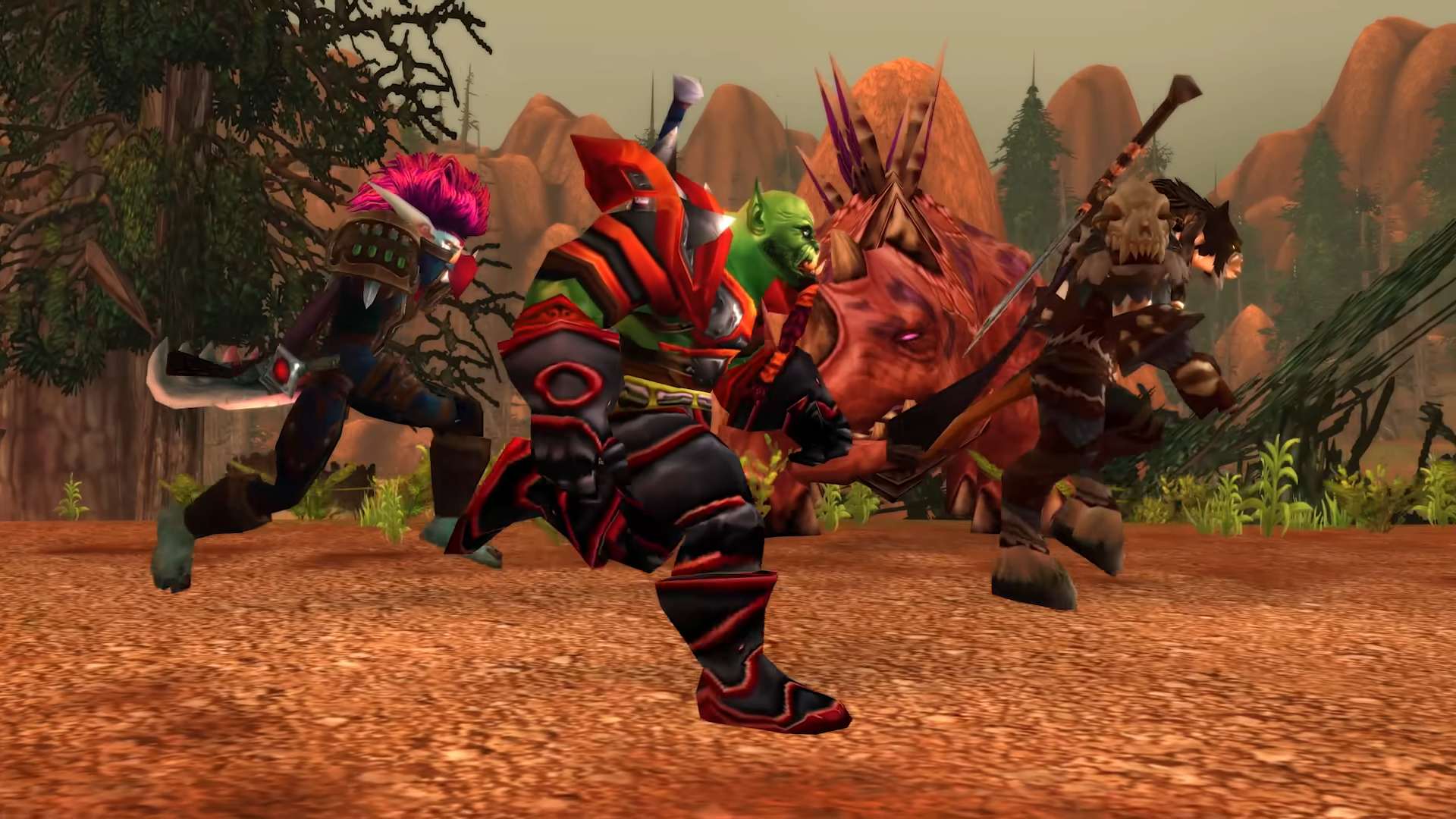
Arrival at the capital was nothing short of dizzying. The traveler was greeted by:
- Visual Overload: Massed ranks of towering avatars, mount-riding veterans, and densely populated streets that put immense pressure on local server rendering.
- Global Chat Cacophony: A rapid-fire world chat stream where serious guild recruitment advertisements collided instantly with absurd, mundane banter—such as spirited debates over individual household toilet paper consumption.
- The Quest Hub Trap: Eager to immerse further in the culture of the Horde, the player ventured past the main thoroughfares into the outskirts, seeking out unassuming, local narratives tucked away from the grand sweep of the capital’s war rooms.
It was here, tucked quietly behind a nondescript building where a cluster of troll children played, that the descent into madness truly began.
Supporting Data: The Anatomy of a Quest Bottleneck
The breaking point was not a legendary raid boss with millions of hit points, nor an unforgiving elite monster capable of wiping a party with a single blow. Instead, it was an innocent-sounding, seemingly innocuous undertaking: "Rocks to Rest."
+--------------------------------------------------------------------------+
|                        THE "ROCKS TO REST" ANATOMY                       |
+--------------------------------------------------------------------------+
| Objective: Collect 8 loose rocks for troll children to build furniture.  |
| Environment: Confined backyard space behind an Orgrimmar building.       |
| Active Competitors: 10+ players camping the exact same spawn points.     |
| Mechanics: Server-side spawning with instant loot depletion.             |
| Result: Pure, unadulterated competitive chaos ("The Wild West").         |
+--------------------------------------------------------------------------+
As described by the shell-shocked adventurer, the quest seemed simple on paper: “Go and get some rocks so we can have chairs and tables.”
The reality turned out to be a stark lesson in MMORPG resource scarcity. When a single confined zone features at least ten players aggressively circling a sparse handful of sluggishly respawning boulders, cooperative gameplay evaporates instantly.
- The First Success: The initial rock was scooped up with deceptive ease, lulling the player into a false sense of security.
- The Descent into Chaos: The remaining seven objectives required rapid camera-swiveling, obsessive tracking of terrain textures, and frantic sprinting matches.
- The Fatal Mistake: A single moment of inattention—rotating the camera away from a rock that spawned directly behind the player’s back—resulted in immediate forfeiture. Before the mouse could sweep back around, a competitor had already swept in and claimed the prize.
While some corners of the World of Warcraft community famously organize polite, orderly queues for heavily contested quest items, "Rocks to Rest" proved to be an absolute lawless frontier. In this microscopic corner of Orgrimmar, the philosophy was brutally simple: You snooze, you lose.
Official Responses and Community Reception
The experiences of new and returning players facing archaic quest design in classic iterations of World of Warcraft have long been a subject of amusement and debate within the broader gaming community. Blizzard Entertainment’s original design philosophy for Vanilla WoW was heavily influenced by late-90s and early-2000s tabletop roleplaying games and earlier MMOs like EverQuest, where virtual space was viewed as a scarce commodity that players had to navigate, fight for, and share.
Community veterans often look back at these bottlenecks with a mix of nostalgic fondness and dark humor. These friction points served an unintended sociological purpose: they forced players to communicate, negotiate, form impromptu groups, or simply learn patience in a shared digital space.
However, modern game critics and onboarding specialists frequently point to bottlenecks like "Rocks to Rest" as massive friction points for user retention. When a player who is otherwise enjoying the art style, music, and atmospheric world-building of an MMORPG hits a hard psychological wall over gathering eight virtual stones, it highlights the stark chasm between historical game design and contemporary player expectations.
Implications: What This Means for the Future of Classic MMOs
The ordeal in Orgrimmar offers a broader lens through which to examine how contemporary audiences consume historical gaming content. As publishers continue to monetize nostalgia through classic servers, legacy re-releases, and preserved builds, developers face an ongoing dilemma: How much historical friction should be preserved for the sake of authenticity?
If developers were to step in and modernize quests like "Rocks to Rest" by implementing client-side gathering or shared quest item drops, they would strip away a core element of what makes the classic world feel dangerous, unpredictable, and genuinely populated. Yet, leaving these systems untouched risks alienating newcomers who find themselves locked out of basic progression not through lack of skill, but due to pure logistical bad luck in a crowded server queue.
Ultimately, the tale of the humble Orgrimmar boulder stands as a testament to the unpredictable nature of massive multiplayer online gaming. It proves that the most memorable moments in an MMO are rarely the epic, cinematic battles scripted by developers, but rather the chaotic, deeply human, and fiercely competitive scrambled moments shared in the dirt with nine other desperate strangers fighting over office supplies for troll children.

