

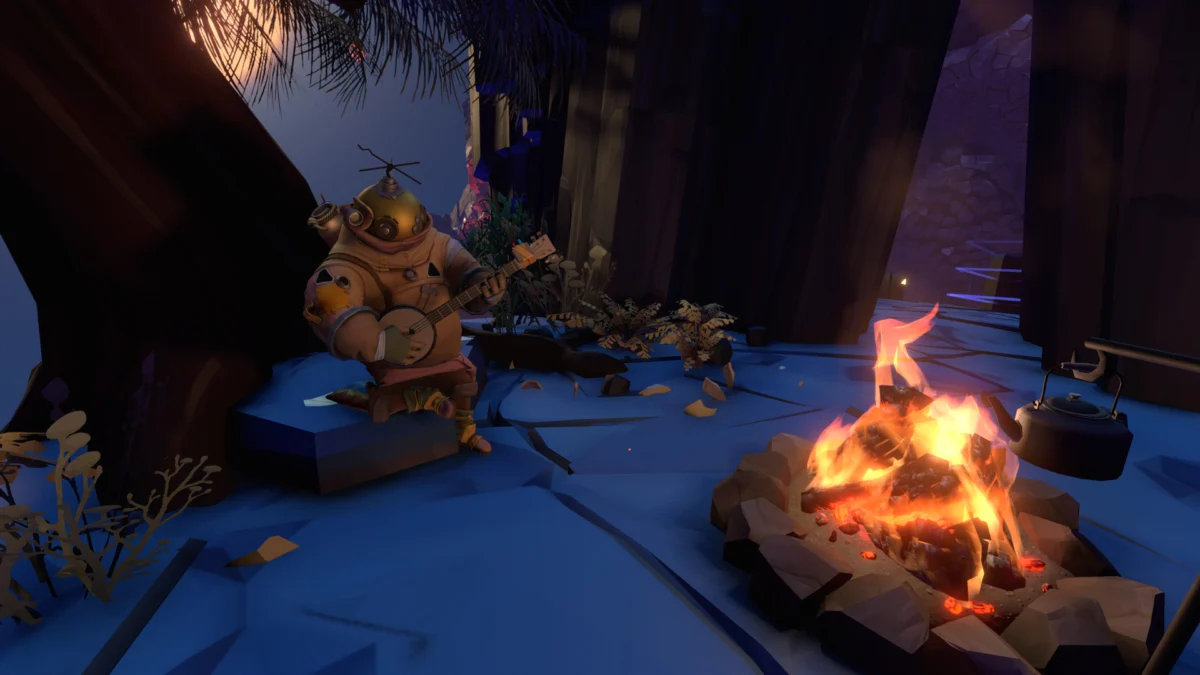
Since its initial release in 2019, Mobius Digital’s Outer Wilds has ascended from a critically acclaimed indie darling to a permanent fixture in the pantheon of modern gaming. Even years after its debut, the game continues to dominate discussions in podcasts, retrospective critiques, and "best of" lists. While its challenging loop-based mechanics may intimidate casual players, Outer Wilds stands as a masterclass in narrative design, environmental storytelling, and the sheer joy of discovery.
The Core Concept: Time, Space, and the Curiosity Loop
At its heart, Outer Wilds is a game defined by the constraints of time and the vast, uncaring nature of space. The player assumes the role of a fledgling astronaut for the Outer Wilds Ventures, a space program launched by a civilization of four-eyed, wood-carving aliens known as the Hearthians. Armed with a rickety wooden spacecraft and a translation tool, the player is tasked with uncovering the secrets of a dying solar system.
The "gimmick," if one can call it that, is a 22-minute time loop. Every 22 minutes, the local star goes supernova, incinerating everything in the system and resetting the player back to the start of their journey. This mechanic is not merely a source of frustration; it is the game’s primary engine for learning. Death is not a failure state in Outer Wilds; it is an essential tool for progression.
A Chronology of Discovery: From Indie Project to Cultural Phenomenon
The Development Phase (2012–2018)
The origins of Outer Wilds date back to Alex Beachum’s master’s thesis at the USC Interactive Media & Games Division. The core premise was simple: "How do you make a game where the only progression is knowledge?" Unlike traditional RPGs where you level up your character’s stats, in Outer Wilds, the only thing that changes is the player’s understanding of the world. After a successful crowdfunding campaign and a pivotal partnership with Annapurna Interactive, the team spent years refining the physics-based flight model and the intricate, clockwork nature of the solar system.
The Launch (2019)
When the game launched on Windows and Xbox One in May 2019, it was met with immediate, glowing praise. It quickly became the "darling" of the gaming press, cited for its lack of traditional quest markers and its reliance on player agency. The game’s design philosophy was revolutionary: it trusted the player to connect the dots themselves.
The Post-Launch Legacy (2020–2021)
Following its release, the game saw a steady, organic growth in its player base. Through word-of-mouth recommendations, Outer Wilds became the title that every critic insisted their peers play. The 2021 release of the Echoes of the Eye expansion further cemented the game’s status, adding a massive, self-contained mystery that seamlessly integrated with the base game’s lore.
Supporting Data: Why It Remains Essential
What separates Outer Wilds from other exploration games is its "Knowledge Gate" system. Most open-world games lock areas behind physical barriers—a high-level sword, a double-jump ability, or a keycard. In Outer Wilds, every area is accessible from the very first minute. The only barrier is your own ignorance.
- Environmental Storytelling: The game uses the Nomai—an ancient, extinct race—to tell a non-linear history through stone tablets. Players piece together the story of the Nomai’s quest to find the "Eye of the Universe," which parallels their own journey.
- Physics-Based Interaction: The game’s solar system is a fully realized physical simulation. Planets have their own orbital mechanics, weather patterns, and unique dangers. The Brittle Hollow, a planet that is slowly crumbling into a black hole, is a testament to the game’s technical ambition.
- Audio and Atmosphere: Andrew Prahlow’s banjo-heavy, melancholic soundtrack has become iconic, perfectly capturing the lonely, adventurous, and bittersweet tone of exploring a doomed star system.
Official Responses and Industry Impact
Industry figures and fellow developers have frequently cited Outer Wilds as a benchmark for game design. In various interviews, the team at Mobius Digital has emphasized that the game’s success was largely due to their refusal to compromise on the "knowledge-only" progression model.

"We wanted to build a world that reacted to itself, regardless of whether the player was watching," said creative director Alex Beachum in a post-mortem discussion. This design philosophy—creating a systemic world rather than a scripted one—has influenced a wave of subsequent indie titles that prioritize exploration and emergent storytelling over combat-heavy gameplay.
The Implications: Why You Should Play It Today
If you are currently looking for a gaming experience that transcends the standard "go here, shoot that" loop, Outer Wilds is not just recommended; it is mandatory. However, there are some important considerations for potential players:
1. The Barrier to Entry
The game is notoriously difficult in its navigation. Piloting a spaceship in Outer Wilds is deliberately awkward. You will crash. You will run out of fuel. You will die by falling into a black hole or being crushed by shifting terrain. For players accustomed to modern, highly polished, "hand-holding" titles, this can be a jarring experience.
2. The Emotional Toll
Outer Wilds is deeply existential. It asks players to confront the inevitability of an ending. By forcing the player to watch their world end repeatedly, it transforms from a frantic puzzle game into a meditative, philosophical experience about finding peace in the face of the unknown.
3. The "Spoiler" Problem
The most critical piece of advice for anyone considering playing Outer Wilds is to avoid spoilers at all costs. Because the game is entirely based on discovery, knowing the answer to one puzzle can effectively ruin hours of potential joy. It is a game that can only be played once, in the sense that you can never "un-know" the secrets of the universe.
Conclusion: A Timeless Experience
It is rare for a game to feel as relevant two years after its release—or even today—as it did at launch. Outer Wilds manages to strip away the clutter of modern gaming and return to the fundamental human impulse: curiosity. It rewards the patient, the observant, and the brave.
Whether you are looking to fill the quiet hours of a vacation or you are searching for a title that will fundamentally change your perception of what video games can accomplish, Outer Wilds stands ready. It is a rare, crystalline moment of brilliance in a sea of commercial content. It asks you to step into a cockpit, look up at the stars, and embrace the terrifying, beautiful truth that the universe is waiting for you to understand it.
Go to your digital storefront of choice, hit download, and prepare yourself for an adventure that will stay with you long after the final loop closes. You won’t regret it.

