

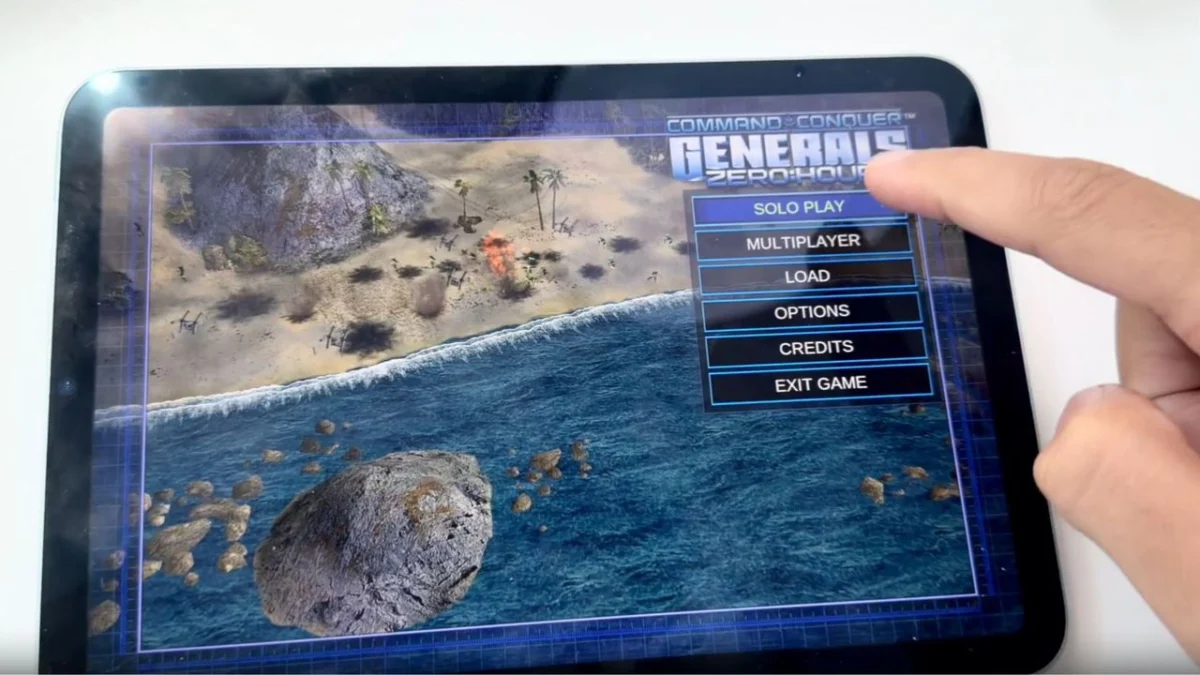
The landscape of software development is undergoing a seismic shift. While the concept of using Artificial Intelligence to write code—often colloquially referred to as "vibe coding"—has been a subject of intense debate, a recent breakthrough has moved the discourse from theoretical potential to tangible reality. Ammaar Reshi, Lead of Product and Design at Google AI Studio, has successfully ported the classic 2003 real-time strategy (RTS) title Command & Conquer: Generals – Zero Hour to Apple’s iOS platform.
Achieved using Anthropic’s newly deployed Claude Fable 5 model, this project represents more than just a technical curiosity; it marks a milestone in human-AI collaboration. By leveraging existing open-source Linux and macOS builds, Reshi and Claude 5 have effectively bypassed the need for traditional emulator overhead, delivering a native ARM64 experience that runs directly on iPhones and iPads.
The Chronology of a Digital Resurrection
The project, which came to public light on July 4, 2026, was a rapid-fire development cycle that challenged the conventional timelines associated with porting legacy software.
The Foundation (Pre-July 2026)
Before the AI was engaged, the project relied on a "chain of giants." The primary scaffolding for this port was GeneralsX, a community-driven effort to bring the 2003 classic to Linux and macOS. Without these pre-existing efforts to modernize the engine and adapt it to contemporary architectures, the task would likely have been impossible for an AI to execute autonomously.
The Development Sprint (July 2–4, 2026)
- July 2–3: Reshi began the intensive process of feeding the source code and existing port architecture into the Claude Fable 5 model. During this phase, the AI was tasked with cross-compiling the engine for ARM64 architecture, a notoriously difficult task for legacy x86-based Windows software.
- July 4: Following a grueling 48-hour period of iterative debugging, the project reached a functional state. Reshi announced the achievement via social media, showcasing the game running natively on an iPad, complete with touch-optimized controls including tap-to-select, drag-to-box, and long-press commands.
Technical Execution: Human-AI Synergy
A common misconception regarding this feat is that the AI acted as a "magic button" that ported the game in its entirety. Reshi’s documentation on GitHub clarifies that the process was a deeply symbiotic partnership.
The Division of Labor
The porting process functioned as a feedback loop between the human operator and the machine. The AI handled the heavy lifting of C++ syntax translation, memory management, and ARM64 instruction set optimization. However, it lacked the sensory context of the game.
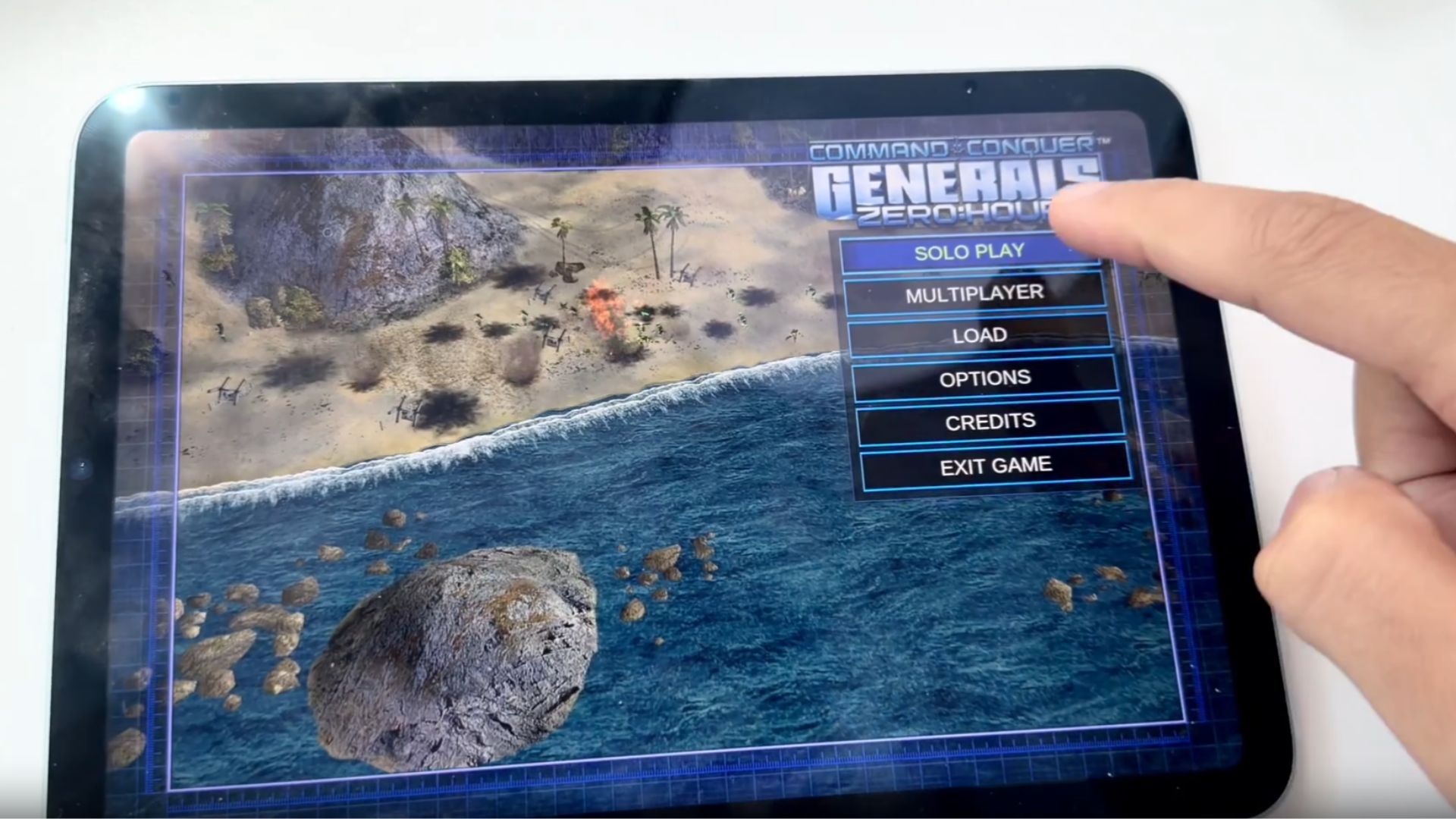
When the game displayed a black minimap or emitted audio artifacts described as "chirping," the AI required human intervention to diagnose the issues. Reshi acted as the primary QA lead, performing real-time playtesting and feeding descriptive, qualitative feedback back into the Claude Fable 5 prompt. As Reshi noted, "Neither half ships this alone: one of us can’t write C++, and the other can’t hear the chirping."
The Cost of Innovation
Innovation at this scale comes with a financial price tag. Reshi reported that he fully exhausted a Claude Max subscription in just two days. Given the pricing tiers of advanced LLMs, this implies that the compute cost for this project likely fell between $100 and $200 in token consumption. Notably, Reshi highlighted that this level of performance was exclusive to Fable 5; previous iterations, including Opus 4.8, proved incapable of handling the complexity of the task, despite being optimized for code generation.
Implications for the Gaming Industry
The successful porting of Command & Conquer: Generals raises significant questions regarding the future of software maintenance and intellectual property (IP) management.
The Source Code Barrier
The primary hurdle for future projects remains the accessibility of source code. Reshi expressed skepticism regarding the potential to port Red Alert 2 using similar methods, largely because Electronic Arts (EA) is believed to have lost the original source code for that title. Without the underlying blueprints, AI models are effectively blind.
Even when source code exists, it remains locked behind corporate walls. Many publishers view their legacy assets as prime candidates for future remasters or remakes. Allowing community members or independent developers to create unofficial ports using AI could, from the perspective of a corporation, dilute the value of their IP or cannibalize potential future sales.
The Threat of Data Scrapping
The process requires feeding proprietary, legacy source code into third-party AI models. This creates a security and legal conundrum. Developers are hesitant to input sensitive, copyrighted code into models that may store or utilize that data to improve their own training sets. The risk of exposing corporate secrets or proprietary engine architectures is a significant deterrent to the widespread adoption of AI-assisted porting by official studios.
Looking Ahead: Is Porting "Commoditized"?
While the Generals port is a triumph, it is not yet a replicable blueprint for the average user. Several factors currently gatekeep this technology:
- High-Level Expertise: The user must still understand how to navigate complex build environments, manage dependencies, and provide highly accurate, descriptive feedback to the model.
- Existing Community Efforts: The project succeeded because it stood on the shoulders of the GeneralsX community. Without a base of open-source work, the AI would be starting from scratch—a task that remains beyond the current capabilities of even the most advanced models.
- Hardware Optimization: Adapting a game designed for a mouse and keyboard to a touch interface requires architectural changes to the input handling code. While the AI can write the code, the design philosophy behind those changes remains a human endeavor.
Conclusion
The successful migration of Command & Conquer: Generals – Zero Hour to iOS serves as a compelling proof-of-concept for the future of "vibe coding." It demonstrates that AI, when guided by a knowledgeable human operator, can bridge the gap between legacy desktop software and modern mobile hardware.
However, the industry is not yet at a point where games can be "AI-ported" in an afternoon. The requirement for original source code, the financial cost of high-end LLM usage, and the legal complexities of IP ownership ensure that this remains a niche, albeit powerful, tool for the enthusiast and independent developer communities.
As AI models continue to evolve—and as the threshold for human technical expertise shifts—we may see a surge in the preservation of "abandonware." For now, however, the project stands as a testament to what is possible when the boundary between human intent and machine execution begins to blur. For those interested in the technical minutiae, the source code and the story of the port’s development are available on the project’s GitHub repository, offering a window into how the future of software development might look: one prompt, one bug-fix, and one classic game at a time.

