


The video game industry is currently caught in a tug-of-war between the ballooning budgets of AAA blockbusters and the scrappy, high-risk innovation of the indie scene. Sitting in the middle is the "AA" segment—projects with significant production value and ambition, yet lacking the nine-figure budgets that characterize today’s market-dominating titles. While the recent, runaway success of Clair Obscur: Expedition 33—which has surpassed 8 million copies sold—should have signaled a golden age for this mid-tier space, the reality on the ground remains stubbornly cautious.
For many, Expedition 33 wasn’t just a game; it was a revelation. It proved that a studio could deliver a high-concept, emotionally resonant experience that didn’t require a GDP-sized budget to succeed. However, as industry veterans point out, the path from a singular hit to a sustainable industry trend is paved with hesitation, skepticism, and a persistent "blockbuster-or-bust" mentality among major publishers.
The Mirage of the Mid-Tier: A Chronology of Risk
To understand the current landscape, one must look at the recent trajectory of AA development. For years, the industry trended toward "live service" models and massive open-world epics. The AA tier was largely written off as a relic of the mid-2000s, an era when games were smaller and development cycles were shorter.
When Clair Obscur: Expedition 33 hit the market, it functioned as a statistical anomaly that challenged the prevailing wisdom. Its rapid ascent to 8 million copies sold wasn’t merely a triumph of marketing; it was a testament to a growing player appetite for titles that prioritize depth, narrative craft, and creative risk-taking over sheer scale.
However, the industry’s response has been muted. While players celebrated the title as a "Game of the Year" contender, the boardrooms of major publishing houses remained largely unmoved. The prevailing sentiment among investors remains that a hit like Expedition 33 is an outlier rather than a repeatable formula. This creates a paradox: the more successful a mid-tier game is, the more publishers treat it as a "lucky strike" rather than a blueprint for future investment.
The ‘Valor Mortis’ Perspective: A Developer’s Plea
Radek Ratusznik, the game director at One More Level—the studio behind the upcoming zombie soulslike Valor Mortis—has been at the forefront of this conversation. During the recent Gamescom, Ratusznik spoke candidly about the uphill battle facing AA studios.
"We had this enormous success of Clair Obscur: Expedition 33, but still, publishers find the AA segment quite risky," Ratusznik noted during an interview with GamesIndustry.biz. His assessment is sobering: despite the proof of concept, the financial gatekeepers are still holding the keys tightly.
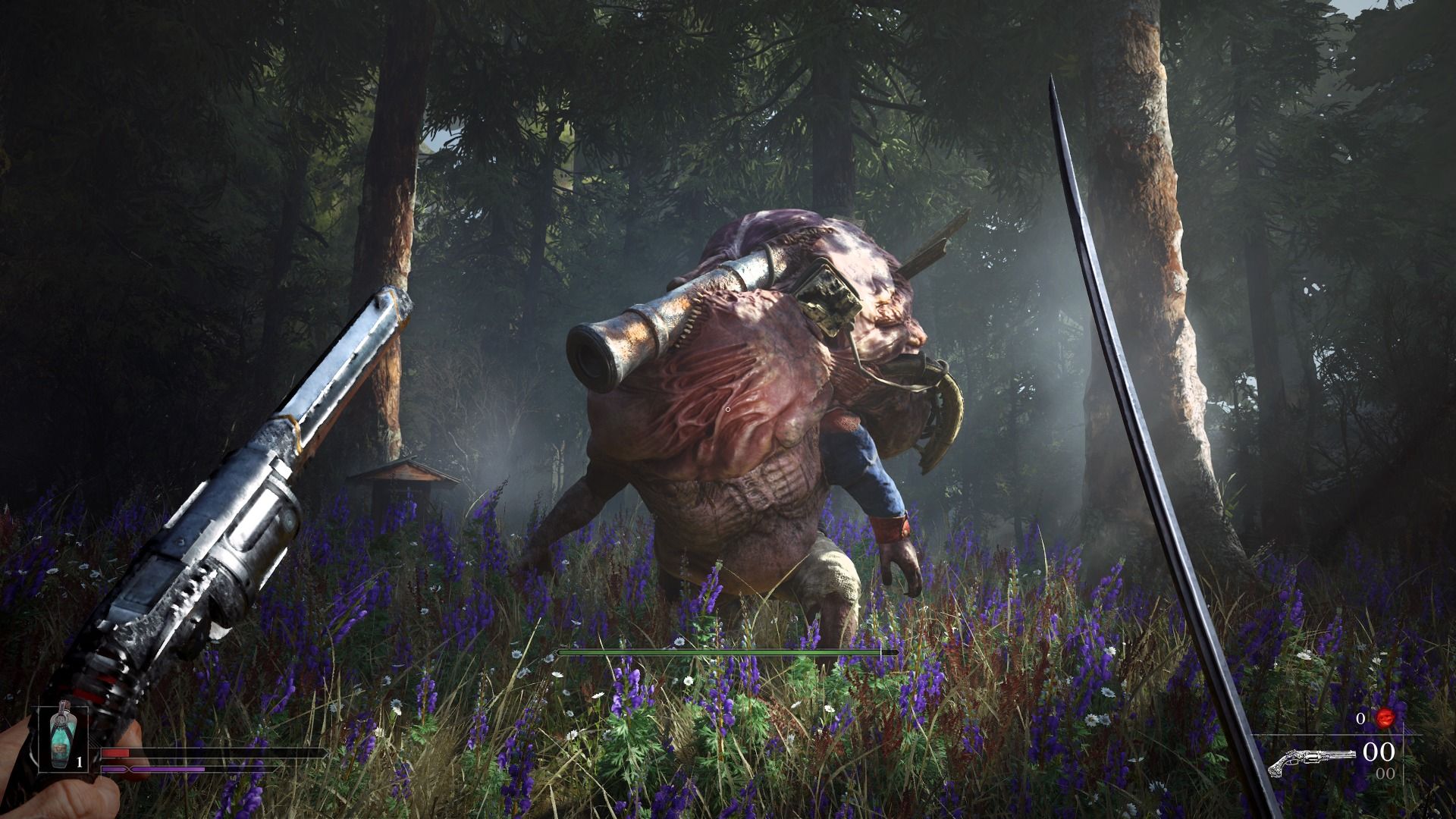
Ratusznik believes that the industry is suffering from a lack of data points. A single success, no matter how monumental, is often dismissed as a result of specific market conditions or a unique creative "lightning in a bottle" moment. To shift the needle, Ratusznik suggests that the industry needs a sustained run of successes. "We probably need a few more Expedition 33s to just prove them wrong," he argued. "Maybe one Expedition is not enough."
The Myth of the ‘Miracle’ Development
One of the most persistent issues in the publisher-developer relationship is the expectation of speed. Publishers are often attracted to the idea of AA development because it promises lower costs, but they frequently attempt to recoup those savings by compressing development timelines.
Ratusznik pushes back against the idea that smaller budgets should equate to shorter production cycles. "It’s not like we can make the game in one year without any trouble," he explained. "The game still needs proper time to be published and properly tested. I doubt that we can squeeze it that much, as probably some of the publishers would like to."
This tension highlights a fundamental misunderstanding of the AA value proposition. The strength of these projects lies in the focused, deliberate efforts of smaller, highly skilled teams. By rushing these teams, publishers risk stripping away the very quality that made titles like Expedition 33 successful in the first place. The "miracle" that publishers are looking for—a high-quality, low-cost, fast-turnaround product—is a fantasy that threatens to undermine the viability of the entire segment.
Implications: Where Does the Industry Go From Here?
The implications of this hesitation are profound for the future of gaming. If publishers continue to view the AA sector as a risky liability, the industry risks bifurcating into two extremes: ultra-low-budget indie titles and gargantuan, safe-bet AAA sequels. This leaves a massive hole in the market for titles that are experimental, AA-budgeted, and ambitious.
1. The Death of Creative Middle-Ground
Without a robust AA segment, we lose the "middle-ground" games that often serve as the incubators for new mechanics and storytelling techniques. AAA games are often too expensive to experiment with, and indie games, while creative, often lack the resources to polish these ideas to a high sheen. AA projects bridge this gap.
2. The Talent Drain
If talented developers at studios like One More Level cannot secure funding for mid-tier projects, the industry risks a talent drain. Developers who want to work on complex, high-quality projects will be forced to join massive, monolithic studios where their individual impact is diluted, or drop out of the industry entirely.

3. A Potential Shift in Funding Models
If traditional publishers refuse to adapt, we may see a rise in alternative funding models. Crowdfunding, private equity, and government-backed grants (which have historically supported the French and Polish game industries) may become the primary lifeblood of the AA sector. If publishers won’t invest, the developers will simply find ways to work around them.
A Hopeful Horizon: The Rise of ‘Valor Mortis’
Despite the skepticism, there is a palpable excitement surrounding titles like Valor Mortis. As seen at Summer Game Fest, the demo for this first-person zombie soulslike has captured the attention of both critics and players. Its 19th-century setting and focus on moral ambiguity evoke the same spirit of innovation that defined Expedition 33.
If Valor Mortis manages to replicate even a fraction of the success of its predecessors, it will provide yet another data point for Ratusznik’s argument. The industry is currently in a transition period where the old guard of publishing is struggling to reconcile their risk-averse nature with the changing demands of a savvy, quality-focused player base.
Conclusion: The Case for Faith
The success of Clair Obscur: Expedition 33 should have been a wake-up call. Instead, it has served as a litmus test for the industry’s imagination. Publishers are currently betting on the "known quantity" of massive sequels, while ignoring the massive, untapped market for high-quality, mid-tier experiences.
As Ratusznik and his peers continue to push the boundaries of what a AA studio can achieve, the burden of proof rests on them. However, the onus also rests on the publishers to stop looking for miracles and start looking for talent. The mid-tier isn’t dead—it’s simply waiting for the industry to realize that the most profitable path forward might be the one that takes a few more risks.
In the coming years, the success or failure of projects like Valor Mortis will likely determine whether the AA sector becomes a thriving ecosystem or remains a collection of isolated successes in an industry dominated by corporate caution. For now, the fans wait, the developers build, and the publishers continue to check their balance sheets, waiting for one more sign that the "breeze" of the AA renaissance is actually the start of a storm.

