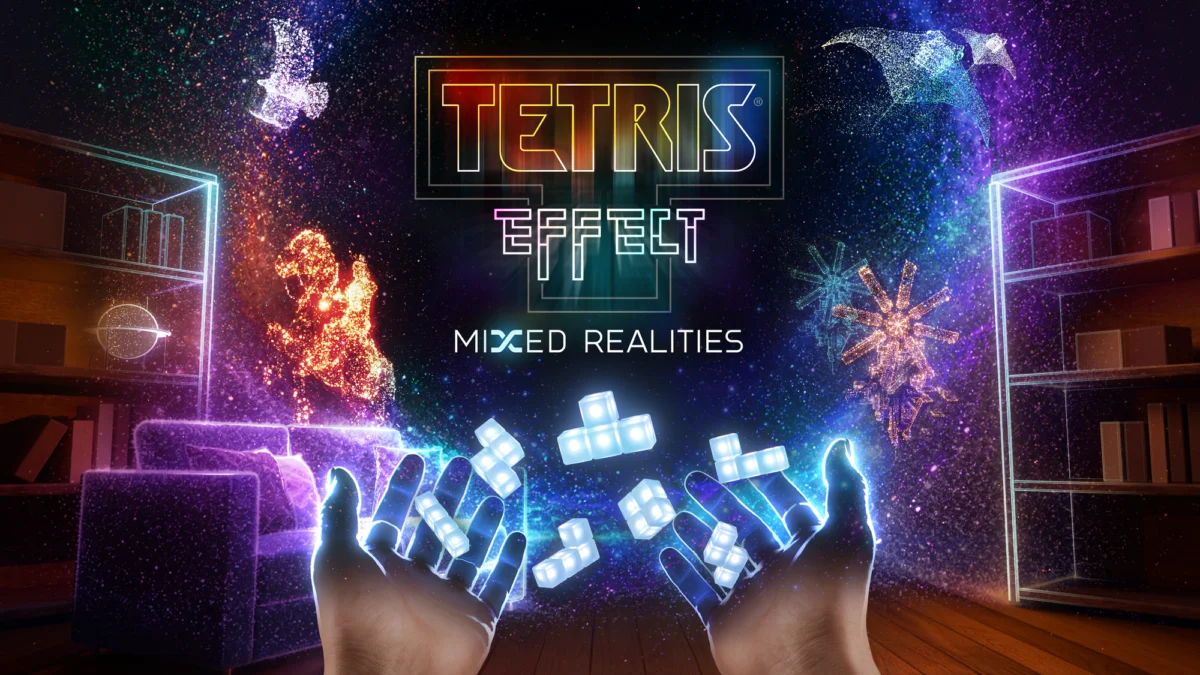
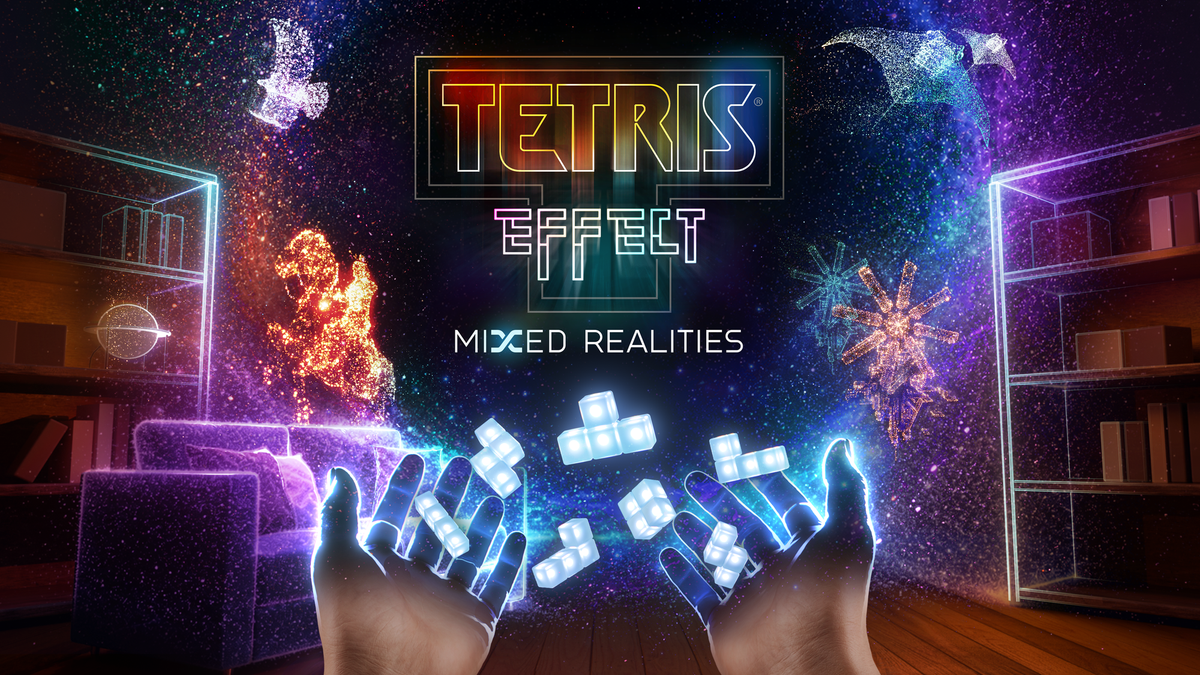
SAN FRANCISCO — The iconic, critically acclaimed puzzle masterpiece Tetris Effect is once again evolving. Developer and publisher Enhance, in collaboration with its creative partners, has officially announced Tetris Effect: Mixed Realities, a groundbreaking iteration tailor-made for Meta’s hardware ecosystem, specifically targeting the Quest 3 and Quest 3S headsets.
Slated for a 2027 release, this upcoming version promises to completely upend how players interact with the falling-block classic. By leveraging advanced spatial computing, real-time room geometry mapping, and precise hand-tracking technology, Tetris Effect: Mixed Realities transitions the psychedelic, synesthetic journey from a purely virtual space directly into the player’s physical living room.
Main Facts
Tetris Effect: Mixed Realities is a newly unveiled, purpose-built version of the modern classic Tetris Effect, designed exclusively to harness the cutting-edge mixed reality capabilities of Meta’s modern hardware lineup, including the Quest 3 and Quest 3S.
Unlike previous iterations that isolated players inside a closed virtual reality headset or demanded traditional controllers, this new release centers entirely around two core pillars: hand-tracking and room-awareness.
Hands-On Interaction: Players will be able to abandon physical controllers altogether, using their bare hands to pinch, rotate, slide, and drop Tetriminos in mid-air.
Environmental Blending: Utilizing the advanced full-color passthrough cameras on the Quest 3 and 3S, the game analyzes the physical geometry, layout, and lighting of the player’s actual room. It then dynamically wraps its signature particle effects, reactive music, and responsive visual environments around everyday furniture and walls.
The Creative Force: Developed under the visionary guidance of legendary creator Tetsuya Mizuguchi (known for Rez, Lumines, and the original Tetris Effect), the game continues the studio’s ongoing mission to blend interactive gaming, music, and emotional resonance.
Release Window:Tetris Effect: Mixed Realities is officially scheduled to launch in 2027 for Meta Quest 3 and Quest 3S devices.
Chronology: The Evolutionary Timeline of Tetris Effect
To understand the magnitude of Tetris Effect: Mixed Realities, it is essential to trace the journey of the franchise from its origins to its modern iterations across multiple hardware generations.
2018: The Genesis on PlayStation
The story of modern Tetris began in November 2018 with the launch of Tetris Effect for the PlayStation 4, with optional support for PlayStation VR (PSVR). Developed jointly by Enhance, Resonair, and Monstars, and led by Tetsuya Mizuguchi, the game was instantly lauded as a transcendent artistic achievement. It took the time-tested mechanics of Alexey Pajitnov’s 1984 masterpiece and married them to reactive, beat-driven soundtracks and sweeping, dynamic visual landscapes that shifted in time with the player’s inputs.
2020: Moving to Standalone VR
Capitalizing on the rise of untethered virtual reality, Tetris Effect made the jump to Meta’s ecosystem in May 2020 with a dedicated release for the original Oculus Quest. This version proved that high-fidelity immersive experiences could run successfully on standalone mobile hardware, opening the door to a massive new audience of VR enthusiasts.
2021–2023: Expansion and Multiplayer Integration
The franchise continued to grow rapidly over the next few years:
2021: Enhance released Tetris Effect: Connected on Steam, introducing long-awaited multiplayer modes that allowed players worldwide to cooperate or compete. Concurrently, a free update brought these multiplayer features to existing PlayStation VR, Epic Games Store, and Quest versions.
2023: As next-generation hardware hit the market, a dedicated version of Tetris Effect: Connected launched for the PlayStation 5 and PlayStation VR2, taking advantage of haptic feedback, eye-tracking, and advanced OLED visuals.
2027: The Spatial Computing Leap
Now, looking ahead to 2027, the franchise is poised to make its most radical shift yet. By moving away from closed-off virtual reality and fully embracing mixed reality via the Quest 3 and 3S, Tetris Effect: Mixed Realities represents the next logical step in the evolution of spatial entertainment.
Supporting Data and Technological Integration
The announcement of Tetris Effect: Mixed Realities highlights a major shift in how game developers approach mixed reality (MR) hardware. For years, "passthrough" features on VR headsets were limited to safety boundaries (guardians) or grainy, black-and-white peripheral views. The introduction of high-resolution, full-color passthrough cameras on devices like the Meta Quest 3 and Quest 3S has changed the calculus entirely.
Hardware Synergy: Quest 3 and 3S
The technical backbone of Tetris Effect: Mixed Realities relies heavily on the advanced sensor suites embedded in Meta’s latest generation of headsets:
Scene Understanding and Room Meshing: The Quest 3 and 3S use computer vision algorithms to map a user’s physical environment in real-time, identifying flat surfaces like floors, tables, and walls. In Tetris Effect: Mixed Realities, this data allows the game engine to anchor falling blocks to real-world architecture. A Tetrimino might cascade down a living room wall, or particle effects might cascade across a coffee table.
Advanced Hand-Tracking Latency Reduction: Traditional VR requires holding controllers equipped with infrared tracking rings. Hand-tracking on modern chipsets (such as Qualcomm’s Snapdragon XR2 Gen 2 platform powering the Quest 3) has reached a level of speed and reliability where millimeter-precise gestures can be interpreted without physical peripherals. Pinching to grab a block and flicking the wrist to rotate it feels remarkably tactile.
Dynamic Lighting Integration: Because the game interacts with room lighting, the immersive visual synesthesia that defines the Tetris Effect brand will no longer be confined to a virtual screen floating in the dark. Instead, virtual lighting cues will spill out into the physical room, casting colorful glows on physical couches and televisions.
The Mizuguchi Philosophy: Games That Move You
Tetsuya Mizuguchi has spent decades exploring the intersection of synesthesia—the stimulation of one sensory pathway leading to automatic experiences in a second sensory pathway—and interactive media. From his early days at Sega working on Space Channel 5 and Rez, to his musical puzzle game Lumines, and finally Tetris Effect, Mizuguchi’s core design philosophy revolves around making games that evoke genuine emotional responses.
In recent interviews surrounding his broader body of work—including the upcoming launch of Lumines Arise on PS VR2 and Steam—Mizuguchi has emphasized that technology is merely a vehicle to achieve human connection and emotional resonance. Bringing Tetris out of the headset and directly into the player’s physical home is a natural extension of this philosophy. By merging the digital puzzle board with the player’s personal living space, the boundary between the game world and real life begins to dissolve.
Official Responses and Industry Context
While full press conferences and deep-dive developer diaries for Tetris Effect: Mixed Realities are expected closer to its 2027 launch window, early statements from the creative collective behind the project paint a clear picture of their ambitions.
Representatives for Enhance noted that the studio has been monitoring the maturation of mixed reality technology for several years. While initial virtual reality implementations of Tetris Effect successfully transported players to alien planets, deep-sea trenches, and cosmic nebulae, the team recognized an untapped potential in augmenting the real world.
"For years, our goal was to take players away to beautiful, emotional virtual spaces," said an internal development source close to the project. "With Tetris Effect: Mixed Realities, we want to bring that magic home. By letting your own living room become part of the canvas, we are creating an experience that feels deeply personal, grounding, and entirely fresh, even for veterans of the franchise."
Meta, too, has heavily championed mixed reality as the definitive differentiator for its Quest 3 product line. By securing high-profile, critically acclaimed intellectual properties like Tetris Effect, Meta aims to prove that mixed reality is not just a novelty for productivity or passive media consumption, but a premier platform for world-class, artistic video game experiences. Industry analysts note that securing unique software adaptations like Mixed Realities gives the Quest 3 and 3S a distinct competitive edge in the evolving spatial computing market.
Implications for the Future of Spatial Gaming
The announcement of Tetris Effect: Mixed Realities carries significant implications for the broader video game industry, touching on game design, hardware adoption, and the future of arcade classics.
1. The Normalization of Controller-Free Interaction
For decades, video games have been defined by controllers, keyboards, mice, and touchscreens. The elimination of physical peripherals in favor of natural hand gestures marks a major milestone. If Tetris Effect: Mixed Realities can successfully prove that high-speed, high-stress puzzle gameplay can be reliably executed using bare hands, it will pave the way for other fast-paced genres to adopt controller-free inputs.
2. Redefining "Sitting Room" Entertainment
Traditional console and PC gaming require players to stare at a fixed screen—whether a television monitor or a desktop display. Spatial computing and mixed reality turn the entire room into the display. By allowing players to interact with virtual objects embedded in their physical environment, games like Tetris Effect: Mixed Realities bridge the gap between traditional video games and immersive installation art. Friends and family members in the same room can watch the player interact with floating blocks hovering in the middle of the living room, creating a shared viewing experience reminiscent of local couch co-op.
3. Longevity of Legacy IP
Tetris celebrated its 40th anniversary recently, proving itself to be one of the most resilient and adaptable intellectual properties in human history. From the monochrome Game Boy screen to modern 4K HDR displays and fully immersive virtual reality, the core gameplay loop has remained remarkably unchanged because its fundamental design is near-flawless. By continually reinventing its presentation layer through cutting-edge technological paradigms like mixed reality, Tetris ensures that each new generation of hardware experiences the franchise not as a retread of the past, but as a cutting-edge contemporary experience.
Looking Ahead to 2027
As development continues over the next few years, all eyes will be on Enhance, Resonair, and Monstars to see how they translate the dizzying synesthetic peaks of Tetris Effect into physical spaces. With a 2027 release window targeted squarely at Meta Quest 3 and 3S users, Tetris Effect: Mixed Realities stands as one of the most anticipated and conceptually intriguing upcoming projects in the spatial computing landscape. Whether playing alone in a quiet room or sharing the spectacle with others, players are once again invited to clear lines—not just on a screen, but right before their very eyes.