

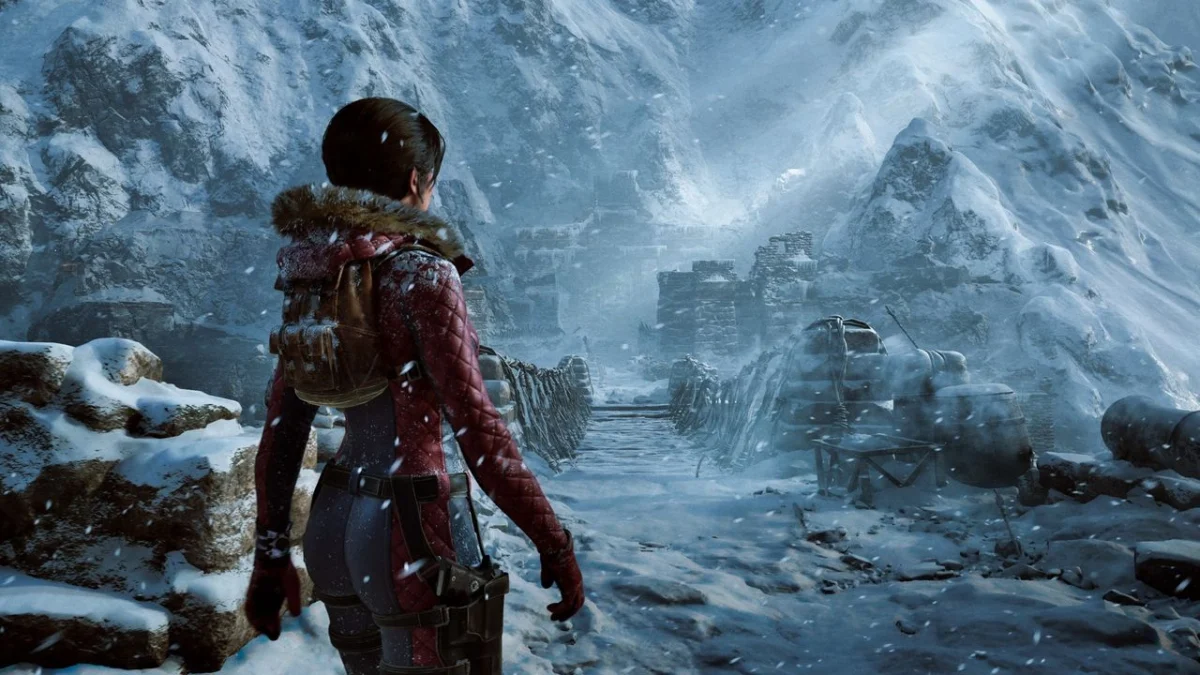
The announcement of Tomb Raider: Legacy of Atlantis sent a wave of nostalgia through the gaming community. As a reimagining of Lara Croft’s inaugural 1996 odyssey, the title carries the heavy burden of living up to a legendary legacy while satisfying the expectations of a modern audience. However, rather than simply relying on graphical fidelity or modernized controls, the development team is looking toward the recent past—specifically the "Survivor Trilogy"—to solve one of the most persistent issues in game design: the "one-size-fits-all" difficulty setting.
In a recent reveal, it was confirmed that Legacy of Atlantis will adopt the granular, highly customizable difficulty system popularized by 2018’s Shadow of the Tomb Raider. This approach promises to allow players to surgically adjust the challenge level of combat, traversal, and puzzles independently, ensuring that the experience remains engaging for both series veterans and newcomers alike.
The Evolution of Difficulty in the Survivor Trilogy
To understand the significance of this design choice, one must look back at the trajectory of the modern Tomb Raider era. When the franchise was rebooted in 2013, the focus was heavily on survival and narrative immersion. As the series progressed through Rise of the Tomb Raider (2015) and culminated in Shadow of the Tomb Raider (2018), the developers at Crystal Dynamics realized that players approached the game with vastly different skill sets.
In Shadow of the Tomb Raider, the team introduced a groundbreaking feature: three distinct sliders for difficulty. This allowed a player who excels at tactical gunplay but struggles with complex environmental navigation to "turn down" the traversal difficulty while keeping combat intense. Conversely, those who play for the brain-teasing archeology could elevate the puzzle complexity while easing the combat encounters to avoid frustration.
By providing these tools, the developers effectively democratized the Tomb Raider experience. It moved away from the binary "Easy/Normal/Hard" paradigm, which often forces players to compromise their preferred playstyle just to experience the story.
Bridging the Gap: The Legacy of Atlantis Philosophy
During an interview at Summer Game Fest, Game Director Raul Siqueira emphasized that the lesson learned from the Survivor Trilogy was foundational to the development of Legacy of Atlantis. The team’s primary goal is to ensure that the "Lara Croft fantasy"—a delicate blend of exploration, combat, and puzzle-solving—is accessible to a wider demographic without losing the sharp edge of its core challenges.
"I think the biggest lesson that we took from that trilogy is tuning difficulty based on players’ expectations," Siqueira explained. "We found that because Tomb Raider blends a bunch of different things together, there are people who are really into puzzles and they want puzzles to be very difficult, but they’re not great at combat, so they want combat to be easy."
This philosophy acknowledges a fundamental truth of modern game design: player agency is the ultimate accessibility feature. By allowing the player to act as their own "game master," Legacy of Atlantis is positioning itself to be perhaps the most inclusive entry in the entire franchise.
A Technical Deep Dive: What to Expect
While the full scope of the customization options for Legacy of Atlantis is still being finalized, the implications of a "similar mode" to Shadow of the Tomb Raider are significant. Based on historical data from the previous title, we can anticipate several layers of customization that go beyond mere damage multipliers:
1. Combat Tuning
Beyond adjusting enemy health and damage output, this setting usually dictates enemy aggression, frequency of flanking maneuvers, and the scarcity of ammunition. For those who want the game to feel like a high-stakes survival horror, higher combat settings force players to rely on stealth and resource conservation.
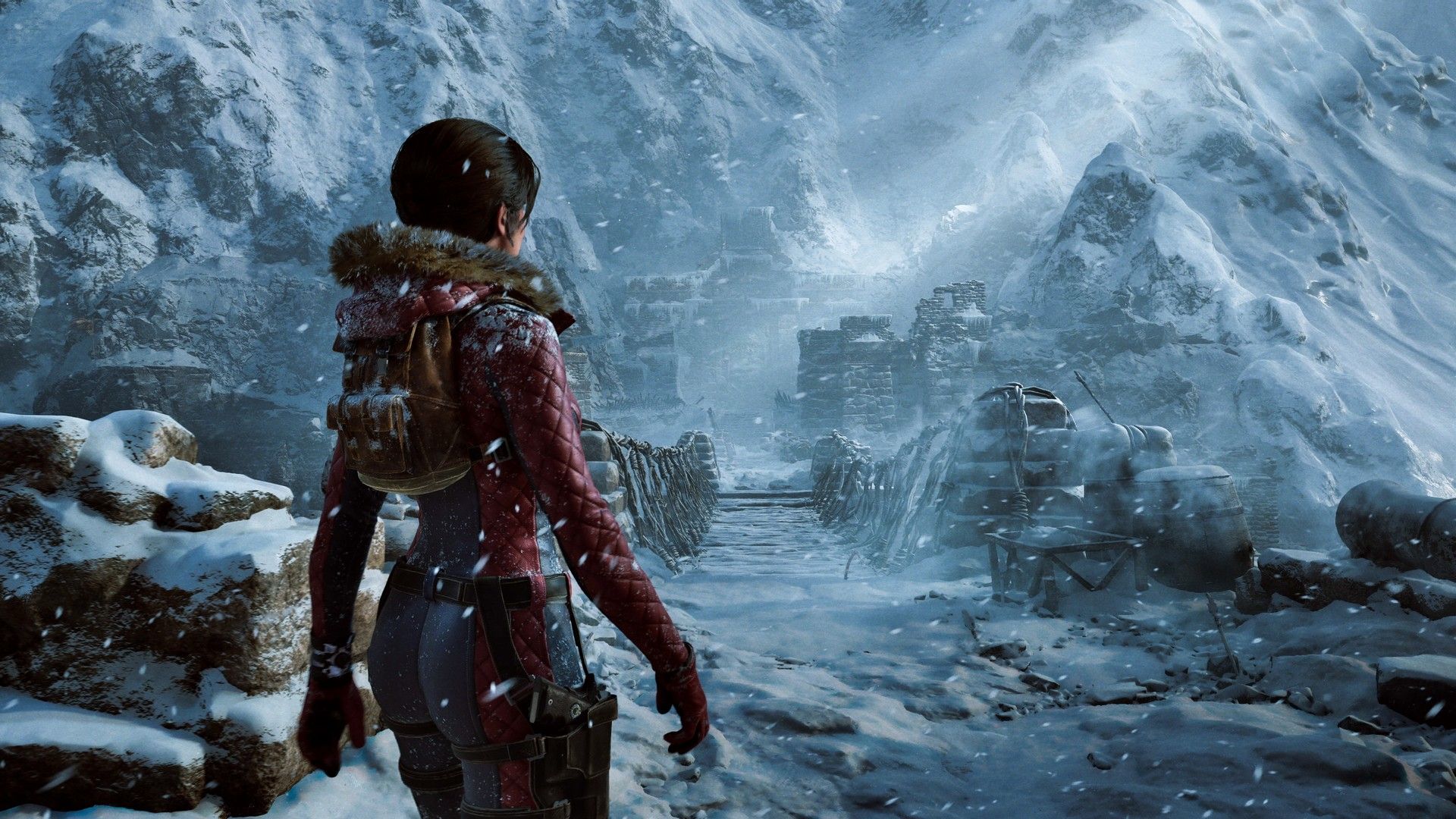
2. Traversal and Environmental Cues
Perhaps the most debated aspect of modern Tomb Raider games is the inclusion of "guiding paint"—the yellow or white markers that signal climbable surfaces. In Shadow, players could toggle these visual crutches off. For Legacy of Atlantis, which is inherently rooted in the "puzzle-box" level design of the 90s, the ability to remove these hints will be a welcome feature for purists who want to solve the environmental navigation through observation rather than following neon-colored breadcrumbs.
3. Puzzle Complexity
This is where the game’s core identity lies. By adjusting puzzle difficulty, the game likely changes the time limit for certain sequences, the clarity of hints provided by Lara’s internal monologue, or the complexity of the mechanical systems required to open ancient doors. By separating this from combat, the game ensures that a player’s lack of reflexes in a shootout doesn’t bar them from experiencing the game’s most intricate brain-teasers.
Official Responses and Studio Intent
The development team has been careful to manage expectations while remaining transparent about their design ethos. Siqueira noted that the balance of these systems is an "ever-changing thing" that the team is tuning right up until the final stages of production.
The studio’s commitment to this level of detail suggests a desire to respect the original game’s punishing nature while acknowledging that modern gaming audiences have different ergonomic and accessibility needs. By offering these "knobs," the team is essentially inviting the player to curate their own version of the Tomb Raider experience. Whether you want a cinematic, narrative-heavy journey or a brutal, hardcore survival challenge, the game aims to provide the framework to make that happen.
Implications for the Genre
The decision to prioritize granular difficulty settings in a high-profile remake has broader implications for the action-adventure genre. For years, the "Soulslike" trend has pushed the industry toward rigid, punishing difficulty as a badge of honor. However, the success of the Survivor Trilogy—and now the anticipated implementation in Legacy of Atlantis—proves that games can be both challenging and inclusive.
By decoupling combat, puzzles, and traversal, Legacy of Atlantis is setting a new standard for player agency. It signals to the industry that accessibility is not about "dumbing down" a game, but rather about providing options that allow every player to reach the same satisfying conclusion at their own pace and comfort level.
Looking Toward the Future
As the development of Tomb Raider: Legacy of Atlantis continues, fans remain eager for more details regarding the accessibility suite. Siqueira’s promise that the team will have "a lot more to share" regarding these options suggests that the final product may even exceed the customization depth of its predecessors.
For a game that is tasked with honoring a 30-year-old classic, the biggest hurdle is not technology, but sentiment. The developers are attempting to recreate the feeling of being lost in a tomb, staring at a complex mechanism, and figuring out how to survive—all while ensuring that the experience doesn’t feel archaic or exclusionary.
If they succeed, Legacy of Atlantis will not only stand as a successful remake of the original Tomb Raider but as a blueprint for how to handle legacy IP in an era where player preferences are more diverse than ever. Whether or not it claims the top spot on the list of all-time Tomb Raider greats remains to be seen, but one thing is certain: it will be the most customizable, accessible, and player-friendly journey into the dark corners of the world that the franchise has ever produced.

