

By Global Gaming Desk
Published: October 2026
Main Facts
PlayStation 5 owners who have long admired the PC simulation space are about to receive one of the most technologically demanding and critically acclaimed titles of the last decade. Developer and publisher BeamNG has officially confirmed that its seminal, hyper-realistic soft-body physics sandbox and driving game, BeamNG.drive, is making the jump to console hardware. The title is scheduled to launch in an Early Access state on the PlayStation 5 on October 19, 2026.
Originally introduced to the gaming public via a tech demo and subsequent PC release in 2015, BeamNG.drive has spent over a decade cultivating a fiercely dedicated community on personal computers. Renowned for its uncompromising commitment to physics-based destruction, vehicle handling, and open-ended sandbox gameplay, the title has long been considered nearly impossible to port to console architecture due to the immense processing power required to run its proprietary simulation engine.
However, advancements in console hardware—specifically the processing capabilities of the PS5 and the specialized rendering technology of the PlayStation 5 Pro—have finally made this ambitious transition possible. According to the development team, the PS5 version will launch alongside the PC version 0.40 update, ensuring that console players receive a feature-rich experience right out of the gate. This milestone release brings highly anticipated local split-screen support, a brand-new day-one vehicle, sweeping visual enhancements, and a slate of general fixes.
While pricing details for the PlayStation 5 version remain unconfirmed as of press time, developer BeamNG has assured fans that the title will follow a traditional paid release model paired with its established philosophy of delivering major, free content updates every few months. In anticipation of the October 19 launch, the game’s official page is now live on the PlayStation Store, allowing eager users to add the title to their wishlists.
Chronology: A Decade-Long Journey from Tech Demo to Console Frontier
To fully understand the weight of BeamNG.drive arriving on the PlayStation 5, one must trace the timeline of a project that fundamentally redefined how digital vehicles react to forces.
The Genesis: CryEngine Origins and the Rigs of Rods Precursor (2011–2014)
Long before BeamNG.drive became a household name among simulation enthusiasts, the core technology was born out of an open-source project called Rigs of Rods. Developed primarily by programmers who envisioned a world where vehicles were constructed of interconnected nodes and beams rather than rigid, pre-animated polygons, this early engine pioneered soft-body physics. In 2011, the key creators formed the company BeamNG and began developing a brand-new, proprietary game engine from scratch, utilizing advanced physics calculations to simulate real-time structural deformation.
The PC Alpha and Steam Early Access Breakthrough (2013–2015)
In 2013, BeamNG released a tech demo featuring breathtaking crash physics that quickly went viral across early video-sharing platforms and social media. Buoyed by this viral success, the studio launched BeamNG.drive on PC via its own website in 2015, eventually bringing the title to Steam Early Access. From its earliest days, the game was not a traditional racing title with a linear campaign; instead, it offered an open sandbox where players could test vehicles in crash laboratories, deliver cargo across sprawling fictional regions, or engage in high-speed police chases.
The Content Expansion Era (2016–2024)
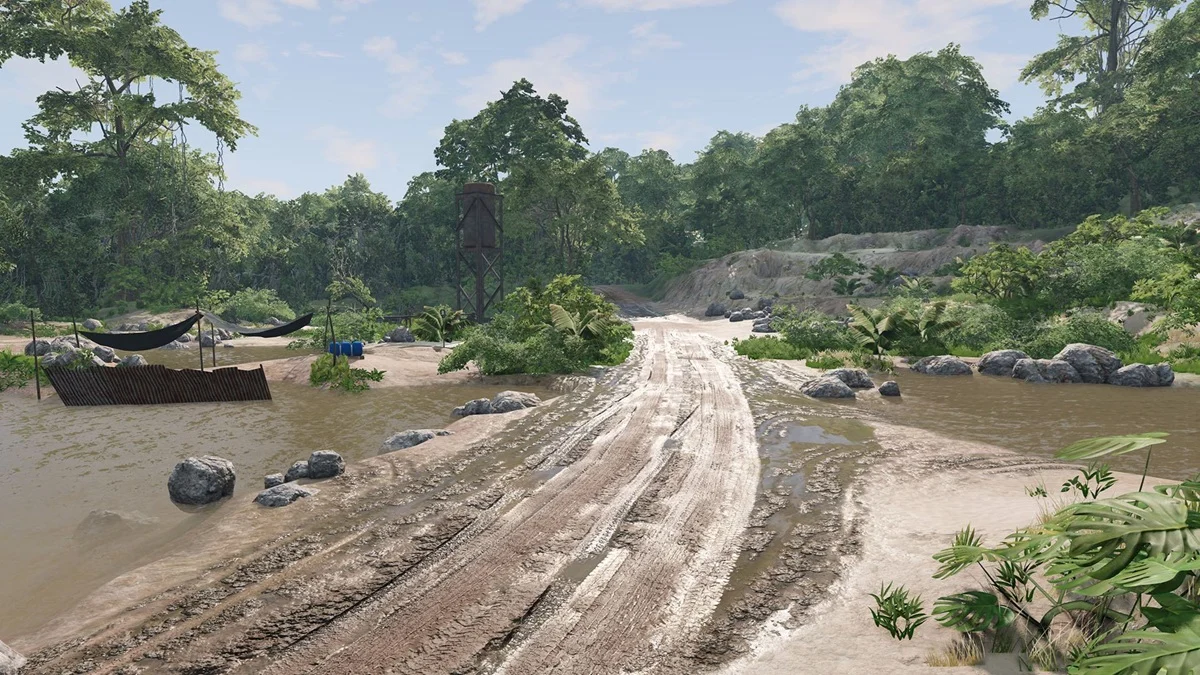
Over the next several years, the PC version underwent relentless iteration. The developers expanded the map pool from a handful of simple test tracks to massive, diverse environments encompassing dense urban centers, winding mountain passes, tropical islands, and desolate deserts. The vehicle roster grew from a few basic sedans to dozens of meticulously modeled cars, trucks, buses, and specialized utility vehicles—all fully customizable down to their individual suspension components, engine blocks, and drivetrain configurations.
The Console Horizon and PS5 Optimization (2025–2026)
As modern console hardware evolved, rumors began to circulate regarding a potential console port. The immense multi-threaded processing requirements of soft-body physics traditionally throttled console CPUs, which were traditionally optimized for fixed asset streaming and predetermined animations rather than real-time finite element analysis. However, with the maturation of current-generation hardware and the introduction of advanced upscaling technologies, BeamNG finally greenlit the PlayStation 5 development cycle, culminating in the official October 2026 release date announcement.
Supporting Data: Technical Specifications and Performance Metrics
The technical hurdles of bringing BeamNG.drive to the PlayStation 5 cannot be overstated. Unlike arcade racers where damage is cosmetic and handling is governed by simplified friction curves, BeamNG.drive calculates the structural integrity of every single vehicle component in real time.
Real-Time Soft-Body Physics Engine
At the heart of the game is the proprietary physics engine, which simulates a vehicle as a network of virtual masses (nodes) connected by springs (beams). When a car impacts a wall at 80 miles per hour, the game does not trigger a pre-rendered crash animation. Instead, it computes the kinetic energy transfer, crumpling metal, bending chassis frames, shattering glass, and popping tires dynamically based on the exact angle, speed, and material properties of the collision. This level of simulation consumes vast amounts of CPU cycles, making the optimization work done for the PS5 version a remarkable engineering feat.
Hardware Integration: PSSR and FSR 3 Support
To ensure the game runs smoothly while maintaining visual fidelity across different Sony hardware tiers, BeamNG has confirmed specialized graphical integrations:
- PlayStation 5 Pro Integration: The title will fully leverage PlayStation Spectral Super Resolution (PSSR), Sony’s proprietary machine learning-based upscaling technology. This will allow the PS5 Pro version to achieve higher native resolution targets, improved framerate stability, and enhanced environmental detail without compromising the integrity of the physics simulation.
- Base PlayStation 5 Support: Standard PS5 owners will benefit from AMD FidelityFX Super Resolution 3 (FSR 3) integration. This implementation ensures that players on the base console can enjoy sharp visuals and high-performance frame pacing even during chaotic multi-vehicle pileups and physics-heavy destruction sequences.
Update 0.40 Feature Parity
The PlayStation 5 Early Access launch aligns strategically with the deployment of PC Version 0.40. This synchronicity ensures that console players are not receiving an outdated port. Key features included in this milestone patch comprise:
- Local Split-Screen Support: A feature long requested by the community, allowing couch-cooperative gameplay and head-to-head sandbox experimentation.
- Day-One Vehicle Addition: A brand-new, highly requested vehicle class will be available immediately upon downloading the game.
- Visual Overhauls and Optimization: Upgraded texture streaming, refined lighting engines, and environmental texture passes tailored specifically for console display standards.
Official Responses and Developer Insights
In official statements accompanying the release date reveal, the development team at BeamNG emphasized their excitement regarding the expansion of their player base beyond the PC ecosystem.
"Bringing BeamNG.drive to the PlayStation 5 has been one of the most challenging yet rewarding endeavors in our studio’s history," a representative for BeamNG shared. "For years, our community has asked when console players would get to experience the uncompromised depth of our soft-body physics engine. Thanks to the architecture of the PS5 and the incredible performance headroom provided by technologies like PSSR on the PS5 Pro, we are finally able to deliver an experience that stays true to our PC roots."
The developers also addressed the decision to launch the title in an Early Access state on the console platform, noting that community feedback will be vital as they fine-tune controller layouts, user interface scaling, and performance stability.
"Our journey with the PC version has always been a collaborative effort between our developers and our players," the studio noted. "By bringing this Early Access build to the PlayStation Store, we invite the console community to join us in shaping the final stages of development. Regular updates, community-driven bug reports, and continuous performance tuning will remain our top priorities as we move toward the full commercial release."
Industry analysts have praised the transparency of the studio’s approach, noting that releasing the game via Early Access manages expectations regarding ongoing optimization while allowing passionate simulation fans to dive into the sandbox years ahead of a traditional, fully polished retail rollout.
Implications: What This Means for the Racing and Simulation Genre on Consoles
The arrival of BeamNG.drive on the PlayStation 5 carries profound implications for the broader console gaming landscape, particularly within the racing, driving, and simulation genres.
Bridging the Gap Between PC Simulation and Console Accessibility
Historically, ultra-realistic driving simulators—such as iRacing, Assetto Corsa Competizione, and deep sandbox titles like BeamNG.drive—have been heavily concentrated on personal computers. Consoles have traditionally catered to accessible, visually polished arcade and sim-cade racers like Gran Turismo or Forza. The inclusion of BeamNG.drive in the PlayStation 5 library signals a shifting paradigm. It demonstrates that modern consoles possess the computational horsepower to handle niche, physics-heavy simulations that were once deemed exclusive to high-end gaming rigs.
Redefining Expectations for Damage and Destruction Physics
For decades, mainstream racing games have been limited by licensing agreements with major automotive manufacturers who were historically reluctant to allow their licensed vehicles to be visually deformed or systematically destroyed. BeamNG.drive bypasses these traditional licensing constraints primarily through fictionalized vehicle designs that heavily mirror real-world automotive archetypes. The success of this model on PlayStation 5 could encourage other developers to push the boundaries of destruction physics, raising consumer expectations for how physical environments and vehicles should interact in next-generation video games.
The Evolution of the Early Access Model on PlayStation
While Early Access programs have been a staple of the PC ecosystem (via platforms like Steam) for well over a decade, console platforms have historically maintained strict quality-assurance gates that favored complete, gold-master releases. Sony’s willingness to host high-profile Early Access sandbox titles like BeamNG.drive reflects a more flexible, service-oriented publishing model. This shift allows developers of complex, simulation-heavy projects to gather invaluable telemetry and user feedback directly from the console community, paving the way for more ambitious, non-traditional software to find a home on PlayStation hardware.
As October 19, 2026, approaches, anticipation among console simulation fans continues to build. Whether players are looking to construct elaborate stunt courses, test automotive crash safety standards, or simply enjoy casual, chaotic drives with friends via local split-screen, BeamNG.drive is poised to leave a permanent mark on the PlayStation 5 ecosystem.

