

By the Gaming Desk
Published: September 2026
Main Facts
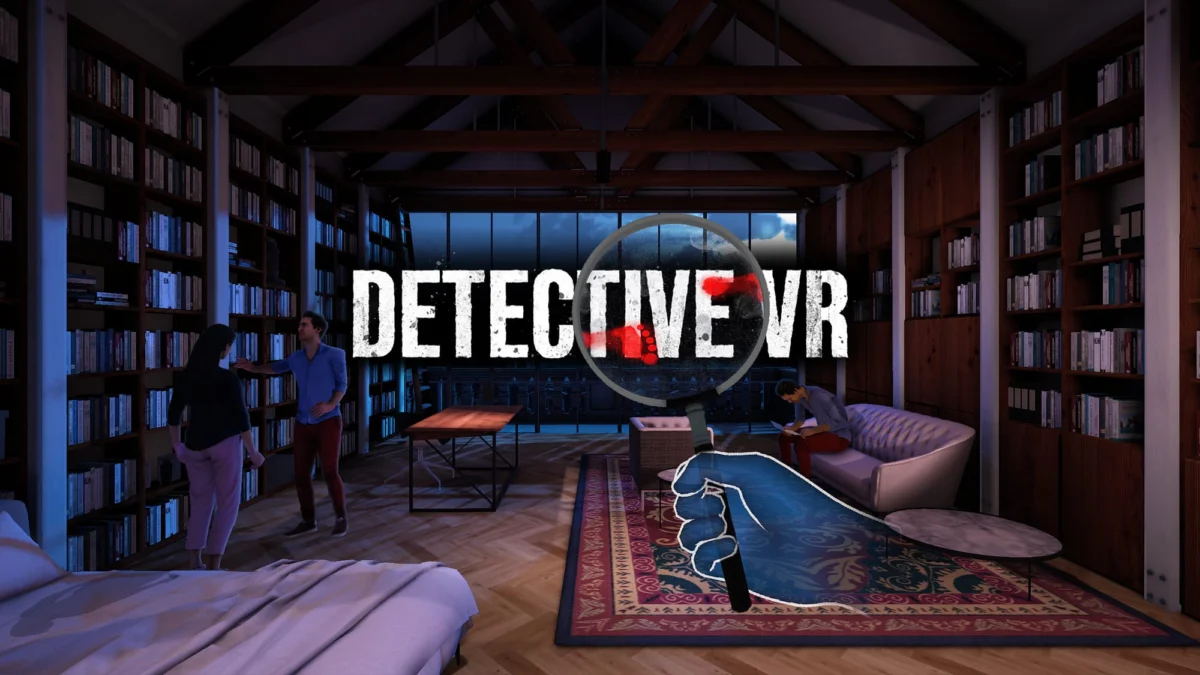
The immersive gaming landscape has expanded its investigative horizons this week as Detective VR, the acclaimed murder mystery puzzle game developed by Studio Chipo y Juan, officially launches on SteamVR and PlayStation VR2. Marking a significant milestone for Sony’s platform, the PlayStation VR2 version of the game introduces native hand-tracking support—a feature that remains a distinct rarity within the PS VR2 ecosystem.
Building upon its previous success on Meta Quest headsets, Detective VR challenges players to step directly into the shoes of a homicide investigator. The core gameplay loop requires virtual sleuths to meticulously search intricate crime scenes for overlooked clues, capture photographic evidence using intuitive gesture controls, interview recalcitrant witnesses, and synthesize their findings on an interactive murder board to unmask the guilty party.
A standout mechanic of the experience is its meta-level investigation feature: players can virtually "put on a pair of VR glasses" to dynamically reconstruct crime scenes as they unfolded. While the title originally leaned heavily into mixed-reality capabilities on platforms like the Meta Quest 3, Studio Chipo y Juan has adapted the experience for SteamVR and PS VR2 by designing fully immersive virtual environments. Despite these architectural shifts, the fundamental mechanics, narrative pacing, and deductive challenges remain entirely intact.
Demonstrating immediate responsiveness to the community, the development team has already deployed a post-launch patch to address early user feedback concerning locomotion and hand-tracking stability. For prospective detectives eager to test their deductive logic before purchasing, a free playable demo is currently available on Steam.
Chronology of an Investigation: From Meta Quest to PC and Console
The journey of Detective VR from an innovative concept to a multi-platform release offers a fascinating look at the iterative nature of modern virtual reality development.
The Early Days and Meta Quest Debut
Studio Chipo y Juan first conceptualized Detective VR as an exploration into spatial computing and physical interaction within virtual reality. The title initially found its footing on Meta’s ecosystem, culminating in its release on the Meta Quest 3. Leveraging the Quest 3’s advanced mixed-reality pass-through capabilities, the game blurred the line between the player’s physical living room and the digital crime scenes they were tasked with investigating.

Upon its Quest launch, critics and players alike praised the game’s tangible approach to puzzle-solving. Reviewers noted that while the title still possessed minor rough edges and room for gameplay refinement, it stood out as an ambitious and thoroughly delightful effort from Studio Chipo y Juan. The community response signaled that there was an insatiable appetite for slower-paced, intellectual puzzle games in VR, moving away from high-octane action and fast-paced shooters.
Adapting for Traditional VR Headsets
Following the initial success on Meta’s hardware, Studio Chipo y Juan turned their attention toward expanding the game’s reach to more powerful, tethered, and dedicated VR platforms: SteamVR for PC players and the PlayStation VR2 for Sony console owners.
This expansion, however, required thoughtful design pivots. Unlike the Meta Quest 3, neither SteamVR-compatible headsets (in most standard configurations) nor the PlayStation VR2 place their primary commercial focus on mixed-reality pass-through environments. Recognizing this, the developers wisely crafted fully realized, atmospheric virtual environments tailored for traditional VR immersion.
The Dual Launch and Day-One Patches
This week, Detective VR officially arrived on both SteamVR and PlayStation VR2. The launch was accompanied by the release of its official PlayStation launch trailer, offering prospective players a cinematic look at the interactive mechanics, crime scene reconstruction tools, and gritty atmosphere.
Anticipating the technological hurdles of bringing hand-tracking—especially to a platform where it is seldom utilized like the PS VR2—Studio Chipo y Juan closely monitored early player adoption. Demonstrating swift developer support, a day-one and post-launch patch was rapidly issued to smooth out early reports concerning locomotion glitches and hand-tracking calibration quirks, ensuring a stable investigative experience for all players.
Supporting Data & Platform Breakdown
To understand the scope and technical achievement of Detective VR’s latest release, it is helpful to examine the hardware landscape, availability, and how the game translates across different headsets.
Platform Availability and Pricing
Detective VR is now universally accessible across the major VR ecosystems. Players can purchase and download the title across the following storefronts:

- PlayStation VR2: Available via the official PlayStation Store. Notable for including innovative, controller-free hand-tracking support.
- SteamVR: Available on Steam, complete with a free playable demo for users wishing to test performance and mechanics before buying.
- Meta Quest: Still available on the Meta Store for Quest 2, Quest 3, and Quest Pro users, retaining its mixed-reality features.
Technical Feature Matrix
| Feature / Mechanic | Meta Quest 3 (Original) | PlayStation VR2 (New) | SteamVR / PC VR (New) |
|---|---|---|---|
| Primary Environment | Mixed Reality / Pass-through | Fully Immersive Virtual | Fully Immersive Virtual |
| Hand Tracking Support | Yes | Yes (Rare Feature) | Dependent on Hardware |
| Locomotion Options | Teleport / Smooth | Teleport / Smooth (Patched) | Teleport / Smooth |
| Core Investigation Tools | Murder Board, Camera, Glasses | Murder Board, Camera, Glasses | Murder Board, Camera, Glasses |
| Demo Availability | Varies | No | Yes (Steam) |
Gameplay Mechanics Breakdown
- Crime Scene Examination: Players physically walk around or teleport through detailed environments, inspecting objects from various angles.
- Photographic Evidence: Using a natural "pinch-and-pull" gesture (optimized for both controllers and bare hands), players capture crucial pieces of evidence.
- Witness Interrogations: Dialogue trees and dynamic reactions allow players to press suspects for information and catch them in contradictions.
- The Murder Board: A centralized hub where evidence links are established, strings are drawn between suspects and motives, and final conclusions are deduced.
- Crime Scene Reconstruction: Donning the meta-level "VR glasses" allows investigators to watch holographic replays of how events transpired, transforming static crime scenes into dynamic temporal puzzles.
Official Responses and Critical Reception
The reception of Detective VR bridges critical praise from its initial release with enthusiastic player adoption on its new hardware platforms.
Reflecting on the original Quest launch, industry reviews highlighted both the charm and the potential of Studio Chipo y Juan’s creation. In our comprehensive review of the Quest 3 version, critics observed:
"While there’s room for improvement with the gameplay, it’s an impressive effort from Studio Chipo y Juan that’s a delight to play, with so much room for more to come."
This sentiment of high potential has carried over into the discussion surrounding the PS VR2 and SteamVR ports. Industry analysts have paid close attention to the inclusion of hand tracking on the PlayStation VR2. Because Sony’s headset relies heavily on the advanced Sense controllers—which feature haptic feedback and adaptive triggers—developers rarely build native, controller-free hand-tracking into their games due to the technical overhead and lack of universal adoption.
Studio Chipo y Juan’s decision to implement hand tracking on the PS VR2 has been lauded as a bold technical achievement. Early testers have noted that operating the game without controllers—using natural hand gestures to pinch, grab, and examine evidence—deepens the psychological immersion of feeling like a real detective examining physical artifacts.
Furthermore, the developer’s proactive stance on technical feedback has earned praise. By swiftly addressing early user reports concerning locomotion snags and hand-tracking precision through immediate patching, Studio Chipo y Juan has reinforced its commitment to delivering a polished product across all supported storefronts.
Implications for the VR Industry
The multi-platform rollout of Detective VR and its technical achievements carry several broader implications for the virtual reality ecosystem moving forward.

1. Proving the Viability of Hand Tracking on PS VR2
For years, hand tracking has been a staple of Meta Quest development, largely driven by the headset’s standalone nature and built-in computer vision focus. The PlayStation VR2, conversely, has been heavily defined by its dedicated Sense controllers. Detective VR proves that developers can successfully implement robust hand-tracking mechanics on Sony’s hardware, potentially inspiring other developers to incorporate controller-free options into puzzle, adventure, and narrative-driven titles. This opens the door for more tactile, organic interactions that do not rely on holding physical hardware.
2. Bridging Mixed Reality and Fully Immersive Worlds
When transitioning games built primarily around mixed reality (like the Quest 3 pass-through features) to platforms with different hardware strengths, developers face a distinct design challenge. Studio Chipo y Juan’s successful pivot—adapting their crime scenes into fully realized, atmospheric virtual spaces for SteamVR and PS VR2—serves as a case study in flexible game architecture. It demonstrates that compelling gameplay loops do not need to rely on a single environmental gimmick; strong puzzle design and narrative mechanics can thrive whether rendered in a player’s physical living room or a digital recreation of a dimly lit Victorian parlor.
3. Expanding Genre Diversity on Tethered Headsets
The PC VR and PlayStation VR2 libraries have historically leaned heavily toward high-fidelity action games, flight simulators, rhythm titles, and sprawling RPGs. The arrival of Detective VR injects much-needed genre diversity into these platforms. By proving that slower-paced, intellectual, narrative-heavy puzzle games can find an enthusiastic audience on high-end tethered systems, the game encourages further investment in non-combat virtual reality experiences.
As players log onto Steam and the PlayStation Store to put their investigative skills to the test, Detective VR stands as proof that the virtual reality medium is maturing—offering cerebral challenges that engage the mind just as effectively as traditional video games engage the reflexes. Whether playing with traditional controllers or experiencing the rare thrill of controller-free hand tracking on the PS VR2, armchair detectives now have a rich, immersive new world waiting to be investigated.

