

By Josh Broadwell
Published: August 30, 2026
Main Facts: The Grandeur of the Hippodrome
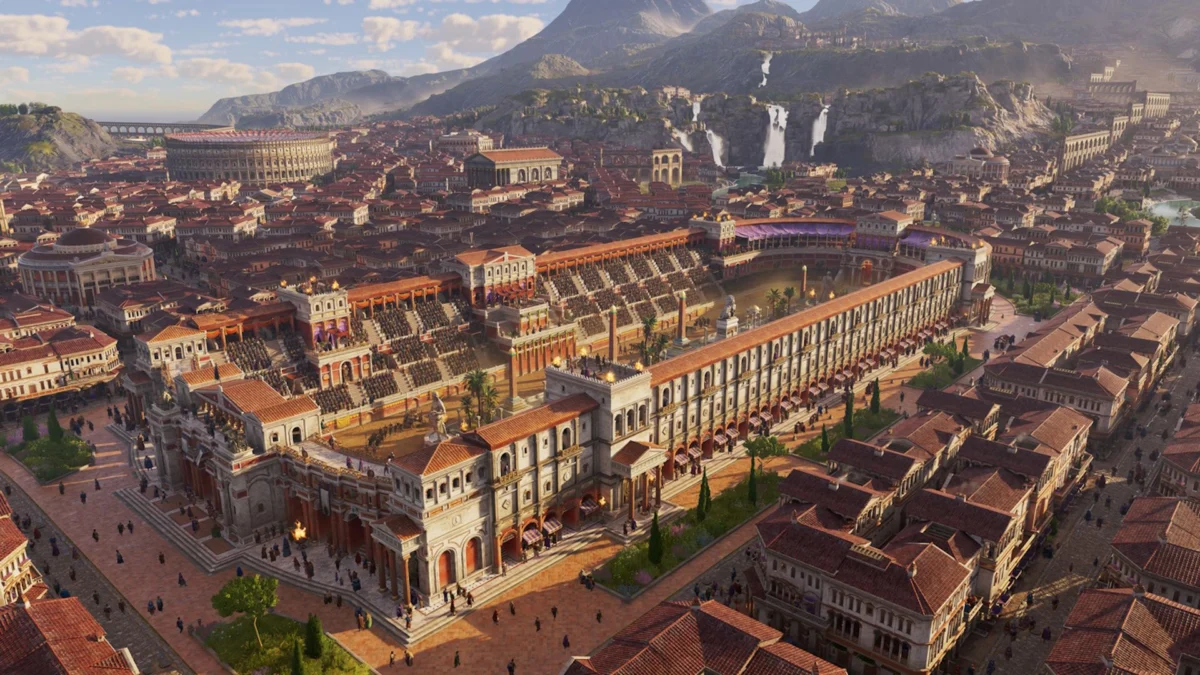
Historically, middle-of-the-season downloadable content (DLC) in the Anno franchise has occupied a peculiar space. Traditionally viewed as ancillary additions—stepping stones meant to bridge the gap between grand launch features and definitive end-game expansions—these mid-season releases rarely commanded high expectations. When Ubisoft Mainz announced the Hippodrome expansion for Anno 117: Pax Romana, initial skepticism was understandable. After all, on paper, it is merely a single monument-class building.
Yet, that assessment underestimates the profound structural and systemic changes this expansion brings to the table. The Hippodrome is far more than a visual spectacle; it is a meticulously designed strategic anchor that transforms empire management, revitalizes underutilized provinces, and injects much-needed mid-game purpose into a title that has occasionally struggled with pacing.
The core premise of the DLC unlocks a specialized research branch dedicated to constructing the Hippodrome. In classical antiquity—particularly in Rome and Byzantium—these sprawling architectural marvels served immense, multi-layered socio-political functions. They were unique urban spaces where patricians, plebeians, and emperors converged under the banner of competitive chariot racing, surrounded by an atmosphere of civic pageantry that frequently doubled as a backdrop for imperial ceremonies and statecraft. While Anno 117 omits the darker historical elements like political executions, it fully embraces the pomp, scale, and logistical nightmare of managing such a colossal undertaking.
Chronology: The Trials of Monumental Construction
Building a marvel in the world of Anno is a masterclass in controlled chaos, executed across grueling, multi-phase construction cycles. For players diving into the Hippodrome DLC, the logistical pipeline is nothing short of demanding.
Phase 1: Resource Acquisition and Infrastructure Strain
Initially, construction requires astronomical quantities of standard materials: hundreds of tons of timber and concrete. While these are relatively straightforward to source on most standard map seeds, subsequent phases introduce severe bottlenecks. Marble and the specialized pigments required for intricate mosaics quickly become rare commodities depending on island fertility and world generation parameters.
Phase 2: Expanding Borders to Albion
The Hippodrome introduces unique resource demands that force players to look far beyond the safety of mainland Italy. Constructing the monument requires substantial shipments of cloth—demanding a pivot away from traditional flax usage—and, surprisingly, granite harvested from the marshy, eel-ridden province of Albion.
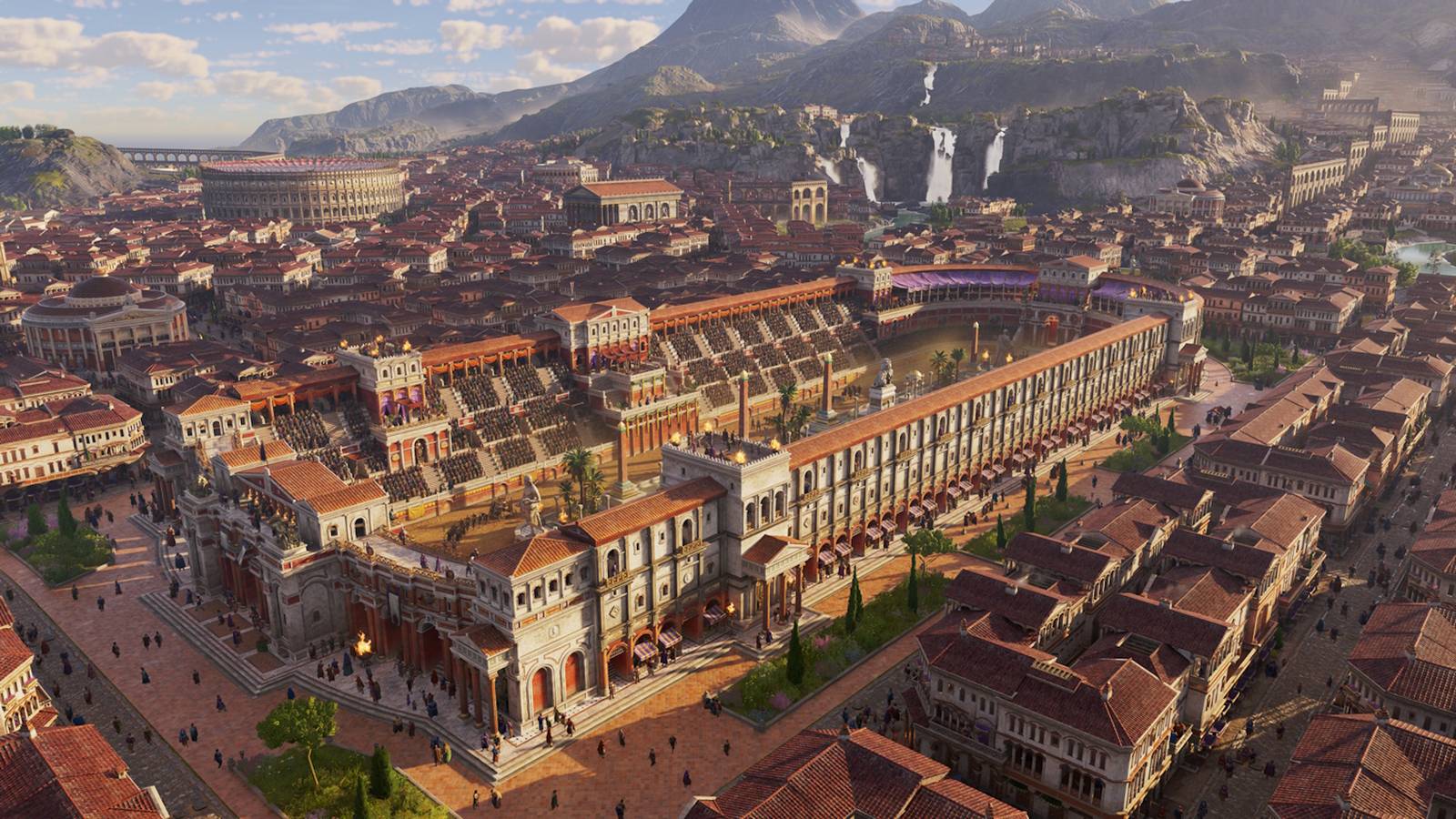
For many players, Albion had previously served as a minor, neglected outpost valued solely for supplying isolated consumables to the Roman elite. The Hippodrome forces a strategic reckoning. Players must rapidly industrialize the province, establish secure maritime trade routes, and manage the complex logistics of shipping raw granite across treacherous waters back to the heart of the empire.
Phase 3: Workforce Management and Island Specialization
Monument construction requires a massive influx of local labor—measured in the hundreds of workers. This necessitates careful zoning and population management. Poorly planned island layouts will immediately bottleneck a player’s ability to even break ground on the Hippodrome. Fortunately, islands like Cinis—introduced in the earlier Prophecies of Ash expansion—provide the sprawling geographic footprint required to support such monumental undertakings, highlighting how Ubisoft Mainz is slowly weaving disparate DLC systems into a cohesive overarching narrative.
Supporting Data and Systemic Integration: Splendor and Buffs
Once the grueling multi-phase construction finally concludes and the gates of the Hippodrome swing open to the cheering masses, the true utility of the monument reveals itself.
The Hippodrome operates on a Splendor Level mechanic. Unlike traditional public buildings that merely generate static happiness or basic tax revenue, the Hippodrome radiates powerful production buffs across the entire island. Crucially, as players invest in raising the monument’s splendor level, the potency of these industrial and economic buffs scales upward.
This creates a level of architectural interconnectedness rarely seen in the Anno series. Traditional production chains in Anno 117—such as bakeries that increase income while inadvertently raising local fire risks—tend to exist in silos, interacting little with surrounding structures. Even the base game’s amphitheatre functioned primarily as a prestige sink rather than an active industrial catalyst. The Hippodrome breaks this mold, rewarding thoughtful city planning and layout optimization in a way that sets an encouraging precedent for upcoming content drops, such as the anticipated Delta expansion later this year.
Furthermore, the simultaneous release of a free 2.0 game update breathes new life into the game’s underutilized prestige system. While prestige has historically been little more than a metric for attracting standard specialists, the 2.0 patch introduces a new tier of Heroic Specialists. These high-level elite figures are significantly easier to attract when a city boasts high splendor and prestige ratings, and their capabilities fundamentally alter end-game optimization.
Official Responses and Balance Philosophy
Ubisoft Mainz’s design philosophy surrounding the Hippodrome and its accompanying update has drawn largely favorable comparisons to past entries in the franchise, specifically Anno 1800.

In Anno 1800, certain late-game additions—such as agricultural silos—proved polarizing. While undeniably helpful for managing massive, sprawling metropolises, they occasionally bypassed core strategic challenges by making entire modes of production trivial almost overnight.
By contrast, the implementation in Anno 117: Pax Romana is praised for its measured, piecemeal approach. The new Heroic Specialists introduced in the 2.0 update offer powerful shortcuts—such as eliminating pigment production chains entirely, substituting bronze for gold, or utilizing wood to replace chassis manufacturing—yet they demand heavy infrastructural investment to acquire. They offer legitimate gameplay-altering conveniences without completely eroding the foundational challenge of the game’s economy. This balanced approach encourages players to commit to long-term save files, nurturing their empires into prosperous, self-sustaining super-states rather than abandoning worlds the moment the mid-game progression curve flattens.
Implications: The Future of Anno 117: Pax Romana
The release of the Hippodrome DLC, alongside Prophecies of Ash, marks a critical turning point for Anno 117. At launch, critics and veterans alike noted a distinct lack of guided purpose once players transitioned from the bustling early-game expansion phase into the sprawling complexities of the mid-to-late game.
By introducing monumental projects that demand cross-provincial logistics—forcing empires to bridge the cultural and economic gaps between Italy and the damp shores of Albion—Ubisoft Mainz has successfully patched the pacing holes that previously plagued the experience.
The integration of systemic buffs, tiered splendor mechanics, and game-changing Heroic Specialists proves that the developers are listening to community feedback. While Anno 117: Pax Romana still possesses room to grow, these expansions have smoothed over its rougher edges and established a robust mechanical foundation. As the community looks toward the horizon and upcoming roadmap deliverables like the Delta expansion, confidence in the title’s long-term trajectory has never been higher. Building a grand Roman civilization is no longer just about meeting quotas—it is about crafting a living, breathing, interconnected empire worthy of the Caesars.

