

Tom’s Hardware Verdict
The SanDisk Optimus GX Pro 8100 is a top-tier drive with excellent performance, exceptional random read latency, and good power efficiency. While its technical prowess is undeniable, the current pricing disparity compared to its WD Black SN8100 counterpart makes it a less compelling value proposition for the discerning consumer, despite offering a much-desired 8TB capacity in the high-performance PCIe 5.0 segment.
Pros
- Exceptional overall performance, including sequential and random speeds
- Industry-leading random read latency
- Impressive power efficiency for a PCIe 5.0 SSD
- Available in a coveted 8TB capacity
- Robust endurance ratings and a 5-year warranty
- Reliable hardware from a trusted brand (SanDisk/WD)
- Includes useful software utilities (Dashboard, Acronis True Image)
Cons
- Significantly higher price than the technically identical WD Black SN8100
- 8TB model is double-sided, potentially limiting compatibility in some compact systems
- Limited competition in 8TB PCIe 5.0 space still results in high prices
Why you can trust Tom’s Hardware
Our expert reviewers spend hours testing and comparing products and services so you can choose the best for you. Find out more about how we test.
The Arrival of High-Capacity PCIe 5.0: SanDisk Optimus GX Pro 8100
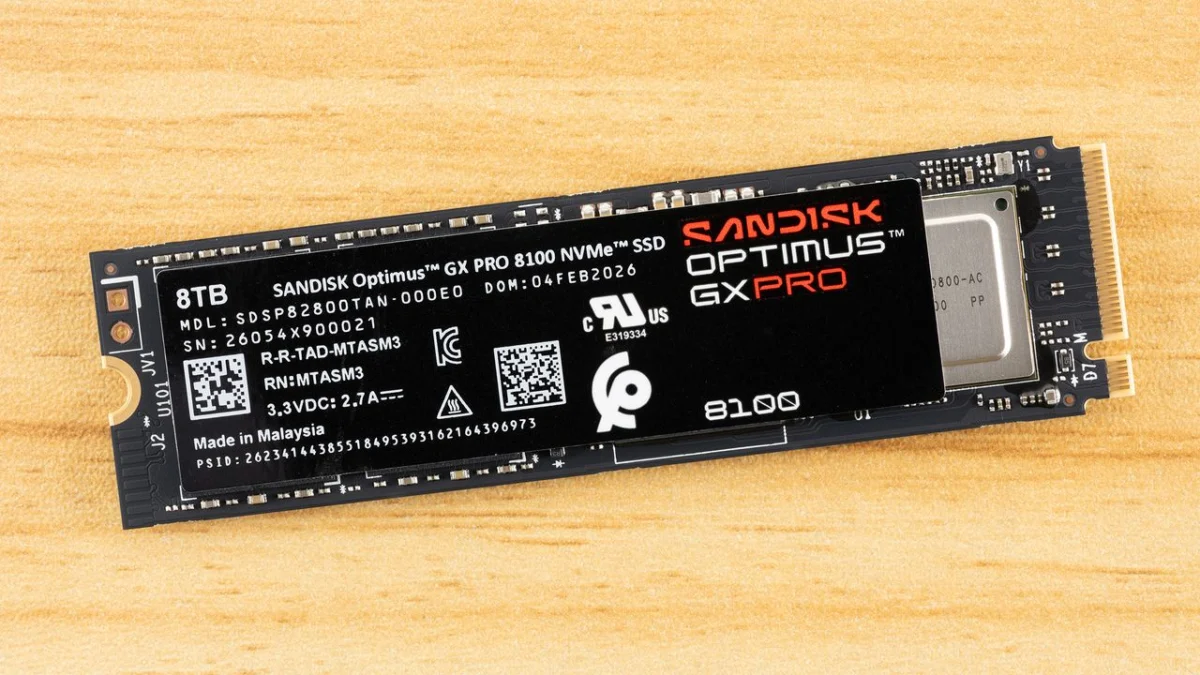
Today marks a significant moment in the high-performance storage landscape with the detailed examination of the SanDisk Optimus GX Pro 8100. While the name might sound new, this drive shares its foundational architecture with the formidable WD Black SN8100, which we previously lauded for its efficiency and low random read latency. The crucial and highly anticipated distinction here is the introduction of an 8TB capacity model, elevating the SanDisk Optimus GX Pro 8100 into a rarefied echelon of storage solutions. This massive capacity, combined with blistering PCIe 5.0 speeds, places it firmly on the wish list of enthusiasts, content creators, and professionals alike.
The 2TB WD Black SN8100 proved to be a pleasant surprise, showcasing not only high power efficiency but also an absurdly low random read latency that remains a significant draw. The central question now is whether this combination of attributes can be faithfully replicated and maintained at the sprawling 8TB capacity under the SanDisk branding. And, perhaps more importantly for many, will such cutting-edge storage be remotely accessible from a financial standpoint?
Chronology: The Quest for 8TB PCIe 5.0
The demand for high-capacity, high-speed storage has steadily intensified, driven by ever-growing game libraries, professional media workflows, and data-intensive applications. For a considerable period, the market for 8TB NVMe SSDs, particularly those leveraging the latest PCIe 5.0 interface, has been remarkably sparse.
The previous undisputed champion for high-capacity value, the PCIe 4.0 WD Black SN850X, still holds a compelling position, especially if one considers its relative cost-effectiveness within the premium segment. However, the true frontier of storage performance lies with PCIe 5.0, and here, options have been exceedingly limited. Our previous review of the 8TB Samsung 9100 Pro highlighted its status as one of the few contenders in this niche, a drive whose fleeting availability at reasonable prices likely left many with a sense of missed opportunity.
Promises of other 8TB PCIe 5.0 drives, such as the Kingston Fury Renegade G5 (which, notably, shares the same underlying hardware as the Black SN8100 and the Optimus GX Pro 8100), and various Phison E28-based drives, have yet to fully materialize in the retail market at this capacity. This landscape underscores the significance of the SanDisk Optimus GX Pro 8100’s entry, even if its availability effectively means purchasing the WD Black SN8100 under a different label, potentially offering consumers more options for sourcing this high-performance hardware.
Supporting Data: A Deep Dive into the SanDisk Optimus GX Pro 8100
The SanDisk Optimus GX Pro 8100 is presented across a range of capacities—1TB, 2TB, 4TB, and the flagship 8TB. While the smaller capacities were previously available under the WD Black SN8100 banner, the 8TB model now officially joins the lineup.
SanDisk Optimus GX Pro 8100 Specifications
Swipe to scroll horizontally
|
Product |
1TB |
2TB |
4TB |
8TB |
|---|---|---|---|---|
|
Pricing |
$349.99 / $369.99 |
$694.63 / $649.99 |
$1339.99 / $1449.99 |
$2799.99 / $2849.99 |
|
Form Factor |
M.2 2280 (Single-sided) |
M.2 2280 (Single-sided) |
M.2 2280 (Single-sided) 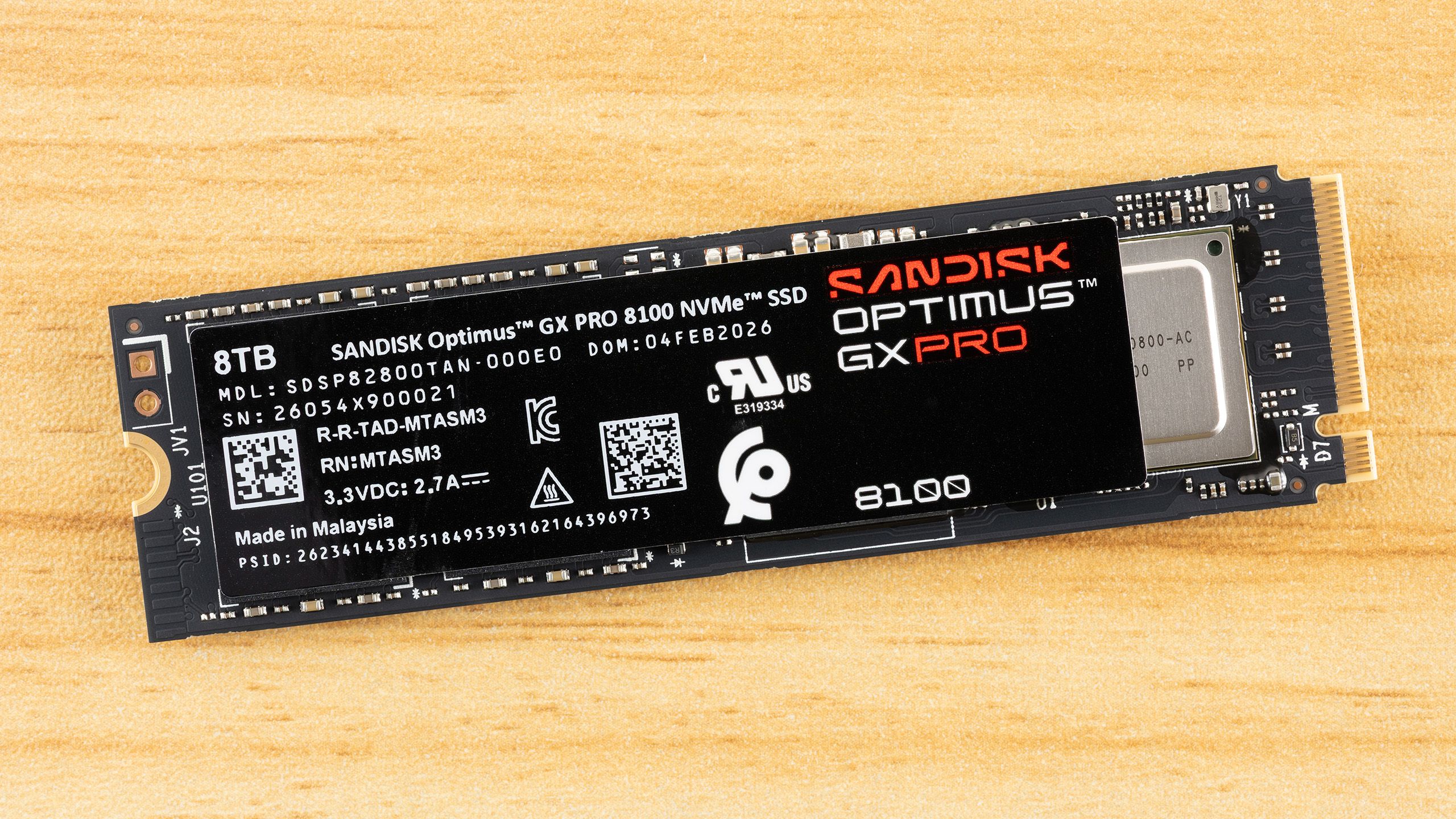 |
M.2 2280 (Double-sided) |
|
Interface / Protocol |
PCIe 5.0 x4 / NVMe 2.0 |
PCIe 5.0 x4 / NVMe 2.0 |
PCIe 5.0 x4 / NVMe 2.0 |
PCIe 5.0 x4 / NVMe 2.0 |
|
Controller |
Silicon Motion SM2508 |
Silicon Motion SM2508 |
Silicon Motion SM2508 |
Silicon Motion SM2508 |
|
DRAM |
DDR4 |
DDR4 |
DDR4 |
DDR4 |
|
Flash Memory |
Kioxia 218-Layer BiCS8 |
Kioxia 218-Layer BiCS8 |
Kioxia 218-Layer BiCS8 |
Kioxia 218-Layer BiCS8 |
|
Sequential Read |
14,900 MB/s 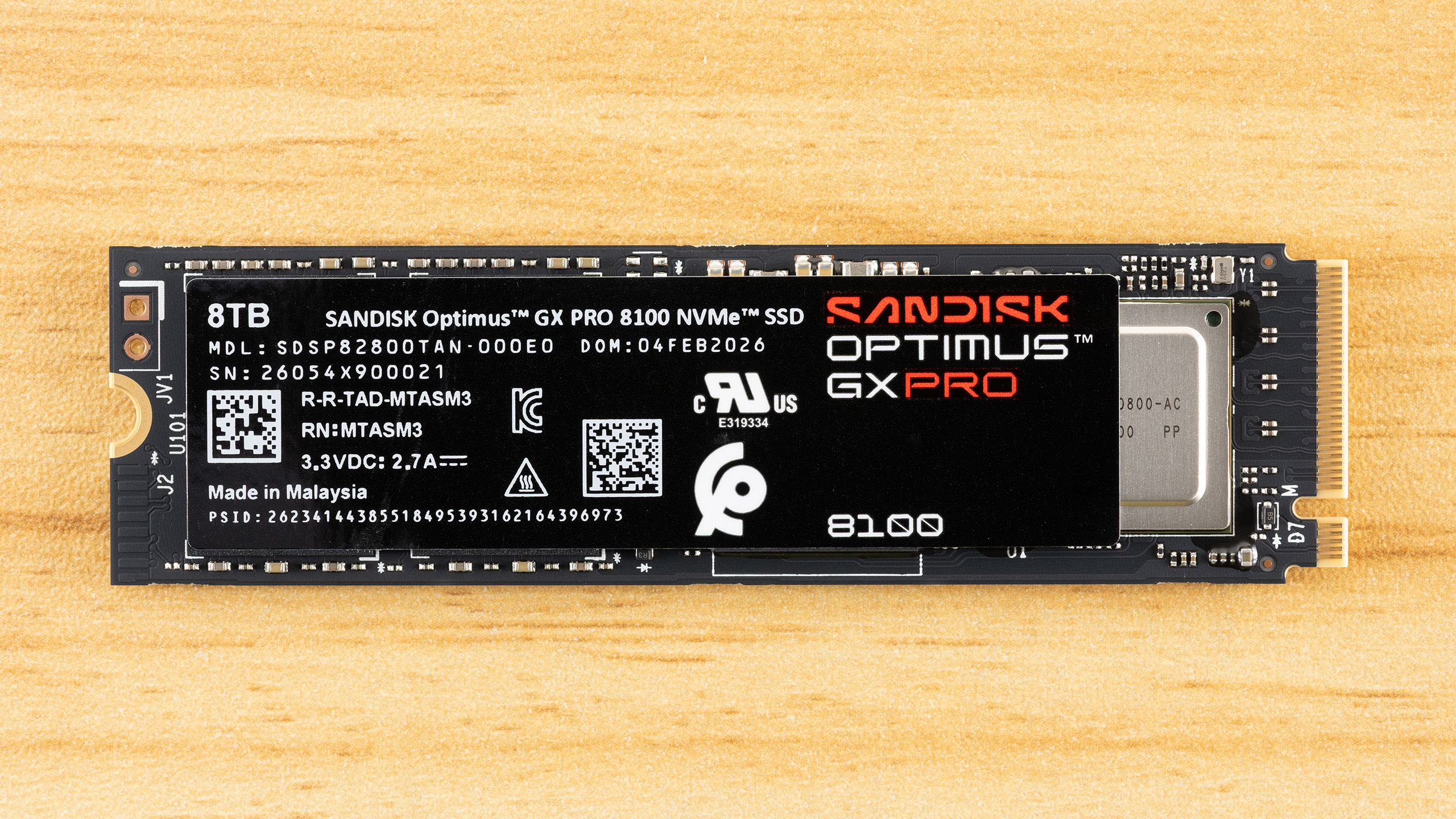 |
14,900 MB/s |
14,900 MB/s |
14,900 MB/s |
|
Sequential Write |
11,000 MB/s |
14,000 MB/s |
14,000 MB/s |
13,200 MB/s |
|
Random Read |
1,600K IOPS |
2,300K IOPS |
2,300K IOPS |
2,200K IOPS |
|
Random Write |
2,400K IOPS |
2,400K IOPS |
2,400K IOPS |
2,400K IOPS |
|
Security |
TCG Opal 2.02 |
TCG Opal 2.02 |
TCG Opal 2.02 |
TCG Opal 2.02 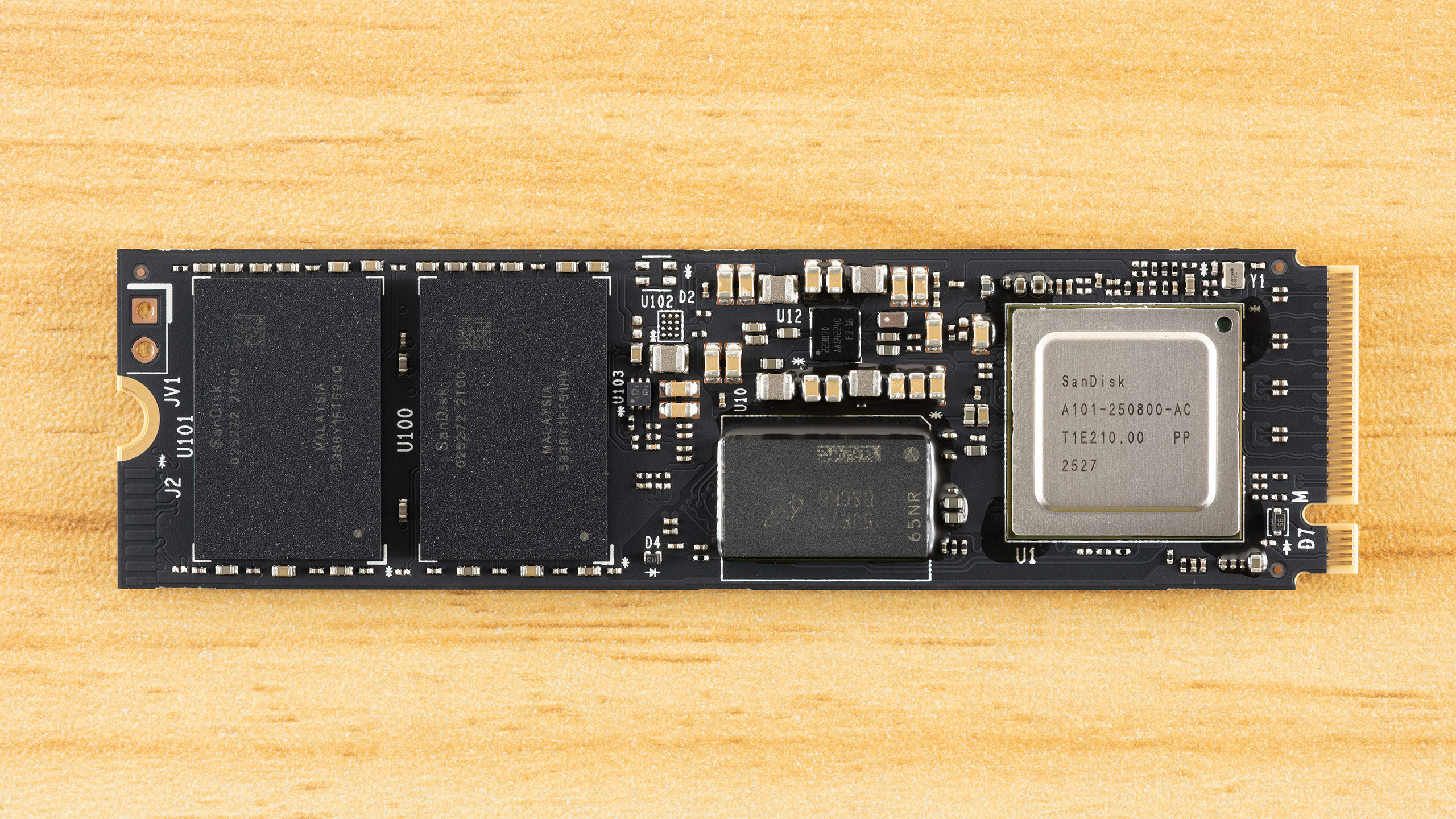 |
|
Power (R/W) |
6.2W / 6.1W |
6.4W / 7.0W |
6.5W / 7.0W |
7.1W / 7.3W |
|
Endurance (TBW) |
600TB |
1,200TB |
2,400TB |
4,800TB |
|
Part Number |
SDSP82100TAN |
SDSP82200TAN |
SDSP82400TAN |
SDSP82800TAN |
|
Warranty |
5-Year |
5-Year |
5-Year |
5-Year |
Architectural Excellence
The drive’s maximum performance figures are genuinely striking: sequential read speeds reach up to 14,900 MB/s, with sequential writes hitting up to 14,000 MB/s (13,200 MB/s for the 8TB model). Random read and write IOPS stand at an impressive 2,300K and 2,400K respectively (2,200K random read IOPS for the 8TB variant). These numbers represent the current pinnacle of client SSD performance, placing the Optimus GX Pro 8100 among the elite.
What makes this performance even more remarkable is its power efficiency. The drive achieves these speeds with average power consumption typically under 7W for reads and writes. This is a significant leap forward from the early generations of high-end PCIe 5.0 SSDs, which often demanded 11.5W or more, frequently necessitating active cooling solutions. This improved efficiency is a testament to advancements in controller technology and NAND design.
Controller, DRAM, and NAND

