

Main Facts
The upcoming sci-fi horror survival shooter Rustmourne, developed by the Rustmourne Team and slated for an early 2027 release, has captured the attention of virtual reality enthusiasts following its terrifying showing during Steam Next Fest. Built exclusively for PC VR, the title addresses a persistent pitfall in the virtual reality survival genre: the temptation to make players feel overly empowered by pitting them against waves of easily dispatched fodder. Instead, Rustmourne successfully channels Visceral Games’ legendary Dead Space formula, proving that a single, meticulously designed enemy is more than enough to induce sheer panic.
The hands-on preview of the demo—tested on a high-end rig featuring a Ryzen 7 9850X3D processor, 32 GB of DDR5 RAM, and an RTX 5070 Ti GPU, streamed to a Meta Quest 3 via Virtual Desktop on ultra settings—revealed a gritty, atmospheric industrial nightmare. While past narrative-driven VR sci-fi horror efforts like Memoreum and By Grit Alone showed immense ambition, they ultimately stumbled in execution. Rustmourne, however, demonstrates a mature understanding of pacing, environmental tension, and immersive mechanics, positioning itself at the very top of anticipated VR release slates for 2027.
Quick Facts: Rustmourne Demo
- Genre: Sci-Fi Horror Survival Shooter
- Platforms: PC VR (Steam)
- Release Window: Early 2027
- Developer: Rustmourne Team
- Price: Demo available for free; full game pricing to be announced
- Comfort Options: Features smooth and snap turning, with standard smooth locomotion. Excludes teleportation, jumping, or climbing to keep motion sickness triggers minimal for experienced users.
Chronology: Surviving the Nightmare
The roughly one-hour demo acts as an extended, white-knuckle tutorial, introducing players to a desolate future one agonizing step at a time. The chronological progression of the demo expertly ramps up tension, transitioning from helpless terror to desperate, tactical defense.
Awakening in the Depths
The experience begins with a visceral jolt. Players regain consciousness strapped inside a chamber within a decaying, futuristic industrial warehouse. The immediate threat is physical and urgent: a jagged piece of metal piping is impaled directly through the player’s body. Survival requires physically reaching down, grabbing the pipe, and tearing it out—a tactile introduction to the game’s uncompromising physical immersion.
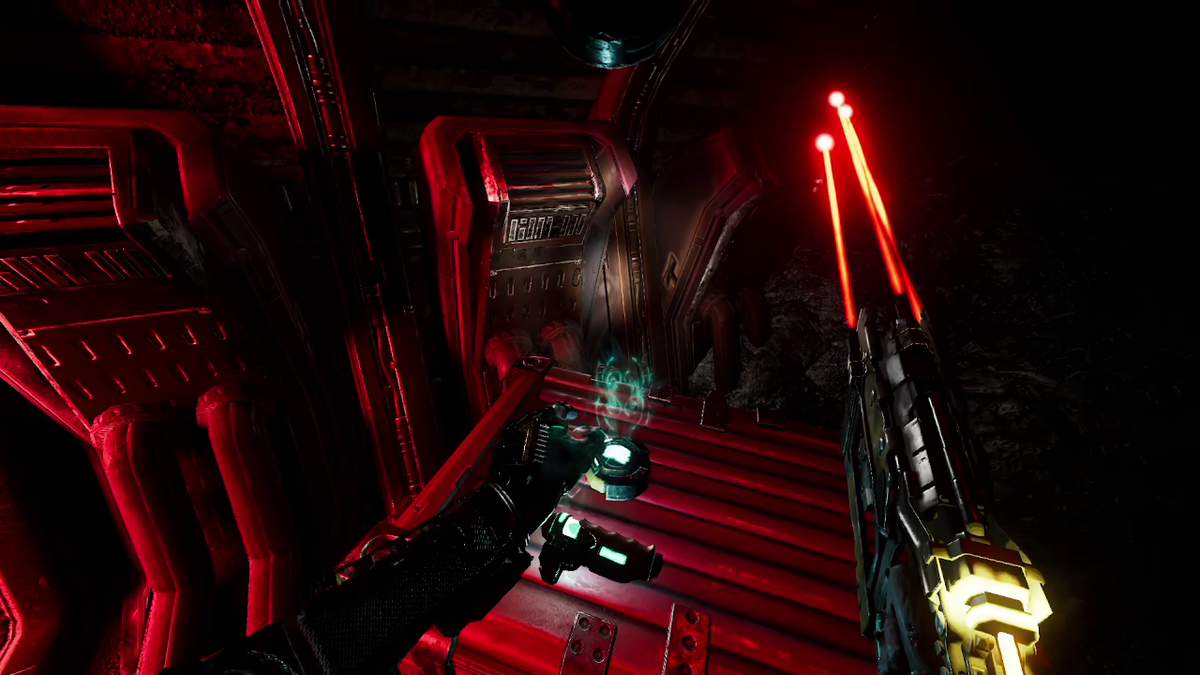
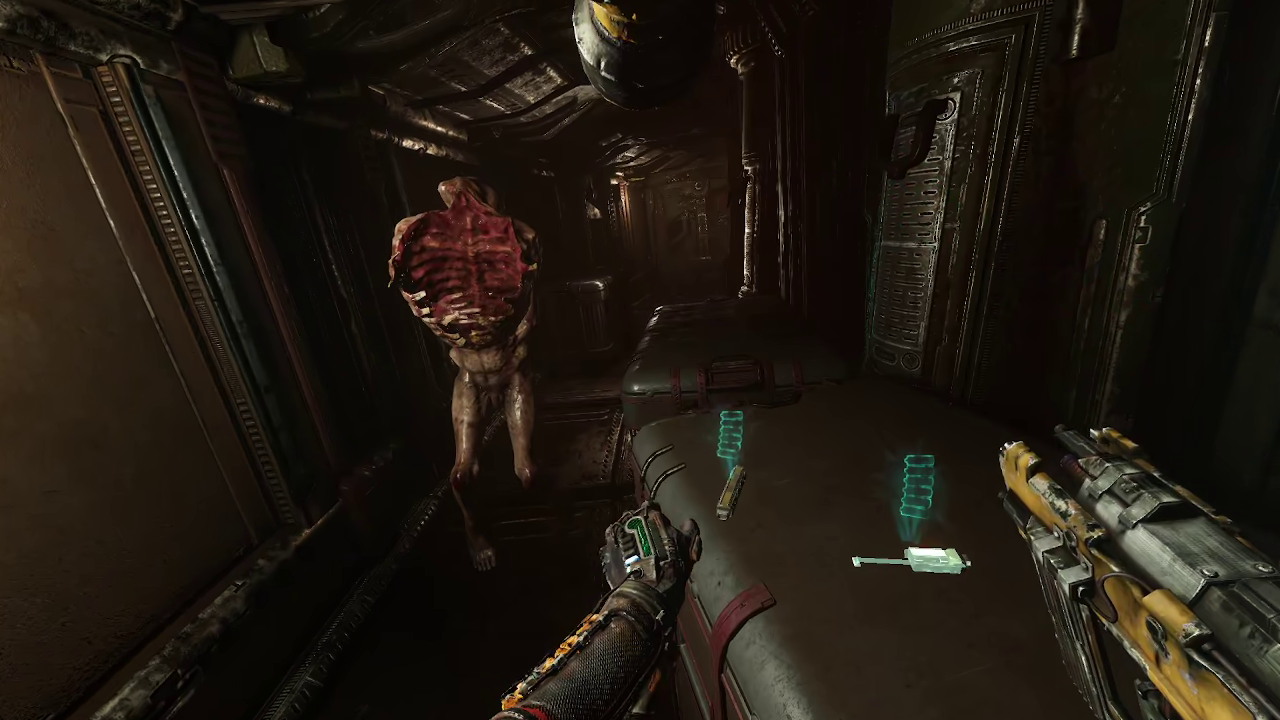
Shortly after freeing themselves, players acquire gravity gloves, allowing them to interact with the environment from afar, pulling distant objects or clearing debris from blocked pathways. The atmosphere is thick with grime and decay, illuminated by flickering industrial lights and punctuated by ambient machinery groans.
The First Encounter: The Blind Crawler
Venturing deeper into the facility, the demo delivers its defining horror beat. A disembodied voice crackles over the facility’s audio logs, offering vague hints about the overarching situation while serving as an unsettling guide. Suddenly, the ambiance shifts with a sickening thud: an automaton drops a mutilated corpse directly in front of the player.
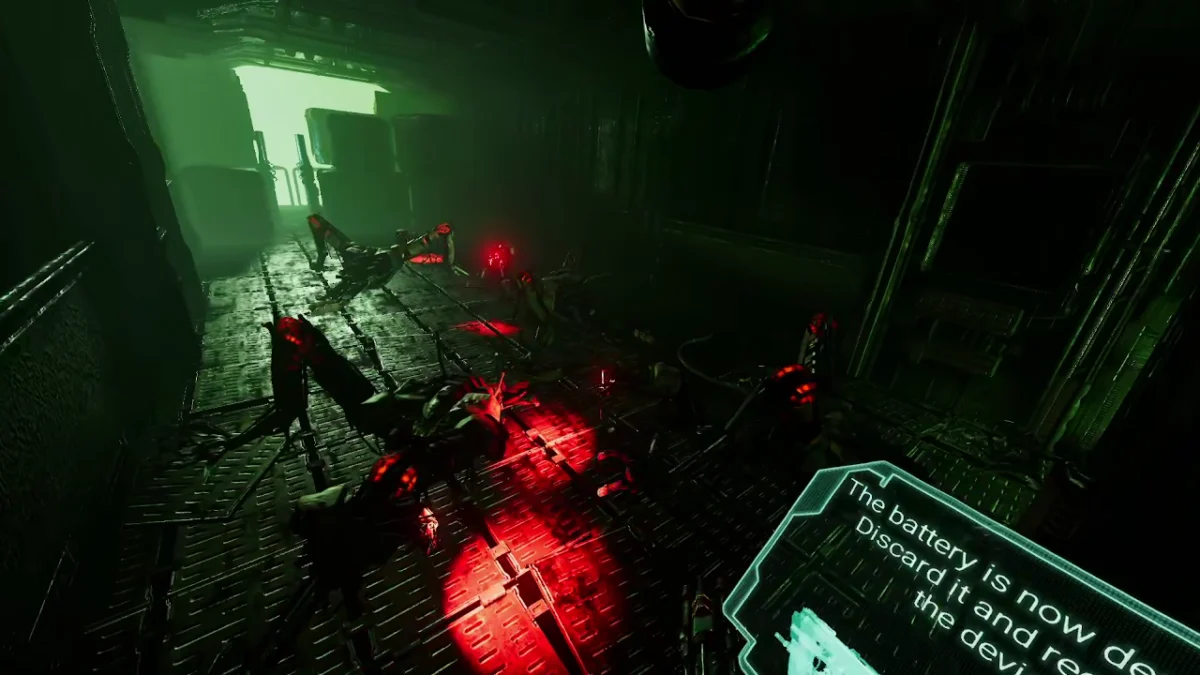
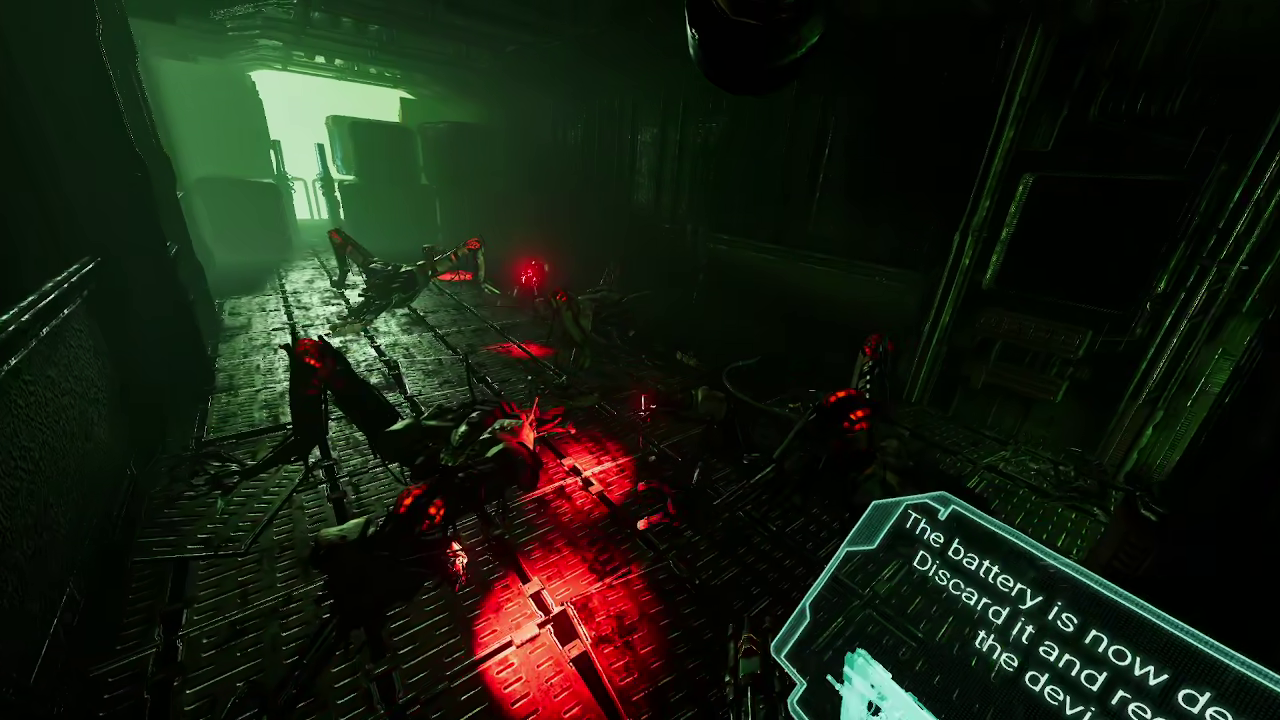
Out steps the first enemy type: a legless, horrific robotic crawler with elongated, mechanical limbs. Terrifyingly, this creature is entirely blind, hunting exclusively by sound. Because the player has no weapons at this early stage, direct confrontation is suicide. Survival forces the application of a classic stealth trope: picking up a loose object with the gravity gloves and hurling it into the distance to generate a diversion, drawing the blind hunter away from the escape route.
Acquiring the Tools of Survival
As the demo progresses deeper into the warehouse’s guts, the player is gifted a tool that will look intimately familiar to fans of survival horror: a weapon that acts as a dead ringer for Dead Space’s iconic plasma cutter. Alongside the firearm, players unlock the ability to violently flick objects at high speeds, using them as kinetic projectiles to shatter barriers or stagger incoming threats.
However, acquiring a weapon does not equate to feeling powerful. The game immediately punishes complacency by throwing multiple crawlers at the player simultaneously. Because these mechanical monstrosities move significantly faster than the player, backing away blindly results in a swift, bloody demise. Standing one’s ground requires absolute precision, disciplined ammo management, and nerve-wracking spatial awareness.
Supporting Data and Technical Performance
Rustmourne is built on the back of heavy-duty visual and auditory immersion. Developer optimization and design choices heavily influence how the horror translates into virtual reality.
System Specifications and Hardware Performance
The demo was evaluated using a modern enthusiast-tier PC configuration:
- CPU: AMD Ryzen 7 9850X3D
- Memory: 32 GB DDR5 RAM
- Graphics Processing Unit (GPU): NVIDIA GeForce RTX 5070 Ti
- Headset & Setup: Meta Quest 3 connected via Virtual Desktop using the Ultra graphics preset, with in-game graphical fidelity pushed to maximum parameters.
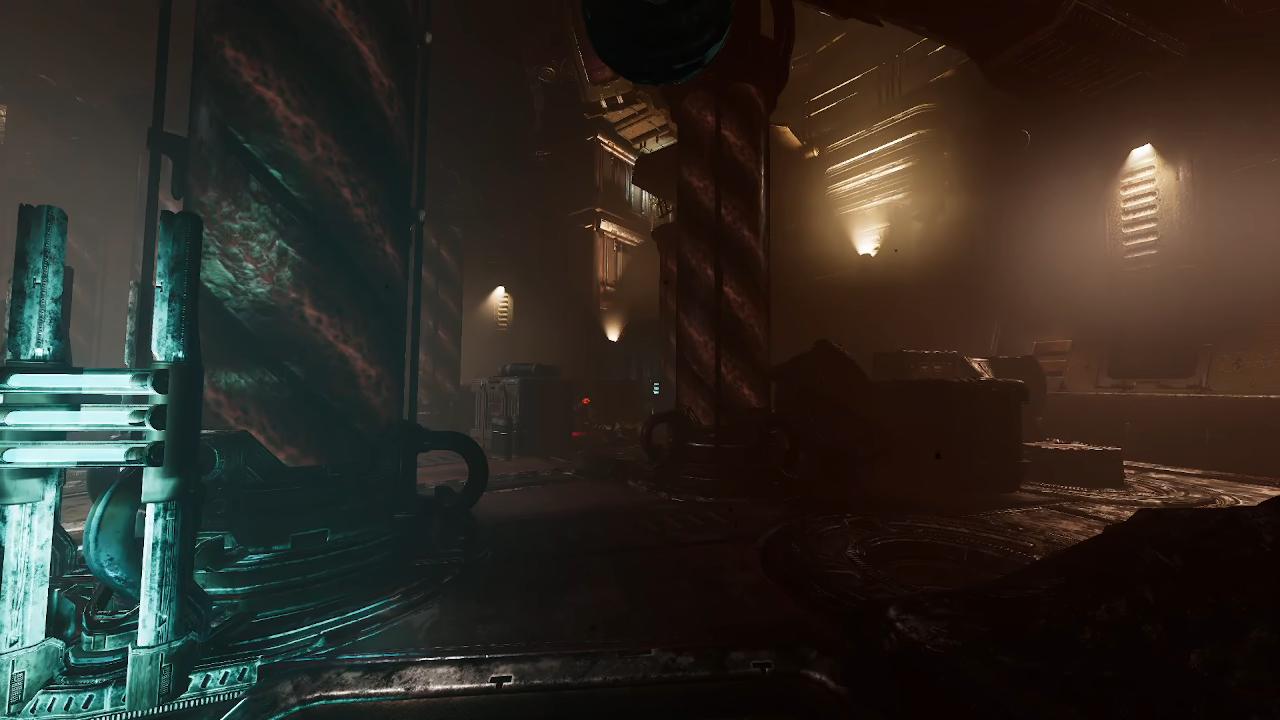
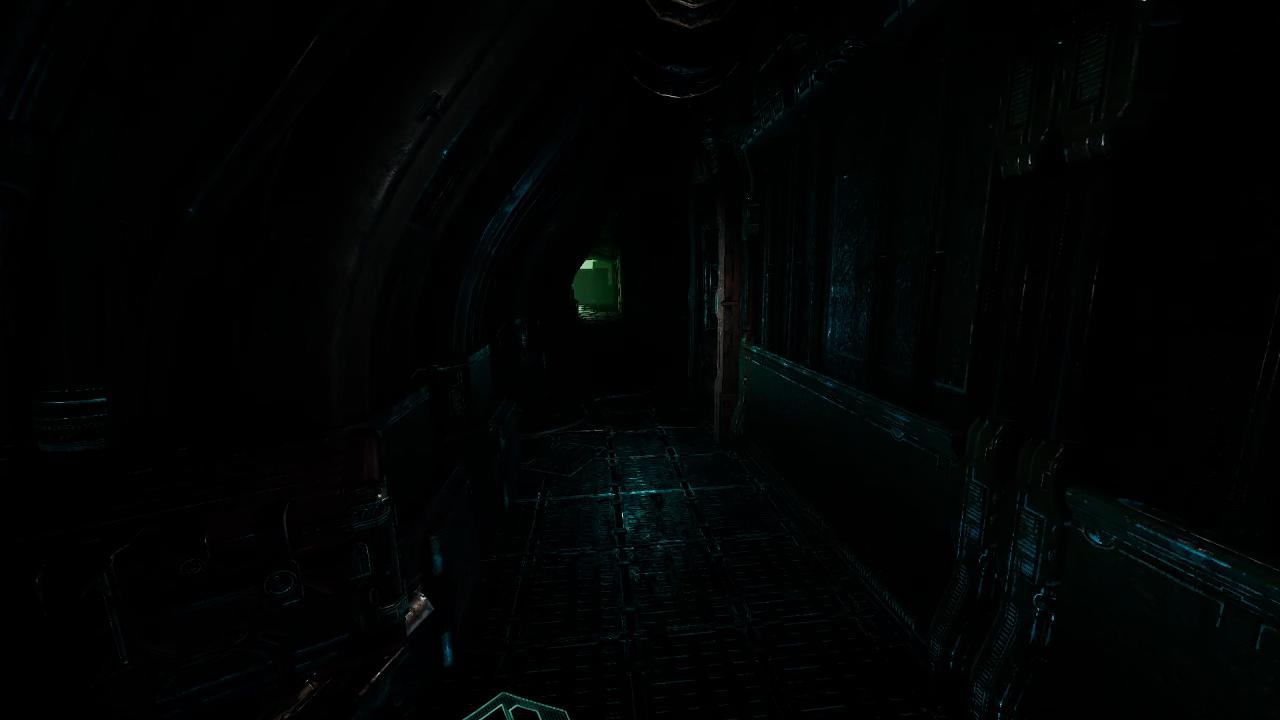
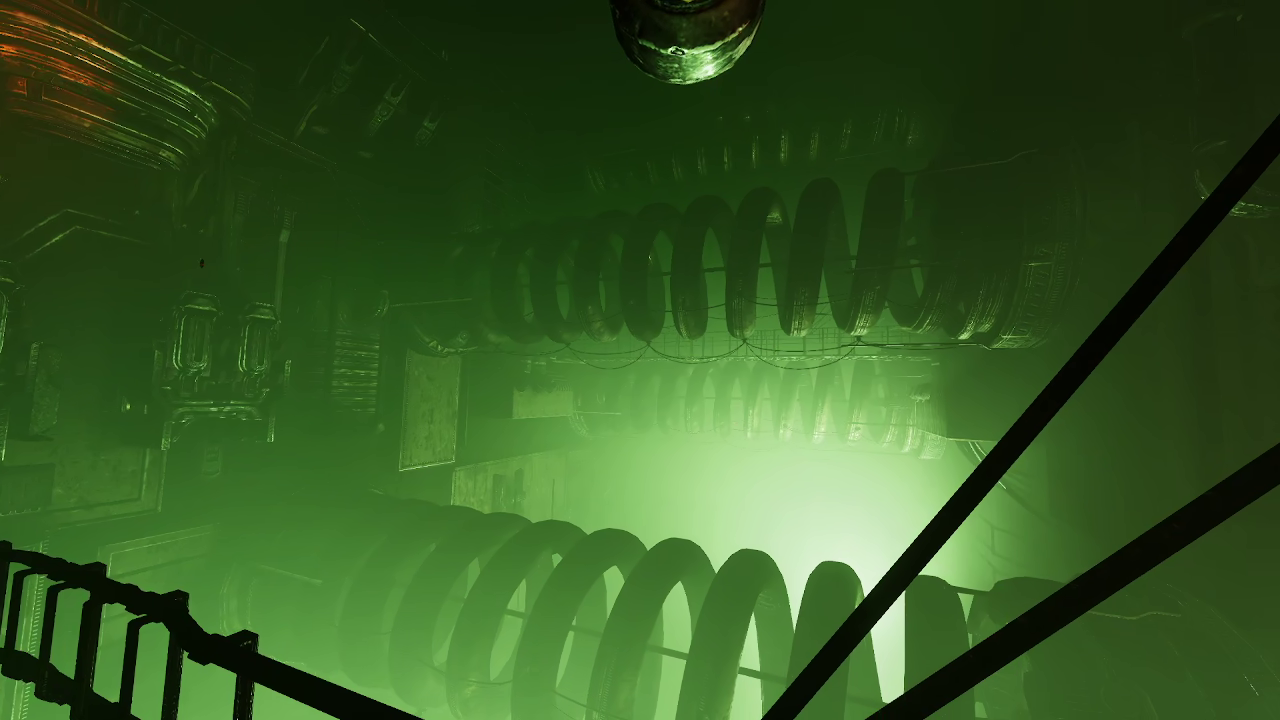
Even under high-end conditions, the environments render with a striking, filthy realism. The tactile nature of the world—from the rust flaking off metal bulkheads to the stark, directional shadows cast by dying overhead fixtures—contributes heavily to the immersion. Players seeking to dive into the demo or follow the game’s development can consult the minimum and recommended system requirements listed directly on the official Steam store page.
Audio Design as a Gameplay Mechanic
In a horror game, sound is often more terrifying than sight, and the Rustmourne Team has treated acoustic engineering as a core pillar of the experience. The soundscapes are layered with echoing metallic screeches, distant thuds, dripping water, and the unnatural skittering of mechanical appendages. Throughout the demo, players will find themselves freezing in their tracks every few steps, gripped by the instinctual question: "What was that noise, and is it hunting me?"
Comfort and Accessibility
Virtual reality comfort remains a critical hurdle for horror titles, where sudden movements can easily induce motion sickness. Rustmourne adopts a balanced approach:
- Locomotion: Standard smooth locomotion is paired with player choice between smooth or snap turning.
- Omissions: The demo entirely avoids teleportation movement systems. Crucially for comfort, it also strips out active vertical mechanics such as jumping or climbing, lowering the barrier for entry for newer VR users while keeping disorientation manageable during high-stress chase sequences.
Official Responses and Developer Intent
While formal press releases from the Rustmourne Team have been sparse, the design ethos of the demo speaks volumes about the developers’ ambitions. By explicitly opting away from the power-fantasy action loop common in modern VR shooters, the studio has signaled a commitment to authentic survival horror.
The inclusion of an enigmatic, disembodied voice acting as a reluctant guide indicates a narrative style reminiscent of environmental storytelling classics—where exposition is drip-fed, leaving players to piece together the dark history of the facility while constantly looking over their shoulders. The developer’s focus on tactile inventory management, physical interaction, and punishing enemy design suggests that Rustmourne is designed as a love letter to classic survival horror veterans who feel contemporary VR has leaned too heavily into arcade-style action.
Implications for the VR Gaming Landscape
The enthusiastic reception of the Rustmourne Steam Next Fest demo carries significant implications for the future of PC VR gaming, particularly regarding genre maturation and player expectations.
Raising the Bar for PC VR Horror
For years, PC VR horror has struggled to break out of a specific niche. Titles often fell into one of two camps: short, atmospheric tech-demos that lacked mechanical depth, or wave-shooters masquerading as horror games. Memoreum and By Grit Alone proved that developers are eager to deliver narrative-driven, action-horror adventures, but both titles ultimately faced criticism for failing to nail the tension-and-release cycle that makes flat-screen horror classics so enduring.
Rustmourne demonstrates that the blueprint forged by Visceral Games decades ago can be successfully translated into first-person virtual reality. By recognizing that fear stems from vulnerability rather than sheer enemy volume, the Rustmourne Team has set a new benchmark for what players should expect from standalone or PC-powered VR survival horror.
Anticipation for 2027 and Beyond
As the industry looks ahead toward the game’s official launch window in early 2027, Rustmourne has fundamentally shifted from an under-the-radar project into a tentpole release for the PC VR community. If the full game manages to sustain the suffocating atmosphere, meticulous enemy pacing, and visceral combat mechanics showcased in its hour-long demo, it has the potential to become a defining title for the platform—proving once and for all that in virtual reality, you don’t need a hundred monsters to terrify a player; you just need one, well-crafted nightmare creeping up behind you in the dark.

