

Main Facts
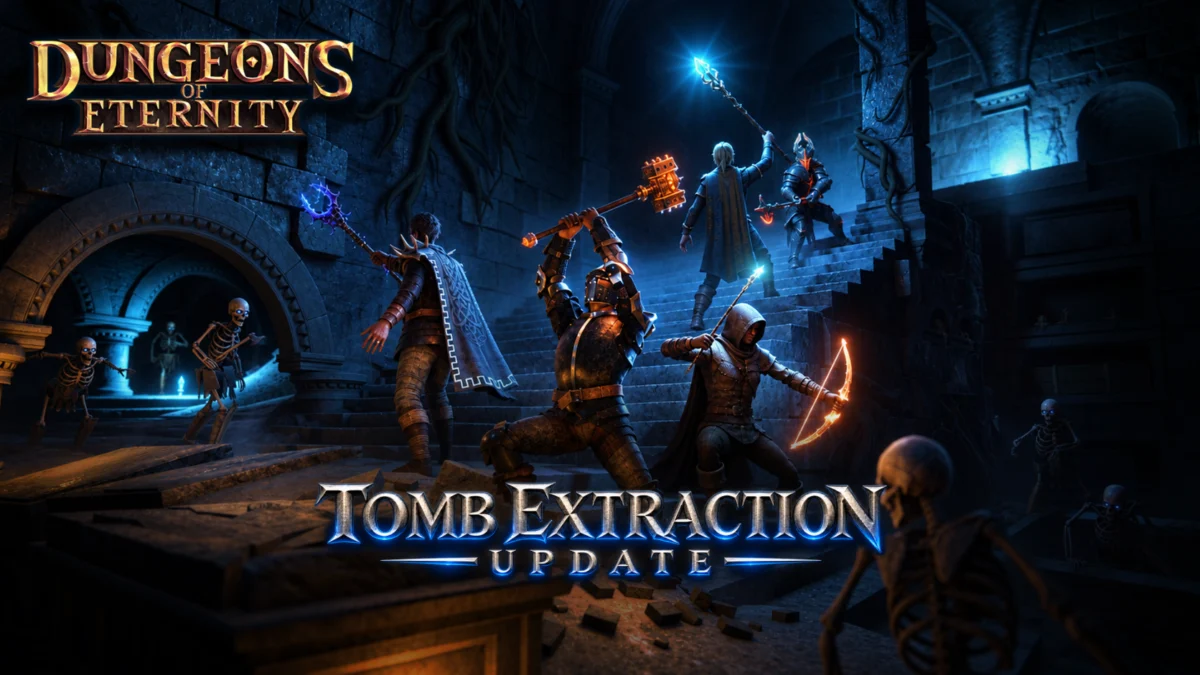
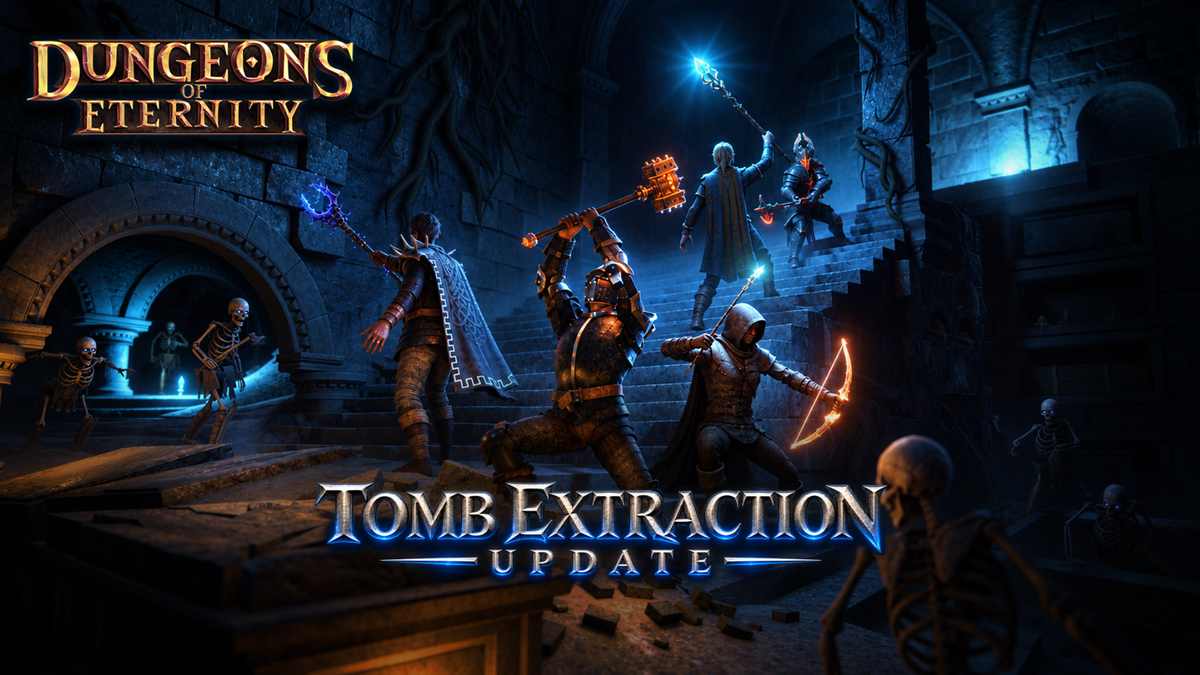
Developer Othergate has released a massive new content update for its critically acclaimed virtual reality cooperative dungeon crawler, Dungeons of Eternity. Available now across Meta Quest and Steam platforms, the update introduces a brand-new "Tomb Extraction" game mode that brings the high-stakes, risk-and-reward mechanics of modern extraction shooters into a dark fantasy setting. Alongside this fresh gameplay loop, players can dive into subterranean catacombs to face a terrifying new adversary type, wield five brand-new weapons, experiment with expanded loot systems, and enjoy a complete technical overhaul of the game’s lighting and rendering architecture designed to boost overall frame rates and visual fidelity.
The centerpiece of the update is undoubtedly the Tomb Extraction mode, which fundamentally alters how players approach run planning. Rather than diving headfirst into standard procedurally generated dungeons, adventurers must now harvest crypt runes during standard Dungeon Raids—specifically located within the red-designated zones on the run selection map. These collected runes are then fed into a new cryptographic dialing device housed within the safety of the player outpost. This device acts as the blueprint for the upcoming expedition, dictating both the physical layout of the tomb and the rarity of the treasures buried within its walls.
Compounding the tension of these high-risk runs is the introduction of the Crypt Guard, a sophisticated new enemy variant equipped with acoustic detection capabilities. Unlike standard monsters that rely purely on line-of-sight, the Crypt Guard can actively listen to player movements, spoken voice chat, and the subtle resonance of magical incantations. Any careless noise will cause this sentinel to investigate the disturbance, potentially triggering a chain reaction that alerts the entire dungeon to the party’s location.
To combat these threats, Othergate has expanded the armory with five new weapons, a fresh equipment slot, and new loot categories. However, in a surprising pivot from grimdark survival horror, the update also introduces a fully networked, playable lute within the outpost. Boasting sixteen distinct chords, this interactive instrument allows bards-in-training to serenade their cooperative squads—or subject them to discordant noise—between brutal subterranean skirmishes.
Chronology of Development and Release
The journey of Dungeons of Eternity from its initial release to this current feature-rich state reflects Othergate’s ongoing commitment to evolving the virtual reality action-RPG genre. Since its debut on the Meta Quest platform, the title has earned a reputation as one of the definitive cooperative multiplayer experiences in VR, largely due to its fluid physics-based melee combat, diverse weaponry, and satisfying dungeon-crawling loops.
Following its initial success and subsequent expansion to PC VR via Steam, Othergate established a roadmap focused on community-driven content. The development team closely monitored player feedback, noting a strong appetite for deeper progression mechanics, more tactical combat engagements, and enhanced replayability. This feedback loop directly influenced the conceptualization of the extraction-style mechanics, transforming what could have been a standard dungeon expansion into an entirely new genre-blending experience.
In the weeks leading up to the update, Othergate teased atmospheric trailers and developer logs showcasing the new cryptographic dialing system and the eerie, tension-filled corridors of the tomb runs. The official release of the trailer gave fans their first detailed look at the Crypt Guard in action, demonstrating how acoustic awareness changes room-clearing strategies. Culminating in the rollout on Steam and Meta Quest, the deployment of this update marks one of the most substantial content milestones in the game’s operational history.
Supporting Data and Technical Enhancements
Beyond the headline-grabbing gameplay additions, Othergate has implemented a series of foundational improvements aimed at optimizing the player experience across all supported hardware configurations.
- Lighting and Rendering Overhaul: The studio completely restructured the game’s lighting and rendering pipelines. This overhaul is designed to maximize performance efficiency on standalone mobile VR hardware like the Meta Quest, while simultaneously delivering cleaner visuals and more stable frame rates for high-end PC VR setups on Steam.
- Tomb Extraction Loop:
- Resource Gathering: Players collect crypt runes exclusively during "red" Dungeon Raids from the run selection map.
- Outpost Preparation: Runes are inputted into a newly installed crypt dialing device.
- Customization: The combination of runes dictates procedural layout generation and loot scaling, directly tying preparation to reward potential.
- Expanded Arsenal:
- Five brand-new weapons introduced to diversify combat approaches.
- A new equipment slot alongside fresh loot classes to deepen character build customization.
- Acoustic AI Integration: The Crypt Guard introduces dynamic sound-tracking mechanics, measuring proximity, voice chat volume, and spellcasting resonance against environmental sound propagation models.
- Social Features: The playable outpost lute features sixteen distinct, fully networked chords, allowing synchronized multiplayer performance in social hubs.
Official Responses and Developer Insights
Othergate has framed this update as a love letter to the game’s dedicated community, aiming to bridge the gap between fast-paced hack-and-slash action and deliberate, tactical survival gameplay. In developer communications accompanying the release, the team emphasized that the Tomb Extraction mode was designed to test the communication and discipline of established co-op teams.
"We wanted to take the core DNA of Dungeons of Eternity—the visceral combat, the cooperative teamwork, the thrill of finding rare loot—and inject a new layer of tension," notes the design philosophy behind the update. By forcing players to gather resources in standard raids, risk them in custom-built tombs, and successfully extract while evading sound-sensitive predators like the Crypt Guard, Othergate has successfully shifted the psychological dynamic of the game. Players can no longer rely on mindless button-mashing; survival now demands spatial awareness, resource management, and stealth.
Furthermore, the inclusion of lighthearted elements like the playable lute demonstrates Othergate’s balancing of tone. Recognizing that cooperative VR games thrive on social interaction and emergent player moments, the studio integrated the musical instrument as a communal decompression zone within the hub world, offering a stark and humorous contrast to the grim, rune-lit catacombs awaiting them outside.
Implications for the VR Gaming Ecosystem
The integration of extraction-shooter loops into a fantasy VR action RPG has significant implications for the broader virtual reality gaming landscape. Extraction mechanics, popularized by flat-screen PC titles and VR pioneers like Ghosts of Tabor, have traditionally been anchored in modern military tactical shooters, looting-and-shooting, or survivalist settings. By successfully porting the high-risk/high-reward extraction model into a physics-driven melee combat environment, Othergate is pioneering a novel subgenre.
This update proves that the mechanics of extraction—where players weigh the temptation of better loot against the catastrophic loss of current gear—translate remarkably well to fantasy dungeon crawling. It addresses a common critique in procedural PvE games: that runs can eventually feel repetitive once players reach maximum character power. By introducing customizable tomb runs via the crypt dialing device, the developers have created an infinite endgame loop driven by player choice and calculated risk.
Additionally, the technical optimizations rolled out alongside the content showcase how independent VR developers continue to master standalone hardware limitations. By overhauling lighting and rendering pipelines without sacrificing the atmospheric dread required for dungeon exploration, Othergate has raised the technical benchmark for what standalone headsets can achieve in dense, physics-heavy multiplayer environments.
As Dungeons of Eternity continues to grow on both Steam and Meta Quest, this update firmly establishes the title as a benchmark for cooperative VR design. Whether players are tiptoeing in terrifying silence to avoid the predatory ears of the Crypt Guard, coordinating extraction routes with their squadmates, or strumming discordant medieval tunes on the outpost lute, Othergate has fundamentally enriched the digital underworld, ensuring that adventurers will be exploring its dark corridors for a long time to come.

