

By Jake Roach
Senior CPU Analyst
Main Facts
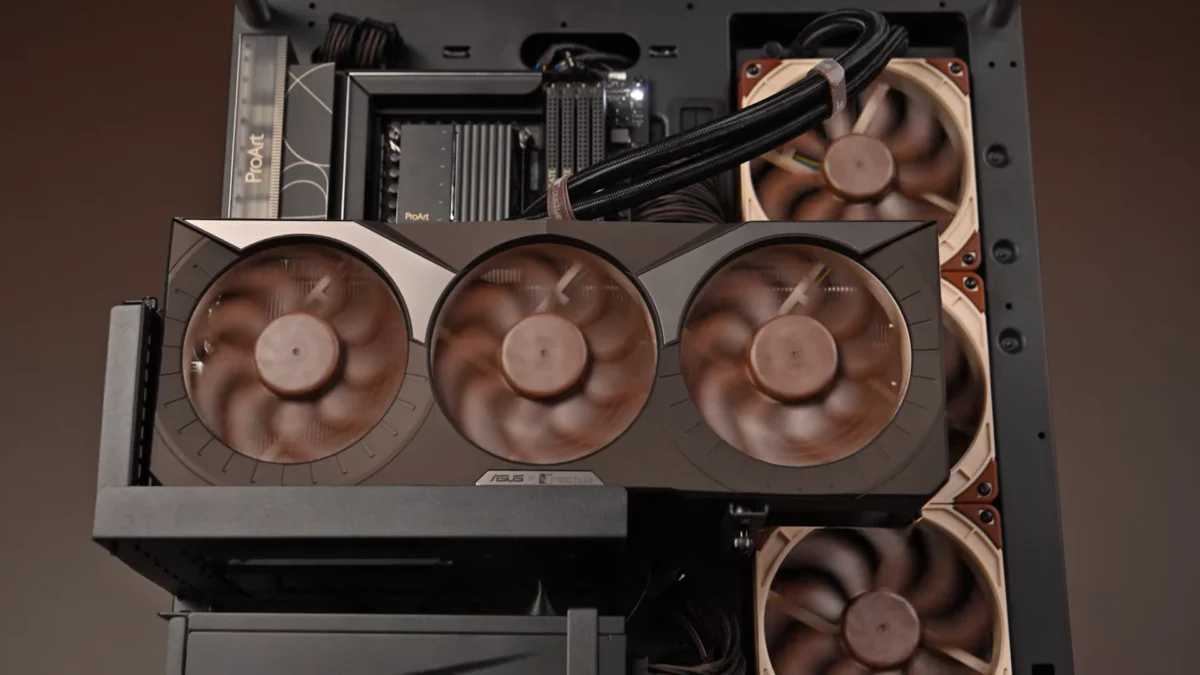
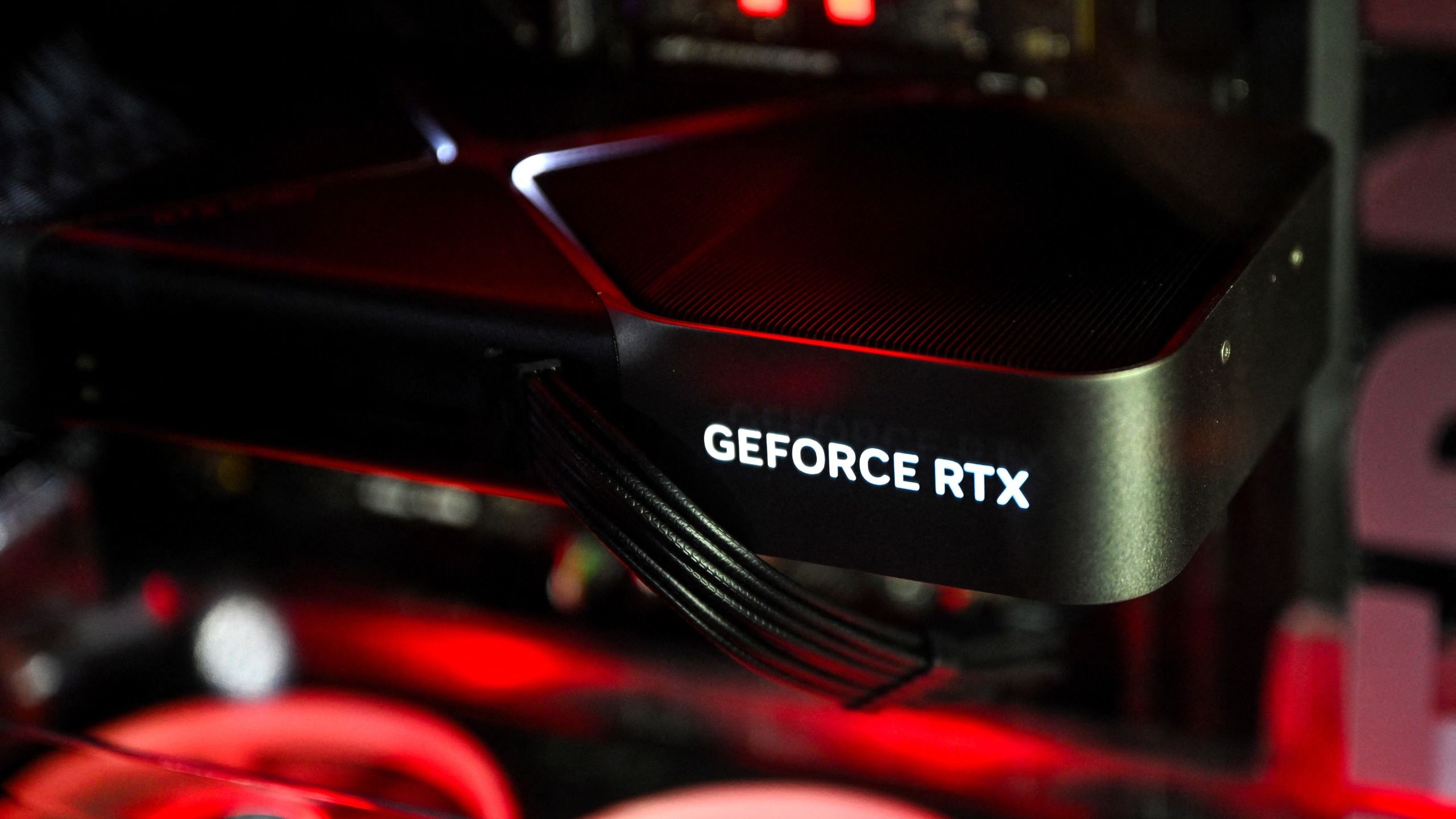
Nvidia’s flagship consumer graphics card, the GeForce RTX 5090, has vanished from mainstream online retail channels, triggering a severe supply crunch that has driven marketplace prices to unprecedented heights. What was already an expensive enthusiast-grade component has now turned into a luxury commodity, with third-party resellers on platforms like Newegg and Amazon listing the card anywhere from $6,500 to a staggering $9,500.
The primary drivers of this crisis are a lethal combination of white-hot demand from the artificial intelligence (AI) sector, limited initial production allocations, and opportunistic scalpers exploiting the inventory vacuum. While major online retailers are completely barren of stock at standard manufacturer-suggested retail prices (MSRP), a handful of brick-and-mortar exceptions—most notably Micro Center—continue to honor fair pricing models through strict in-store-only purchasing policies.
Industry analysts and hardware experts are strongly advising consumers to steer clear of inflated third-party listings. Beyond the blatant price gouging, the secondary market for the RTX 5090 has increasingly become a breeding ground for elaborate online scams, ranging from the notorious "fanny pack" bait-and-switch tactics to stripped-down, non-functional hardware sold near MSRP.
Chronology of a Price Surge
To understand how the RTX 5090 market reached its current state of dysfunction, it is necessary to examine the rapid escalation of its pricing trajectory over the past several months:
- June: The median online marketplace price for an RTX 5090 hovered around a steep, yet somewhat stable, $4,299. Even at this early stage, demand far outpaced supply, but basic availability kept prices relatively tethered to reality.
- Early September: According to tracking data, the lowest available online price crept upward to $5,199. While enthusiasts balked at the premium, many assumed prices would stabilize as production scaled.
- Mid-September (The Current Crisis): In less than a two-week window, mainstream online stock evaporated entirely. Third-party sellers flooded the void, pushing prices past the $6,500 floor and threatening to breach five-figure territory for top-tier custom variants like the MSI Ventus 3X OC.
This sudden evaporation of stock highlights a recurring structural vulnerability in the PC hardware supply chain, where high-performance consumer silicon is systematically vacuumed up by enterprise buyers and opportunistic re-sellers before ordinary gamers can secure units.
Supporting Data and Market Dynamics
A deeper look into the current retail listings reveals the precarious nature of buying an RTX 5090 online:
- Newegg Marketplace: The cheapest available unit is currently an MSI Ventus 3X listed by "Slava Computers"—a relatively new storefront holding a mediocre 2.8 out of 5 rating across 239 reviews—commanding $6,449. Other listings for the same card scale as high as $8,699.
- Amazon Marketplace: The Asus TUF Gaming OC is listed at $6,395 through "Joes Tech Shop," a vendor with an 81% positive lifetime rating. However, a recent wave of one-star reviews highlights unfulfilled orders and delayed shipments.
- The In-Store Safe Haven: Micro Center remains the singular outlier. During recent checks, the retailer maintained local stock of the RTX 5090 starting at $4,299. By enforcing a strict in-person purchasing requirement over the past several years, Micro Center has successfully insulated its inventory from automated botting scripts and online scalping syndicates.
Why is the RTX 5090 in Such High Demand?
The root cause of the RTX 5090 shortage is no secret within the tech community: artificial intelligence.
At the heart of the RTX 5090 lies the massive GB202 GPU paired with an extraordinary 32GB of high-speed GDDR7 memory. To put this in perspective, Nvidia’s workstation-focused RTX Pro 5000 48GB card utilizes the same underlying GPU architecture but features a third fewer enabled shader units and lower memory bandwidth—yet commands an enterprise price tag of $7,000 to $9,000.
Viewed through this lens, purchasing a $5,000 (or even $6,000) RTX 5090 to build a localized AI development server or machine-learning workstation suddenly becomes an economically attractive proposition for small businesses, researchers, and developers. Consequently, enterprise and prosumer demand is directly cannibalizing the gaming supply.
At the same time, the RTX 5090 reigns supreme as the undisputed fastest gaming graphics card on the market, dominating performance metrics across the board. This performance crown is further cemented by Nvidia’s introduction of DLSS 5 Neural Rendering. While our extensive testing confirms that lower-end Blackwell architecture cards can achieve playable 1080p performance with DLSS 5, the RTX 5090 is uniquely equipped to leverage the technology to its absolute maximum potential at extreme resolutions.
The Threat of Marketplace Scams
The scarcity and inflated value of the RTX 5090 have inevitably attracted bad actors looking to fleece desperate buyers. Hardware publications and consumer protection agencies have tracked multiple sophisticated scam methodologies targeting high-ticket tech purchases:
- The "Bait-and-Switch" Accessory Scam: Earlier this year, 42 Amazon customers fell victim to a listing offering a too-good-to-be-true $999 RTX 5090 from a seemingly reputable top-rated seller. Instead of receiving a multi-thousand-dollar GPU, victims opened packages containing cheap fanny packs.
- Stripped "Phantom" Hardware: More recently, secondhand marketplaces have seen fraudsters selling physical RTX 5090 cards near MSRP, only for buyers to discover upon inspection that the core silicon and VRAM chips have been physically removed or desoldered from the board.
These incidents underscore why major tech outlets explicitly caution against purchasing high-end components from unverified third-party marketplace accounts. Without the consumer protections offered by authorized direct-to-consumer retailers or physical storefronts, buyers risk losing thousands of dollars with little recourse.
Official Responses and Industry Outlook
As of press time, Nvidia has not issued a formal public statement addressing the acute online shortages or the exorbitant secondary market pricing of the RTX 5090. Tech journalists and consumer advocacy groups have reached out to Nvidia corporate representatives for comment regarding potential inventory stabilization measures, manufacturing adjustments, or channel enforcement policies. This story will be updated immediately should an official response be provided.
Implications for PC Gamers and the Industry
The ongoing RTX 5090 crisis has profound implications for the PC hardware ecosystem:
- The Death of Accessible High-End Gaming: For the average enthusiast, the pinnacle of PC gaming performance is increasingly becoming an unattainable luxury. When a single component costs as much as a high-end used car, the enthusiast market fractures, alienating core consumers who built the PC gaming community.
- The Blurring Lines Between Consumer and Enterprise Hardware: The willingness of AI developers to purchase consumer-grade hardware at inflated prices proves that the traditional boundary between gaming GPUs and workstation accelerators has permanently dissolved. Unless Nvidia and its board partners can drastically increase production capacity or implement strict prosumer gating, enthusiast cards will continue to be pulled into enterprise data pipelines.
- The Urgency of Retail Reform: The stark contrast between barren online storefronts and well-stocked physical locations like Micro Center demonstrates the urgent need for robust anti-scalping measures in e-commerce. Retailers must adopt more rigorous captcha verification, queue systems, and purchase limits to protect legitimate consumers from automated buying bots.
Until supply chains catch up with the insular demands of the AI boom, prospective buyers are urged to exercise extreme caution, avoid predatory third-party markups, and rely exclusively on authorized retail channels to secure their hardware safely.

