

By Entertainment Desk
Published: November 2024
Introduction & Main Facts
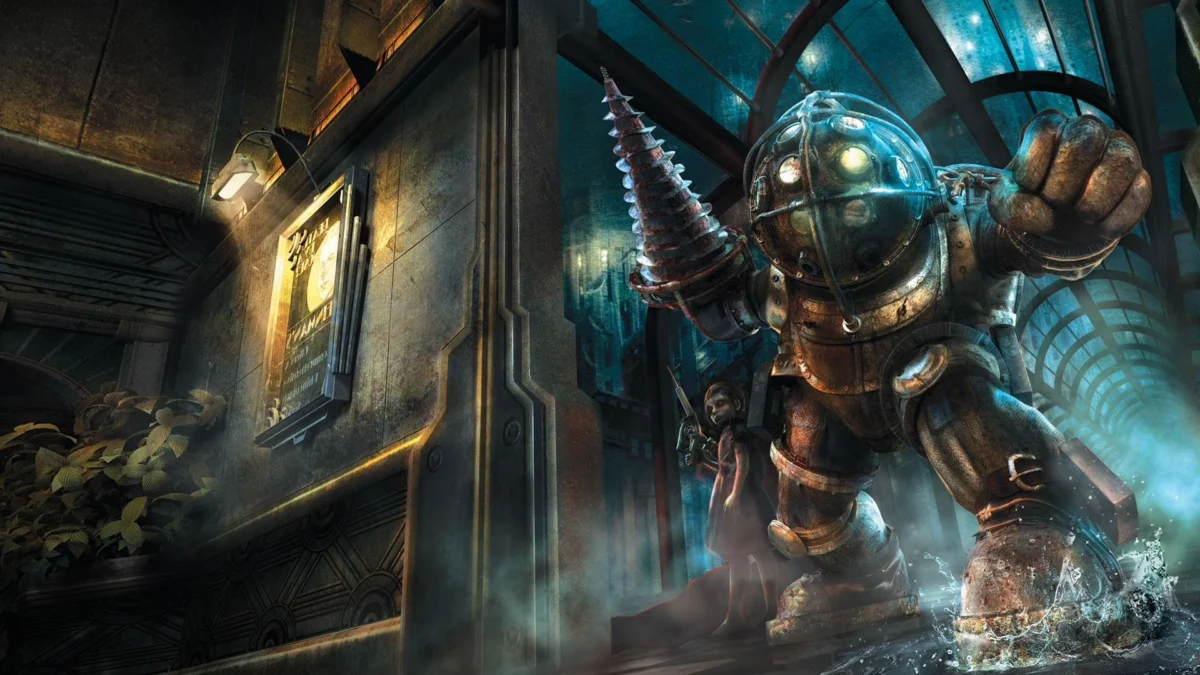
For nearly twenty years, the internet has whispered about a mythical beast: a cinematic adaptation of Ken Levine’s atmospheric, dystopian masterpiece, BioShock. Among the countless rumors, fan castings, and development hell stories that have circulated since the game’s release in 2007, one persistent whisper involved visionary auteur Guillermo del Toro. Fans long suspected that the master of dark fantasy and creature features—the mind behind Pan’s Labyrinth, Hellboy, and The Shape of Water—was a natural fit to bring the crumbling, Art Deco depths of Rapture to the silver screen.
Now, the rumors have finally been confirmed. In a recent interview with IGN, Guillermo del Toro broke his silence, admitting that he was indeed in discussions to helm a BioShock film adaptation. However, the dream collaboration collapsed before it ever left port. According to the filmmaker, a series of profoundly contentious and "disastrous" phone calls regarding the nature of video game storytelling versus cinematic narrative abruptly ended the project.
While del Toro’s version of Rapture remains confined to the realm of what-ifs, the long-delayed Netflix adaptation spearheaded by director Francis Lawrence and producer Roy Lee continues to inch forward. But as Hollywood attempts once again to crack the notoriously difficult puzzle of video game adaptations, del Toro’s revelation serves as a stark reminder of the fundamental creative friction that occurs when interactive art tries to cross over into passive media.
Chronology: The 20-Year Saga of BioShock on Screen
To fully understand the weight of del Toro’s revelation, one must look back at the tumultuous history of BioShock’s journey through Hollywood’s development labyrinth.
2007–2008: The Genesis of the Rumors
Following the August 2007 release of 2K Games’ BioShock, critical acclaim was universal, and commercial success was swift. Players were captivated by the underwater dystopia of Rapture, its genetically modified inhabitants (Splicers), the towering Big Daddies, and the haunting moral choices involving Little Sisters.
Almost immediately, major studios took notice. In early 2008, rumors began swirling across online message boards and early film blogs that Universal Pictures was eyeing a big-budget adaptation. Guillermo del Toro, already known for his distinct visual style and love for dark, atmospheric storytelling, was frequently linked to the project by hopeful fans. At the time, neither del Toro nor the studios confirmed the whispers, though the filmmaker frequently professed his admiration for the game in interviews.
2009–2013: Gore Verbinski’s Close Call
Before del Toro’s specific discussions—or perhaps overlapping with the chaotic creative phase of early development—Universal Pictures formally attempted to mount a BioShock film with Pirates of the Caribbean director Gore Verbinski at the helm, working from a script by John Logan (Gladiator, Skyfall).
This version came remarkably close to production. Sets were being designed, and a budget was greenlit. However, in a tragic twist of cinematic history, Universal pulled the plug shortly before filming was set to begin. The studio panicked over the projected $200 million budget and Verbinski’s insistence that the film retain an R-rating, ensuring blood, body horror, and bleak moral ambiguity. Universal wanted a PG-13 rating to broaden the box office appeal, and when Verbinski refused to compromise, he stepped down as director, leaving Juan Carlos Fresnadillo (28 Weeks Later) to briefly inherit a sinking ship before it was ultimately mothballed.
2022: Netflix Resurrects Rapture
For nearly a decade, the BioShock movie IP sat dormant in a corporate vault. Then, in February 2022, Netflix announced it was partnering with 2K and Take-Two Interactive to develop a live-action BioShock feature film.
Initial reports confirmed that Francis Lawrence (The Hunger Games: Catching Fire, I Am Legend) had signed on to direct, with Michael Green (Blade Runner 2049) originally attached to write the screenplay. The announcement sparked renewed excitement, though it also reignited skepticism from fans who had watched previous iterations drown in pre-production.
2024–2025: Script Revisions and Del Toro’s Confession
As production moved slowly through development, updates trickled out. In 2025, producer Roy Lee confirmed that the Netflix film would definitively focus on the narrative of the first game. Meanwhile, Justin Rhodes (Terminator: Dark Fate) took over writing duties, collaborating with Lawrence.
Amidst these ongoing updates, Guillermo del Toro finally shattered two decades of silence in late 2024, confirming to IGN that he had indeed attempted to adapt the property, only for the project to implode during exploratory discussions due to irreconcilable creative differences.
Supporting Data & Creative Philosophy: Why the Collaboration Failed
The core of del Toro’s grievance with adapting BioShock boils down to a fundamental philosophical divide between how video games engage an audience and how films tell stories.
The "Mandala" of Interactive Sandboxes
During his interview, del Toro contrasted the passive viewing experience of cinema with the active participation required by video games. He referenced his own experiences working on Insane—an ambitious, cancelled survival-horror video game project he was developing with THQ around 2010—to illustrate his perspective on game design.

"When we made the structure for Insane, we created what I call a mandala," del Toro explained. "You have to give the illusion of an infinite sandbox, and you lead audiences to the right or to the left through their ‘own decisions,’ but you sort of have to corner them. So it’s a very different thing."
In del Toro’s view, video games rely on mechanics like spatial exploration, puzzle-solving, inventory management, and agency—the sensation that the player is actively building their progress through the world. Translating that into a two-hour linear film strips away the core mechanism that makes properties like BioShock immersive: player choice and the psychological weight of agency (famously encapsulated by the game’s iconic twist phrase, "Would you kindly?").
Cinematic Translation vs. Literal Adaptation
Del Toro noted that while games and movies can look visually similar in terms of camera movement and blocking, their storytelling DNA is fundamentally incompatible if approached too literally.
"I find that the dynamics of a video game are very different than a movie," del Toro stated. "They may be cinematically similar in terms of the camera moving, and this and that, but the storytelling is very different, because you’re not solving puzzles. You’re not assembling."
When executives failed to grasp these structural differences during early creative meetings, the conversations deteriorated rapidly. Summing up the experience, del Toro remarked: *"Adapting it, BioShock, we had a couple of calls. They are probably one of the most disastrous calls I’ve ever had. So no, f*k no."
Official Responses and Current Status of the Netflix Adaptation
While Guillermo del Toro has officially closed the book on any future involvement with the franchise, the official Hollywood adaptation chugs along under the banner of Netflix.
Producer Roy Lee and director Francis Lawrence have faced the daunting task of converting Rapture’s sprawling, multi-tiered narrative into a cohesive, linear feature-length screenplay. Speaking on the project’s progress, Lawrence and his team have emphasized fidelity to the original 2007 game’s setting—the underwater Art Deco metropolis founded by Andrew Ryan, corrupted by the miracle substance ADAM, and overrun by mutated Splicers.
However, production timelines remain fluid. Francis Lawrence’s schedule has been heavily occupied with directing The Hunger Games: Sunrise on the Reaping, the prequel to Lionsgate’s juggernaut franchise. Consequently, the script by Justin Rhodes is still being refined, and Netflix has yet to assign an official release date to the project.
Industry analysts note that video game adaptations have entered a golden age following the massive critical and commercial successes of HBO’s The Last of Us, Amazon’s Fallout, and Universal’s The Super Mario Bros. Movie. This changing cultural landscape likely provides Netflix with the confidence to take its time with BioShock, ensuring that the script captures the grim philosophical underpinnings of Objectivism, corporate greed, and biological hubris that defined Levine’s original masterpiece.
Implications: What Del Toro’s Admission Means for Video Game Cinema
Guillermo del Toro’s blunt assessment of his failed BioShock talks highlights a broader, ongoing debate within the entertainment industry: Can interactive art successfully transition to film, or are video games inherently unadaptable?
1. The Trap of Literalism
Del Toro’s frustration underscores the danger of trying to mechanically recreate a video game on screen. Movies that fail—such as early 2000s adaptations like Doom or Max Payne—often attempt to replicate game mechanics (like first-person camera angles or endless wave-based combat sequences) rather than translating the emotional and thematic experience into cinematic grammar. Successful modern adaptations, by contrast, focus on character-driven drama and atmosphere (as seen in The Last of Us) rather than trying to simulate a controller in the viewer’s hands.
2. The Autonomy of Auteurs vs. Corporate IP Management
Del Toro is famously protective of his artistic vision, having walked away from or seen multiple high-profile projects collapse (including his legendary aborted adaptation of H.P. Lovecraft’s At the Mountains of Madness). His clash with BioShock stakeholders suggests that early creative discussions hit a wall when studio executives wanted a specific product, while the director demanded deep thematic reinvention. It reinforces the reality that adapting beloved interactive properties requires navigating a minefield of corporate expectations, fan nostalgia, and creative ego.
3. The Shadow of What Might Have Been
For fans, del Toro’s confirmation is bittersweet. On one hand, it validates decades of fan speculation. On the other, it paints a vivid picture of a dark, gothic, practical-effects-heavy Rapture that we will never get to see. Del Toro’s distinct visual flair—master of grotesque beauty, decaying grandeur, and tragic monsters—would have arguably matched the aesthetic DNA of BioShock better than almost any other living director.
As Netflix presses forward with Francis Lawrence at the helm, the ghost of Guillermo del Toro’s cancelled BioShock will undoubtedly linger over the project. Whether Lawrence and writer Justin Rhodes can successfully navigate the treacherous waters of Rapture without suffering the same fate as their predecessors remains one of modern Hollywood’s most anticipated questions. Until then, players and cinephiles alike are left to wonder about those disastrous phone calls, and the sunken city that got away.

