


Main Facts
In an ongoing, self-imposed mission to either transform Grand Theft Auto 5 into a makeshift PC version of the heavily anticipated GTA 6 or completely obliterate the game’s structural integrity, a persistent modder has introduced a chaotic new element to Los Santos: SEGA’s iconic arcade classic, Crazy Taxi.
Utilizing the aptly named "Crazy Taxi Mod" alongside a cocktail of previously installed, physics-breaking modifications, the project has turned Rockstar Games’ masterclass in open-world crime into a high-speed, hyper-volatile public transit simulator. However, rather than functioning as a smooth homage to the 1999 arcade hit, the mod intersects with a game world already pushed to its absolute limits. Vehicles suffer from perpetual, unyielding momentum, rival factions engage in endless turf wars across the sidewalks, and potential fares find themselves caught in the crossfire of automated bodyguards and volatile street traffic.
This latest stunt is part of a daily serial project where the modder pushes GTA 5 past its intended engineering boundaries, documenting the hilarious, bizarre, and catastrophic failures that occur when decades-old engine code is forced to process contradictory physics directives.
Chronology: The Evolution of the Breaking Point
Phase 1: The Foundation of Mayhem
The grand experiment did not begin with taxis. In earlier iterations of the daily modding series, the creator tested the waters by injecting overpowered arsenals and game-breaking vehicle modifications into Los Santos. Players were treated to a baseline scenario where standard civilian vehicles were replaced with heavily armed military transport capable of leveling entire city blocks with a single keystroke.
Phase 2: Eliminating Friction
As the project progressed, the modder escalated the chaos by disabling vehicle friction entirely across the game world. This single adjustment transformed every automobile in Los Santos into an erratic, hyper-kinetic projectile. Cars could no longer simply park or idle; they existed in a state of permanent, uncontrollable acceleration, turning standard city streets into pinball machines of twisted metal and exploding chassis.
Phase 3: The Integration of the Crazy Taxi Mod
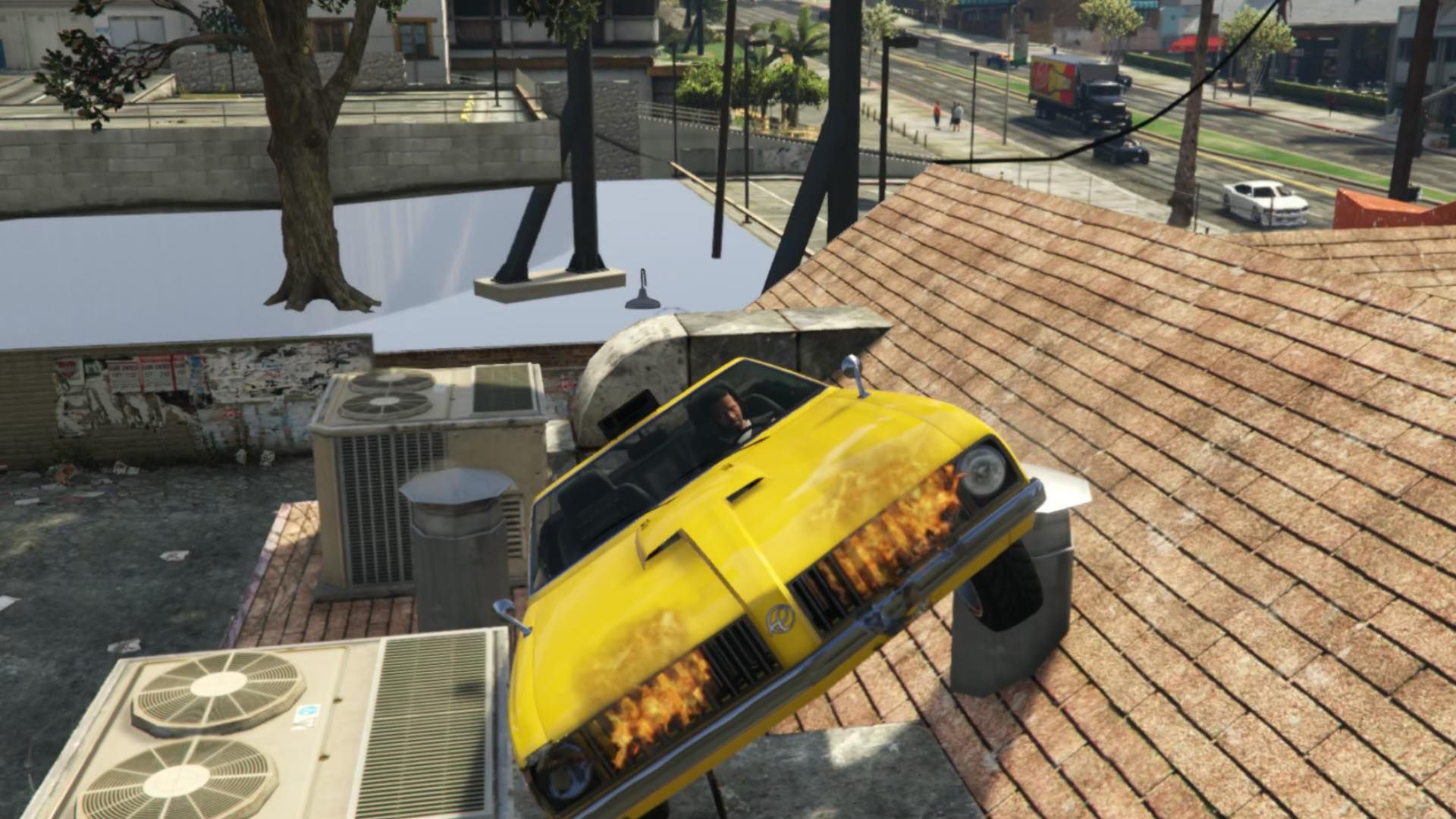
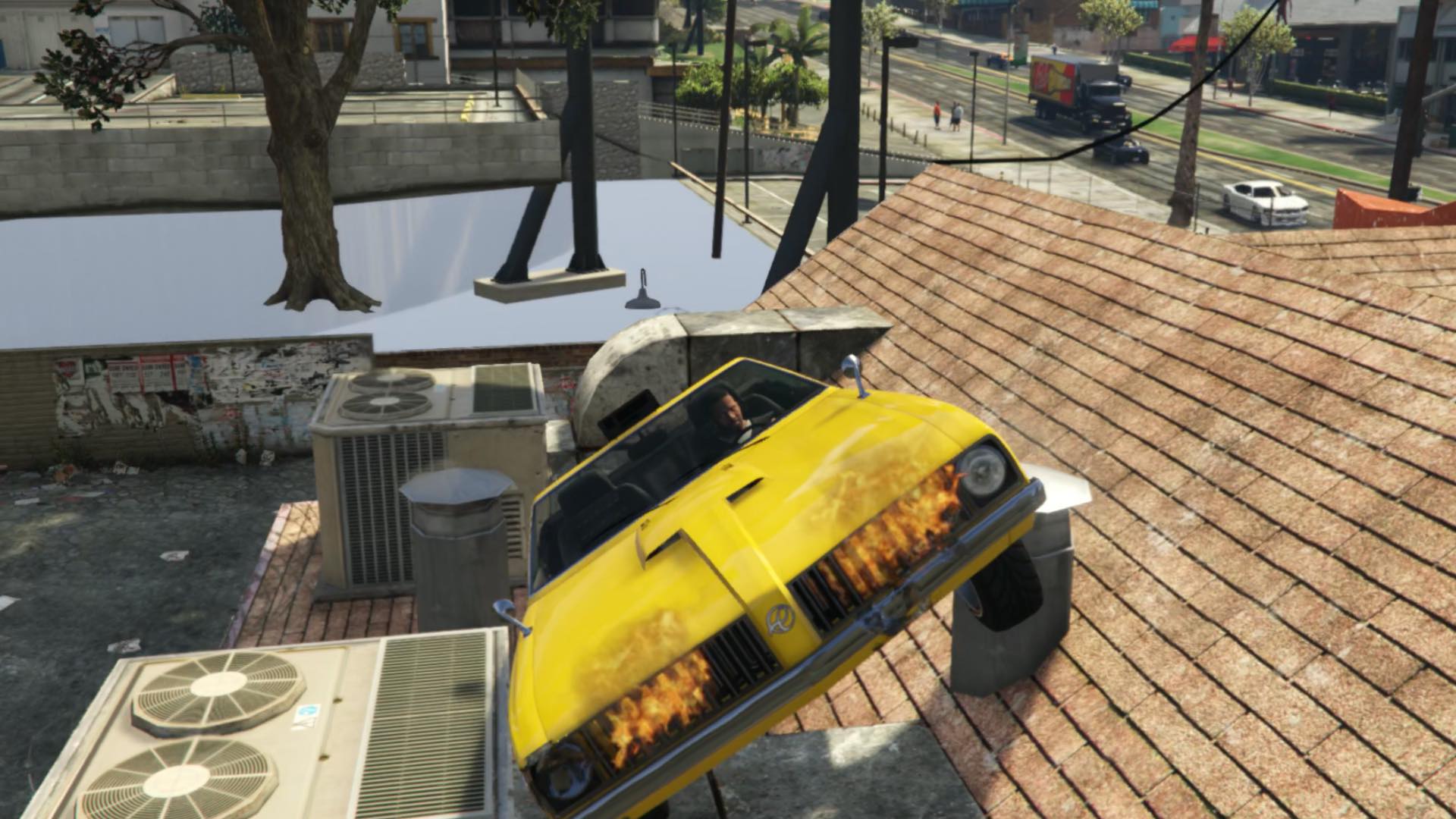
Seeking a new avenue for structural torment, the modder installed the Crazy Taxi script. This modification introduced point-to-point transportation missions, complete with yellow-painted cabs and desperate citizens waiting on sidewalks for frantic, timed drop-offs. Yet, because the underlying physics engine was still stripped of friction and governed by chaotic momentum-based scripts, the introduction of arcade-style taxi missions immediately spirtered into slapstick disaster.
Vehicles on the character-selection screen refused to remain stationary, launching themselves into the stratosphere or smashing into brick facades before the player could even select their ride.
Supporting Data and Technical Overview
To understand the scope of this modded monstrosity, one must look at how GTA 5’s RAGE engine interacts with legacy arcade logic grafted onto it via community scripts.
- Engine Limitations: The RAGE (Rockstar Advanced Game Engine) is optimized for realistic, weighty vehicular handling and intricate pedestrian AI.
- The Friction Variable: By setting friction values to zero or near-zero, the modder bypasses standard traction calculations, causing vector-based velocity to take absolute priority over collision meshes.
- Script Conflict: The Crazy Taxi script relies on predictable spawn logic, stationary vehicle selection menus, and static pedestrian hailing behaviors. When combined with physics-altering mods, the spawn menu transforms into a launching pad. Cars achieve escape velocity within milliseconds of spawning.
- Dynamic World Variables: Los Santos features active background simulations, including police responses, gang warfare, and armed NPC bodyguards. When a player attempts to initiate a taxi fare in this environment, the overlapping scripts create a cascading failure where prospective customers are either gunned down, run over, or frightened away before entering the cab.
Official Responses and Industry Context
While Rockstar Games has remained officially silent on this particular brand of sandbox terrorism—focusing its own development resources heavily on the upcoming, official release of GTA 6—the timing of the mod aligns with a broader cultural resurgence of the Crazy Taxi franchise.
SEGA recently announced official plans to revive Crazy Taxi, both as a modernized video game release (which has already sparked community debates over the inclusion of generative AI disclosures on its Steam page) and as a live-action motion picture project.
Industry analysts note that fan-made revivals like this GTA 5 conversion highlight the enduring cultural footprint of arcade-style gameplay loops. Even as modern triple-A titles push toward photorealism and deep narrative simulations, players consistently find joy in stripping away complex storytelling to engage in pure, frictionless, arcade-style chaos. Community reactions to the modder’s daily logs have been overwhelmingly positive, praising the sheer unpredictability of a game engine buckling under the weight of its own modifications.
Implications for the Future of Modding and GTA 6 Anticipation
The implications of this daily modding gauntlet extend beyond mere entertainment; they offer a fascinating look into the psychology of the PC gaming community as it waits for the next mainline installment in the Grand Theft Auto series.
With GTA 6 slated to redefine open-world fidelity on consoles first, PC players are left bridging the gap through creative engineering. By turning GTA 5 into a Frankenstein’s monster of conflicting mods, creators are exploring the absolute boundaries of what proprietary game engines can endure.
Can GTA 5 truly be transformed into GTA 6? Technically, no. The architectural differences between the generations of software are insurmountable. However, by breaking the game down to its core mechanics—driving, shooting, and physics—and rebuilding it with absurd, arcade-style constraints, modders are proving that the lifespan of a decade-old game is effectively infinite as long as creative minds are willing to break it.
As the daily experiment continues, the gaming world watches with bated breath to see what new horrors await the citizens of Los Santos. Will the engine finally give out entirely, or will the modder successfully drive a flaming taxi straight into the digital dawn of a new generation? Only time—and the next script installation—will tell.

