


The transition from digital simulation to physical board game is a path fraught with complexity. Translating the sprawling, historically grounded, and notoriously intricate mechanics of the Kingdom Come: Deliverance (KCD) video game series into a tabletop experience is an undertaking that defies conventional design logic. Yet, Czech Games Edition (CGE) has officially announced Kingdom Come: Deliverance – The Board Game, a project that promises to take the "grognard-friendly" complexity of the source material and amplify it for the tabletop enthusiast.
With a price point of $200 and a pedigree that includes some of the industry’s most respected design minds, this is not a casual spin-off. It is a bold attempt to capture the essence of a medieval simulator—where every decision, from the quality of your gambeson to the silver-tongued nature of your dialogue, dictates your survival—within the tactile constraints of cards, boards, and miniatures.
Main Facts: A Simulation Transposed
At its core, Kingdom Come: Deliverance – The Board Game is an expansive cooperative RPG designed to be played solo or with up to four players. It aims to replicate the "zero-to-hero" arc that defined the 2018 video game. Players begin as humble, rag-clad peasants in the 15th-century Kingdom of Bohemia, forced to navigate a world that is as beautiful as it is lethal.
The game is being helmed by legendary designers Tomáš Holek and Vlaada Chvátil. For those unfamiliar with the board game landscape, Chvátil is a titan of the industry, known for deeply complex, systemic games like Through the Ages and Mage Knight. His involvement signals that the board game will likely prioritize deep strategy and emergent narrative over simple dice-rolling mechanics.
The primary draw is the promise of "radical agency." Players must manage their character’s progression through various paths—archery, oration, thievery, or swordsmanship—while contending with an open-world map that responds to their presence. Much like the video game, the tabletop version promises a brutal learning curve where "success or death" are the only two realistic outcomes for the unprepared.
Chronology: The Journey to the Tabletop
The announcement trailer, released recently, serves as a mission statement for the project. While the original video game, developed by Warhorse Studios, became a cult classic for its refusal to hold the player’s hand, the board game development timeline suggests a long-gestating project aimed at capturing that same stubborn, detail-oriented spirit.
- Initial Conceptualization: Drawing from the deep lore of the Bohemian conflict in the early 1400s, CGE began the design phase with the goal of maintaining the video game’s commitment to historical authenticity.
- Design Iteration: Throughout the design process, the team focused on "systemic density." Unlike standard adventure board games that rely on static events, this title incorporates a multi-layered board structure. Players aren’t just moving tokens; they are managing the minutiae of medieval life.
- The Announcement: The official unveiling of the trailer brought the project into the public eye, showcasing a prototype that is "redolent in bits"—an exhaustive collection of tokens, figurines, and sub-boards.
- Pre-order Phase: As of now, the game is available for pre-order via the Czech Games website, with an anticipated release window set for Q1 of next year.
Supporting Data: The Anatomy of Complexity
To understand the gravity of this release, one must look at what is actually in the box. A $200 price tag in the board game market is significant, placing the product in the "luxury hobbyist" category. In exchange for this investment, players receive a massive amount of physical content designed to facilitate a high-fidelity simulation.
The game features:
- Modular Board Architecture: To replicate the open-world feel, the game uses sub-boards that expand as players explore, mimicking the travel mechanics of the video game.
- Systemic Tracking: Players must track hunger, energy, social standing, and equipment durability. This adds a layer of "inventory management" that is rarely seen in mainstream board games.
- AI-Driven Combat: Combat is not resolved by simple combat-resolution cards. Instead, it utilizes an AI system that simulates the unpredictability of medieval skirmishes. Players must account for terrain, armor weight, and weapon types.
- The "Grognard" Factor: The game demands that players keep track of a vast array of status effects and narrative variables. This is the antithesis of the "pick-up-and-play" model; it is designed to be a weekend-long commitment to a single campaign.
Official Responses and Creative Vision
Vlaada Chvátil and Tomáš Holek have emphasized that this game is not a "lite" version of the video game. Instead, it is an attempt to translate the feeling of being a peasant in the 15th century.
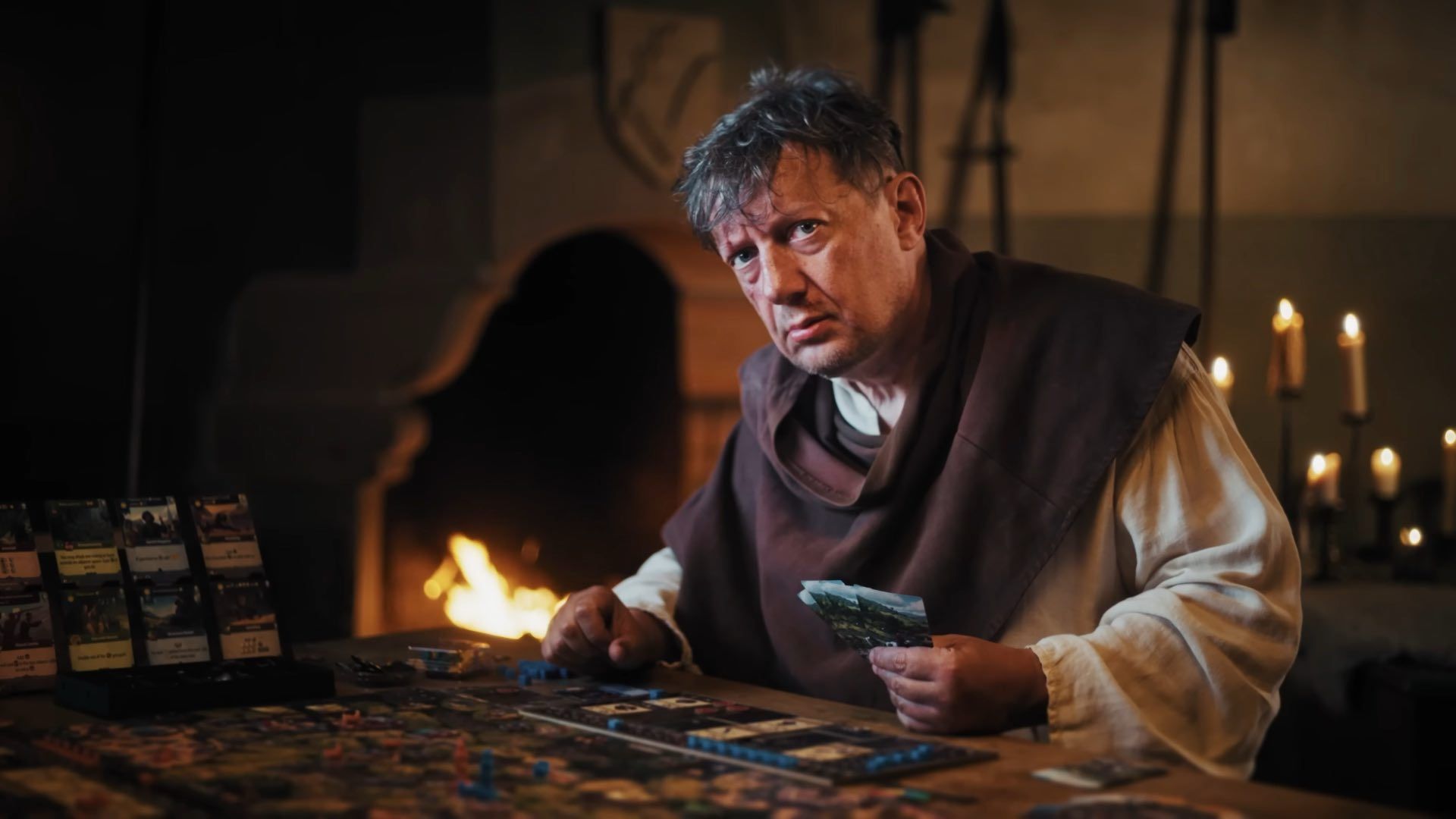
In official communications, the designers have noted that the biggest challenge was balancing the game’s "unpredictable locals" with the player’s desire for progression. "Whatever path you choose, let it be your own," says the official blurb, suggesting that the game’s narrative branching is as significant as its mechanical systems.
For the team at CGE, the goal is to make the tabletop experience feel as demanding as the video game. If the player forgets to eat, if they fail to maintain their armor, or if they pick a fight they aren’t prepared for, the game’s systems are designed to punish them accordingly. This is a design philosophy that respects the player’s intelligence and their patience.
Implications for the RPG and Board Game Industry
The arrival of Kingdom Come: Deliverance – The Board Game represents a shifting trend in the tabletop industry. We are seeing a move away from simplified, streamlined experiences toward "heavy" simulation games that offer a high barrier to entry.
The Rise of the "Simulation" Board Game
There is a growing market for players who want to engage with history, economics, and survival logistics in a physical format. By choosing Kingdom Come—a title already defined by its refusal to compromise—CGE is effectively marketing to a segment of the population that finds mainstream board games too shallow. This could pave the way for other complex video game IPs to receive similar treatments, provided they have the mechanical depth to support it.
The $200 Price Point Barrier
The price is perhaps the most contentious aspect of the announcement. In an era of digital gaming, where a standard title costs $60–$70, asking $200 for a box of components is a bold move. It signals that the board game market is bifurcating: on one side, mass-market party games; on the other, premium, content-heavy "hobbyist" experiences. The success or failure of this title will provide a clear metric on whether the board game audience is willing to sustain such high-cost, high-complexity products in the long term.
The Future of Cross-Media Adaptations
Historically, video game adaptations have struggled to capture the "soul" of their source material. Often, they become simplified board games with a thematic skin. Kingdom Come appears to be doing the opposite: it is attempting to adapt the complexity of the source material. If this succeeds, it may change how developers look at their own IPs, shifting the focus from "how do we turn this into a game?" to "how do we replicate this system on a table?"
Conclusion
Kingdom Come: Deliverance – The Board Game is an ambitious, perhaps even audacious, project. It takes the most demanding elements of the video game and asks the player to handle them with their own two hands. Whether it succeeds in becoming a genre-defining title or remains a niche curiosity for the most dedicated fans of simulation, it is undoubtedly a project to watch.
For the player who feels that modern games have become too automated and too forgiving, this represents a return to the roots of gaming: systems that demand attention, decisions that carry weight, and a world that doesn’t care if you succeed or fail. It is, in every sense of the word, a challenge—and in the current gaming landscape, that is a rare thing indeed.
As we approach the Q1 release date, the question remains: are you ready to put on your armor, piece by piece, and face the harsh, unforgiving realities of 15th-century Bohemia? If you have the patience and the funds, the answer is only a pre-order away.

