

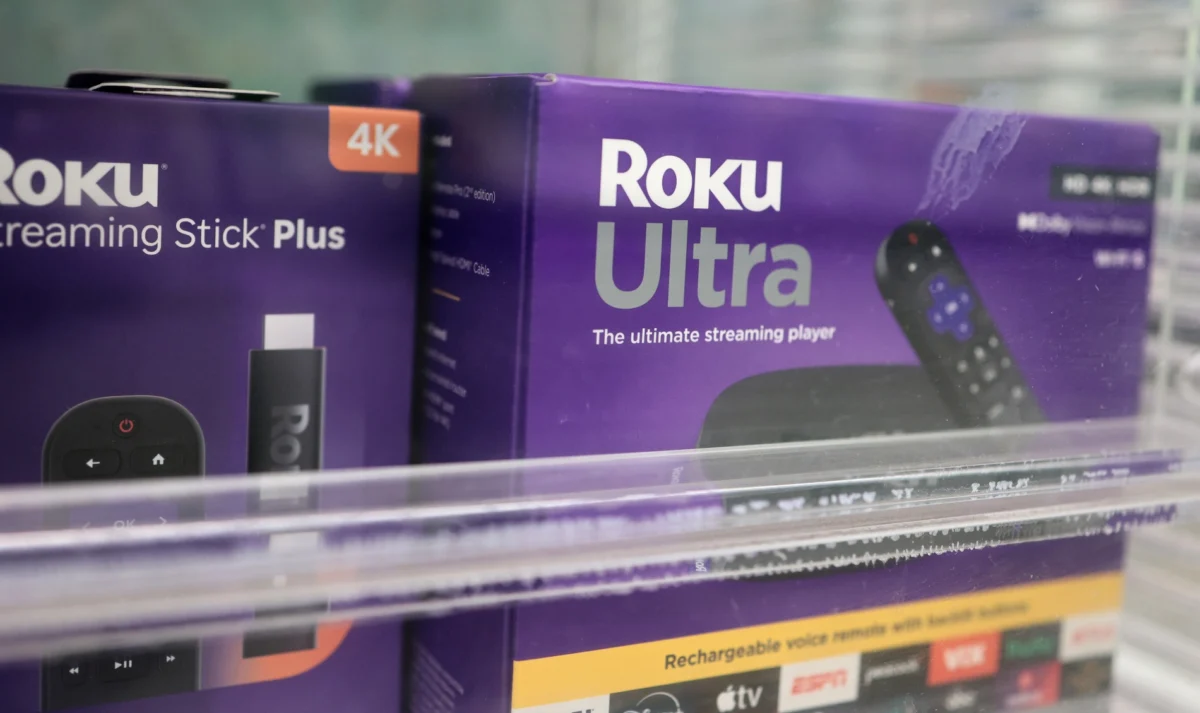
In a move that promises to redefine the power dynamics of the modern media ecosystem, Fox Corporation has announced a definitive agreement to acquire the streaming giant Roku for $22 billion. This landmark cash-and-stock transaction, unveiled by Fox CEO Lachlan Murdoch during a recent investor call, marks a pivotal evolution in Fox’s transition from a traditional broadcast powerhouse to a dominant, multifaceted streaming conglomerate.
By integrating Roku’s vast distribution infrastructure with Fox’s existing streaming assets—most notably the ad-supported titan Tubi—Murdoch is positioning the company to capture a commanding share of the digital advertising market. The acquisition effectively bridges the gap between content creation and hardware distribution, creating a vertically integrated juggernaut capable of competing with the world’s largest tech and media entities.
The Architecture of the Deal: Merging Two Streaming Titans
The acquisition of Roku is not merely an expansion of Fox’s library; it is a strategic consolidation of streaming methodologies. For years, the streaming industry has been fragmented by competing acronyms: SVOD (Subscription Video-on-Demand), AVOD (Ad-supported Video-on-Demand), and FAST (Free, Ad-supported Streaming Television). With this deal, Fox has secured a portfolio that covers every corner of this ecosystem.
While Fox already controls Tubi, the addition of Roku introduces a sophisticated hardware-plus-software ecosystem. Tubi has long operated as a powerhouse in the AVOD sector, providing a robust library of licensed and original content to cost-conscious viewers. Roku, by contrast, functions as a dual-threat: it operates a premier AVOD service in The Roku Channel while simultaneously serving as the "discovery engine" for thousands of FAST channels and third-party apps.
Maintaining Separate Ecosystems
Crucially, Lachlan Murdoch has clarified that Fox intends to maintain Tubi and The Roku Channel as distinct entities. This separation is rooted in data-driven strategy. During the investor call, Murdoch emphasized the limited overlap between the two user bases.
"If you look at Tubi and the Roku channel together, they are incredibly complementary services," Murdoch stated. "There’s about a third overlap between the audience, between the two of them, so that they’re not identical audiences. Bringing the two of them together effectively triples the reach of the combined service."
A Chronology of Fox’s Streaming Evolution
To understand the magnitude of this $22 billion deal, one must look at the path Fox has carved over the last several years. The company’s digital strategy has been marked by calculated, incremental growth, eventually leading to this massive leap.
- 2020: The Tubi Acquisition: Fox’s initial foray into the AVOD space began with its acquisition of Tubi. At the time, the industry was heavily focused on the "streaming wars" centered around premium SVOD services. Fox zagged where others zigged, betting on the growing consumer appetite for free, ad-supported content.
- 2022-2024: The Rise of Profitability: Unlike many of its competitors, who burned billions on expensive original content to fuel SVOD subscriber growth, Fox focused on the economics of AVOD. By 2024, Fox reported that Tubi had reached consistent profitability, proving that the ad-supported model was not just a secondary play, but a primary engine for revenue.
- 2025: The Creator Push: Fox pivoted further into original programming with the "Tubi for Creators" initiative. By partnering with prominent social media influencers and creators, the company successfully tapped into younger, highly engaged demographics that traditional television often struggles to reach.
- 2026: The Roku Merger: The culmination of these efforts, the acquisition of Roku, provides Fox with the hardware footprint—the "gateway" to the living room—necessary to scale its streaming operations to a global level.
Supporting Data: Why the Economics Favor AVOD and FAST
The traditional SVOD model, popularized by platforms like Netflix and HBO Max, has faced increasing scrutiny as subscriber growth plateaus and production costs for "prestige" television skyrocket. Many SVOD services have struggled with the "bloated original" syndrome, where high-budget projects fail to yield a sufficient return on investment.
Fox’s strategy, conversely, leans into the leaner economics of AVOD and FAST. These models rely on programmatic advertising, which offers a more stable and predictable revenue stream than the volatile nature of subscription churn.
Audience Reach and Demographic Diversity
Market data suggests that the AVOD/FAST market is the fastest-growing segment of the television industry. The demographic profile of the combined Tubi-Roku audience is significantly broader than that of traditional pay-TV.
- User Overlap: With only a 33% overlap in users, the combined entity provides advertisers with unprecedented reach.
- Economic Resilience: As inflation impacts household spending, consumers are increasingly gravitating toward "free" alternatives. By dominating this space, Fox is effectively "future-proofing" its revenue against economic downturns that often lead to subscription cancellations.
Official Responses and Strategic Vision
The investor community’s response to the announcement has been one of cautious optimism, focused largely on the potential for synergy. Lachlan Murdoch’s messaging has been consistent: this is a long-term play for digital supremacy.
"We aren’t looking to force a singular brand experience," Murdoch noted during the investor briefing. "We are looking to create a multi-layered ecosystem where the user is presented with the right content at the right time, whether they are looking for a deep-dive documentary on a FAST channel or a quick, ad-supported movie on Tubi."
Internal stakeholders at Fox have also expressed excitement regarding the "Tubi for Creators" expansion. By leveraging Roku’s massive distribution network, Fox can now offer creators a direct line to millions of households, potentially disrupting the traditional studio-to-distributor pipeline.
Implications: What This Means for the Future of TV
The acquisition of Roku by Fox sends a clear message to the industry: the future of television is not just about content; it is about the conduit.
1. The Death of the "Subscription-Only" Monopoly
For years, the industry operated under the assumption that the "Netflix model" was the only way to win. Fox is proving that a hybrid approach—leveraging the reach of free, ad-supported content—is a more sustainable path to profitability. Expect other major media conglomerates to scramble to acquire their own FAST/AVOD platforms or hardware partnerships in the coming months.
2. A New Era for Advertisers
With the combined reach of Tubi and Roku, Fox is poised to become the most important partner for advertisers. The ability to offer hyper-targeted ads across a diverse range of devices and platforms is an asset that few other companies can match. This will likely lead to a shift in ad spend away from legacy cable networks and toward the Fox-Roku digital ecosystem.
3. The Democratization of Content Creation
The "Tubi for Creators" program is expected to expand rapidly. By integrating this into the Roku interface, Fox is creating a new tier of distribution that favors agile, low-cost productions. This could lead to a massive influx of creator-led content, moving away from the "big-budget, big-risk" model that has defined the last decade of television.
4. Regulatory Scrutiny
While the deal is a triumph for Fox, it will undoubtedly face significant regulatory scrutiny. A merger that combines one of the largest media content producers with a dominant streaming platform and hardware provider will likely be viewed through the lens of antitrust laws. Analysts expect a lengthy review process as regulators assess whether the combined entity would create an unfair barrier to entry for smaller, independent content creators.
Conclusion: The Streaming Titan Emerges
The $22 billion acquisition of Roku is more than a financial transaction; it is a declaration of intent. Fox Corporation, once viewed as a legacy broadcast giant, has successfully reinvented itself as a modern streaming titan.
By strategically balancing the different needs of the SVOD, AVOD, and FAST markets, and by maintaining a diverse, non-overlapping audience between Tubi and Roku, Fox has built a fortress. As the dust settles on this announcement, one thing remains clear: the way we discover, watch, and pay for television has changed forever. Whether the market is ready for this consolidation or not, Fox has made its move, and the rest of the media world is now playing catch-up.
As Murdoch and his team begin the arduous task of integrating these two massive organizations, the industry will be watching closely to see if the promised synergies translate into the long-term profitability that investors are banking on. For the average viewer, the promise is simple: a more robust, diverse, and accessible library of content, delivered through a platform that is finally beginning to make sense of the digital age.

