

By [Your Name/Journalistic Desk]
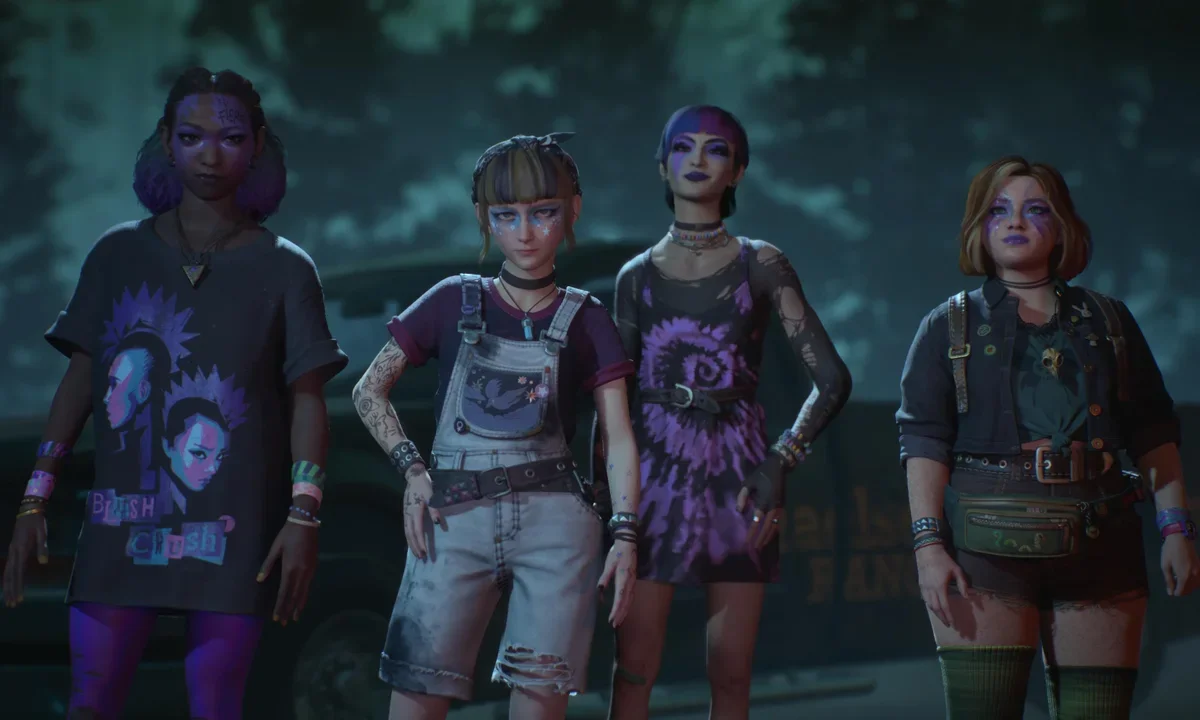
The landscape of the independent video game industry is shifting, and for one of France’s most celebrated studios, the terrain has turned perilously steep. Don’t Nod, the acclaimed developer behind the Life is Strange franchise and recent titles such as Lost Records: Bloom and Rage, is currently grappling with a severe liquidity crisis. According to official auditor reports, the company faces the stark possibility of insolvency as early as November 2026, marking a somber chapter for a studio that has spent the last decade defining the narrative adventure genre.
The Current Financial Landscape: A Race Against Time
The gravity of the situation was brought to light through an auditor’s report, first highlighted by industry journalist Gauthier Andres. The data is sobering: as of April 13, 2026, the company’s cash reserves had dwindled to approximately €8.8 million.
For a studio with the overheads associated with high-fidelity game development, this figure represents a precarious runway. Oskar Guilbert, the Chair of the Board and a veteran of the industry, has reportedly been scouring the market for fresh capital for several months. Despite these exhaustive efforts, the studio remains in a state of fiscal limbo, unable to secure the necessary backing to continue its operations beyond the autumn of 2026.
Chronology of a Slow-Motion Crisis
To understand how a studio of Don’t Nod’s pedigree reached this inflection point, one must look at the recent history of its corporate strategy and market positioning.
2023–2024: Strategic Realignment
In the years preceding the current crisis, Don’t Nod embarked on an ambitious restructuring plan. The goal was to pivot the company into three distinct pillars: RPGs, narrative adventures, and action-adventure titles. This was intended to streamline production and capitalize on the studio’s unique creative identity. However, the costs of maintaining such a diversified development pipeline in an increasingly expensive market proved to be a heavy burden.
2025: Staff Reductions and Market Volatility
By 2025, the strain became visible. The studio initiated an undisclosed number of layoffs, a common but painful trend across the gaming industry as capital began to dry up and investment fervor cooled. The restructuring, while intended to optimize the company, failed to generate the immediate financial stability required to weather the industry’s wider economic downturn.
2026: The Search for a Savior
As the calendar turned to 2026, the focus shifted from internal optimization to external survival. Negotiations with major industry players were initiated, yet as of late May 2026, no concrete financing deals have been announced. The company had pinned its hopes on securing a partnership with a "major partner" to co-finance its current slate of projects, but as that deadline has passed without a public resolution, the pressure on the board has intensified exponentially.
Tencent and the Cooling of Global Investment
Perhaps the most significant development in this saga is the strained relationship between Don’t Nod and its largest shareholder, Tencent. The Chinese conglomerate, which held 41.9% of the studio’s stock and 33.5% of the voting rights as of December 2025, has reportedly declined requests for a short-term capital injection.
Furthermore, Tencent has signaled a lack of interest in participating in project-specific financing through co-production agreements. This refusal is emblematic of a broader trend: the "Big Tech" era of gaming investment is undergoing a sharp correction.
For years, companies like Tencent and NetEase acted as the primary lifeblood for Western indie and AA studios. Now, those same giants are pulling back. NetEase, for instance, has moved to divest from several of its funded studios—most notably Fantastic Pixel Castle—as part of a strategic shift toward internal consolidation. Don’t Nod’s inability to leverage its existing relationship with Tencent underscores a harsh reality: even "preferred" partners are no longer willing to underwrite the risks of independent game development in a market that demands blockbuster returns.
Supporting Data: Why "AA" Gaming is Under Pressure
Don’t Nod’s struggle is not an isolated incident; it is a symptom of the "AA" development squeeze. The cost of developing high-quality, modern titles has skyrocketed, often requiring budgets that compete with the mid-tier of the AAA space, yet without the guaranteed sales volume of established franchises.
- The "Middle-Market" Squeeze: Studios that sit between small indie teams and massive AAA publishers often lack the marketing budgets to compete for visibility on platforms like Steam or Epic Games.
- Reduced Venture Capital: The post-COVID investment bubble has burst. Interest rates are higher, and venture capitalists are prioritizing profitability over growth-at-all-costs models.
- Genre Saturation: While Life is Strange was a lightning-in-a-bottle success, replicating that magic in the narrative adventure space has proven difficult. The market for story-driven games is passionate but niche, often failing to reach the massive player counts required to sustain long-term studio operations.
Official Responses and Stakeholder Silence
As of the time of this writing, both Don’t Nod and Tencent have been approached for comment. The silence from both parties is telling. In the world of high-stakes corporate finance, a lack of public comment usually signals that negotiations are either ongoing, stalled, or that the parties are bracing for a period of intense legal and financial restructuring.
Oskar Guilbert remains the central figure in this narrative. As the face of the studio, his legacy is tied to finding a way through this deadlock. If he cannot convince the board or new investors that Don’t Nod has a viable path to profitability by November, the studio may be forced to look at drastic measures, including selling off its intellectual property (IP), further downsizing, or exploring a total merger/acquisition by a larger entity.
Implications for the Future of Interactive Storytelling
The potential collapse or severe contraction of Don’t Nod carries significant implications for the gaming industry at large. The studio has been a pioneer in normalizing "choice-based" narrative gameplay. Should they fail to secure funding, it would send a chilling message to other narrative-focused studios.
- Creative Homogenization: If studios like Don’t Nod vanish, the industry risks losing the unique, human-centric stories that differentiate interactive entertainment from passive cinema.
- The "Indie-Pocalypse" 2.0: We are entering a period where even established, critically acclaimed studios are not safe from the volatility of the capital markets.
- The End of the "Tencent Era": The pivot away from international minority stakes suggests that studios must return to a model of self-reliance or find regional partners closer to home, as the era of easy, globalized Chinese investment appears to be coming to a close.
As November approaches, the industry watches with bated breath. Don’t Nod has delivered some of the most emotionally resonant experiences in modern gaming history; the question now is whether the market values that legacy enough to provide the lifeline necessary for the studio to survive into 2027 and beyond. For now, the "Lost Records" of the studio’s future remain unwritten, and the clock is ticking.

