

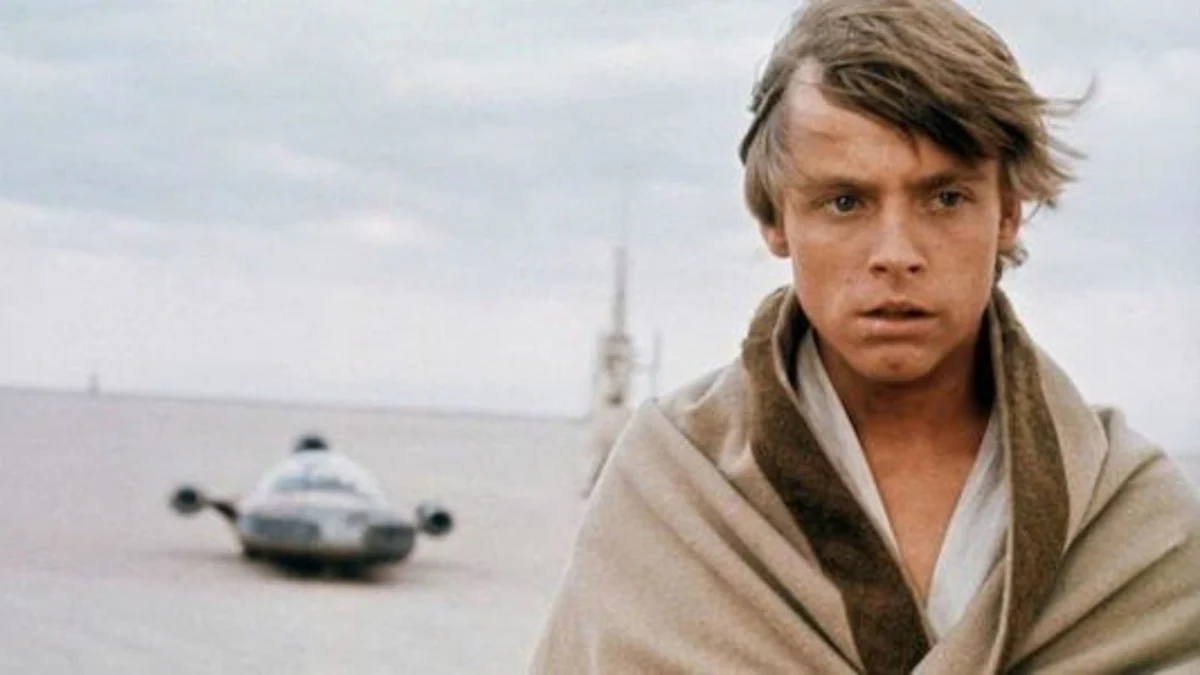
Nearly half a century has passed since George Lucas first invited audiences to a galaxy far, far away, yet the cultural resonance of Star Wars: A New Hope remains undiminished. While the franchise has expanded into a sprawling, multi-generational tapestry of spin-offs, sequels, and animated series, fans are currently finding solace in the simplicity of its beginnings. A recent viral resurgence on Reddit has reignited a collective appreciation for one of the most iconic cinematic sequences in history: the "Binary Sunset" scene.
As the franchise prepares to pivot toward the next chapter in the Ahsoka saga, the digital conversation serves as a poignant reminder that the soul of Star Wars lies not in its space battles or lightsaber duels, but in its quietest, most human moments.
The Anatomy of an Iconic Moment: Main Facts
The scene in question is deceptively simple. Luke Skywalker, a restless farm boy confined to the dusty plains of Tatooine, gazes out toward the horizon as the planet’s twin suns dip below the dunes. There is no dialogue, no action-heavy spectacle—only the visual of a young man staring into the unknown and the swell of John Williams’s legendary "Binary Sunset" theme.
For many, this scene functions as the emotional thesis of the entire franchise. It is the moment where the audience stops viewing the film as a mere adventure and begins to see it as a mythic journey. The scene captures the universal feeling of longing, the "human condition" of wanting to break free from the constraints of one’s circumstances. By stripping away the high-tech wizardry of the Empire and the Jedi, the film anchors itself in a relatable, grounded yearning for destiny.
A Legacy in Motion: The Chronology of Impact
To understand why this scene persists, one must look at its place in the 1977 original. Star Wars was, at the time, a gamble. George Lucas was crafting a space opera that needed to balance pulp-serial thrills with genuine character stakes.
- 1977: The theatrical release introduces the world to the binary sunset, cementing John Williams’s score as the backbone of the Star Wars identity.
- 1997-2005: The Prequel Trilogy expands the lore of Tatooine, yet the binary sunset remains the "gold standard" for quiet character development.
- 2015-2019: The Sequel Trilogy pays homage to the shot, most notably in The Rise of Skywalker, where Rey stares at a similar sunset, linking the two trilogies through visual poetry.
- 2025: The current online discourse proves that despite the influx of CGI and interconnected narratives, the core audience still values the "less is more" approach that defined the 1977 original.
Reddit users, reflecting on the scene, have noted that the power of the moment is timeless. "It moves me as much now as it did when I was a kid," one fan remarked, highlighting the intergenerational appeal of the sequence. It is a rare instance of film history that refuses to age, largely because the emotion it conveys—the desire to escape one’s mundane reality—is a constant in the human experience.
Symphony of the Soul: Supporting Data and Musical Context
It is impossible to discuss the binary sunset without addressing the contributions of composer John Williams. His score is often cited by fans as the "finest moment" of his illustrious career. The music does not merely accompany the visual; it provides the internal monologue for Luke Skywalker.
The melody, characterized by a haunting, ethereal quality, conveys hope mixed with a heavy sense of melancholy. Fans discussing the scene frequently point to the "live symphony" experience as the definitive way to consume the film, suggesting that the orchestral power of Williams’s composition is what elevates the scene from a simple sunset to a spiritual experience.
Why the Fans Keep Returning
The discourse across social media platforms has been remarkably consistent. Key themes identified by the community include:
- The Relatability of Stagnation: Fans argue that the scene works because everyone has felt "stuck, lost, and yearned for a better future."
- Visual Storytelling: The scene is a masterclass in economy. It tells the audience everything they need to know about Luke’s character—his isolation, his ambition, and his restlessness—without a single line of dialogue.
- The "One Movie" Perspective: A recurring sentiment is the appreciation for the original Star Wars as a standalone piece of art. Fans argue that even without the context of the subsequent trilogies, this scene stands as a perfect short film.
The Industrial Perspective: Official Responses and Future Directions
While fans dwell on the past, Lucasfilm is aggressively looking toward the future. The conversation surrounding the binary sunset serves as a quiet contrast to the high-octane marketing currently surrounding Ahsoka season 2, which is scheduled to premiere on Disney Plus on January 20.
The upcoming season promises to be a massive event for the franchise, featuring the return of fan-favorite characters and concepts that deepen the lore established by Dave Filoni. The return of Hayden Christensen as Anakin Skywalker, the reintroduction of Admiral Ackbar, and the integration of the enigmatic "Mortis gods" signal a move toward a more mystical, epic scale.
However, the contrast between the quiet reflection of the binary sunset and the high-stakes narrative of Ahsoka is telling. Lucasfilm continues to balance the "space fantasy" spectacle with these foundational, character-driven moments. The success of the franchise has always relied on this duality: the expansive, galaxy-altering conflicts and the intimate, personal struggles of individuals looking at the horizon.
Implications: What the Sunset Means for the Franchise
The enduring popularity of the binary sunset scene offers a clear lesson for the custodians of the Star Wars franchise: the audience does not always need the next big "event" to stay engaged. Sometimes, they need to be reminded of the magic of the original vision.
The implications for future storytelling are significant. As Disney and Lucasfilm continue to churn out content, there is a risk of over-explaining the universe, stripping away the mystery that made the binary sunset so evocative in the first place. When a fan writes, "Something that sometimes gets lost… is that Star Wars began with one movie—and that it was a really fucking good movie," they are signaling a desire for more grounded, character-centric narratives.
The "Binary Sunset" is the anchor of the franchise. It reminds viewers that the stakes are not just about the fate of the Republic or the survival of the Jedi, but about the growth of an individual. Whether it is Luke on Tatooine or Ahsoka navigating the mysteries of the Force, the most effective moments are those that allow for a pause—a moment to reflect on the unseen possibilities and the hope that lies just over the horizon.
As we look toward the premiere of Ahsoka season 2, we do so with the understanding that the franchise is at its best when it remembers its roots. The galaxy may be getting bigger, more complex, and more dangerous, but the heart of Star Wars remains firmly planted in the sand of a lonely desert planet, watching two suns set, wondering what comes next.
Looking Ahead: The Future of the Galaxy
For those wishing to keep pace with the evolving narrative of Star Wars, the following resources provide a roadmap of the upcoming slate:
- Ahsoka Season 2 (January 20, Disney Plus): The next major milestone, promising a convergence of legacy characters and new, cosmic threats.
- The Expanded Universe Guide: A comprehensive look at upcoming films and television series that will continue to test the boundaries of the established lore.
- Reflective Analysis: As the franchise grows, engaging with the classic moments—the binary sunsets, the trench runs, the meditations—is essential to maintaining a connection with the core spirit that George Lucas initiated in 1977.
In a media landscape obsessed with constant noise, the binary sunset remains a beacon of silence. It is a reminder that in a universe of laser swords and death stars, the most powerful weapon is still the human capacity to hope.

