

The creator economy is shifting beneath our feet, and nowhere is that transition more apparent than on Roblox. With the platform having paid out an astounding $1.5 billion to creators in 2025 alone, the once-niche sandbox has officially matured into a legitimate economic engine. Recognizing this, Night—the Dallas-based juggernaut behind internet icons like Kai Cenat, Hasan Piker, and Safiya Nygaard—has officially thrown its hat into the ring.
Night has launched KUZU, a dedicated Roblox studio designed to bridge the gap between casual platform play and AAA-quality game design. This move marks a strategic pivot for the talent management firm, signaling that the future of influencer-led businesses lies not just in content creation, but in the creation of proprietary, interactive ecosystems.
The Strategic Blueprint: Why Now?
For years, Night has been the engine room for the world’s most recognizable digital personalities. However, the $70 million funding round secured by the company in February 2026 provided the necessary capital to move beyond traditional management. According to Nick Brotman, SVP at Night, the decision to enter the Roblox space was rooted in hard data.
"Roblox’s 2025 payout figures tell you that this is no longer an experimental economy," Brotman says. "It is a real market with real businesses being built inside it. We raised that capital specifically to build companies embedded in internet culture, and Roblox is exactly where we want to be. There is a lot of money to be made here, provided you treat the platform with the professional rigor it now demands."
KUZU is not a side project; it is a full-scale operation with an aggressive development roadmap. The studio intends to roll out more than a dozen titles over the next 18 months, aiming to capture a specific demographic of users: those who enjoy the ease of access provided by Roblox but crave the mechanical depth and sophisticated gameplay loops typical of console or PC indie titles.
Chronology of a Studio: From Concept to KILLSTREAK!
The formation of KUZU was a deliberate, months-long orchestration. The seeds were sown early in 2026 when James Purell, a seasoned veteran of the game development industry, identified the void in the market.
- January 2026: James Purell joins the initiative, bringing together a team of developers who had previously collaborated on various branded and original games.
- February 2026: Night closes its $70 million Series B-style funding, providing the financial runway to formalize KUZU as an internal studio.
- Early 2026: The partnership with JOGO—a Roblox and Fortnite powerhouse founded by creators Typical Gamer (Andre Rebelo) and MustardPlays (Chad Mustard)—is finalized.
- Mid-2026: Development ramps up for the studio’s flagship title, KILLSTREAK!.
- Late 2026: KILLSTREAK! officially launches, serving as the proof-of-concept for KUZU’s development philosophy.
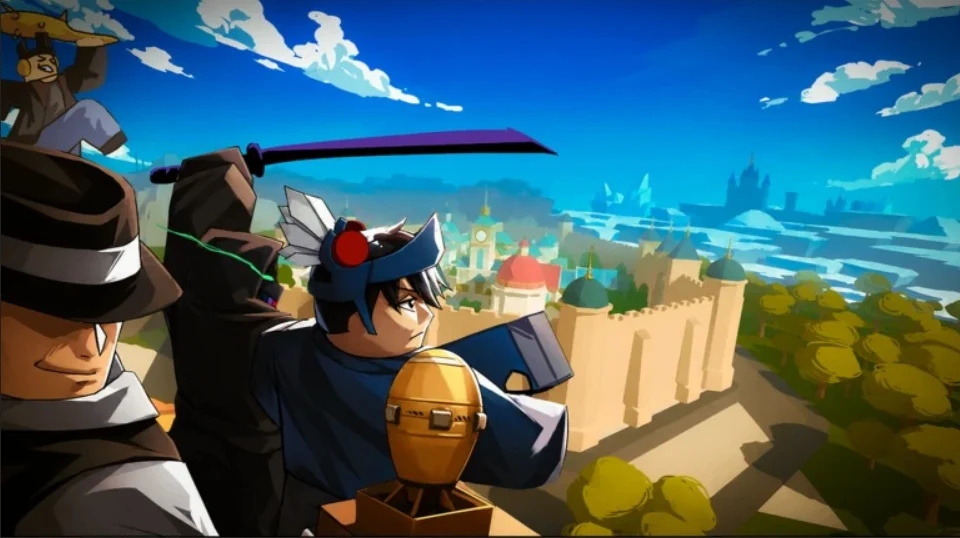
By the time of this report, KILLSTREAK! has already amassed approximately 25 million visits, maintaining a steady player base and earning 93,000 favorites. The game features a Fortnite-esque battle royale mechanic, emphasizing high-stakes looting, zone management, and resource scarcity—a far cry from the simplified "tycoon" or "obby" games that once defined the Roblox ecosystem.
The JOGO Partnership: Borrowing Experience
One of the most critical aspects of KUZU’s structure is the involvement of JOGO. Founded in 2023 by two of the most successful gaming creators on the internet, JOGO serves as both an investor and a strategic mentor.
JOGO has taken a seat on the KUZU board, providing the "counsel" mentioned in their mandate. This partnership is designed to bypass the steep learning curve usually associated with scaling a game studio.
"We are there to help them pressure-test concepts, mechanics, staffing, and production," says Chad Mustard. "The goal is to allow the team to move faster and make better decisions without having to learn every single lesson the hard way. We’ve been in the trenches; we know what works on the platform and, more importantly, what causes a game to flop."
For Purell, this partnership was the missing piece of the puzzle. "I’d already worked with much of the team across branded and original games," Purell explains. "We weren’t assembling strangers. We were formalizing a group that already knew how to build together, and once we met with the Night leadership team, the thesis lined up quickly."
Market Implications: The Professionalization of Roblox
The entry of a firm like Night into the Roblox ecosystem signals a broader trend: the professionalization of the platform. For the first decade of its existence, Roblox was primarily the domain of independent hobbyists and young developers. Today, it is increasingly dominated by studios with venture capital backing, marketing budgets, and professional management structures.
The "AAA-in-Roblox" Movement
KUZU’s development philosophy reflects a broader desire within Roblox to host "novel" games. As the engine becomes more powerful, the distinction between a "Roblox game" and a "standalone indie game" is blurring. By importing design philosophies from the AAA sector—such as complex progression systems, tight balancing, and high-fidelity graphics—studios like KUZU are attempting to capture a more mature audience.
The Creator-Led Conglomerate
Night’s strategy is also a reflection of the "creator-led conglomerate" model. By leveraging their roster of creators, Night can theoretically drive massive traffic to their internal titles without the exorbitant customer acquisition costs (CAC) that plague traditional game studios. If Kai Cenat or Unspeakable plays a KUZU game, the immediate surge in user acquisition is organic and immense, effectively turning Night’s management business into an in-house marketing engine for their development studio.
Data-Driven Growth: Looking Ahead
The numbers support this aggressive expansion. With 25 million visits to KILLSTREAK! in a relatively short window, the studio has proven that its gameplay loops resonate with the target audience. However, the challenge for KUZU will be long-term retention.
Roblox is a notoriously fickle platform. Players cycle through games rapidly, and maintaining a "live service" presence requires constant content updates, seasonal events, and community management—all areas where Night’s expertise in influencer management could prove to be a distinct competitive advantage.
As we look toward 2027, the success of KUZU will likely serve as a benchmark for other talent agencies. If Night can successfully monetize their audience via custom game development, we can expect a wave of "creator-owned studios" to flood the platform.
For the traditional gaming industry, this is a wake-up call. The barrier to entry for high-quality game development is no longer just technical skill or hardware access; it is the ability to command attention in an increasingly fragmented digital landscape. In this new era, the entities that control the talent—and by extension, the attention—hold the keys to the kingdom.
KUZU’s journey is just beginning, but with $1.5 billion in potential annual payouts flowing to creators, the stakes have never been higher. For Night, the strategy is clear: stop managing the influencers who play the games, and start building the games that the influencers play.

