

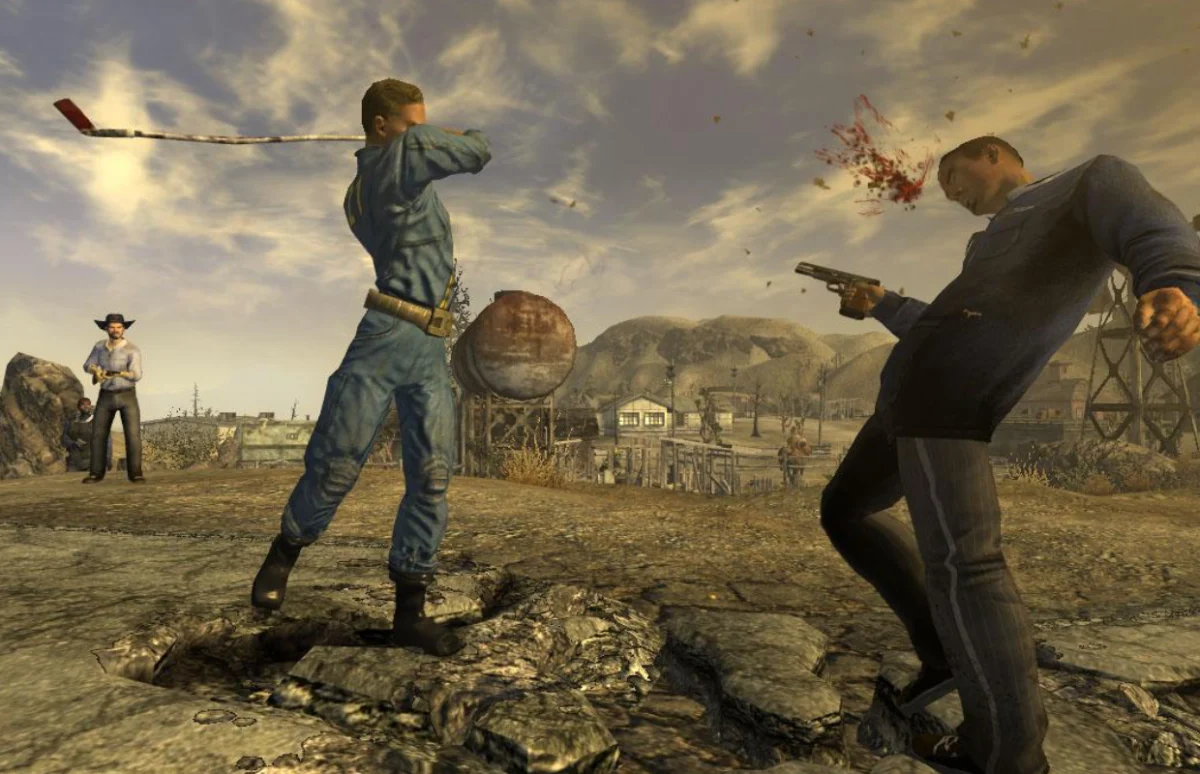
In a landscape defined by industry-wide volatility, Bethesda Game Studios has issued a comprehensive roadmap detailing its future. The announcement comes at a precarious time for its parent company, Microsoft’s Xbox division, which recently confirmed a staggering series of layoffs affecting 1,600 employees, with an additional 1,600 personnel reductions expected throughout the remainder of the year. Despite the shadows cast by these organizational shifts, Bethesda is projecting a narrative of continuity, ambition, and technological evolution.
The studio has confirmed that its core efforts are now firmly centered on the development of The Elder Scrolls VI and Fallout 5, both of which are being built upon the newly unveiled Creation Engine 3. Perhaps most significantly, the studio has officially confirmed long-standing industry rumors: Obsidian Entertainment is currently collaborating with Bethesda on a new, undisclosed Fallout project.
The Chronology of Change: From Layoffs to Roadmaps
The timing of Bethesda’s announcement is deliberate. Following the recent wave of staff reductions across Xbox’s internal studios—including notable impacts at Ninja Theory, Compulsion Games, Double Fine, and Arkane—the morale of the gaming community has been understandably fragile. By releasing a "Note from Bethesda Game Studios," the leadership team is attempting to signal stability amidst the corporate downsizing.
A Forty-Year Legacy
The studio’s message begins by reflecting on a four-decade history, noting that their titles have entertained nearly half a billion players. By framing their games not merely as software products but as "worlds," Bethesda is doubling down on its identity as a premier creator of immersive RPG experiences. This retrospective serves as a foundation for their forward-looking strategy: investing deeper into existing intellectual properties, empowering creators through community tools, and tightening the integration between internal development teams.
The Future of Fallout: A Franchise in Expansion
Fallout has arguably become the crown jewel of the Bethesda ecosystem, particularly following the critical and commercial success of the Amazon Prime television series. The studio’s roadmap for the franchise is vast, spanning across live-service support, remasters, and long-term sequels.
Fallout 76 and the "Raven Rock" Expansion
Fallout 76, once considered a troubled launch, has solidified its position as a long-term service. With nearly 70 free updates already released, the studio has announced a major expansion for next year titled Raven Rock, which will serve as a prequel to the events of Fallout 3. This suggests a strategy of leaning into established lore to keep the player base engaged while simultaneously building hype for the broader franchise.
The Remastered Rumors
Perhaps the most requested feature from the community has finally been acknowledged: the desire to revisit classic Fallout titles. Bethesda confirmed they are actively working on remasters for both Fallout 3 and Fallout: New Vegas. While no release dates were provided, the acknowledgment of these projects serves as a massive concession to the fan base, acknowledging that the studio is listening to the nostalgia-driven demand for updated versions of its most storied RPGs.
Obsidian’s Return to the Wasteland
The most explosive revelation in the document is the confirmation that Obsidian Entertainment—the studio behind the beloved Fallout: New Vegas—is working on a new Fallout project. Given the historical friction and eventual reconciliation between the two entities, this partnership is seen by many analysts as a "dream collaboration." While details remain scarce, the involvement of Obsidian suggests that Bethesda is willing to leverage external expertise to expand the franchise’s footprint while the main studio focuses on its internal pillars.
Supporting Data: By the Numbers
Bethesda’s report provides a wealth of data points intended to demonstrate the continued relevance of their IP:
- Starfield: With over 17 million players and nearly a billion hours logged, Starfield is positioned as a long-term project. The studio plans to introduce new "Starborn" content next year, alongside gameplay improvements.
- Fallout 4: Celebrating its 10-year anniversary, the game has surpassed 35 million units sold, proving that the demand for single-player Bethesda RPGs remains high even a decade after release.
- Skyrim: The enduring power of The Elder Scrolls V: Skyrim remains unmatched, with over 65 million copies sold over 15 years.
- Fallout Shelter: A mobile juggernaut with 250 million players, the game will continue to receive new seasons, bridging the gap between console/PC experiences and casual play.
- Creators and Royalties: Through the "Creations" platform, community developers have earned over $10 million in royalties. This reinforces Bethesda’s long-standing philosophy that their worlds belong to the players as much as the developers.
Technological Shifts: The Arrival of Creation Engine 3
At the heart of the studio’s technical future is the move to Creation Engine 3. This shared technology platform, which has been in development since the launch of Starfield, is designed to facilitate the simultaneous development of multiple massive projects.
Unified Development
By centralizing their tools, rendering pipelines, and systems into one engine, Bethesda aims to solve the historical bottleneck of developing their games one at a time. This engine transition is critical for the studio’s goal of getting games into players’ hands sooner.
Currently, the studio has split its focus:
- The Elder Scrolls VI: The primary focus of the studio, with the majority of the workforce currently dedicated to its development.
- Fallout 5: Currently in the preproduction phase, serving as the "long-range destination" for the franchise.
The studio noted that they are "where they planned to be" with The Elder Scrolls VI, explicitly stating that developers are currently playing the game daily—a sign that the project has moved well beyond the concept phase and into an active, playable state.
Official Responses and Strategic Implications
The restructuring at Microsoft and the subsequent silence from many other studios have left the industry in a state of unease. Bethesda’s decision to publish such a granular roadmap can be interpreted as a strategic attempt to reassure shareholders and fans alike that, despite the layoffs, the "core" of the studio remains intact and focused.
Synergy with ZeniMax Online
A key component of the new strategy is a closer collaboration between Bethesda Game Studios and ZeniMax Online Studios. By aligning these teams on The Elder Scrolls franchise, the studio hopes to ensure a more consistent output for The Elder Scrolls Online while keeping the development of the single-player Elder Scrolls VI on track. This "One Bethesda" approach is likely a direct response to the efficiency demands imposed by the broader Microsoft/Xbox restructuring.
Beyond Gaming: The Multimedia Strategy
The studio is also doubling down on its multimedia ambitions. With the Fallout television series on Amazon Prime earning 10 Emmy nominations for its second season and production already underway for a third, Bethesda is successfully treating its games as intellectual property that transcends the screen. An unscripted Fallout Shelter television project is also in the works, signaling a desire to saturate the entertainment market with the Fallout brand.
Conclusion: A Delicate Path Forward
Bethesda Game Studios stands at a crossroads. While the internal culture is undoubtedly grappling with the broader implications of the Xbox layoffs, the studio is projecting a sense of singular purpose. By embracing a multi-project strategy, leveraging the expertise of collaborators like Obsidian, and committing to a modernized technological foundation in Creation Engine 3, the studio is attempting to guarantee its longevity for the next two decades.
The path ahead is not without its risks. The long wait for The Elder Scrolls VI has been a point of contention for many, and the reliance on live-service models for Fallout 76 and Starfield will require constant iteration to maintain player interest. However, with a clear focus on the 30th anniversary of Fallout in 2027 and the active development of their two biggest franchises, Bethesda is signaling that while the company may be changing, its commitment to creating expansive, player-driven worlds remains the cornerstone of its identity.
As the industry continues to consolidate and shift, Bethesda’s ability to execute on this ambitious roadmap will be the ultimate test of its resilience. For now, the message to the players is clear: the wasteland is expanding, Tamriel is coming, and the studio is preparing for a new generation of RPGs.

