

By [Author Name]
Published: September 2026
Main Facts
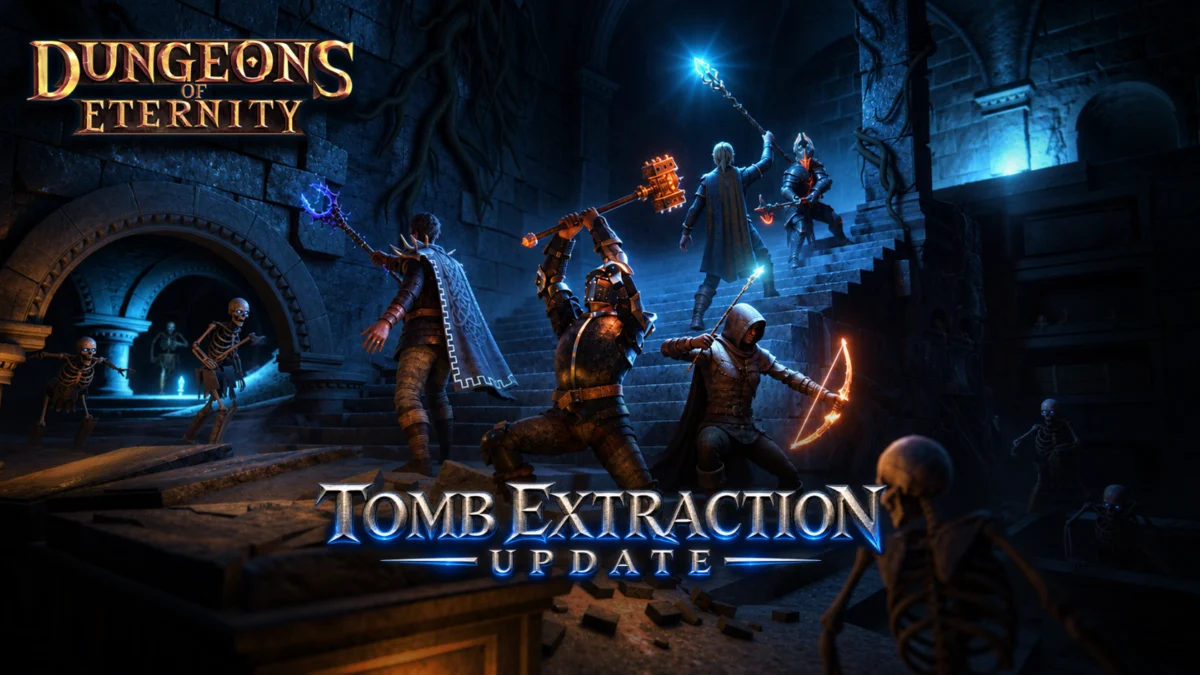
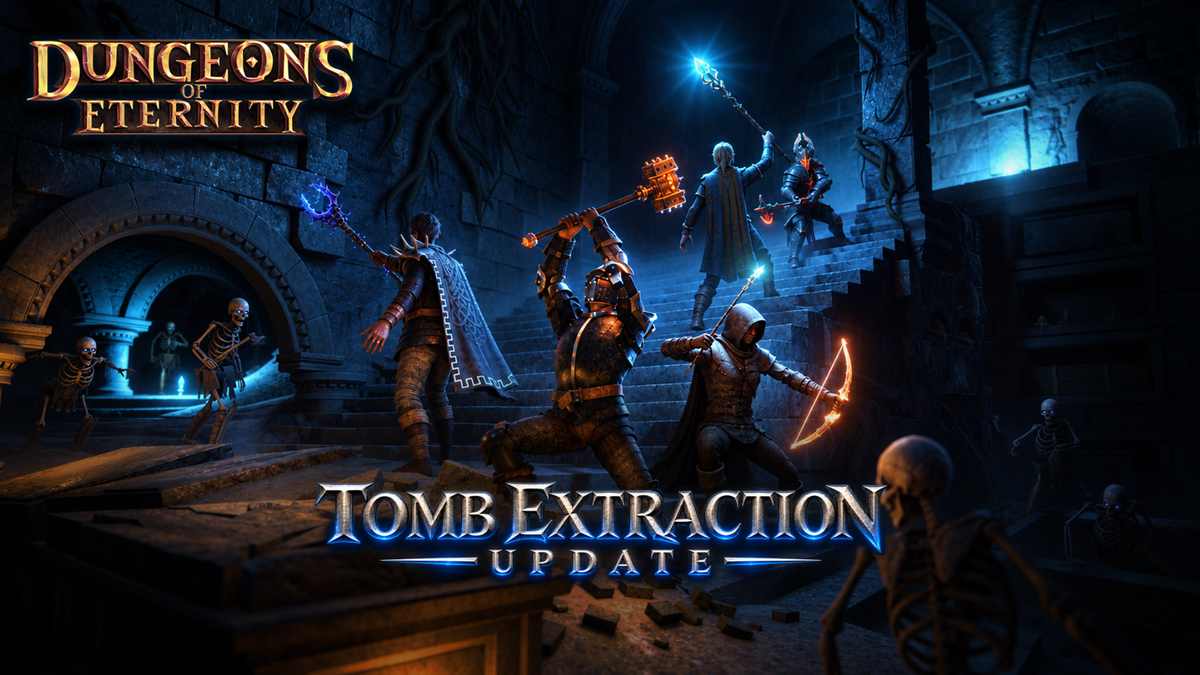
Developer Othergate has released a major, feature-dense content update for its critically acclaimed cooperative virtual reality dungeon crawler, Dungeons of Eternity. Available now across SteamVR and Meta Quest platforms, the patch introduces a high-risk, high-reward extraction-style game mode titled "Tomb Extraction," alongside an arsenal of new weapons, a formidable new enemy type, expanded loot pools, and a fully networked playable lute.
Beyond fresh content, the update includes a massive overhaul of the game’s lighting and rendering pipelines, significantly improving performance and visual fidelity. The update aims to shake up the established dungeon-crawling loop by incorporating extraction shooter mechanics—popularized by flat-screen and VR titles like Ghosts of Tabor—into a dark fantasy setting.
Key highlights of the update include:
- Tomb Extraction Mode: A brand-new game mode utilizing crypt runes collected during Dungeon Raids to dial in and generate custom, high-stakes tomb runs at the outpost.
- New Enemy Type: The Crypt Guard, an aggressive and hyper-aware adversary capable of tracking player voice chat and magic casting.
- Expanded Arsenal: Five new weapons and fresh weapon classes added to the game’s loot pool.
- Technical Overhauls: Comprehensive lighting and rendering updates designed to boost overall frame rates and performance stability.
- Social Features: A fully networked, playable 16-chord lute located in the player outpost for cooperative musical performances.
Chronology: The Evolution of Dungeons of Eternity
Since its initial launch, Dungeons of Eternity has maintained a reputation as one of the premier cooperative action-RPG experiences available in virtual reality. Built from the ground up for untethered and PCVR headsets, the game carved out a niche by offering satisfying physics-based melee combat, diverse ranged weapons, and seamless drop-in/drop-out co-op dungeon exploration.
Phase 1: Foundation and Early Reception
Upon release, Othergate established a core gameplay loop centered around procedurally generated dungeon runs, varied puzzle rooms, and intense boss encounters. Players could choose from multiple weapon classes—ranging from heavy swords and axes to magical staves and bows—while looting gold and gear to upgrade their characters. While the foundational mechanics received widespread praise, the community frequently requested deeper endgame loops, increased difficulty options, and greater enemy variety.
Phase 2: Iterative Expansion
Othergate responded to community feedback with a series of smaller patches, introducing quality-of-life adjustments, balancing tweaks, and minor gear additions. However, the studio behind the scenes was working on a more systemic shift in design philosophy. Recognizing the rising popularity of extraction-based gameplay loops in the broader gaming landscape, the development team conceptualized a way to blend the high-tension risk management of extraction shooters with the physical immersion of a VR fantasy RPG.
Phase 3: The Tomb Extraction Update
Culminating months of development, the Tomb Extraction update represents the most significant structural addition to Dungeons of Eternity to date. By integrating extraction mechanics directly into the game’s map-selection and outpost architecture, Othergate has expanded the game’s core identity beyond traditional dungeon diving into tactical, resource-conscious survival.
Supporting Data and Technical Breakdown
The latest update is not merely a content drop; it represents a comprehensive structural and technical revision of the game’s underlying systems.
The Mechanics of Tomb Extraction
The new game mode borrows heavily from the extraction genre’s core ethos: enter a dangerous zone, scavenge for high-tier loot, and escape alive. If players perish during a Tomb Extraction run, they risk losing their hard-earned spoils.
The loop functions as follows:
- Gathering Currency: Players embark on standard Dungeon Raids (designated as ‘red’ dungeons on the run selection map) specifically to hunt down and collect rare crypt runes.
- Outpost Dialing: Back at the safety of the hub outpost, players interact with a newly installed crypt-dialing device.
- Run Customization: By expending the collected crypt runes, players program parameters that determine the layout, environmental hazards, and potential loot quality of the upcoming tomb run.
- Execution and Extraction: Players deploy into the custom tomb, face elevated threats, and must successfully locate an extraction point to secure their treasures.
The Crypt Guard Threat
Adding to the tension of both standard and extraction runs is the introduction of the Crypt Guard. Unlike traditional mobs that aggro primarily based on visual line-of-sight or proximity, the Crypt Guard possesses advanced sensory mechanics. It is programmed to react dynamically to real-time audio cues—including player voice chat—as well as the arcane resonance of magic casting. Upon hearing a disturbance, the Crypt Guard will actively investigate the source, potentially alerting surrounding enemy encampments and turning a stealthy operation into an overwhelming ambush.
Performance and Visual Optimization
Running complex physics interactions and detailed fantasy environments in VR presents significant optimization hurdles. Othergate tackled this by completely overhauling the game’s lighting and rendering architecture. These under-the-hood changes reduce rendering overhead, resulting in smoother frame pacing—a critical factor in minimizing motion sickness and maintaining immersion on standalone hardware like the Meta Quest, while simultaneously elevating visual clarity on SteamVR setups.
Official Responses and Community Reception
While Othergate has traditionally taken a measured approach to public communications, letting the quality of their updates speak for itself, the reception from both the development team and the player base has been overwhelmingly positive.
Early developer previews showcased the potential of combining VR melee combat with the high-stakes tension of extraction runs. In community Discord servers and on Reddit, players have praised the studio’s willingness to experiment outside traditional dungeon-crawler boundaries.
Content creators and early testers have particularly highlighted the introduction of the playable lute. Featuring sixteen distinct chords and full network synchronization, the instrument has quickly become a favorite community meme and social tool. Players can gather in the outpost between harrowing runs to collaborate on impromptu musical performances—or, as many reviewers jokingly noted, subject their squadmates to discordant, chaotic noise.
Implications for the Future of VR Co-Op Gaming
The release of the Tomb Extraction update for Dungeons of Eternity carries several broader implications for the virtual reality gaming ecosystem.
Bridging Genre Divides
By successfully importing extraction mechanics into a fantasy VR dungeon crawler, Othergate has demonstrated that game design paradigms popularized on flat screens can find vibrant, immersive new life in virtual reality. The tactical paranoia of listening for enemy footsteps—compounded here by the Crypt Guard reacting to real-world voice chat—proves that VR physicalization enhances high-stakes gameplay loops.
Setting a Benchmark for Quest and PCVR Support
As standalone VR hardware continues to dominate market share, developers face continuous pressure to optimize games without stripping away core features. Othergate’s successful overhaul of its lighting and rendering systems serves as a technical blueprint for how studios can enhance performance while simultaneously expanding content scope on constrained hardware.
Sustaining Player Engagement
For cooperative VR titles, long-term player retention hinges on giving communities reasons to return after completing the baseline campaign. By introducing randomized, player-driven tomb configurations via the crypt-dialing device, alongside social distractions like the networked lute, Dungeons of Eternity has cemented its status as a cornerstone title in the modern VR library.
Dungeons of Eternity is available now on SteamVR and Meta Quest platforms.

