


Main Facts
The indie gaming landscape has a new obsession. Developed by Pengonauts and published by Playstack, Dicevaders is a sci-fi roguelike deckbuilder that places players in the boots of an alien invasion force captain. Propelling its players through the cosmos on a relentless quest to conquer worlds, the title has quickly emerged as one of the most compelling portable experiences of the year, earning early praise for its deeply satisfying synergy systems and loop-driven gameplay.
At its core, Dicevaders blends grid-based tactical management with luck-manipulation mechanics. Players draft specialized alien units into distinct columns on a tactical grid. Every column corresponds to a number on a rolling pool of three dice. When the dice are cast, the numbers dictate which columns activate and score points based on the base strength stats of the units stationed within them.
The primary objective is deceptively simple: hit a target damage threshold across four consecutive turns to successfully trigger an invasion. Fall short of this quota, and players are granted a brief grace period where health drains with each failed turn until a definitive "game over" screen appears. However, what elevates Dicevaders beyond a standard luck-based dice roller is its robust resource economy. Players can spend currencies such as "Budge" to manually nudge dice values up or down, or "Chrono" to initiate complete re-rolls. Combined with a shop system featuring upgradeable artifacts, unique unit synergies, and tactical sacrifices, the game manages to transform raw RNG (Random Number Generation) into an intricate puzzle of probability management.

Chronology
The trajectory of Dicevaders mirrors the modern success stories of breakout indie hits that quietly sneak onto devices and quickly consume players’ daily routines.
- Pre-Release Development: Built by Pengonauts and backed by publisher Playstack, the game shares thematic and artistic DNA with last year’s critically acclaimed Starvaders—a roguelike deckbuilder that leaned heavily into traditional shoot-’em-up mechanics. While Starvaders established the studio’s knack for blending distinct genres, the team pivoted toward a more pure, numbers-focused puzzle-strategy loop for Dicevaders.
- Early Access and Launch Phase: Following its recent arrival on platforms including the Steam Deck, the game immediately captured the attention of critics and players alike. Reviewers noted an immediate behavioral shift, with early-morning sessions on portable consoles quickly replacing standard daily routines.
- The Post-Launch Discovery Phase: As players advanced past the initial tutorial phases, strategies rapidly evolved. Within days of release, the community began pushing scores into the millions. Players discovered advanced mechanics such as unit-sacrificing—feeding one alien’s strength stats into another—and building synchronized networks of "Swarmers" to bypass standard dice restrictions altogether.
Supporting Data
While Dicevaders presents a relatively compact framework compared to massive open-world RPGs, its underlying mathematical depth and player engagement metrics highlight a meticulously balanced design:
- The Core Loop: Players must successfully accumulate target damage across precisely four turns per wave to complete an invasion phase.
- Resource Management Caps: Players manage two primary active-manipulation currencies: Budge (which adjusts a single die value up or down by one point per turn) and Chrono (utilized for full dice re-rolls).
- Scaling Potential: Thanks to cascading artifact combinations and unit absorption mechanics, early-game runs that begin with modest baseline values can quickly scale into the millions of points by mid-to-late game encounters.
- Strategic Variety: The title features a diverse roster of unique unit types, ranging from teleporting shock-troopers to back-row specialists that multiply their output when positioned in specific columns, ensuring that players cannot rely on a single, homogenous winning strategy.
Official Responses
While formal publisher statements from Playstack and developer interviews from Pengonauts have focused primarily on the game’s smooth rollout and unexpected cross-platform appeal, early critical and community reception speaks volumes about its design philosophy.

Reviewers and industry veterans have heavily praised the developers for avoiding the classic "punishing RNG" trap typical of poorly balanced roguelikes. By granting players direct agency over the dice through Budge and Chrono currencies—alongside the ability to freeze shop items for future turns—the development team has successfully cultivated a sense of absolute fairness.
"The game isn’t that stingy with them, however, and you have numerous ways to get more, which is what gives Dicevaders its feeling of fairness," notes early critical feedback regarding the game’s resource economy. Rather than leaving players entirely at the mercy of a bad roll, the design explicitly rewards forward-thinking resource allocation, ensuring that even devastating rolls can be rescued with quick tactical pivots.
Implications
Where Dicevaders Fits in the Modern Roguelike Market
The release of Dicevaders arrives during a golden era for bite-sized, high-replayability indie titles, arriving hot on the heels of major portable addictions like Blue Prince and Titanium Court. However, it also enters a crowded marketplace still searching for the next phenomenon on the scale of Balatro.
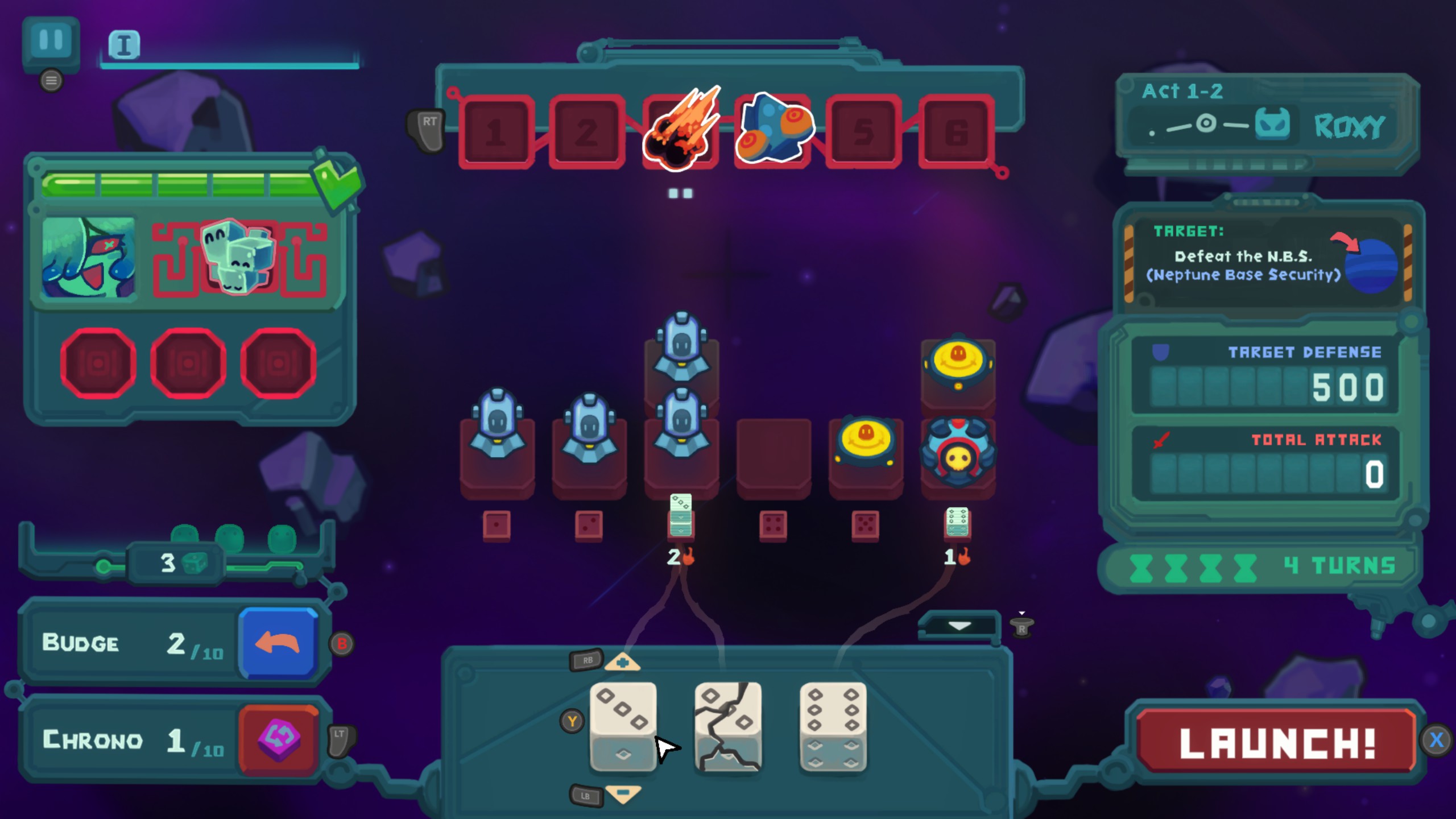
While critics note that Dicevaders may not completely reinvent the wheel for players suffering from fatigue over the sheer volume of modern deckbuilders, its execution places it in elite company. By stripping away the visual clutter of traditional arcade shooters and focusing entirely on high-level synergies, spatial grid positioning, and granular math, Pengonauts has crafted a masterclass in risk-reward balancing.
The Portable Gaming Experience
Crucially, Dicevaders has proven to be a defining title for portable hardware like the Steam Deck. Its quick-turn structure, pause-anytime mechanics, and immediate tactical feedback loop make it ideally suited for short bursts of play. As developers continue to target handheld ecosystems as primary platforms, games that balance deep strategic complexity with accessible, snack-sized gameplay loops will likely dictate the direction of the indie sector for years to come.
Ultimately, Dicevaders succeeds because it respects the player’s time while demanding their complete attention. It offers a labyrinth of interconnected mechanics that take dozens of hours to fully untangle, ensuring that players will continue booting up their portable devices long before their workdays even begin.

