

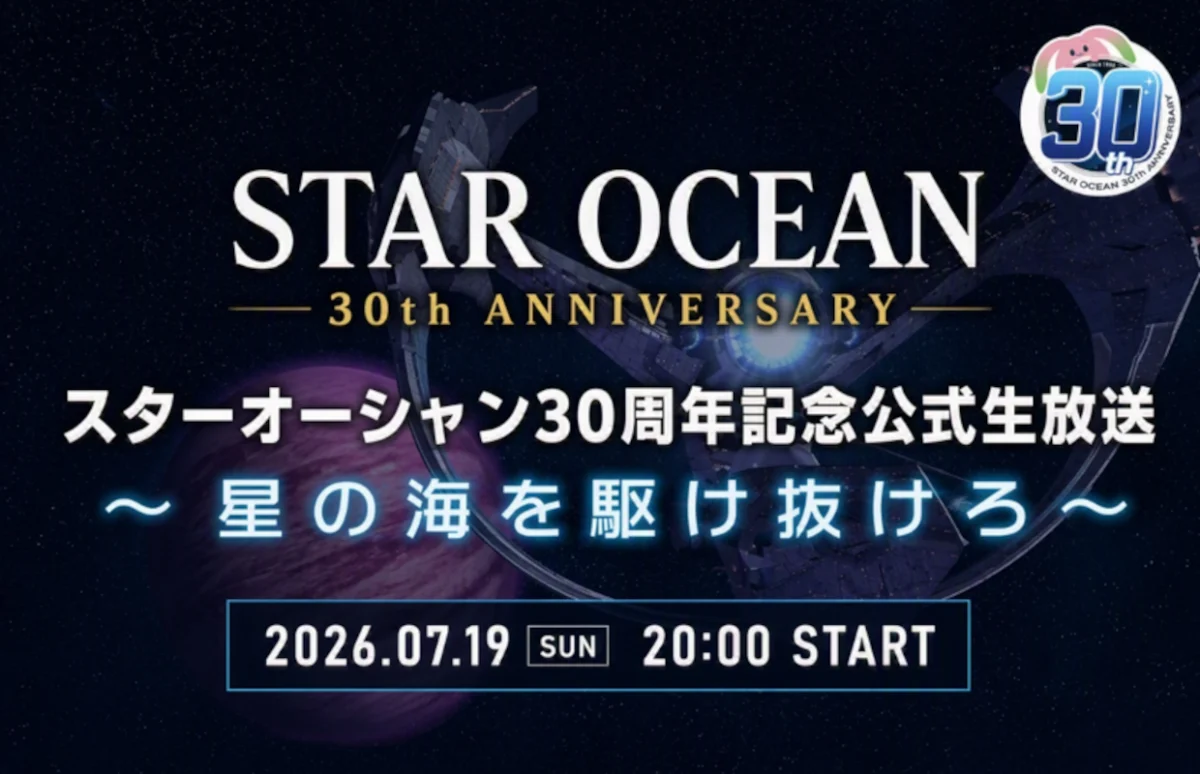
On July 19, 2026, the Star Ocean series reaches a monumental milestone: its 30th anniversary. Since the debut of the original title on the Super Famicom in 1996, the franchise—developed by tri-Ace and published by Square Enix—has carved out a unique space in the RPG genre, blending high-concept science fiction with traditional fantasy tropes. To commemorate this three-decade journey, Square Enix has officially announced a celebratory livestream, inviting fans to reflect on the series’ storied history.
The 30th Anniversary Livestream: What to Expect
Square Enix confirmed via their official social media channels that the commemorative event will be broadcast live on YouTube on July 19, beginning at 20:00 JST (11:00 UTC). The event promises to be a nostalgic retrospective, featuring key figures who have been instrumental in the series’ longevity.
Among the confirmed guests are Producer Kei Komaki from Square Enix and Yuichiro Kitao from Gemdrops. Gemdrops’ involvement is particularly notable, given their recent critical success with the development of Star Ocean: The Second Story R. Their collaboration with Square Enix helped breathe new life into one of the most beloved entries in the franchise, setting a high bar for future remakes and remasters.
However, Square Enix has been transparent regarding the scope of the event. In a move to manage community expectations, the official announcement includes a disclaimer: there will be no reveals of a brand-new, mainline Star Ocean title during this broadcast. While this may come as a disappointment to those hoping for a sudden announcement of a potential Star Ocean 7, the event is framed as a celebration of the community and the history of the IP rather than a PR vehicle for upcoming software development.
A Chronology of the Stars: 30 Years of Innovation
The Star Ocean series has always been defined by its ambition. Created by Yoshiharu Gotanda and the team at tri-Ace—a studio formed by former Wolf Team employees—the series was designed to push the technical boundaries of the consoles it inhabited.
The Foundation (1996–2003)
The original Star Ocean (1996) was a technical marvel for the Super Famicom, utilizing a custom sound driver and a unique "Private Action" system that allowed for character-driven narrative depth rare for the time. This was followed by the critically acclaimed Star Ocean: The Second Story (1998) on the PlayStation, which cemented the franchise’s identity through its dual-protagonist structure and intricate crafting systems.
The early 2000s saw the release of Star Ocean: Till the End of Time (2003), a title that remains divisive yet undeniably ambitious. It shifted the series to full 3D environments and introduced a plot twist that fundamentally altered how fans perceived the lore of the entire universe, sparking debates that continue to populate gaming forums today.
The Modern Era and Renaissance (2009–Present)
Following the release of Star Ocean: The Last Hope (2009) and the somewhat experimental Star Ocean: Integrity and Faithlessness (2016), the series took a hiatus from the spotlight. The release of Star Ocean: The Divine Force in 2022 signaled a return to form, earning praise for its fast-paced, fluid combat and expansive exploration mechanics.
Perhaps the most significant development in recent years has been the "Remake Renaissance." The release of Star Ocean: First Departure R (2019) and the stellar Star Ocean: The Second Story R (2023) has demonstrated that there is a massive appetite for the series’ roots. By utilizing a "2.5D" aesthetic—marrying classic pixel art with modern lighting and high-definition environmental effects—Gemdrops and Square Enix successfully bridged the gap between nostalgia and modern design expectations.
Supporting Data: The Series’ Commercial and Critical Trajectory
The endurance of Star Ocean is evidenced by its consistent ability to attract both long-time veterans and new audiences. The Divine Force, in particular, was positioned as a revitalizing entry point for the franchise. Critically, the series has maintained a reputation for deep, customizable combat systems—often described as "real-time action" with a high skill ceiling—and expansive crafting systems (Item Creation) that allow players to break the game’s difficulty curve if they invest the time.
The success of The Second Story R is a critical data point for Square Enix. According to user reception and sales reports from the fiscal year of its release, the game outperformed expectations, proving that remaking "legacy" titles with a modern polish is a viable strategy for long-running JRPG franchises. The upcoming 30th-anniversary stream serves as a testament to this success, as it highlights the continued viability of the intellectual property.
Official Responses and Industry Context
In anticipation of the stream, stakeholders within Square Enix have emphasized the importance of community connection. The choice to host the event on the exact anniversary date underscores the company’s desire to honor the franchise’s legacy.
Industry analysts suggest that by clearly stating no new games will be announced, Square Enix is attempting to curb the "hype cycle" that often leads to fan backlash. By focusing on the history, the developers, and the fan community, the company is positioning this event as a "thank you" to the players rather than a marketing push.
"We are deeply grateful for the fans who have journeyed through the stars with us for three decades," a representative for the development team noted in preliminary press materials. "This stream is intended to be a retrospective look at where we have been and the memories we have shared together."
Implications for the Future of the Franchise
While no new title is on the horizon for this specific broadcast, the Star Ocean brand is clearly in a state of stable transition. The success of the recent remakes suggests that Square Enix may continue to evaluate the back catalog of the franchise for similar treatments. Titles like Till the End of Time or The Last Hope are ripe for visual modernization, provided the right partnerships are in place.
Furthermore, the integration of Gemdrops into the anniversary celebration highlights the growing trend of outsourcing remakes to studios that specialize in a particular artistic vision. By utilizing external talent, Square Enix can keep its historical IPs relevant without necessarily diverting its primary internal development resources away from new, original projects.
The 30th anniversary of Star Ocean is more than just a calendar date; it is an opportunity for the franchise to define its identity in the modern gaming landscape. As the industry moves toward increasingly photorealistic and open-world experiences, Star Ocean holds a distinct place as a franchise that refuses to abandon its roots in tactical combat, character-driven melodrama, and the "space opera" aesthetic that first captured the imaginations of players in 1996.
Looking Ahead
Fans interested in the stream should mark their calendars for July 19 at 20:00 JST. Whether the event will include retrospectives on the development of the Item Creation system, deep dives into the lore of the Pangalactic Federation, or simply a celebration of the music and character design that defined the series, it promises to be a must-watch for any JRPG enthusiast.
Even without the promise of a new game, the anniversary serves as a reminder that Star Ocean remains one of the most resilient franchises in Square Enix’s portfolio. Its ability to survive, adapt, and eventually flourish in a changing market is a testament to the strength of its core gameplay loop and the loyalty of its dedicated fanbase. As we look back on 30 years, it is clear that the Star Ocean series is not just a collection of games, but a enduring universe that continues to evolve with every passing year.

