

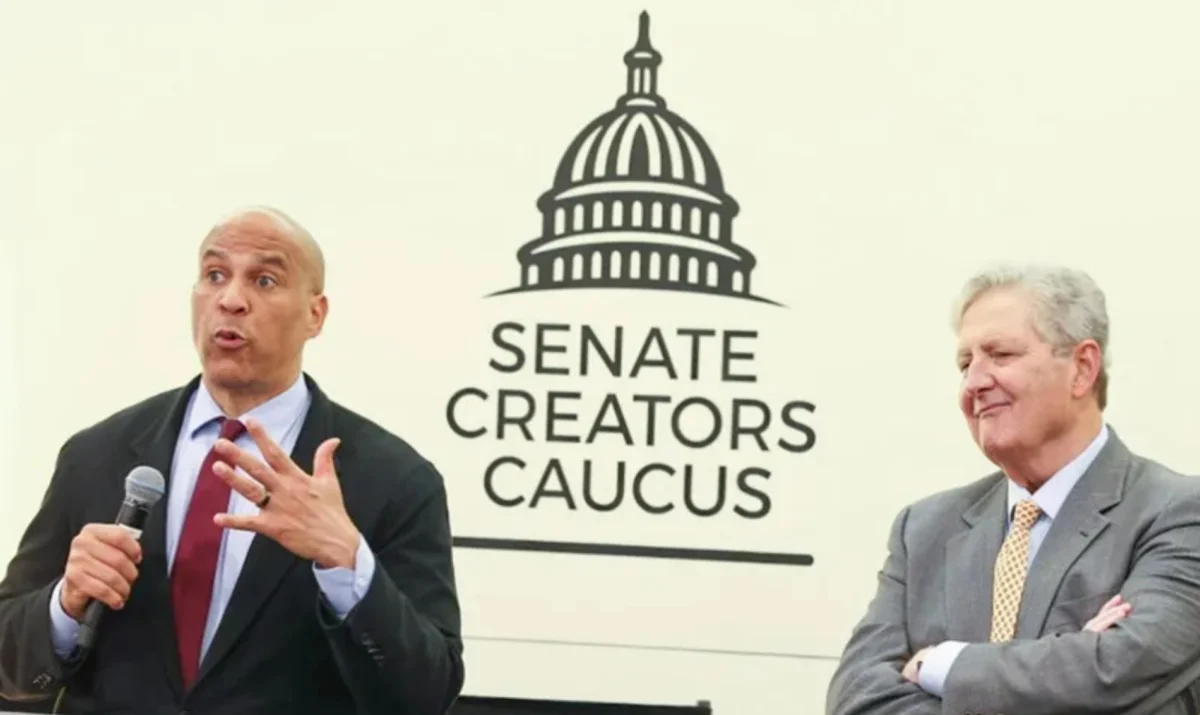
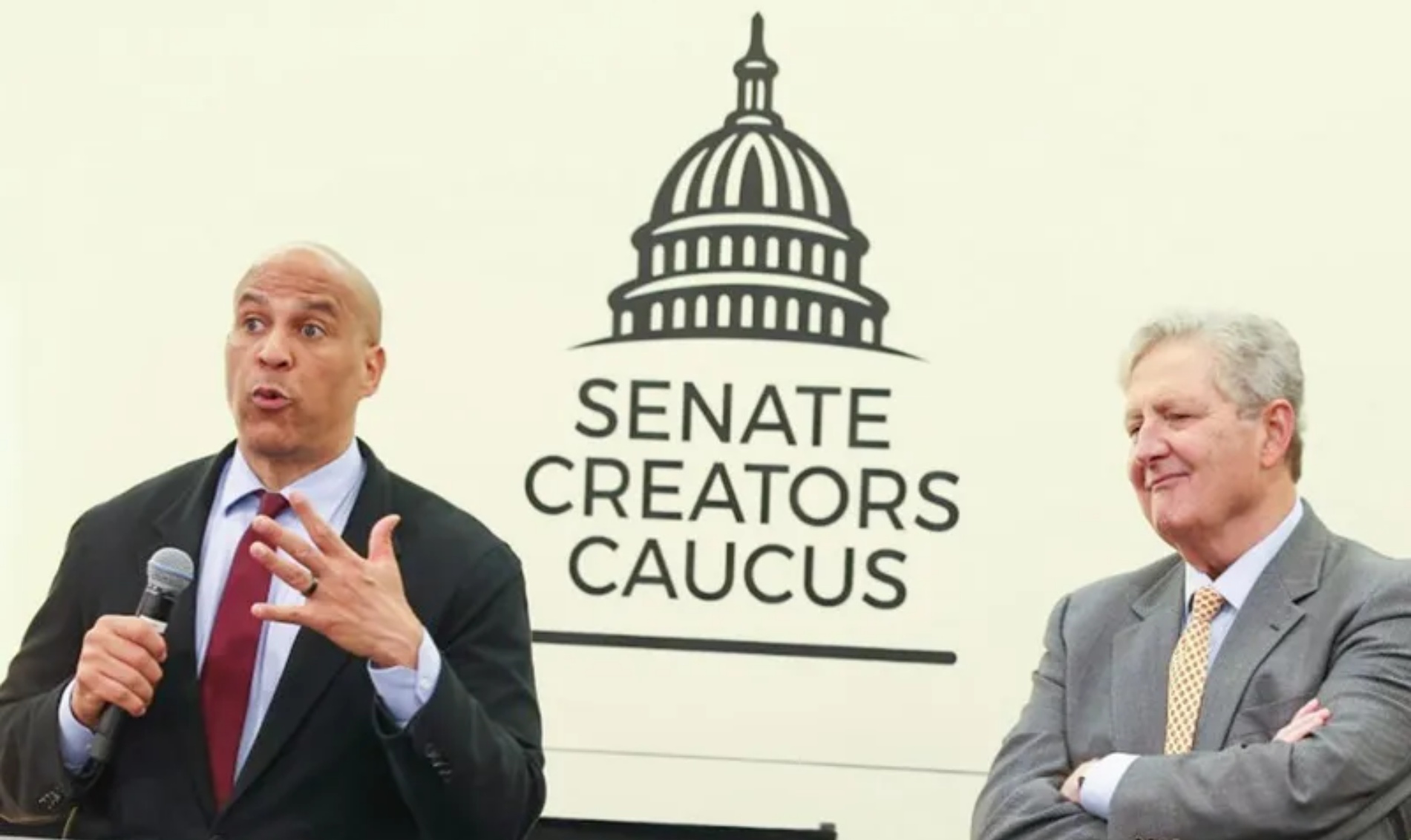
The landscape of American commerce and political discourse has undergone a seismic shift over the last decade. No longer confined to the peripheral spaces of the internet, the "creator economy"—a multi-billion dollar engine of small business, employment, and cultural synthesis—has arrived at the steps of the U.S. Capitol. In a significant move toward institutional legitimacy, a bipartisan duo of U.S. Senators has officially launched the Senate Creators Caucus, a legislative body dedicated to recognizing digital creators not merely as entertainers, but as essential pillars of the modern American economy.
The Genesis of the Senate Creators Caucus
The establishment of the Senate Creators Caucus, spearheaded by Senator Cory Booker (D-NJ) and Senator John Kennedy (R-LA), marks a pivotal moment in the professionalization of the digital media industry. Announced in conjunction with a formal panel at the Dirksen Senate Office Building in Washington, D.C., the caucus serves as a dedicated platform to address the unique challenges and opportunities faced by the millions of Americans who earn their living through social media, streaming, and digital content production.
According to a formal statement released via YouTube’s official blog, the Caucus is designed to function as a vehicle for "recognizing creators as small business owners, job engines, and culture drivers." By bringing these stakeholders into the halls of power, the Senate is signaling a departure from the reactive, often adversarial, relationship that has historically characterized the interaction between lawmakers and Big Tech platforms.
The launch event featured a diverse cross-section of the creator ecosystem, highlighting the breadth of the industry. Notable participants included industry veterans such as Jackie Aina, MatPat (Matthew Patrick), Mark Vins of Brave Wilderness, Shira Lazar, and Kati Morton. The panel also extended beyond traditional influencers to include voices from the educational and entrepreneurial sectors, such as Dr. Javoris Hollingsworth of Gracie’s Corner, Ian Schwartzman of the Joe Budden Network, and Avery Smith of the Louisiana Crawfish Company.
A Chronology of Creator Advocacy in D.C.
The road to the Senate floor has been a multi-year effort, paved by the increasing influence of creators in national elections and a growing realization by policymakers that the social media ecosystem is poorly understood by the legislative branch.
The Turning Point: 2024 and Beyond
The 2024 election cycle served as a definitive "proof of concept" for the political power of influencers. As creators played a central role in shaping public opinion and mobilizing voters—particularly younger demographics—it became clear that they were no longer just observers of politics, but active participants. However, this increased visibility also exposed a glaring "understanding gap." Many elected officials, accustomed to traditional media gatekeepers, struggled to grasp the intricacies of algorithms, digital intellectual property, and the precarious nature of the creator-as-entrepreneur model.
The Congressional Precedent
Recognizing this disconnect, digital luminaries like MatPat and other industry leaders took the initiative to establish the Congressional Creators Caucus in the House of Representatives last year. This lower-chamber initiative provided the blueprint for the current Senate effort. It fostered a culture of "direct-to-Congress" communication, proving that when creators are given a seat at the table, they can effectively lobby for policies that reduce bureaucratic friction and protect their livelihoods.
Escalating Engagement
Since the formation of the House caucus, the legislative pace has accelerated. Representative Ro Khanna (D-CA) made headlines earlier this year by proposing a "Creator Bill of Rights," aimed at protecting creators from predatory contracts and platform instability. Meanwhile, Representative George Whitesides (D-CA) has sought to engage with the medium on its own terms, even experimenting with a congressional-style take on the popular Hot Ones interview format. This trend of politicians adopting the language, mannerisms, and platforms of the creator economy reflects a desperate, albeit sometimes clumsy, attempt to capture the youth vote.
Supporting Data: Why the Senate is Taking Notice
The economic data behind the creator economy is now too substantial for federal lawmakers to ignore. While individual creators may appear to be "independent actors," the aggregate impact of the industry is staggering.
- Job Creation: Creators act as small business owners who hire editors, producers, legal counsel, and merchandise managers. They represent a decentralized workforce that has flourished in the absence of traditional corporate structures.
- Economic Diversification: As demonstrated by participants like Avery Smith, creators are revitalizing traditional industries—from agricultural retail to local manufacturing—by utilizing digital storytelling to access global markets.
- The "Grey Area" Problem: Legislative urgency has also been driven by the need to regulate the intersection of influence and finance. Senator Adam Schiff (D-CA) has recently turned his attention to the campaign finance loophole that allows creator endorsements to exist in an underregulated space. As creators become the primary conduits for political messaging, the risk of "dark money" influence through influencer marketing has prompted a bipartisan interest in transparency and disclosure.
Official Responses and Stakeholder Perspectives
The inaugural panel at the Dirksen Senate Office Building was more than a ceremonial launch; it was a functioning legislative hearing. Creators were given the floor to inform Sens. Booker and Kennedy about the realities of their daily operations. The testimony centered on three key pillars: the need for standardized contract protections, the complexities of platform algorithmic changes, and the recognition of digital creators as legitimate small business owners for the purpose of tax and benefit eligibility.
Senator Booker, a vocal advocate for this dialogue, has consistently pushed for higher-level engagement. His previous work with Senator Tina Smith (D-MN) to host a summit for creators, journalists, and media activists served as the direct precursor to this Caucus. For the Senators involved, the goal is not merely to "regulate" the internet, but to provide a legislative framework that allows the creator economy to continue its rapid growth while protecting the rights of the individuals who power it.
The Implications: What This Means for the Future
The formation of the Senate Creators Caucus signals a permanent change in how Washington perceives digital media. There are several critical implications for the coming years:
1. Legislative Stability vs. Platform Power
The primary friction in the creator economy is the power imbalance between platforms (e.g., YouTube, TikTok, Meta) and the creators who generate the content. By establishing a formal caucus, creators are creating a pressure valve for legislative oversight. Should platforms engage in opaque demonetization or abrupt policy shifts, the Senate now has a direct line of communication to the affected small business owners.
2. The 2026 Midterm Strategy
The timing of this caucus is not coincidental. With the 2026 midterm elections approaching, the influence of the creator community is expected to reach an all-time high. By formalizing this relationship, the Senate is signaling that it wants to be at the forefront of the conversation, rather than reacting to it. Creators, in turn, have gained a powerful venue to lobby for policies that favor digital entrepreneurship.
3. Professionalization of the Industry
As creators interact more frequently with the Senate, the industry will likely see a move toward greater professional standards. Expect to see discussions regarding health insurance for independent contractors, standardized copyright protections for creators, and potential tax reform that acknowledges the unique expense-heavy nature of digital content production.
4. A Cultural Shift in Governance
Finally, the Caucus represents a generational transition. As the median age of the electorate shifts toward digital natives, the Senate is being forced to adapt. The adoption of creator-centric policies is no longer a niche interest; it is a fundamental requirement for any politician hoping to stay relevant in the 21st century.
Conclusion
The Senate Creators Caucus is more than a committee—it is a recognition that the digital frontier is now the American mainstream. By bridging the gap between the chaotic, fast-moving world of social media and the deliberate, rule-bound nature of the U.S. Senate, Booker and Kennedy have opened a new chapter in American civic life. Whether this will result in substantive legislative reform remains to be seen, but for the millions of creators who have spent years building empires in the cloud, having a seat at the table in Washington is, in itself, a historic victory.
As we look toward the 2026 midterms and beyond, the influence of the creator economy will only continue to scale. The Senate has finally decided that if they cannot beat the digital tide, they must learn to navigate it. The "influencer election" of 2024 was only the prologue; the real legislative drama is just beginning.

