

By Gaming Industry Desk
Comprehensive Gaming & Localization Retrospective
Main Facts: The Enduring Riddle of Final Fantasy VII on PC
Few acronyms and platform combinations carry as much historical ambiguity as "Final Fantasy 7 PC." Depending on who you ask, the phrase might refer to the trapezoidal-box port published by Eidos Interactive in 1998, the digital re-release that hit Square Enix’s storefront in 2013, or the modern, multi-part Unreal Engine remake trilogy that began nearly a decade later. Calling the 1998 PC release the "original" only deepens the confusion, as it introduced numerous technical and textual idiosyncrasies that set it apart from the iconic 1997 PlayStation original.
When Square Enix brought Final Fantasy VII to modern PC platforms in 2013, the publisher had a golden opportunity to deliver a definitive, polished version of the JRPG masterpiece. Instead, the update opted for shortcuts. While it corrected a few glaring grammatical oversights from the notoriously rushed late-90s localization—most notably smoothing over minor structural slips—it left the vast majority of the script untouched.
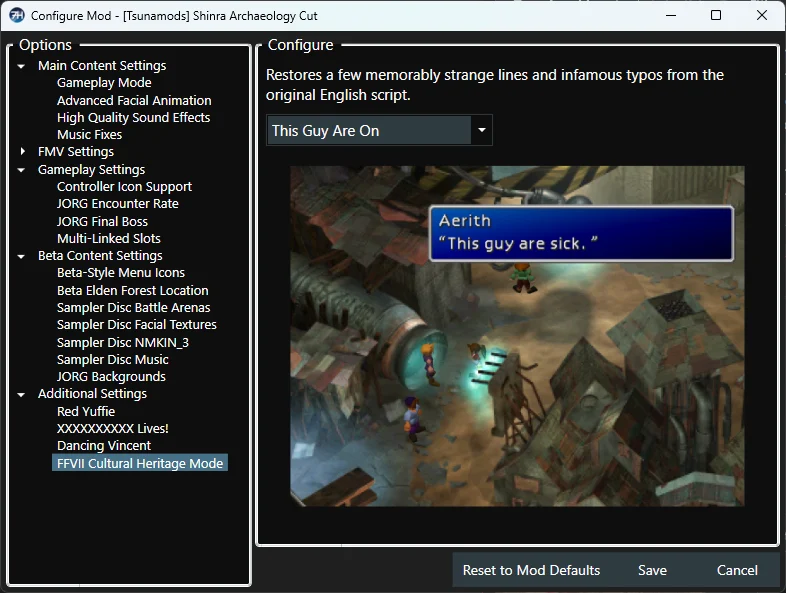
The result was a frustrating "worst of both worlds" scenario. Iconic localization blunders like "this guy are sick" were surgically altered to "this guy is sick," yet the broader narrative remained frequently convoluted, tonally erratic, and structurally misleading in English.
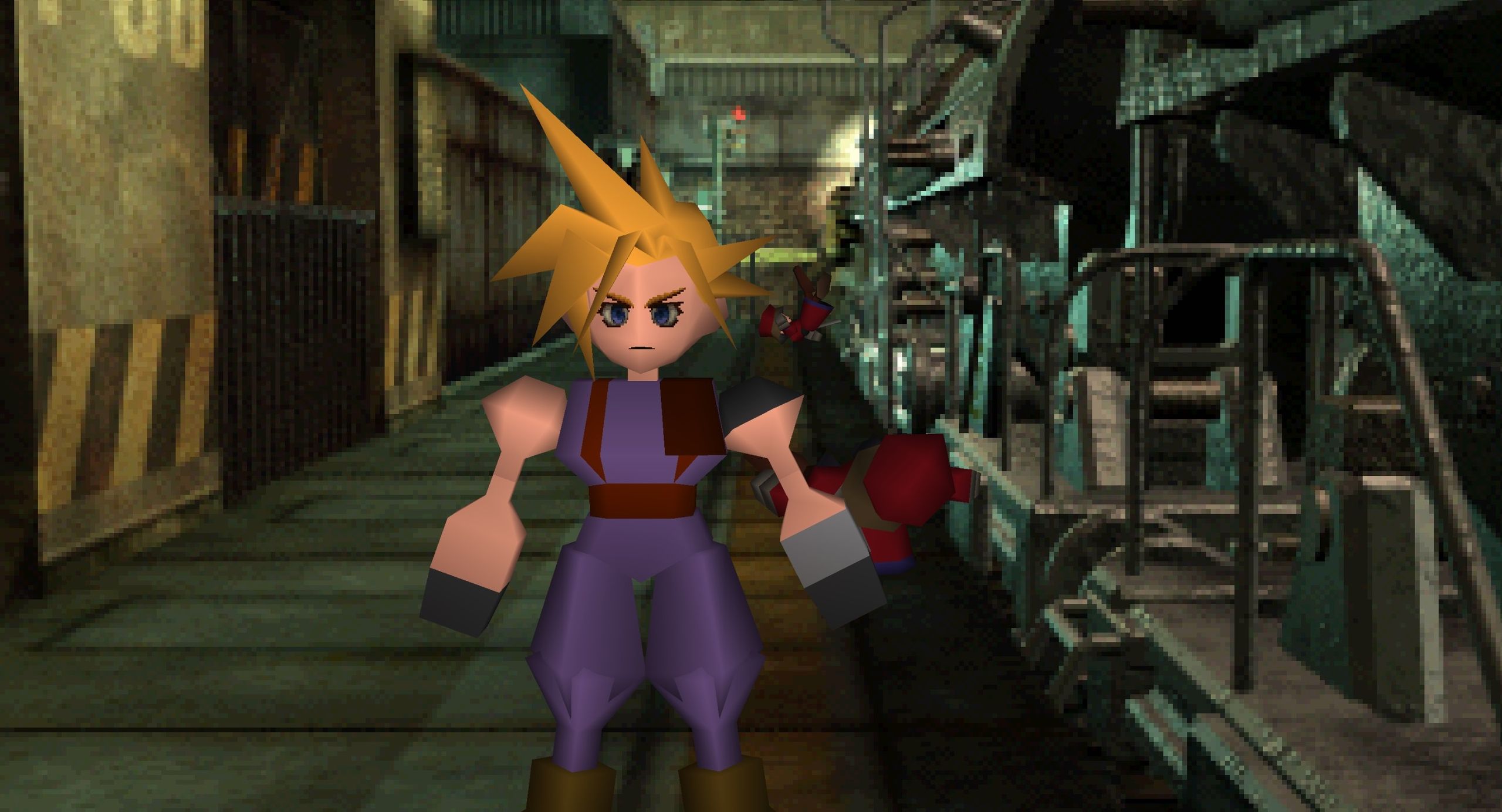
Enter the fan community. Two years ago, a dedicated cadre of modders released the monumental Shinra Archaeology Cut, a comprehensive, top-to-bottom retranslation designed to grant the legendary script the narrative clarity and emotional resonance it always deserved. Operating within the robust ecosystem of the fan launcher 7th Heaven—home to graphics overhauls, gameplay rebalances, and fan dubs—this translation project has transformed how players experience Midgar and beyond.
Recently, the modding community unearthed another treasure: a meticulously maintained, side-by-side comparison spreadsheet. Spanning every single line of dialogue, this document juxtaposes the official PC release, the Japanese original text, and the new fan translation by community translator TurquoiseHammer, revealing just how deeply the original 1997 localization compromised its source material.
Chronology: From 1997 Localizations to Fan Renaissance
To understand the magnitude of the Shinra Archaeology Cut, one must trace the timeline of Final Fantasy VII’s journey to Western audiences and the ongoing struggle for textual accuracy.
1997–1998: The Rush to the West
During the production of Final Fantasy VII, Square (now Square Enix) faced immense pressure to bring its first 3D, CD-ROM-based epic to North America and Europe. Handled under tight deadlines by a small localization team, the English translation was famously rushed. Translators had to contend with hardcoded character limits, primitive tools, and incomplete contextual information. This gave birth to legendary, albeit nonsensical, lines of dialogue, awkward sentence structures, and an overall sharper, more cynical tone for protagonist Cloud Strife and his companions than was present in Kazushige Nojima’s original Japanese script.

2013: The Digital Re-Release Missed Opportunity
When Square Enix ported the PC version of Final Fantasy VII to modern systems in 2013, fans anticipated a script overhaul. While the company fixed minor typographical errors, it preserved the core translation. This created a jarring dissonance: players were treated to cleaner programming and modern operating system compatibility, but they still had to wade through murky explanations of Sephiroth’s identity, Jenova’s origins, and the nature of the Lifestream.
2021–2023: The Birth of the Shinra Archaeology Cut
Frustrated by decades of opaque storytelling, fan translator TurquoiseHammer and contributors behind the Shinra Archaeology Cut embarked on a multi-year project to re-examine every line of the Japanese script. Released via the 7th Heaven mod manager, the mod provided a clean, context-accurate retranslation. Crucially, recognizing that the community had grown deeply attached to its linguistic history, the developers included an optional "Cultural Heritage Mode," allowing players to experience the newly polished prose while keeping select infamous typos and quirky turns of phrase—such as "this guy are sick"—alive.
Supporting Data: A Line-by-Line Breakdown of Textual Distortion
Side-by-side comparisons reveal that the original English localization didn’t merely cut corners; it frequently misunderstood plot-critical mechanics, added unsolicited edge, and obscured core character motivations. Below is a breakdown of how key lines contrast across official localizations and the Shinra Archaeology Cut.
1. The Iconic Send-Off
- Official PC Release: "All right, everyone, let’s mosey." (Spoken by Cid)
- Literal Japanese: Alright, everyone. Let’s head out.
- Shinra Archaeology Cut: Cid pressures Cloud to use a more commanding phrase ("Move out!"), leading to Cloud awkwardly shouting, "Let’s move out!" before Cid accepts the more relaxed "mosey" cadence. The retranslation captures the awkward camaraderie between the characters with greater nuance.
2. The Identity of the "Ancients" and Jenova
- Official PC Release: Convoluted dialogue frames Jenova as an Ancient (Cetra) who became a "calamity from the skies."
- Literal Japanese: Clarifies early on that Jenova is an interstellar parasite, a cosmic disaster distinct from the planet’s indigenous Cetra.
- Shinra Archaeology Cut: Restores crucial exposition where Cloud expresses profound shock that Jenova was never an Ancient at all, reshaping the player’s understanding of the entire cosmic threat.
3. Tifa and Cloud’s Memories
- Official PC Release: Dense and occasionally contradictory dialogue regarding how Cloud’s persona was constructed from Tifa’s memories of other young men.
- Shinra Archaeology Cut: Sephiroth’s explanation of Jenova’s mimicry is rendered with clinical precision. The script explicitly details how Jenova scavenged recollections within Tifa’s mind to piece together a "boy named Cloud," directly addressing a major plot pillar that the 1997 release left muddled.
4. Tone and Characterization
Throughout the original localization, edgy vernacular was injected into scenes where characters were meant to sound weary or philosophical. For instance, Barret’s musings on existential dread and personal identity were often padded with aggressive slang, whereas the retranslation presents a more grounded, weary warmth fitting a father fighting for his home.
Official Responses and Community Impact
While Square Enix has never officially integrated fan translations into its commercial releases—preferring to focus its modernization efforts on high-budget remakes like Final Fantasy VII Remake and Rebirth—industry observers have long acknowledged the unique charm of the 1997 script.
When asked about the localization legacy, developers from the original era have often noted that the constraints of 1990s video game development forced creative improvisations. Phrases that became memes, such as Aerith’s deadpan medical assessment or Cid’s sarcastic encouragement, transcended their technical origins to become embedded in gaming culture.
The release of the Shinra Archaeology Cut highlights a fascinating dichotomy within the retro gaming community:
- Purists vs. Modernizers: While some fans prefer the nostalgic comfort of the original English text—complete with its grammatical quirks—others view the retranslation as a vital act of media preservation that finally honors the original artistic intent of Square’s writers.
- The Rise of Community Mods: Tools like 7th Heaven continue to push the boundaries of what is possible on PC, transforming twenty-year-old software into modular canvases where textual integrity and modern graphical fidelity can coexist.
Implications: What This Means for Retro JRPG Preservation
The success of the Shinra Archaeology Cut carries broad implications for the preservation and retranslation of classic Japanese role-playing games.
1. Redefining "Localization" vs. "Translation"
For decades, publishers argued that localization required wholesale rewrites to appeal to Western markets. Projects like this prove that modern audiences increasingly value fidelity and narrative clarity over forced colloquialisms and arbitrary edginess. By offering tools like "Cultural Heritage Mode," modders have demonstrated that preservationists can honor nostalgic artifacts without sacrificing narrative integrity.
2. The Future of PC Modding as Historical Correction
As commercial publishers increasingly abandon older editions of classic titles in favor of remakes and remasters, community-driven projects are stepping into the role of digital historians. By maintaining meticulously cross-referenced spreadsheets and open-source translation databases, fans are ensuring that the true narrative text of foundational video games is not lost to time or corporate oversight.
3. A Lasting Tribute to a Masterpiece
Final Fantasy VII remains a monumental achievement in interactive storytelling. Thanks to the tireless efforts of modders and translators, PC players can now experience Midgar, the Lifestream, and Cloud’s shattered psyche with a level of textual accuracy that bridges the cultural gap between 1997 Japan and the modern global gaming community. And thankfully, thanks to thoughtful mod design, "this guy are sick" remains untouched—ensuring that history’s most beloved typo lives on, now and forever.

