

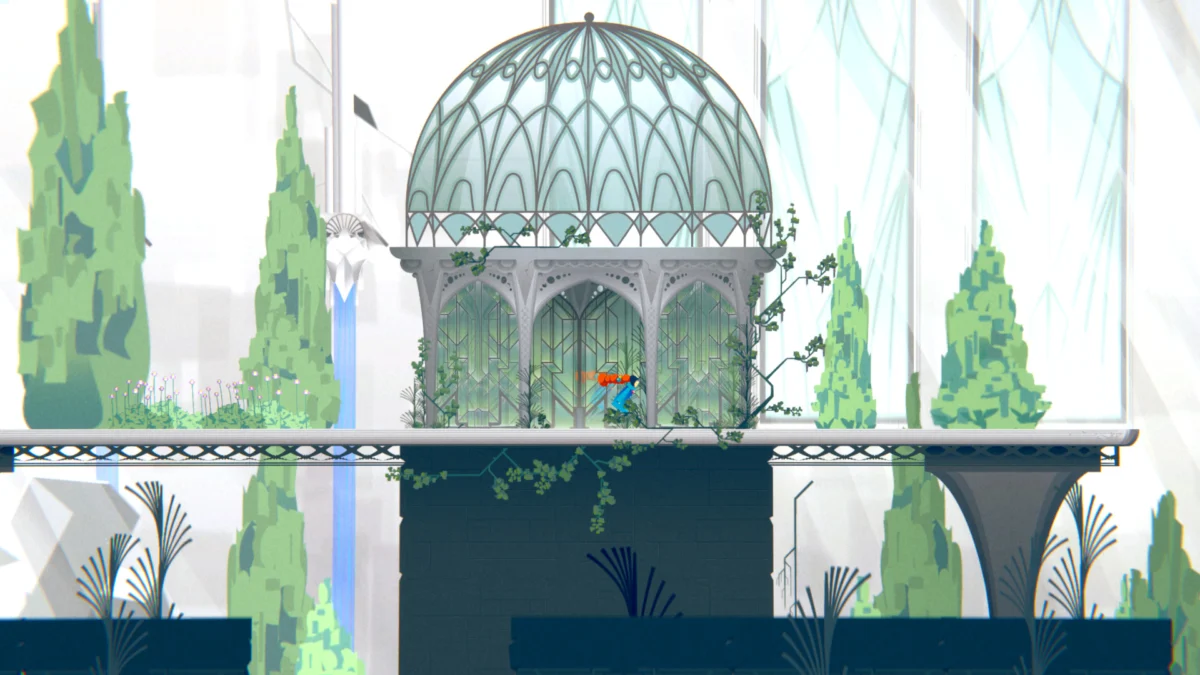
The indie gaming landscape has reached a saturation point where the term "story-rich" has become a double-edged sword. While it once promised profound, narrative-driven experiences, it is now frequently deployed as a marketing buzzword, often masking a lack of substance with high-fidelity aesthetics. Aspire: Ina’s Tale, developed by Wondernaut Studio and released in late 2021, stands as a prime example of this phenomenon. While the game presents a visually arresting 2D platforming world, it struggles to transcend the derivative tropes that have come to define the genre, leaving players with a beautiful, yet hollow, experience.
The Premise: Familiar Tropes in a Polished Shell
At its core, Aspire: Ina’s Tale follows the well-trodden path of contemporary 2D platformers, drawing frequent, unfavorable comparisons to titles like Hoa, Gris, and Minute of Islands. The narrative centers on Ina, a protagonist who adheres to the now-standard archetype of the "spindly-legged waif" navigating a world of profound mystery.
Waking within the confines of a monolithic, sentient Tower that sustains itself on the dreams of its inhabitants, Ina discovers her role as the "Heart of the Tower." Tasked with maintaining the structure’s delicate balance, she must navigate its labyrinthine corridors to find a way home to Kamiura. The plot is heavily flavored with "chosen one" narratives, positioning Ina as the pivot point between a mysterious Architect and the various inhabitants of the Tower.
While the art direction is undeniably crisp—featuring polished hand-painted assets, intricate lighting, and clever environmental details like reflections in crystal and glints off archaic armor—the narrative lacks the narrative depth required to support such high visual production values. The story attempts to explore themes of loss, duty, and the beauty found in broken things, but it does so through a lens so familiar that it fails to elicit a genuine emotional response.
Chronology of Gameplay and Design Philosophy
The gameplay loop of Aspire is characterized by a reliance on classic puzzle-platformer mechanics. The experience is segmented into distinct areas, each introducing a new mechanical focus, such as resizing objects or manipulating light sources.

Early Impressions and Initial Engagement
Upon starting the game, players are greeted by a sense of wonder. The initial puzzles provide a satisfying balance of challenge and reward. The absence of traditional combat—replaced by a system where the player must evade monsters using light-emitting sources—is a refreshing design choice that reinforces the game’s focus on exploration and atmospheric puzzle-solving.
The Mid-Game Slump
As the game progresses, the initial charm begins to wear thin. The puzzles, while conceptually diverse, often hit "brick walls of frustration." The transition from curiosity to irritation is exacerbated by the lack of narrative stakes. Because the story feels like a collection of boilerplate tropes regarding "innocence lost" and "restoring joy," the motivation to overcome increasingly tedious platforming challenges diminishes.
The Final Act
By the time the player reaches the final stages of the game, the experience often shifts from an engaging journey to a process of resignation. The lack of a compelling narrative arc means that the difficulty spikes in the final levels feel less like a climax and more like an endurance test. The absence of meaningful player agency in the story—coupled with the rigid, unforgiving platforming—makes reaching the end feel more like a chore than a triumph.
Supporting Data: The Mechanics of Frustration
The core tension in Aspire: Ina’s Tale lies in the disconnect between its precise requirements and its unrefined movement controls.
- Platforming Precision: The game demands exacting timing, yet Ina’s movement physics are notably stiff. This is particularly evident during rope-swinging sequences, which often feel unresponsive and inconsistent.
- Trial and Error: Due to the sensitivity of the platforming, the game relies heavily on "Goldilocks-style" experimentation—finding the exact pixel-perfect position to execute a jump or a pull. This results in a cycle of constant death and respawn.
- Checkpointing: While the developers included frequent checkpoints—a design choice that prevents total player abandonment—it also signals an awareness that the mechanics are prone to failure. Without these frequent respawns, the game’s difficulty would likely be viewed as prohibitively high, further highlighting the misalignment between the game’s movement physics and its design goals.
- Hardware Limitations: Playing the game on the Nintendo Switch highlights these mechanical flaws. Even with well-calibrated hardware (notably the absence of Joy-Con drift), the character’s movement feels imprecise, leading to significant friction in high-stakes platforming sections.
Official Responses and Industry Context
Wondernaut Studio positioned Aspire as a "story-rich" experience, aiming to create a contemplative journey through a mystical world. In interviews surrounding the release, the development team emphasized the "Tower" as a living character, designed to reflect the protagonist’s emotional journey.
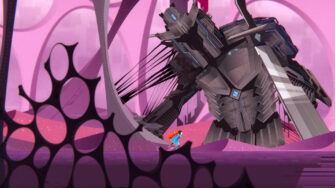
However, the critical reception suggests a gap between the developers’ intent and the players’ experience. Critics have noted that while the team succeeded in creating a beautiful environment, they missed an opportunity to "get weird" with the storytelling. By sticking to established conventions—such as the "innocent protagonist" and the "ancient, mysterious architecture"—the game failed to distinguish itself in a crowded market.
Industry analysts often point to Aspire as a cautionary tale in the "indie bubble." When visual fidelity and atmosphere become the primary selling points, the underlying gameplay and narrative must be sufficiently innovative to sustain interest. Without that innovation, a game risks being labeled as "derivative," regardless of its artistic beauty.
Implications for the Genre
The critical reception of Aspire: Ina’s Tale carries several implications for the future of the narrative-driven 2D platformer genre:
- The Saturation of Aesthetics: As art tools become more accessible, beauty is no longer a differentiator; it is the baseline. Future titles must prioritize unique narrative voices and mechanics that serve the story, rather than relying on atmospheric "vibe-checks."
- The "Story-Rich" Paradox: Developers must be wary of using "story-rich" as a descriptor when the narrative lacks depth. Players are becoming increasingly savvy at identifying when a story is merely a thin layer of "dressing" over a standard platforming loop.
- Mechanical Refinement: In a genre that relies on precision, control physics are non-negotiable. If a game demands the timing of a precision platformer, it must feel as responsive as one. Aspire proves that even the most beautiful art style cannot compensate for "stiff" movement that feels at odds with the player’s intentions.
- Risk-Taking as a Requirement: The critique that Aspire felt "overwhelmingly derivative" suggests that indie players are craving more experimental narratives. Whether it is through non-verbal storytelling, subversive tropes, or radically different structural approaches, the next wave of successful indie games will likely be those that take risks with their subject matter rather than those that polish existing formulas.
Conclusion
Aspire: Ina’s Tale is a testament to the fact that beauty is not enough. While it succeeds as a visual and auditory experience, its reliance on familiar tropes and stiff, occasionally maddening mechanics prevents it from reaching the heights it aspires to. It is a game that serves as a beautiful backdrop for a story that has been told many times before, and unfortunately, told much better elsewhere. For players seeking a game that is easy on the eyes and offers a challenge, it may provide temporary distraction, but for those seeking a truly "story-rich" experience, the Tower of Aspire remains an empty vessel.

