

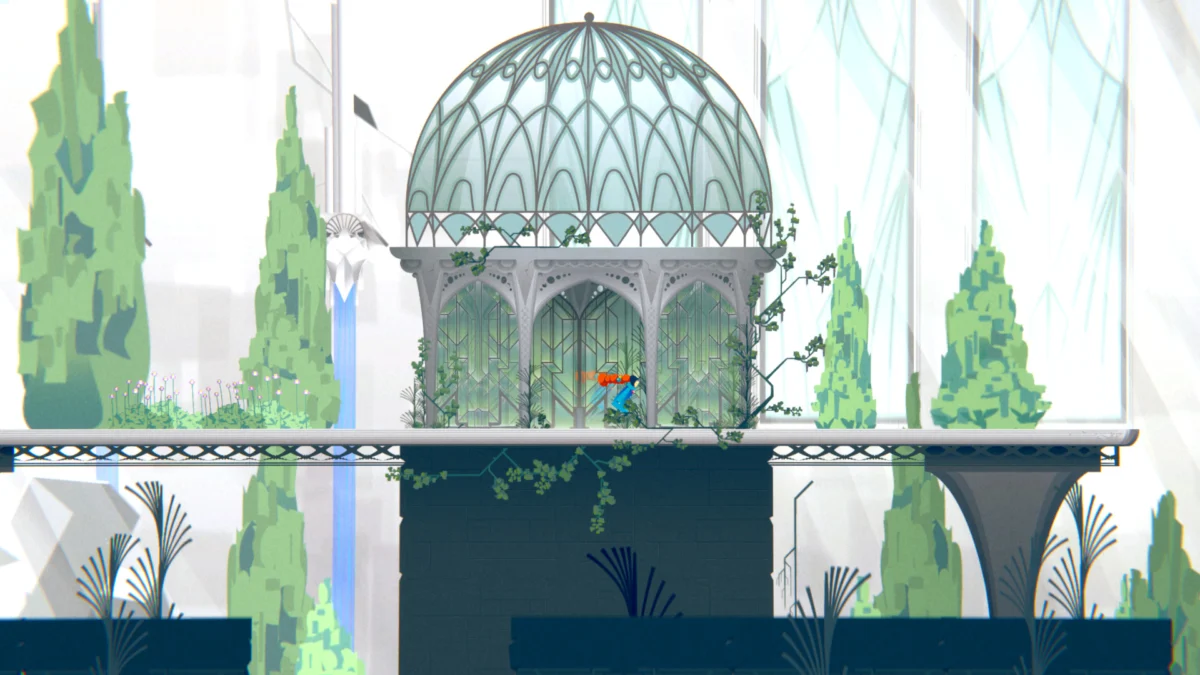
In the crowded landscape of modern indie gaming, the term "story-rich" has become a ubiquitous descriptor, often applied to titles that prioritize atmospheric presentation over narrative substance. The 2021 release Aspire: Ina’s Tale, developed by Wondernaut Studio, serves as a poignant case study in this trend. While the game initially dazzles with its meticulously crafted hand-painted aesthetics and a sense of ethereal mystery, it ultimately struggles to distinguish itself from an increasingly saturated genre of 2D narrative platformers.
The Core Premise: A Familiar Journey
At the heart of Aspire: Ina’s Tale is Ina, a protagonist who adheres strictly to the modern indie archetype: a spindly-limbed, waifish figure navigating a world of immense scale. The game begins with Ina waking in a mysterious, sprawling Tower—a structure that, according to the game’s lore, feeds off the dreams of its inhabitants.
Ina is identified as the "Heart of the Tower," a title that thrusts her into the familiar "chosen one" trope. Her mission is to escape this labyrinthine prison and return to her duties as the "Keeper of Kamiura." Throughout her journey, she traverses various zones of the Tower, interacting with enigmatic NPCs and entities constructed by a shadowy figure known only as "The Architect."
The narrative attempts to ground itself in existential inquiry, prompting the player to question why the Tower’s architecture pays homage to demons and monsters rather than symbols of benevolence. However, while the game invites players to contemplate the worship of fear versus light, the execution remains tethered to well-worn genre conventions. The narrative arc—centered on an innocent character with fragmented memories seeking to restore harmony—feels less like an original exploration and more like a collection of tropes seen in titles such as Gris, Hoa, and Minute of Islands.
Chronology of Development and Design Philosophy
Aspire: Ina’s Tale was released in December 2021, arriving on a wave of anticipation for its visual presentation. The design philosophy, as articulated by the team at Wondernaut, centered on creating a "living world" where the environment acts as an active participant in the story.

- Conceptualization: Early design documents focused heavily on the Tower as a sentient entity. The goal was to build a space that felt both ancient and reactive.
- Visual Iteration: The art style was refined over several months to ensure that the hand-painted assets transitioned smoothly into the 2D plane. Lighting effects—such as the reflection of light on crystal and armor—were highlighted as key technical achievements.
- Gameplay Integration: The team aimed to balance "story-rich" exploration with mechanical puzzle-solving. The absence of traditional combat was a deliberate choice, intended to foster a sense of vulnerability and isolation.
- Release and Reception: Following its December 19, 2021, launch, the game was praised for its technical polish but received mixed feedback regarding the pacing of its mechanics and the depth of its storytelling.
Supporting Data: Mechanical Frustrations and Technical Performance
While the visual fidelity of the game is undeniably high, the mechanical experience tells a different story. The gameplay loop relies on non-combat puzzle solving, where the player utilizes light-emitting power sources to manipulate the environment or repel entities.
The Puzzle Framework
- Environmental Manipulation: Players must move blocks, alter their size, and interact with machinery to progress.
- Checkpoint System: A forgiving checkpoint system mitigates the frustration of frequent deaths, acting as a crucial lifeline for players who might otherwise abandon the experience.
- The "Goldilocks" Dilemma: The game demands precise, pixel-perfect timing. This creates a disconnect between the player’s inputs and the character’s physics-based movement, particularly during rope-swinging sequences, which have been criticized for being prohibitively stiff.
Platform Disparities
Performance on the Nintendo Switch highlights the limitations of the game’s physics engine. Despite the high quality of the hardware controls, the input latency and movement sensitivity often lead to tedious "trial and error" cycles. For a game that asks players to engage with its world, the mechanical friction often serves as a barrier rather than a challenge, breaking the immersion that the art style works so hard to build.
Official Stances and Design Intent
Wondernaut Studio has framed Aspire: Ina’s Tale as a meditative experience. In promotional materials surrounding the launch, the developers emphasized the importance of the "environmental narrative." Their stance has consistently been that the story should be felt rather than explicitly told.
However, critics argue that "minimalist storytelling" is not a substitute for "derivative storytelling." The developers’ intent to create a poignant, emotive journey is clear, but the lack of character depth makes it difficult for the player to invest in Ina’s plight. When the stakes of the "chosen one" narrative feel disconnected from the player’s personal experience of the world, the emotional payoff of the final act—often anticipated in such games—is significantly diminished.
Implications for the "Story-Rich" Indie Genre
The critical reception of Aspire: Ina’s Tale carries broader implications for the independent gaming market. As the barrier to entry for high-quality, hand-painted 2D games lowers, the market is becoming flooded with titles that possess visual beauty but lack narrative innovation.
1. The Saturation of Aesthetic
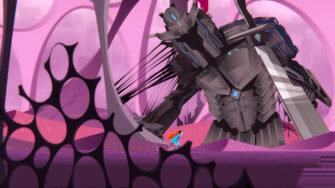
Developers are increasingly relying on the "Gris-style" aesthetic—muted colors, sweeping orchestral scores, and waifish protagonists—to market their games as deep and meaningful. This visual shorthand is becoming a double-edged sword; while it attracts players looking for "art games," it also invites immediate comparisons to superior predecessors, making it harder for new titles to carve out their own identity.
2. Gameplay vs. Narrative
Aspire highlights a recurring failure to integrate gameplay loops with narrative themes. When the puzzle-solving mechanics (moving blocks, rope swinging) feel disconnected from the protagonist’s emotional journey, the "story-rich" tag feels performative. Future titles in this genre must find ways to ensure that every mechanical action informs the player about the world or the character’s internal state.
3. The Need for Narrative Risk
The primary critique leveled at Aspire is its reluctance to subvert expectations. The industry has reached a point where "beautiful" is no longer enough to sustain a player’s interest over a 5-to-10-hour experience. To evolve, developers must be willing to embrace more challenging, "weird," or unconventional storytelling methods that go beyond the standard "hero’s journey" template.
Conclusion: A Beautiful, Yet Hollow, Tower
Aspire: Ina’s Tale is a testament to the fact that visual fidelity and a polished aesthetic are only one half of the equation. While the team at Wondernaut successfully created a world that is visually arresting and occasionally peaceful, the experience is marred by stiff mechanics and a narrative that feels like a pastiche of better-executed titles.
For players who prioritize visual art and are willing to tolerate frustrating, repetitive platforming, Aspire offers a brief, flickering light in the darkness. However, for those seeking a story that leaves a lasting impact, the game serves as a reminder that a beautiful shell cannot compensate for a lack of narrative soul. As the indie market continues to mature, titles like Aspire will likely be remembered as standard-bearers for a specific era of "aesthetic-first" game design—a phase that, while pretty to look at, is rapidly losing its power to surprise and delight.

