

Main Facts
The intersection of theology and advanced computer science has entered uncharted and contentious territory. Pope Leo XIV has emerged as one of the most prominent institutional critics of the unchecked expansion of generative artificial intelligence.
At the center of this ideological clash is a fundamental disagreement over ontology, consciousness, and creativity. While major AI developers and corporate evangelists push for the recognition of machine autonomy and synthetic sentience, the Vatican has drawn a hard theological and philosophical line in the sand.
According to the Holy See, algorithms are fundamentally incapable of experiencing the human condition. They lack bodies, emotions, and the capacity for moral responsibility.
The friction between the Vatican and Silicon Valley reached a public crescendo following the release of Pope Leo XIV’s encyclical, Magnifica Humanitas, in May 2026. This foundational document directly challenged the core assumptions of modern artificial intelligence development, specifically addressing the growing push by tech companies to treat large language models as conscious entities.
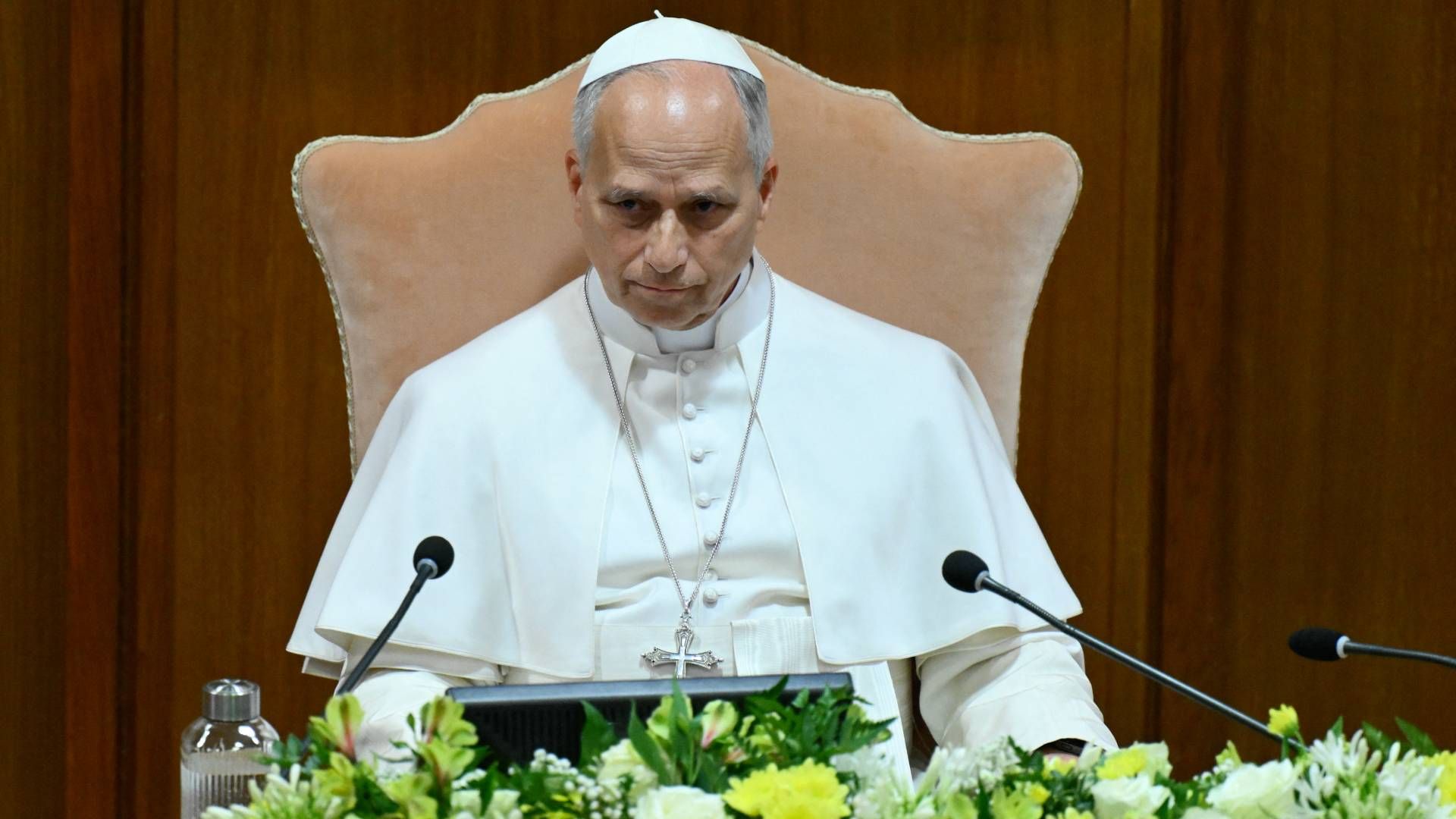
The ongoing dialogue—and occasional digital sparring match—highlights a deepening cultural schism. On one side stand technology executives and AI boosters envisioning a future of post-human superintelligence; on the other stands the Catholic Church, positioning itself as a defender of organic human art, labor, and spiritual agency.
Chronology of a Digital Schism
The public-facing debate between the technological elite and the Vatican has evolved rapidly, moving from private lobbying efforts to public pronouncements across traditional and social media platforms.
- May 2026: AI research and development firm Anthropic reportedly approaches papal advisers, urging the Holy See to seriously consider the possibility that advanced AI models are achieving a form of machine consciousness.
- May 15, 2026: Pope Leo XIV officially publishes his first encyclical letter, Magnifica Humanitas. The document directly addresses the rise of artificial intelligence, asserting that algorithms do not undergo lived experiences, possess physical bodies, or comprehend the nuances of love, work, and friendship.
- Late May 2026: Former White House technology adviser and current OpenAI official Dean Ball publicly criticizes the encyclical on social media. Ball argues that the Vatican’s stance places the Catholic Church in the awkward position of acting as an advocate for European-style technocratic regulation.
- September 2026: The New York Times publishes a comprehensive report detailing Anthropic’s earlier private lobbying efforts within the Vatican, bringing the behind-the-scenes theological debates into the mainstream press.
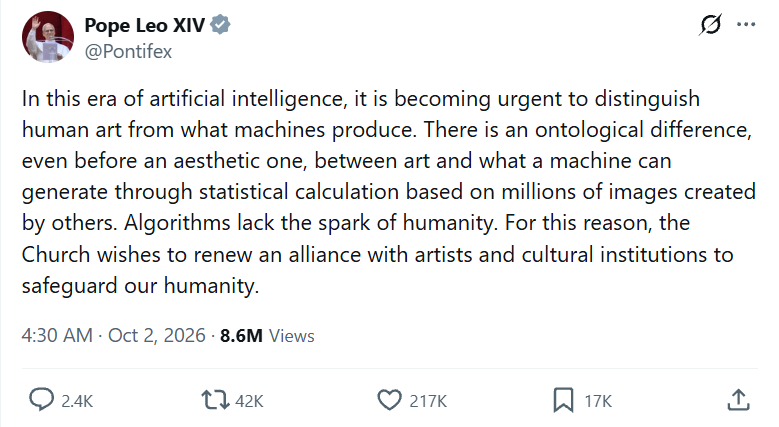
- Late 2026: Pope Leo XIV takes to X (formerly Twitter) to issue a sharp, direct warning against generative AI media, coining an anti-"slop" message that distinguishes human creativity from machine-generated statistical approximations.
Supporting Data and Context
The debate over generative AI is not merely philosophical; it is grounded in the operational realities of how modern machine learning models function.
- Statistical Calculation vs. Lived Experience: Generative AI models operate by performing complex statistical calculations on vast datasets—often comprising billions of images, texts, and audio files created by human authors. Critics, including the Vatican, emphasize that this process relies on imitation rather than invention or genuine emotional synthesis.
- The Corporate Push for "Superintelligence": Major artificial intelligence enterprises continue to pour billions of dollars into scaling foundational models. Proponents frequently use terms like "superintelligence" and argue for the latent personhood of advanced chatbots to justify rapid, largely unregulated deployment.
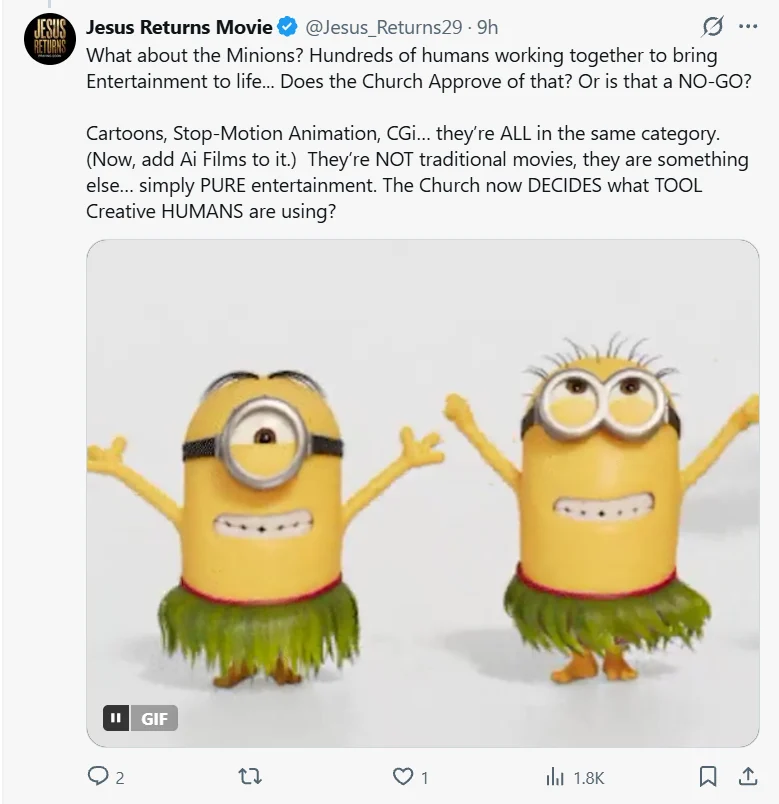
- Digital Engagement Disparities: The Vatican’s official statements on artificial intelligence frequently generate polarized reactions online. While traditionalists and artists praise the Holy See for standing up against algorithmic homogenization, tech evangelists counter with hyper-online defiance—including viral internet memes questioning how fictional computer-generated characters, such as the Minions, fit into traditional Catholic theology.
Official Responses and Stakeholder Perspectives
The ideological divide has prompted sharp commentary from both religious leaders and prominent technology figures, illustrating a clash of worldviews.
The Vatican Perspective
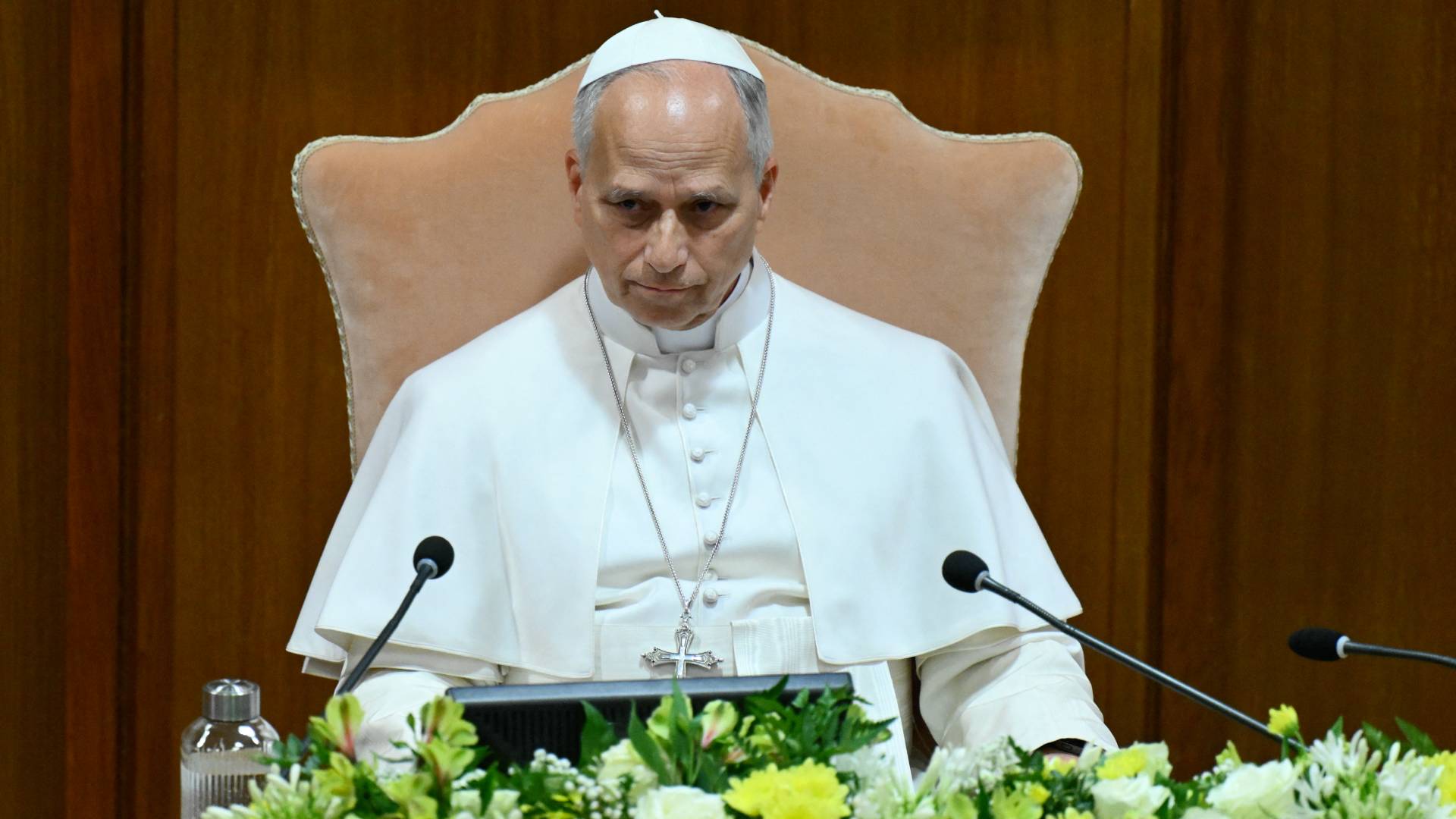
Pope Leo XIV has consistently argued that the widespread adoption of generative AI threatens to flatten human culture into a series of algorithmic echoes. In his statement posted to social media, the pontiff emphasized the irreplaceable nature of human authorship:
"In this era of artificial intelligence, it is becoming urgent to distinguish human art from what machines produce. There is an ontological difference, even before an aesthetic one, between art and what a machine can generate through statistical calculation based on millions of images created by others. Algorithms lack the spark of humanity. For this reason, the Church wishes to renew an alliance with artists and cultural institutions to safeguard our humanity."
Furthermore, within Magnifica Humanitas, the pontiff outlined the physical and relational prerequisites for true consciousness, noting that synthetic intelligences "do not undergo experiences, do not possess a body, do not feel joy or pain, do not mature through relationships and do not know from within what love, work, friendship or responsibility mean."
The Silicon Valley Perspective
Conversely, leaders within the tech sector view the Vatican’s doctrinal boundaries as an impediment to progress. Dean Ball, head of strategic futures at OpenAI, criticized the papal letter for adopting a protectionist, overly regulated tone reminiscent of European tech policy.

Other voices within the AI community have expressed frustration that institutional religion refuses to acknowledge the potential divinity or transcendent utility of hyper-advanced computing systems. Rather than accepting biological human supremacy, these evangelists argue that machine intelligence represents the next logical step in intellectual evolution.
Broader Implications
The friction between the Holy See and the architects of artificial intelligence carries profound cultural, legal, and spiritual implications for the remainder of the 21st century.
1. The Realignment of Art and Labor
By calling for an "alliance with artists and cultural institutions," the Catholic Church is stepping into a secular economic battle. As creative professionals face widespread displacement by generative models that train on uncompensated human labor, the moral authority of the Church offers a powerful megaphone to labor and copyright advocacy movements.
2. Redefining Consciousness and Personhood
As conversational agents become increasingly sophisticated, society faces unprecedented legal and ethical dilemmas regarding personhood. If major technology firms succeed in convincing religious and governmental bodies that models like Claude or GPT-5 possess rudimentary consciousness, it could trigger sweeping changes in property law, liability, and civil rights. The Vatican’s hardline stance serves as a major ideological roadblock to this corporate agenda.
3. Life Imitating Cyberpunk Satire
The spectacle of tech executives debating theology with the Bishop of Rome—while internet subcultures respond with absurdist queries about fictional film characters—feels less like traditional diplomacy and more like a work of speculative fiction. Observers note that contemporary reality increasingly mirrors the dystopian satire found in 1990s cyberpunk literature, such as Neal Stephenson’s Snow Crash.
When combined with broader shifts in the tech landscape—such as consumer virtual reality pioneers transforming into defense contractors piloting private military helicopters—the modern era of artificial intelligence is proving to be as culturally bewildering as it is technologically transformative. Whether the Church can successfully anchor human dignity in an age of synthetic media remains one of the defining questions of our time.

