


The landscape of modern gaming has been dominated by a specific flavor of deckbuilding—the "roguelike dungeon crawler." Following the monumental success of titles like Slay the Spire, the market has become saturated with games that prioritize "pick one of three" card selection and repetitive, high-stakes tower climbs. For many enthusiasts, the formula has begun to lose its luster. Whether it is the exhaustion of procedural generation or the mechanical fatigue of the sub-genre’s rigid loop, the appetite for the traditional deckbuilder is waning.
Yet, against the backdrop of this fatigue, Culdcept BEGINS has emerged as a compelling anomaly. By marrying the strategic depth of a complex trading card game with the cutthroat, territorial nature of a digital board game, Culdcept BEGINS does not just participate in the deckbuilding genre—it recalibrates it.
The Core Concept: Monopoly Meets Magic
At its heart, Culdcept BEGINS is a prequel to the cult-classic Culdcept The First, originally released on the Sega Saturn. Players step into the shoes of a "Cepter," a mage capable of manifesting magical cards to navigate and conquer game boards.
The gameplay loop is deceptively simple: players move across a board reminiscent of Monopoly, claiming territories by landing on them. Once a territory is occupied, it can be fortified with creatures or upgraded to extract higher "magic tolls" from opponents. However, the game diverges from classic board games through its combat mechanics. If an opponent lands on your territory, they may choose to challenge your guardian creature. If the challenger wins, they seize the territory for themselves, effectively shifting the tide of the match.

This creates a dynamic, ever-changing board state where victory is determined not just by luck, or even by card quality, but by the tactical positioning of resources.
A Prequel Built on Foundation
To understand the significance of Culdcept BEGINS, one must look at the franchise’s history. The Culdcept series has long been an outlier in the industry—a Japanese-centric title that carved out a niche for those who found the "Magic: The Gathering" style of play too abstract and the "Risk" style of board games too simplistic.
Culdcept BEGINS serves as an origin story for the world, centering on Kamru, a student at the prestigious Royal Cept Academy. Initially, the narrative is grounded, focusing on academy politics and minor magical skirmishes. While some critics might point to this slow start as a pacing hurdle, it serves a functional purpose: it acts as an extended, organic tutorial for a game system that is notoriously dense for newcomers.
Official Developer Insights: The Neos Corp. Philosophy
During an exclusive interview at BitSummit 2026, the development team at Neos Corp. offered deep insight into their design philosophy. This discussion, representing their first major engagement with a Western outlet, shed light on the challenges of bringing a legacy series to a modern audience.

The developers emphasized that the primary goal was accessibility without dilution. They recognized that the inherent complexity of Culdcept—which involves managing magic points (the currency of the game), creature stats, and environmental modifiers—could be overwhelming. Consequently, the first four chapters of the campaign are intentionally designed to be "schoolyard fights." By keeping the stakes low, the player is allowed to learn the nuances of deck composition—such as balancing creature cards, equipment cards, and board-altering magic spells—before the narrative escalates to world-altering conflicts.
Furthermore, the team expressed a long-term commitment to the game, suggesting that the "BEGINS" subtitle is not merely thematic, but indicative of a new era for the franchise. By integrating a deep story mode, they aim to contextualize the card battles, making each match feel like a piece of a larger, evolving puzzle rather than an isolated game of chance.
Strategic Depth and Deck Customization
The true brilliance of Culdcept BEGINS lies in its deck-building flexibility. Unlike many modern roguelikes where deck variety is gated behind "random draft" pools, Culdcept provides the player with agency.
The strategy extends far beyond selecting which creatures to bring into battle. Players must decide on a philosophy of play:
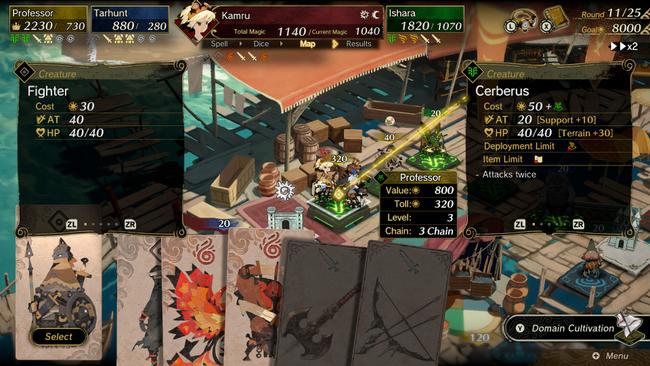
- The Controller: Using dice-roll manipulation cards to dictate the movement of opponents, effectively trapping them on high-toll spaces.
- The Aggressor: Focusing on high-damage creatures and equipment cards designed to strip opponents of their land holdings.
- The Econ-Engine: Prioritizing magic-generating spells and territory upgrades to force an economic victory.
Because every card slot is precious, there is a constant tension between defensive utility and aggressive expansion. Choosing to fill your deck with movement manipulation cards might guarantee you reach your goal first, but it leaves you vulnerable to an opponent who has prioritized heavy weaponry. This trade-off ensures that no two decks are identical and that the meta-game is constantly shifting.
Sensory Design: The Marriage of Art and Sound
A game of this complexity requires a sensory experience that grounds the player, and Culdcept BEGINS succeeds here through a distinct aesthetic. The art style utilizes a "chibi-esque" character design that is immediately charming, creating a false sense of comfort that contrasts sharply with the cutthroat nature of the board play.
This charm is supported by an ambitious soundtrack. The music shifts from the light, melodic, and nostalgic tones reminiscent of Final Fantasy Tactics Advance—featuring airy flutes and rhythmic brass—to intense, tribal-influenced war drums during critical story battles. This sonic variety prevents the long, thoughtful turns typical of board games from becoming tedious, keeping the player’s pulse high even when they are simply managing their magic reserves.
Implications for the Genre
The success of Culdcept BEGINS carries significant implications for the deckbuilding genre. It proves that there is still a massive, untapped demand for "hybrid" games that resist the urge to conform to the current roguelike trend.
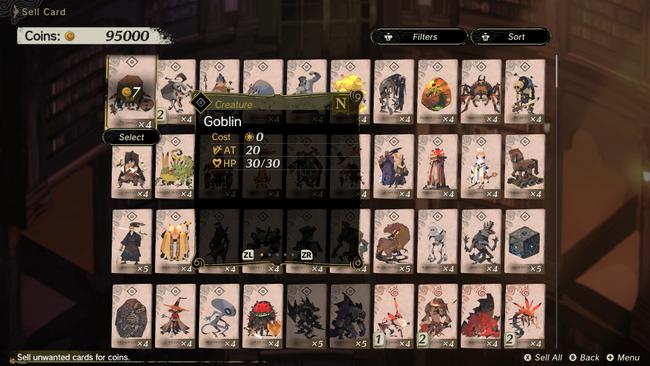
By prioritizing a narrative-driven campaign, deep strategic customization, and a classic "tabletop" feel, the developers have created a blueprint for future titles. The "malaise" often felt by players—the feeling that every new deckbuilder is just a reskin of the last—is cured here by the sheer mechanical difference of the board-game integration.
Conclusion
While the pacing in the early hours of Culdcept BEGINS may be a barrier for those looking for instant action, the reward for patience is substantial. It is a rare title that manages to balance deep, mathematical strategy with an engaging story and high-quality presentation.
For those who have felt the "burnout" of the modern deckbuilding scene, Culdcept BEGINS offers a necessary, refreshing alternative. It reminds us that cards are not just tools for damage calculation—they are keys to navigating worlds, building economies, and outsmarting opponents in a way that feels meaningful. With a 9/10 score, it stands as a testament to the fact that sometimes, the best way to move forward is to look back at the foundations of the genre and build something stronger.
Whether you are a veteran of the Saturn era or a newcomer to the Culdcept universe, this title is a mandatory addition to your library. It isn’t just another game—it is a lesson in how to breathe new life into a stagnant category of gaming.

