

Main Facts: A New Frontier for Cozy Trucking
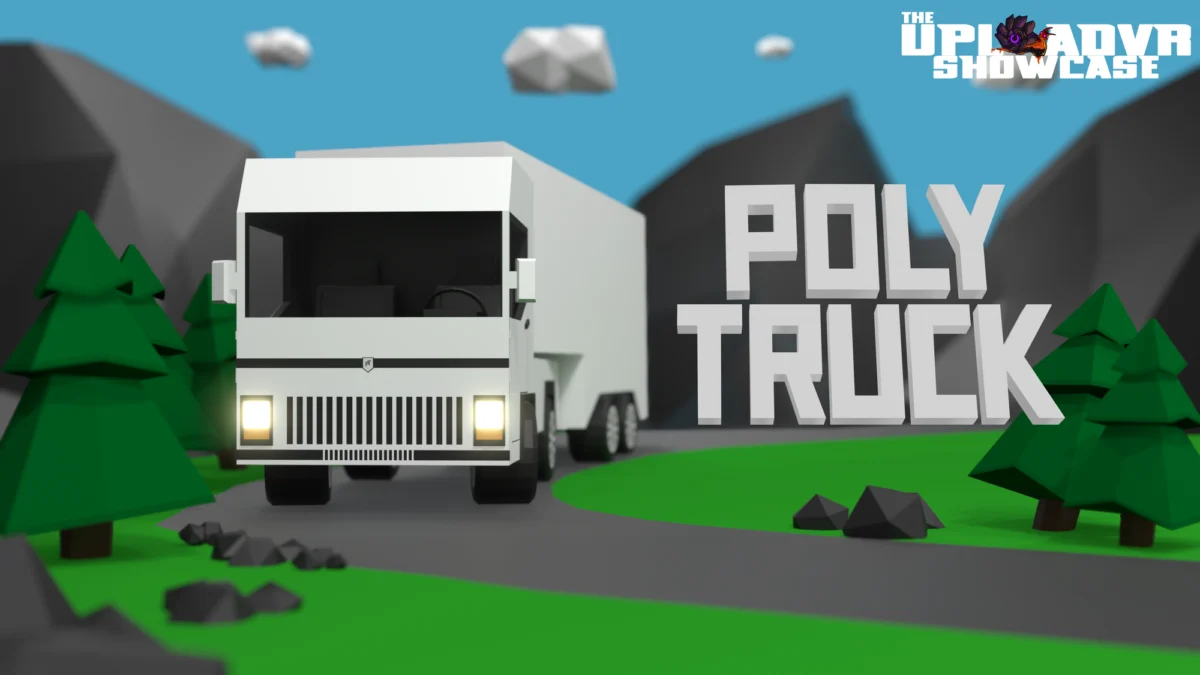
The landscape of virtual reality driving simulations is poised for a colorful, tactile evolution. During today’s UploadVR Summer Showcase, developers unveiled a brand-new gameplay trailer for Poly Truck, a charming, physics-driven simulation that prioritizes cozy immersion over the hyper-realism found in industry titans like American Truck Simulator. The showcase confirmed a highly anticipated release window: Poly Truck is officially slated to arrive on Meta Quest 3 headsets in Q4 2026.
Unlike traditional trucking sims that rely on heavy hardware setups, Poly Truck is built from the ground up for standalone VR. It leverages the unique capabilities of the Quest platform to offer a highly interactive cockpit where players can physically reach out to turn keys, toggle switches, and shift gears. By stripping away the bloat of ultra-realistic graphics, the title focuses on a vibrant, low-poly aesthetic that aims to bring a meditative, “cozy” atmosphere to the trucking genre.
Chronology of Development
The journey toward the Poly Truck reveal has been one of quiet, steady progress. While the developer has kept a relatively low profile compared to larger AAA studios, the project has been gaining traction in the niche VR simulation community for its unique approach to vehicle handling.
- Initial Concept Phase: The project began as an experiment in physics-based VR interaction, specifically looking at how vehicle controls could be mapped to virtual hand movements rather than traditional button presses.
- Engine Selection: Unlike the industry-standard reliance on Unity or Unreal Engine, the developers made the unconventional decision to build Poly Truck using the Godot Engine. This choice represents a significant milestone for the Godot community, proving that the open-source engine is capable of handling complex, physics-heavy VR experiences.
- The UploadVR Summer Showcase: Today’s trailer served as the first major public demonstration of the game’s core loop, showcasing the transition from open-world exploration to the tactile mechanics of the cabin.
- The Roadmap Ahead: With the Q4 2026 window now public, the team is moving into the final phases of optimization and world-building, with a focus on refining the physics of the cargo-hauling mechanics.
Supporting Data and Technical Mechanics
The Physics-Driven Gameplay Loop
Poly Truck distinguishes itself through a loop that balances exploration with precision tasks. Players are dropped into expansive, stylized maps where the primary objective is to seek out and collect scattered "golden trucks." These collectibles act as keys to the game’s progression system; once a sufficient number are gathered, the player unlocks the main trailer required for the level’s primary delivery mission.
Once the delivery is completed, the player transitions to the next environment. This loop encourages exploration, rewarding players for traversing the map and mastering the vehicle’s handling characteristics.
Control Flexibility: Beyond the Cockpit
While the game’s core appeal lies in its tactile interactivity—using virtual hands to manipulate every knob, lever, and button in the truck’s cab—the developers have acknowledged the need for accessibility. The game will support a dual-input system:
- Tactile Mode: Utilizing the Quest controllers to physically interact with every cabin control, creating a "hands-on" experience that mimics real-world driving.
- Standard Mode: For players who prefer traditional comfort or who struggle with the physical demands of long-term reaching, the game supports full analog stick driving and face-button control mapping.
The Godot Factor
The decision to utilize the Godot engine is notable. While Unreal and Unity have long dominated the VR landscape, Godot’s lightweight footprint has allowed the developers to push a stylized, low-poly art direction that maintains high frame rates on standalone hardware. This is crucial for motion-heavy games like driving simulators, where latency or frame drops can quickly lead to motion sickness.
Official Perspectives and Industry Context
The VR trucking genre has long been dominated by PC-based titles like Euro Truck Simulator 2 and American Truck Simulator. These games offer immense scale and graphical fidelity, but they come with a high barrier to entry: they require a powerful gaming PC, a dedicated VR headset, and often an external steering wheel peripheral for the best experience.
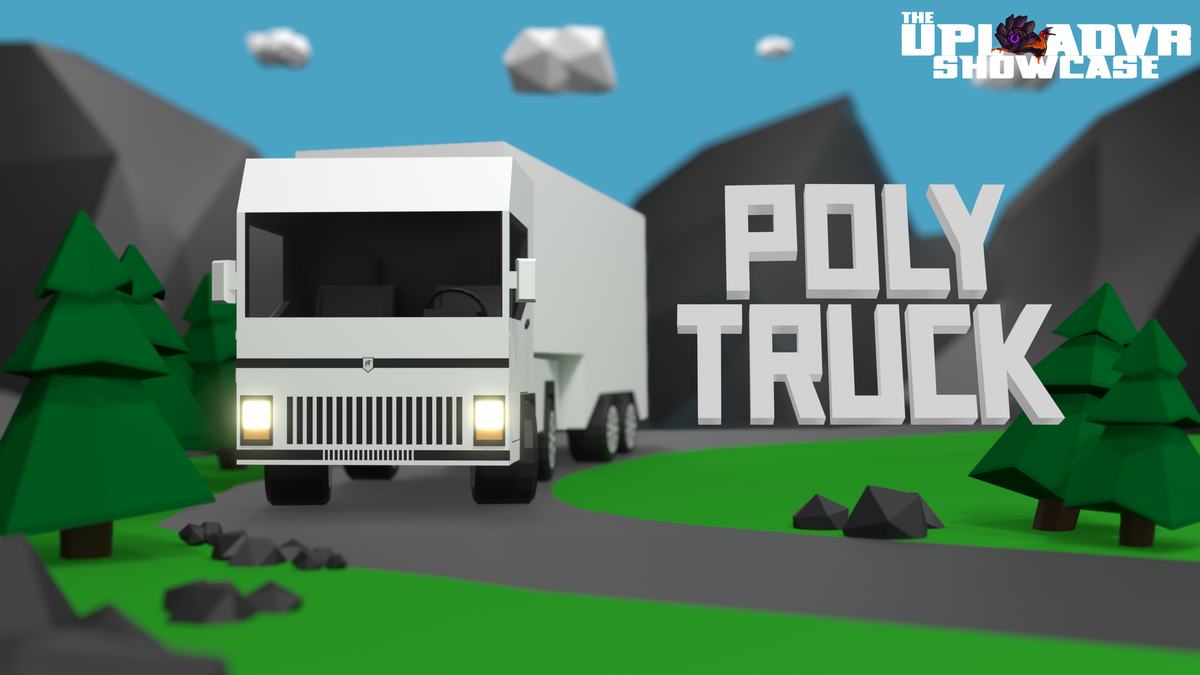
Poly Truck is positioned as an "accessible alternative." It doesn’t compete with the photorealistic visuals of its PC counterparts; instead, it leans into the "cozy game" trend that has seen massive success in the flat-screen market with titles like Stardew Valley or A Short Hike. By offering a pick-up-and-play experience on the Quest 3, Poly Truck is targeting a demographic that wants the satisfaction of a trucking sim without the complexity of a flight-stick setup.
According to preliminary statements from the development team, the goal is to make the act of driving feel "grounded and rewarding." They emphasize that the physics of the truck’s suspension and the weight of the cargo are felt through the game’s feedback systems, even without high-end force-feedback hardware.
Implications for the VR Market
The Rise of "Standalone" Simulators
The release of Poly Truck in 2026 is emblematic of a broader shift in the VR industry. As standalone hardware like the Quest 3 becomes more capable, developers are increasingly moving away from the "experience" model (short, 30-minute tech demos) and toward full-fledged simulation games. The ability to simulate complex systems—like a truck’s entire electrical and mechanical dashboard—on a mobile chipset is a testament to the maturation of VR development tools.
Democratizing Simulation
By choosing a low-poly aesthetic, the developers have bypassed the performance bottlenecks that often plague VR simulators. This ensures that the game can maintain the stable, high-refresh-rate performance necessary for comfort in VR. It also opens the door for a wider audience; casual players who might be intimidated by the realistic driving physics of an American Truck Simulator can engage with the more forgiving, stylized world of Poly Truck.
The Godot Opportunity
If Poly Truck succeeds, it could serve as a "proof of concept" for other indie developers considering the Godot engine for VR projects. As the engine continues to iterate, the successful launch of a polished, physics-based simulator could catalyze a surge in open-source-based VR development, potentially breaking the duopoly of Unity and Unreal in the VR space.
Conclusion and Looking Forward
As the industry looks toward Q4 2026, Poly Truck stands as a reminder that graphical fidelity is not the only path to immersion. By focusing on tactile engagement, a satisfying gameplay loop, and a distinct visual identity, the developers are carving out a space for themselves in a crowded market.
For those eager to get behind the wheel, the game is currently available for wishlisting on the Meta Quest store. While the wait until late 2026 may feel long, the promise of a cozy, physics-based driving escape offers a compelling reason to keep an eye on this title. Whether you are a simulation veteran looking for a relaxing change of pace or a newcomer to the genre, Poly Truck is shaping up to be one of the most unique additions to the standalone VR library.

