

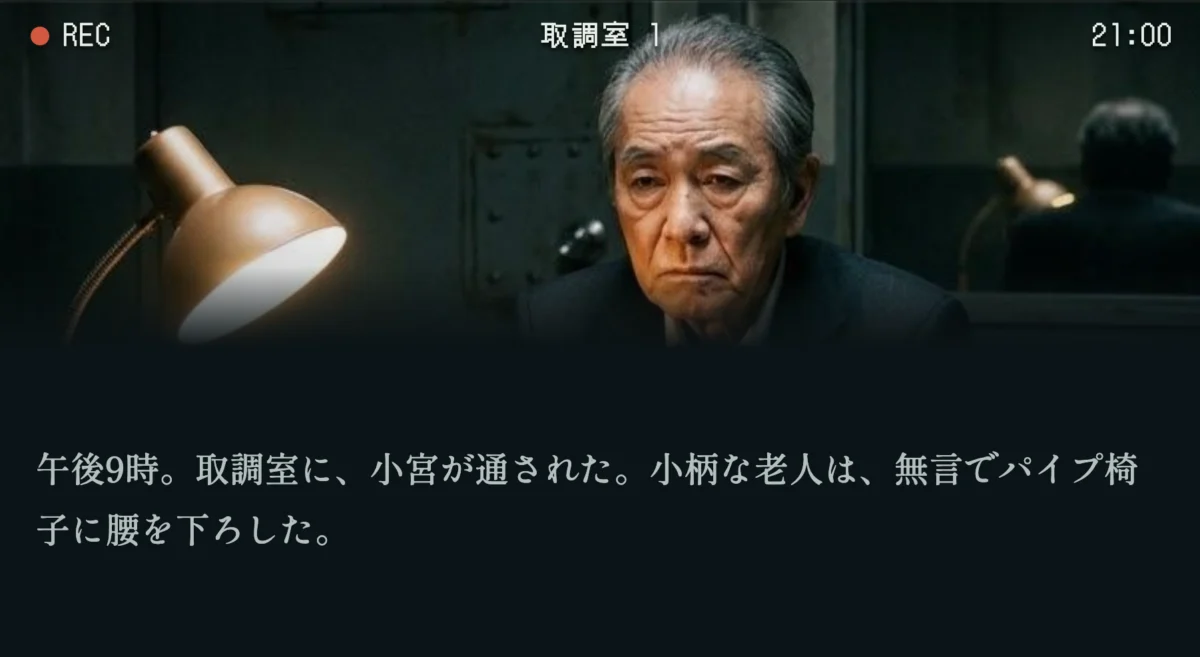
In a development that has sent ripples through both the independent and AAA game development sectors, Yuji Horii—the legendary visionary behind the Dragon Quest franchise—has demonstrated the transformative power of generative artificial intelligence. By crafting a fully functional, playable interrogation mystery game in a mere 30 minutes, Horii has provided a tangible look at a future where the barriers between imagination and execution are rapidly dissolving.
This experiment, shared by the creator himself on social media, serves as more than just a novelty; it is a profound statement on the shifting landscape of software development. As AI tools become increasingly sophisticated, the traditional requirements of professional artistry and complex coding are being supplemented—and in some cases, replaced—by the ability to iterate through natural language prompts.
The 30-Minute Prototype: A New Era of Game Creation
The game in question is a text-based police procedural that leans into the classic detective tropes that made Horii’s early work, such as The Portopia Serial Murder Case, a foundational pillar of the adventure genre. In this new, AI-generated title, players find themselves in a dimly lit interrogation room, tasked with questioning a 72-year-old former locksmith named Komiya. The suspect is tied to a high-stakes burglary involving a pawnshop safe.
The mechanics are deceptively simple yet narratively driven. Players operate within a strict time limit, attempting to extract a confession before a lawyer arrives at 11:00 PM. The game features an "agitation" mechanic: players must carefully manage their approach, as higher agitation levels can make a suspect more prone to slipping up, yet crossing the threshold into 100% resistance causes the suspect to clam up entirely.
Horii’s instruction to players—“don’t press the boost button”—adds a layer of characteristic, slightly mischievous charm to the experiment. However, the true significance lies in the underlying architecture. By utilizing AI to generate the script, the logic flow, and the visual assets, Horii demonstrated that the singular "auteur" developer—a relic of the early 1980s—is not only back but is more powerful than ever before.
From 1983 to the Modern Era: A Chronology of Innovation
To understand the weight of Horii’s statement, one must look at his history. In 1983, when Horii developed The Portopia Serial Murder Case, he operated in a landscape of total creative autonomy born of necessity. "I came up with the story myself, drew the pictures myself, did the programming myself, and created the game all by myself," Horii noted.
For decades, as the industry matured, the cost and complexity of game development scaled exponentially. The "solo developer" became an outlier, and the average game required teams of hundreds, budgets in the tens of millions, and years of iterative development. The timeline of Horii’s career mirrors the industry’s evolution:
- 1983: The birth of The Portopia Serial Murder Case. A single developer handles every aspect of the project.
- 1986: The launch of Dragon Quest. The industry begins its shift toward massive, collaborative team structures.
- 2024: Square Enix partners with Google to integrate Gemini-powered AI into Dragon Quest X, marking a pivot toward AI-assisted narrative interaction.
- 2026: Horii unveils his 30-minute AI-generated mystery game, effectively coming full circle to the solitary creation model of 1983, but with the power of modern neural networks.
This trajectory suggests that we are moving toward a hybrid model where the efficiency of the 1980s is married to the graphical and narrative sophistication of the 2020s.
The Technical Shift: How AI is Lowering the Barrier
The core argument Horii is making is one of accessibility. Historically, an aspiring game developer needed to master C++, C#, or specialized engines like Unity or Unreal. They needed to understand sprite art, 3D modeling, rigging, and animation. Today, as evidenced by tools like the one used by Horii, these skills are being abstracted.
The industry is currently seeing a surge in "prompt-based" development. Unity recently unveiled Unity Spark, a web-based platform that allows users to construct 3D environments and logic systems through simple text inputs. This technology, which will launch in beta on Google’s Playground, allows for rapid prototyping that previously took weeks or months.
By using natural language, a developer can describe an interrogation room, define a character’s personality profile (the "Komiya" logic), and establish win/loss conditions. The AI handles the backend code, ensuring that the dialogue branches correctly and the state-tracking variables for "agitation" remain consistent.
Official Responses and Industry Implications
The gaming industry has received Horii’s experiment with a mixture of excitement and caution. Square Enix, the publisher behind the Dragon Quest empire, has been vocal about its desire to integrate AI into its development pipeline. Earlier this year, the company’s decision to include "Chatty Slimey," an AI-driven chatbot in Dragon Quest X, was met with debate.
In an interview with Famitsu, Horii addressed the backlash directly. He defended the implementation of chatbots, arguing that they serve as a bridge for players who are intimidated by traditional, rigid dialogue trees. "It makes it easier for people to start interacting with AI," he explained. By normalizing these interactions, Horii believes he is preparing the player base for a future where NPCs (non-player characters) are no longer scripted, but sentient-feeling entities capable of dynamic, non-repeating conversation.
The implications for the industry are profound:
- The Rise of the "Micro-Studio": Small teams of 1–3 people will be able to produce games with the scope and polish that previously required mid-sized studios.
- Narrative Complexity: AI-driven NPCs can remember past interactions, hold secrets, and change their behavior based on a player’s unique history, fundamentally changing the replayability of RPGs.
- Content Velocity: Developers can generate assets—textures, dialogue, music—at a speed that allows for rapid, community-led updates.
Addressing the Skepticism: The Human Element
Despite the technological enthusiasm, there remains a palpable concern regarding the "soul" of game design. If a game can be made in 30 minutes, what happens to the nuance, the deliberate pacing, and the artistic intent that defines a masterpiece?
Horii’s own career provides the counterpoint. He is not suggesting that AI replaces the creative mind; he is suggesting that AI acts as an accelerator for the creative mind. His upcoming projects, Dragon Quest 12 and the remake of The Portopia Serial Murder Case (slated for 2027), are massive, high-budget endeavors. He is not abandoning professional development; he is demonstrating that the "game design language" is evolving.
The "human element" in Horii’s AI interrogation game is still very much present. It was his concept, his narrative structure, and his specific instructions that gave the game its identity. The AI was merely the brush, not the painter.
Conclusion: A New Frontier
As we look toward 2027 and beyond, the message from Yuji Horii is clear: the era of "gatekept" game development is coming to a close. While we will always cherish the massive, collaborative spectacles of the modern AAA industry, the next decade will likely be defined by a renaissance of the independent creator.
Whether or not this leads to a flood of low-quality, AI-generated content remains to be seen. However, the ability to turn a fleeting thought into a playable experience in the time it takes to eat lunch is a superpower that will undoubtedly birth new genres, new stories, and a new generation of creators who are limited only by their imagination, rather than their ability to write code or draw pixels.
Horii’s 30-minute experiment is a clarion call. The tools of the trade have changed, and for those ready to embrace the new paradigm, the possibilities for interactive storytelling are truly boundless.

