

Main Facts: Bringing MetLife Stadium Into the Living Room
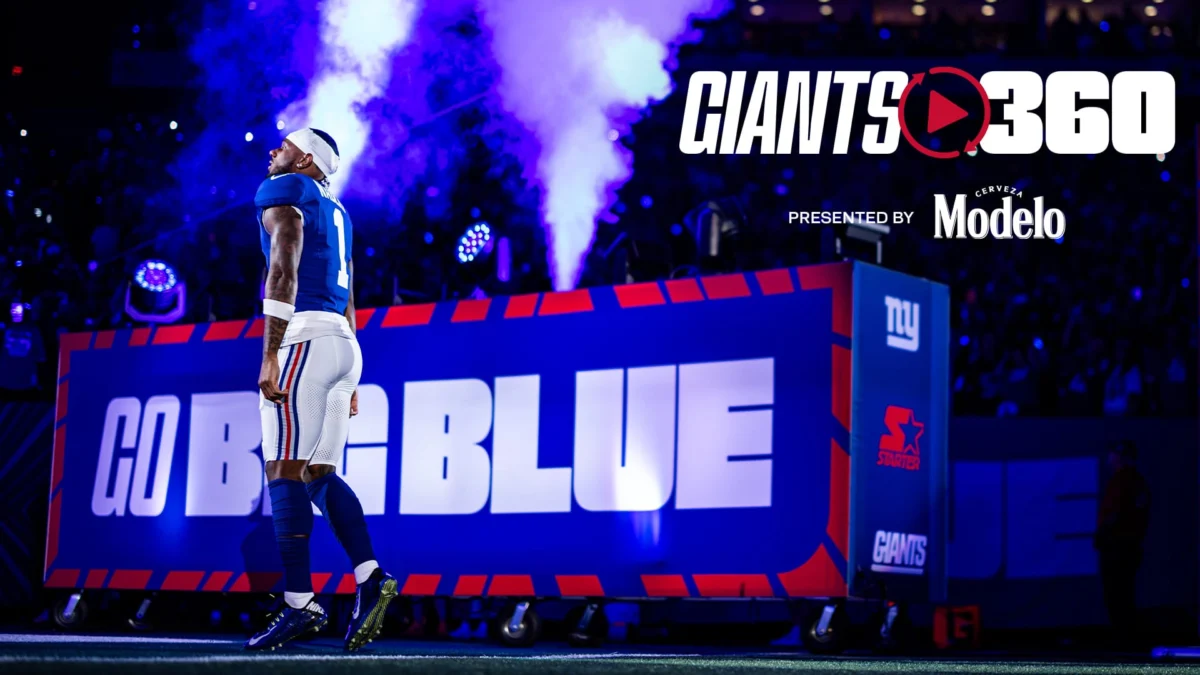
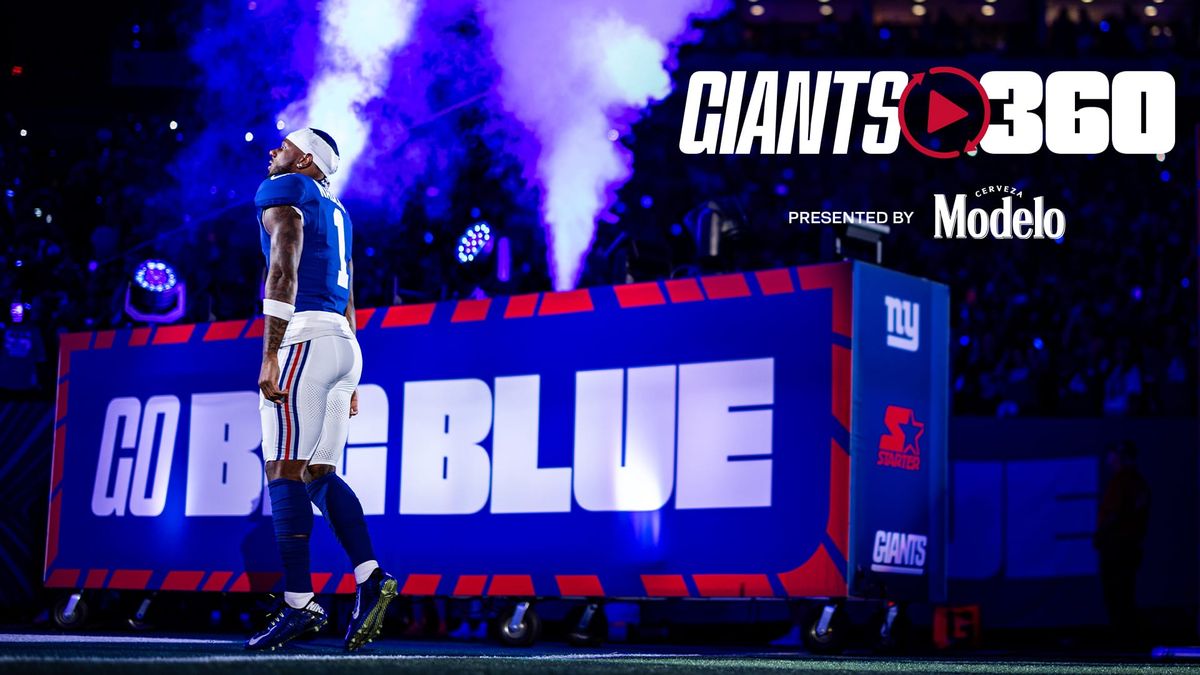
The opening game of the 2026 NFL season for the New York Football Giants brought a sensory overload to MetLife Stadium. Bathed in a radiant, electric blue, the arena pulsed with the deep, primal rhythm of a live drum line. Smoke drifted across the turf, fireworks exploded overhead, and 80,000 roaring fans watched as the Giants’ star roster made a dramatic entrance.
For decades, experiencing this level of raw, adrenaline-fueled spectacle required a ticket, a commute, and a seat in the stands. Today, however, a growing number of fans can experience it as if they are standing directly on the fifty-yard line, shoulder-to-shoulder with the players.
Enter Giants 360, an innovative initiative spearheaded by the iconic NFL franchise. By leveraging 2D 360-degree video technology integrated directly into the team’s mobile application and official YouTube channel, the Giants are offering unprecedented, field-level access. Fans no longer have to wonder what it feels like to witness an NFL pyrotechnic player introduction from the grass; they can simply strap on a virtual reality (VR) headset or drag their fingers across a smartphone screen to look around the stadium in every direction.
Presented by Modelo—a long-standing partner of the franchise on interactive projects—Giants 360 represents a calculated shift for a team historically viewed as traditional and conservative. By bridging the gap between physical sports entertainment and spatial computing, the franchise is redefining how professional sports organizations connect with their global digital audiences.
Chronology: From Concept to the 2026 NFL Season
The journey toward Giants 360 did not happen overnight; it is the culmination of years of digital experimentation within the sports entertainment industry, accelerated by modern advancements in consumer-grade VR hardware.
- Early Industry Experiments (Mid-2010s): Throughout the mid-2010s, forward-thinking NFL franchises—such as the San Francisco 49ers and the Minnesota Vikings—experimented with early-generation VR and 360-degree video applications. While groundbreaking for the era, these projects were often bottlenecked by bulky hardware, low-resolution capture devices, and limited consumer adoption.
- The Planning and Production Phase (Offseason 2026): Recognizing the maturation of headsets like the Meta Quest series and Apple Vision Pro, the Giants’ digital strategy team began formulating a streamlined, high-impact immersive video pipeline. Collaborating with mobile app developer YinzCam, the team designed an in-app 360-degree media player alongside a dedicated YouTube distribution strategy.
- Week 1 of the 2026 NFL Season (The Debut): Giants 360 officially launched during the opening game of the 2026 season. The debut content dropped fans straight into the pre-game pyro, the player intros culminating with quarterback Jaxson Dart, and the electric atmosphere of MetLife Stadium under the night lights.
- Weeks 2 Through 4 (Expanding the Catalog): Over the first month of the 2026 campaign, the production team expanded the scope of Giants 360. Content rolled out to include exclusive pre-game warmups and a grand halftime ceremony celebrating the 40th anniversary of the legendary 1986 Super Bowl XXI Championship team.
- Future Roadmap (Beyond 2026): With the early success of the initial four-week rollout, leadership has already begun mapping out future applications for the technology, ranging from live coverage of the NFL draft party to immersive town halls and summer training camp access.
Supporting Data: Production Workflow and Viewer Metrics
Behind the three-to-four-minute cinematic bursts available on screens and headsets lies a rigorous production and curation process.
Production and Capture Statistics
- Raw-to-Final Ratio: For every finalized clip published to fans, the Giants’ media production crew records approximately 20 minutes of raw 360-degree footage. Editors meticulously comb through the material to isolate the most emotionally resonant angles and dramatic movements.
- Hardware Limitations (Current Gen): The production team currently utilizes specialized GoPro 360-degree cameras. While these units capture stunning field-level imagery, they are currently limited to 2D 360-degree capture rather than stereoscopic 3D.
- The Stereoscopic Difference: Standard 2D 360 video places the viewer inside a spherical video sphere where they can look around freely, but it lacks true visual depth (stereopsis). Stereoscopic 3D utilizes dedicated dual-lens camera systems to capture separate images for the left and right eyes, mimicking human binocular vision to create physical depth perception. Despite the lack of stereoscopic depth in the current iteration, the sheer proximity to the action delivers a deeply visceral impact.
Platform Accessibility and Distribution
- Mobile Integration: Through a partnership with YinzCam, the team’s mobile application (available on both the Apple App Store and Google Play Store) features an embedded 360 player. Users can pan around the video simply by dragging their fingers across their phone screens or moving their mobile devices.
- Immersive VR Experience: For optimal immersion, fans can access the content via the YouTube VR app on Meta Quest headsets, or through the Quest browser in full-screen YouTube mode.
- Initial Content Library: The launch playlist features four core entries, spanning player intros, warmups, and historical franchise milestones.
Official Responses: Perspectives From Franchise Leadership
Stepping outside the traditional boundaries of NFL marketing requires vision and executive buy-in. David Dominik, the Giants’ Vice President of Digital Strategy, spoke candidly about the philosophy driving the Giants 360 initiative.
"Fans just love to be able to get out of their seats and get on the field," Dominik explained when discussing the core motivation behind the project. "And we wanted to try to recreate that experience from a digital perspective."
Historically, the New York Giants brand has cultivated an image of classic restraint. Dominik acknowledges this reputation, framing Giants 360 as a vital tool for cultural evolution within the organization:
"We are sometimes considered to be very traditional and very conservative. As a marketing department, we’ve been working to redefine ourselves a little bit."
When asked about the creative process behind editing down twenty minutes of raw footage into bite-sized immersive experiences, Dominik noted that the team prioritizes emotional resonance above all else: "We’re trying out different things and we’re trying to give people whatever we consider to be the best perspective."
Regarding technical evolution—specifically the transition from 2D 360 capture to true 3D stereoscopic recording—Dominik confirmed that while the team is currently maximizing standard GoPro technology, they are keeping a close eye on emerging hardware. "He’s interested in understanding other technologies," notes indicate, leaving the door open for future hardware upgrades as spatial video capture equipment matures.
Implications: The Future of Fan Engagement and Immersive Sports
The launch of Giants 360 is much more than a cool marketing gimmick for a single NFL franchise; it highlights a broader paradigm shift in how professional sports leagues distribute content and monetize fan loyalty.
1. Broadening Demographic Reach
One of the primary strategic goals articulated by front-office leadership is audience expansion. Traditional broadcast television captures games from high overhead angles or standard sideline cameras. While effective for tracking plays, these angles fail to capture the visceral, emotional energy of being inside the venue. By offering immersive digital experiences, the Giants can capture the attention of younger, tech-forward demographics—such as Gen Z and digital natives—who consume entertainment primarily through mobile devices, interactive media, and spatial computing platforms.
2. Overcoming Geographic Barriers
For millions of fans worldwide, attending a game at MetLife Stadium is a rare pilgrimage rather than a weekly routine. Giants 360 effectively democratizes access to the stadium experience. Whether a fan is sitting in a living room in London, Tokyo, or Los Angeles, dropping into a Meta Quest headset allows them to stand mere feet away from the team during player introductions. This global reach deepens emotional attachment to the franchise without requiring physical travel.
3. The Hardware Wave: Meta, Apple, and Beyond
The timing of Giants 360 coincides with massive capital investments in spatial computing by tech giants like Meta, Apple, and Google. As headsets become lighter, cheaper, and more comfortable, sports franchises are realizing they must build content ecosystems now so they are ready when consumer adoption hits critical mass. Team-led initiatives like this prove that sports organizations are no longer just content creators for linear television—they are emerging as volumetric and immersive media studios.
4. What Lies Ahead for the Giants
As the 2026 NFL season progresses, the success of Giants 360 opens up exciting creative possibilities. Dominik and his digital strategy team have already hinted at expanding the technology to cover off-field and community-focused events. Imagine stepping into a 360-degree livestream of the NFL Draft party, walking the sidelines of summer training camp as a virtual observer, or attending an interactive digital town hall with front-office executives and coaching staff.
For now, the message from MetLife Stadium is clear: the digital turf is open, and the New York Giants are inviting everyone to take a step onto the field.

