


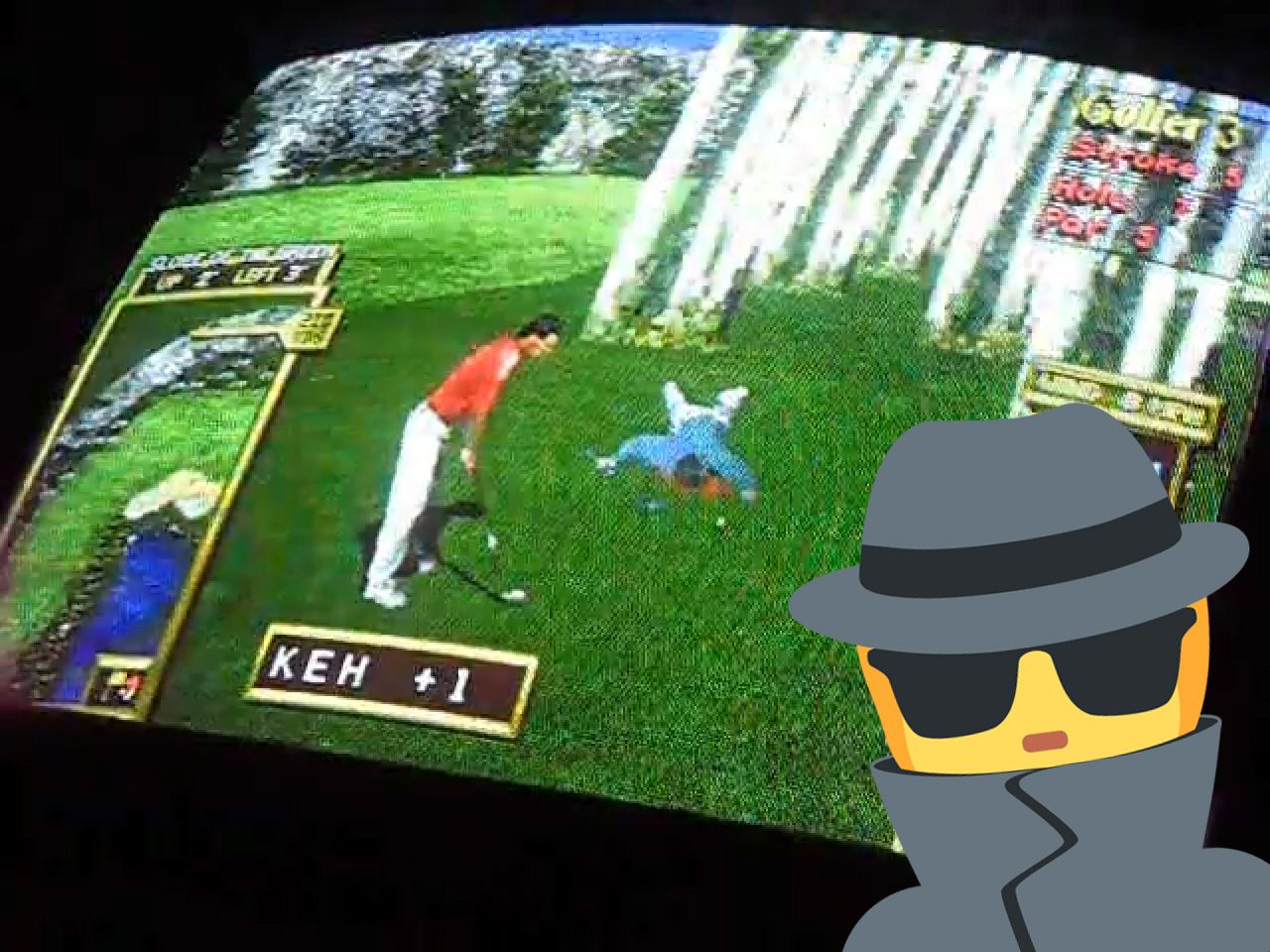
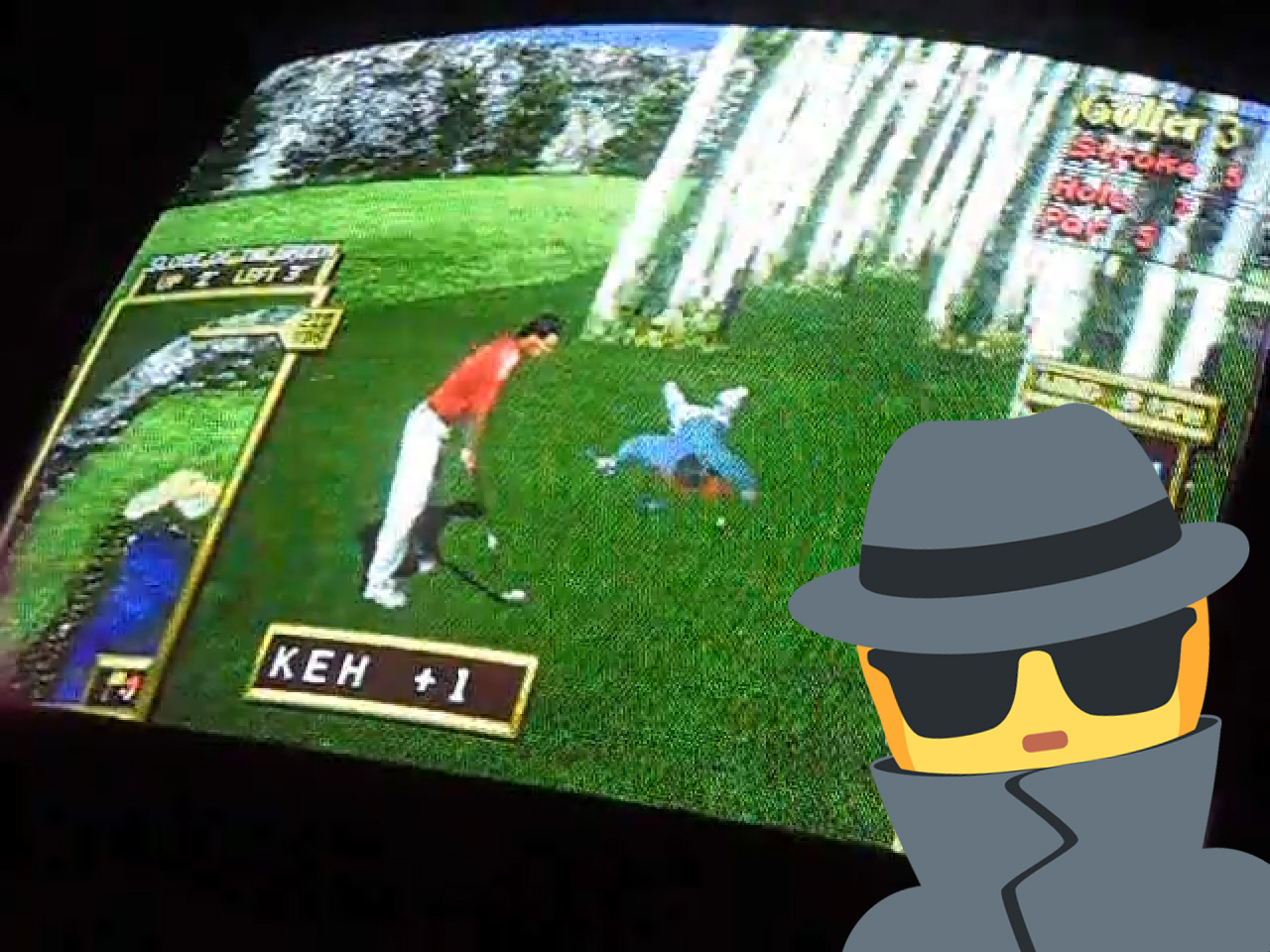
For over two decades, a peculiar, pixelated secret has lurked in the deep woods of the "Aspen Lake" course in the classic arcade title Golden Tee ’99. Roughly 180 yards from the tee box on the seventh hole, nestled among the virtual pines, lies a motionless, prone figure surrounded by a disconcerting pool of red pixels. For years, this "dead body" has served as a campfire story for retro gaming enthusiasts—a macabre Easter egg that seemed to mock the player with its grim, unexplained presence.
What began as a casual discovery on a YouTube channel has spiraled into a multi-year investigative odyssey, challenging our understanding of game development culture, the history of arcade hardware, and the strange, morbid sense of humor that defined the late 1990s. This is the story of the man in the woods, the truth behind the blood, and the bizarre world of Golden Tee lore.
A Discovery in the Rough: The Origins of the Legend
The mystery gained traction in November 2012 when the YouTube channel Keith’s Arcade uploaded a video documenting the grim sight. In the footage, the narrator, Keith, discovers the figure while surveying the course. "There’s a dead body about 180 yards out, a little bit to the right in the woods there," he observes, his voice betraying a mixture of confusion and dark amusement.
The image is stark: a man, facedown in the grass, with a golf club lying nearby. It is a tableau of violence tucked away in a game series otherwise celebrated for its relaxing, albeit competitive, simulated fairways. For the casual player, the body was a surreal glitch—a moment of horror that broke the immersion of a standard golf simulator. For the dedicated, however, it was a call to action. Was this a developer’s protest? A hidden message? Or merely a prank that had been forgotten by time?
Chronology of a Digital Homicide
To understand the significance of the "Aspen Lake Body," one must look at the development cycle of Golden Tee ’99. Developed by Incredible Technologies, the Golden Tee franchise had established itself as the gold standard for bar-room golf simulations.
- The 1999 Release: The game hit arcades, featuring advanced (for the time) 3D graphics and complex course designs.
- The Hidden Asset: It is now known that course designer Jim Zielinski, a central figure at Incredible Technologies, was responsible for the placement of various "interesting things" to reward players who hit errant shots into the deep woods.
- The 2012 Viral Resurgence: Keith’s discovery brought the Easter egg to a global audience, forcing the community to speculate on the identity of the victim.
- The 2026 Investigation: A concerted effort to contact those involved with the original code finally provided a breakthrough, transforming a murder mystery into an anecdote about office pranks.
Unmasking the Victim: A Developer’s Goof
The investigation into the identity of the "victim" led directly to Jim Zielinski. In a series of communications, it was revealed that the body was never a commentary on the dangers of golf, nor was it a hidden crime scene. Instead, it was a highly personal, low-tech Easter egg.

"The dead guy was my idea, and it’s actually a digitized photo of me laying in the grass outside our office," Zielinski revealed. The process was surprisingly analog: a photo was taken of Zielinski, digitized into the game engine, and placed as a reward for players who ventured off the beaten path. This revelation humanized the mystery, turning a scene of "violent death" into a reflection of the scrappy, playful nature of game development in the late 1990s. Zielinski, who had been with Incredible Technologies since the company’s early days as a QA tester, was known for his love of the sport and his desire to pack his courses with personality.
The Case of the Missing Blood: A Technical Discrepancy
As the investigation deepened, a new mystery emerged. When Golden Tee Arcade Classics was released on Steam, players noticed that while the body remained in the woods, the pool of blood—a staple of the original arcade experience—had vanished.

This sparked immediate debate: Was this a modern case of "sanitization," where developers removed gore to suit contemporary sensibilities? Or was it an emulation error? Further research into the various revisions of the game provided the answer. Incredible Technologies had released multiple versions of Golden Tee ’99, including the elusive v1.00 and v1.00S.
By comparing the two, it was discovered that the blood was present in some versions and absent in others, suggesting that the "missing blood" wasn’t necessarily a modern revision, but rather a reflection of the different ROMs used during the preservation process. The mystery of the "sanitized" version highlights the complexities of game preservation, where small, seemingly inconsequential assets can change the entire tone of a discovery.

Implications: The "Zielinskism" of Arcade Design
The presence of the body—and the discovery of other secrets like the sunbathing woman, the lawnmower operator, and the rafting group—speaks to a broader design philosophy. In an era before massive online updates or day-one patches, developers had to bake their personality into the game at the source.
Zielinski’s work represents a "signature style"—or what could be termed "Zielinskism"—where the developer leaves a piece of themselves in the digital landscape. He confirmed that he often placed digitized versions of himself behind the first tee so that friends and family could "find him" in the game. This meta-layer of interaction transformed the golf course from a static play area into a living, breathing, and sometimes morbid, scrapbook of the development team’s lives.

A Legacy of the Unexplained
The case of the Aspen Lake body is now, for all intents and purposes, "closed." We know it was a prank, we know it was the developer, and we know that the "blood" is a variable based on which arcade revision is being played. Yet, the allure of the mystery remains.
The fact that these secrets remained hidden for decades illustrates the depth of the Golden Tee experience. It reminds us that even in the most mundane, repetitive genres—like the arcade sports sim—human creativity finds a way to leave a mark. The "body" in the woods is a testament to the developers who built these worlds, proving that even in a game about birdies and bogeys, there is always room for a little bit of dark, pixelated mystery.

As for the reports of a Sasquatch lurking in the deep woods of the same course? That is a mystery for another investigation—one that, perhaps, will keep the spirit of the arcade gumshoe alive for another twenty years. The golf course is, after all, a dangerous place, and the woods of Aspen Lake have plenty more stories to tell.

