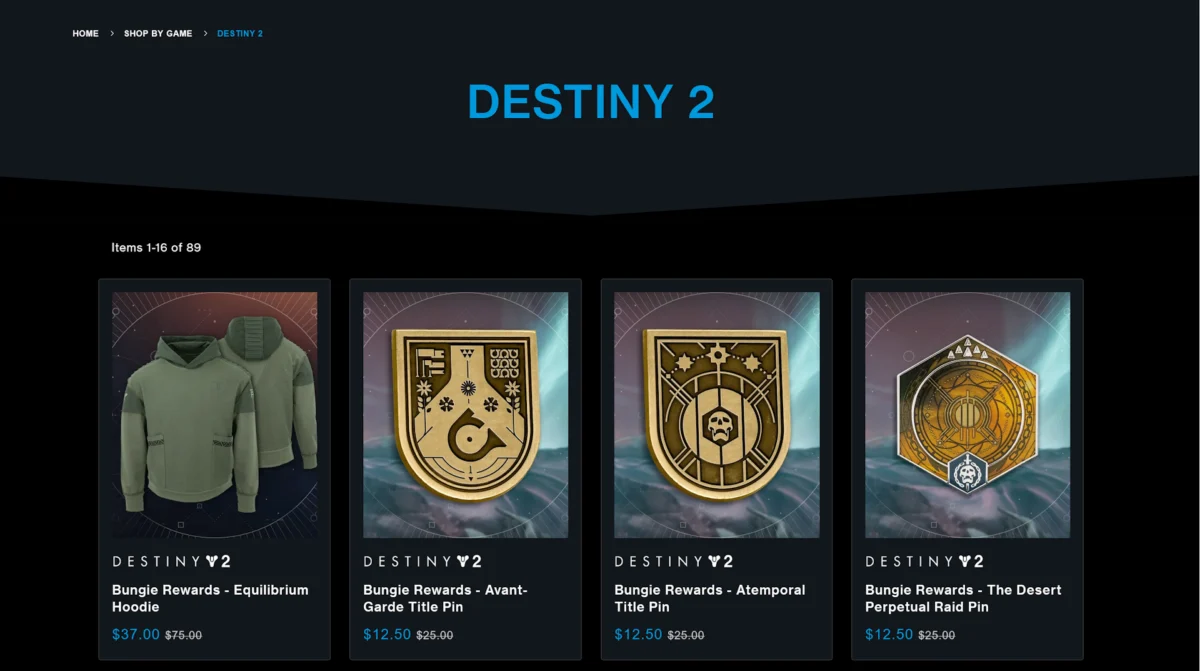
In a surprise development that has set off a fresh wave of speculation within the gaming community, developer Bungie has announced plans to shutter its official merchandise hub, the Bungie Store, after more than ten years of continuous operation. According to official communications, the current storefront for Destiny and broader Bungie-related merchandise will officially close its digital doors on October 19.
While physical merchandise sales will cease, the studio has clarified that customers who have pending digital purchases, downloads, or unredeemed emblem codes will still be able to access those specific assets until a final deadline of December 31.
The closure arrives at a pivotal and turbulent juncture for the studio. Bungie has recently faced a series of high-profile corporate adjustments, creative pivots, and leadership reorganizations. Most notably, the studio recently walked back controversial plans to place Destiny 2 into a maintenance-heavy lifecycle mode—a decision colloquially referred to by fans as "un-cancelling" Destiny—following severe community backlash and declining player sentiment. New studio leadership has since publicly committed to making the sci-fi shooter foundational to Bungie’s long-term future.
Consequently, the timing of the storefront shutdown has left industry analysts and players alike scratching their heads. Suspending a major retail outlet precisely as the studio attempts to revitalize interest in its flagship franchise appears counterintuitive, raising deeper questions regarding Bungie’s operational strategy, logistics pipelines, and its accelerating integration into parent company Sony’s corporate ecosystem.
Chronology of Events
To understand the weight of the current announcement, it is necessary to trace the timeline of Bungie’s retail evolution and its shifting corporate landscape over the past decade:
2013–2014 (Destiny Launch Era): Following the release of the original Destiny, Bungie establishes its dedicated e-commerce presence to distribute collector’s items, apparel, and in-game reward-linked physical goods (such as Moments of Triumph shirts and raid jackets).
2019 (Independence from Activision): Bungie splits from publisher Activision, taking full control of the Destiny intellectual property. The Bungie Store expands its catalog significantly, offering high-end statues, art books, and vinyl soundtracks alongside seasonal apparel lines.
July 2022 (The Sony Acquisition): Sony Interactive Entertainment announces a definitive agreement to acquire Bungie for $3.6 billion, intending to operate the studio as an independent subsidiary within PlayStation Studios.
Late 2023 to 2024 (Internal Turmoil and Layoffs): Plagued by underperforming expansions, shifting industry trends, and missed internal financial targets, Bungie suffers multiple rounds of severe corporate layoffs. Leadership structures are heavily modified.
Late 2024 (The Sony Absorption): Reports solidify that the "independent subsidiary" model has effectively dissolved. Sony exerts tighter operational control, steering Bungie closer to standard PlayStation Studios oversight.
October 2026 (Storefront Sunset Announcement): Bungie announces that the primary Bungie Store will shut down on October 19, promising a "new home" for merchandise aligned with future goals, while leaving secondary properties like the Marathon storefront untouched for the time being.
Supporting Data and Comparative Analysis
The closure of the Bungie Store does not appear to be an industry-wide mandate across all of the developer’s upcoming intellectual properties, introducing a curious inconsistency that analysts are currently parsing.
While the primary storefront handling Destiny collectibles, apparel, and rewards is set to go dark for a period of months while a replacement is built, the dedicated e-commerce portal for Bungie’s upcoming extraction shooter, Marathon (marathon.bungiestore.com), remains fully operational and is notably excluded from the shutdown notice.
A technical and visual comparison between the two web portals reveals nearly identical user interfaces, backend frameworks, and layout designs. This discrepancy has fueled a considerable amount of online debate. If both storefronts utilize the same foundational architecture, observers note, it makes little technical sense to take Destiny’s portal offline for an extended duration simply to transition to a new platform—unless an entirely different corporate migration is occurring behind the scenes.
Furthermore, the operational metrics of the legacy Bungie Store have long been a frequent topic of discussion within the community. Historically, fans have leveled persistent complaints regarding:
International Shipping Costs: High shipping fees, particularly for European and Asian consumers ordering from US-based distribution centers, frequently deterred potential buyers.
Fulfillment Delays: Pre-orders for high-demand physical items—such as raid jackets and Nerf blaster replicas—frequently suffered from months or even years of delivery delays.
Customer Service Bottlenecks: Resolving damaged goods or sizing issues often required protracted communication cycles with third-party logistics partners managing the store on Bungie’s behalf.
Whether the new storefront will address these persistent operational friction points remains to be seen, but the extended downtime indicates a structural overhaul rather than a simple cosmetic re-skinning of the website.
Official Responses and Industry Context
Neither Bungie nor Sony has issued an exhaustive technical post-mortem explaining the precise reasons for the sudden retail shutdown, leaving the community to rely on the brief statement released via social media:
"After more than a decade of serving our players through the Bungie Store, we are retiring the current storefront for Bungie and Destiny related merchandise on October 19. We are building a new home for our merchandise that’s more aligned with our current goals and vision."
Industry observers widely interpret this move through the lens of Bungie’s tightening integration with Sony. Following the initial 2022 acquisition, Bungie operated with a degree of autonomy that allowed it to maintain separate HR, publishing, and merchandise infrastructures. However, as financial pressures mounted and Sony stepped in to restructure the studio’s leadership and corporate oversight, maintaining redundant standalone e-commerce operations outside of the core PlayStation ecosystem became increasingly inefficient.
By consolidating merchandise pipelines, Sony could theoretically leverage its existing, highly optimized global logistics networks to handle manufacturing, warehousing, and shipping for Bungie properties. This would streamline costs and reduce the administrative overhead that Bungie has struggled to manage independently.
Implications for the Community and Future Outlook
For the dedicated Destiny 2 player base, the closure of the storefront carries both sentimental and practical implications.
On a cultural level, the Bungie Store has been a cornerstone of the community experience for over ten years. Earning physical items through grueling in-game accomplishments—such as completing a day-one raid or unlocking specific Triumph seals—created a tangible connection between virtual achievements and real-world mementos. Halting this pipeline, even temporarily, disrupts a long-standing ritual of engagement for veteran guardians.
From a commercial perspective, the community is divided on what the "new home" for Bungie merchandise will look like.
The Optimistic View: Many fans hope that a transition to Sony’s wider retail network will result in lower shipping costs, localized distribution hubs outside of North America, and more reliable customer service standards.
The Skeptical View: Conversely, veteran collectors worry that corporate streamlining could lead to a less diverse product catalog. Where the old Bungie Store specialized in niche, highly specific artistic collaborations, vinyl records, and bespoke replica items, a PlayStation-standardized storefront might focus more heavily on mass-market apparel and generic branded accessories.
Ultimately, the storefront closure encapsulates the current state of Bungie as a whole: a studio in the midst of massive, visible transition where old eras are being systematically dismantled to make way for a Sony-backed future. While digital assets and emblem codes remain secure through the end of December, the physical artifacts of the studio’s independent past are entering a period of transition, leaving fans to wait and watch as the next chapter unfolds.