

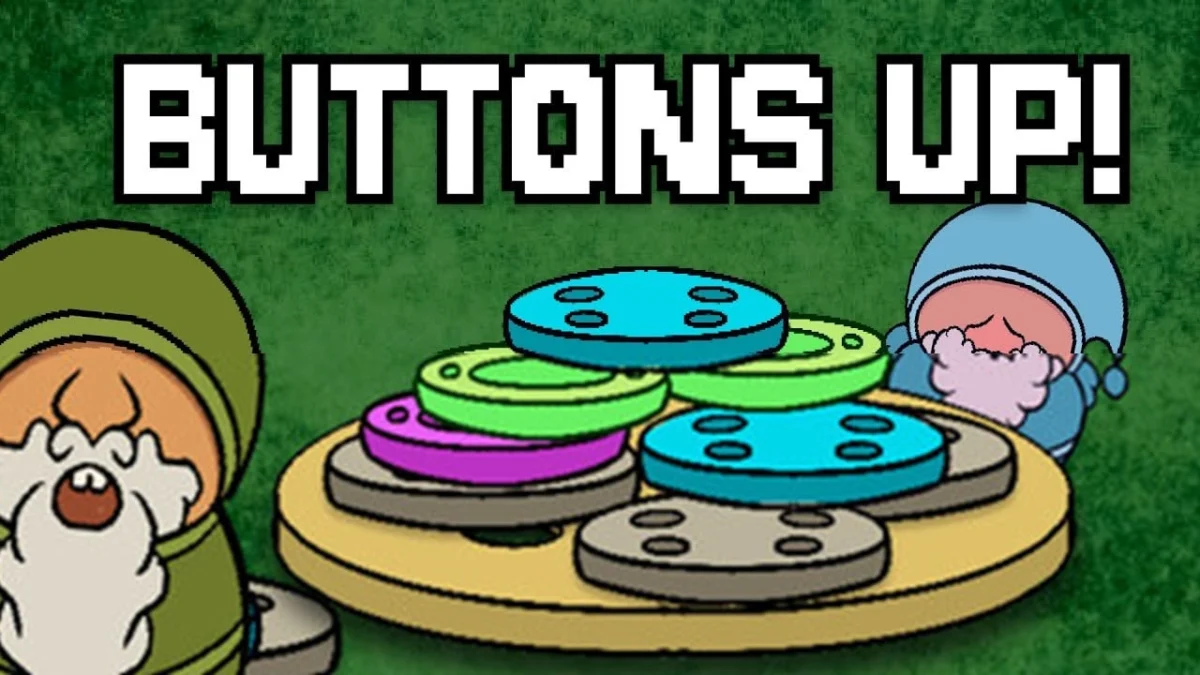
In the vast, ever-expanding ecosystem of mobile gaming, the "idle clicker" genre has carved out a permanent home. It is a genre defined by the satisfaction of exponential growth—the thrill of watching a modest digit swell into an astronomical figure through sheer persistence and strategic optimization. The latest entrant to this space, Buttons Up! Idle Clicker Game, offers a refreshingly tactile premise: building an industrial empire centered entirely around the collection of buttons. Developed by Jestercraft and brought to the global mobile market by publisher Pepperbox Studios, the game blends the meditative rhythm of incremental progression with a quirky, defensive "tower defense" twist.
The Core Concept: From Single Tap to Industrial Magnate
At its inception, Buttons Up! is deceptively simple. The player begins with nothing but an empty screen and the prompt to tap. Each tap generates a single button, the fundamental currency of the game’s internal economy. As with any classic incremental title, the initial phase is manual and labor-intensive. However, this phase is brief, serving as a tutorial for the mechanics of automation.
The progression loop follows the time-tested rhythm of the genre: tap to collect, purchase buildings to increase passive generation, unlock specialized skills, and eventually hire "Collectors." Once the automated workforce is established, the player transitions from a manual laborer to a manager. The game’s appeal lies in this shift; the joy is no longer in the clicking itself, but in watching the screen fill with an ever-growing mountain of buttons as your automated infrastructure works in the background.
Chronology of Development and Market Entry
The development of Buttons Up! by Jestercraft represents a calculated entry into the competitive mobile market. While the genre is saturated with titles featuring cookie bakers, lemonade stands, or space miners, Jestercraft opted for a whimsical, household-themed aesthetic.
Pepperbox Studios, acting as the publisher, identified a gap in the market for titles that balance "cozy" aesthetics with active gameplay requirements. The game’s release cycle saw a period of soft testing to ensure the balance of the economy—the most critical aspect of any idle game. If the progression is too fast, the player loses interest; if it is too slow, they feel frustrated. By fine-tuning the "King’s Button" progression tier and the cost-scaling of late-game buildings, the developers have created a progression arc that satisfies both short-term dopamine hits and long-term strategic planning.
The Gnome Menace: A Strategic Defensive Layer
What sets Buttons Up! apart from its more passive counterparts is the inclusion of the "Gnome Menace." In most idle games, the player is never threatened; their progress is purely additive. Buttons Up! introduces a layer of active defense to mitigate this.
Sneaky gnomes, the antagonists of this button-centric universe, represent a constant threat to your stockpile. These intruders don’t just sit on the periphery—they actively infiltrate your stash, attempting to pilfer the hard-earned resources you’ve spent hours accumulating. This forces the player to engage with the game beyond mere resource management. To counter these thieves, players must invest in security infrastructure, specifically turrets and traps.
This introduces a "tower defense" element to the idle loop. The player must decide whether to allocate their buttons toward increasing production (offensive growth) or toward security (defensive stability). This trade-off is the heart of the game’s strategy. A player who ignores security will eventually find their progress stagnating as gnomes siphon off their income, while a player who over-invests in security may find their growth rate too slow to reach the next tier of upgrades.
Supporting Data: The Mechanics of Growth
To understand the scale of Buttons Up!, one must examine the depth of its tech tree. The game is not a flat experience; it is designed to be experienced in "worlds" or tiers. The current progression architecture includes:
- The Tech Tree: A series of upgrades that improve the efficiency of collectors and the potency of your tapping.
- Powerups and Lasers: Tactical tools used to clear waves of gnomes or temporarily boost production rates during high-activity periods.
- The King’s Button: The ultimate objective of the first phase. Unlocking this signifies the player’s mastery over the initial content, acting as a gateway to the second world.
The second world is not merely a color swap; it introduces fresh challenges, new building types, and a different set of economic variables. This "Prestige" system is common in high-tier idle games, allowing players to reset their progress in exchange for permanent multipliers, ensuring that the game remains engaging over months rather than days.
Official Stance and Design Philosophy
In discussions regarding the game’s aesthetic, Jestercraft has emphasized a "cozy" design philosophy. The minimalist art style is intended to be easy on the eyes, allowing the game to be played in short, low-stress bursts. Unlike high-octane competitive titles that require constant focus and high-speed reflexes, Buttons Up! is designed for the modern mobile user—the commuter, the student on a break, or the person looking to decompress after a long day.
Pepperbox Studios has also committed to a roadmap of content updates. In the current gaming climate, a static mobile title is a dead title. By promising regular updates that include new achievements, additional worlds, and seasonal events, the publisher aims to foster a long-term community of "button hoarders."
Implications for the Idle Genre
The success of Buttons Up! could signal a shift in how developers approach idle game design. For years, the trend has been toward increasing complexity, often leading to cluttered interfaces and overwhelming UI. Buttons Up! proves that there is still a significant audience for titles that keep the presentation simple while introducing "active" threats.
The integration of tower defense mechanics into an idle framework is a particularly compelling evolution. It bridges the gap between two very different player psychologies: those who want to "set and forget" and those who want to actively protect their territory. By forcing players to engage with the game’s hazards, Jestercraft has added a layer of urgency that is often missing from the genre.
Furthermore, the game’s monetization model—a free-to-play structure supported by in-app purchases—is a standard that has been refined through years of mobile market data. By offering optional powerups and convenience features, the developers allow players to support the game at their own pace without gating progress behind paywalls. This player-first approach is essential for retaining a loyal user base in a market that is increasingly wary of predatory microtransactions.
Conclusion: Is It Worth Your Time?
For players who appreciate the satisfaction of watching numbers climb, Buttons Up! is a polished and addictive experience. Its strength lies in its balance: it is simple enough to pick up in seconds, but complex enough to warrant careful planning regarding how you defend your stash.
The "cosy" vibe provided by the minimalist art and the satisfying "pop" of collecting buttons creates a loop that is genuinely hard to put down. Whether you are a veteran of the idle clicker genre looking for your next fix, or a casual player seeking a low-stakes game to occupy your downtime, Buttons Up! offers a unique blend of management and defense.
As the game continues to receive updates and expand its content library, it is likely to become a staple for fans of the genre. If you find yourself drawn to the idea of building a button empire—and you have a penchant for swatting away pesky gnomes—the game is currently available for download on the Google Play Store.
While Buttons Up! provides a lighthearted, button-filled romp, those who find themselves craving a more cerebral challenge may also want to keep an eye on other upcoming mobile ports, such as the highly anticipated The House of Tesla: Definitive Edition. However, for the here and now, there is something deeply satisfying about building a digital empire, one button at a time. The gnomes are waiting, the buttons are ready, and your factory is just a tap away from greatness.

