

For those who have yet to dive into the deep, tactical waters of Larian Studios’ back catalog, the barrier to entry has never been lower. Steam is currently hosting a massive promotional event, slashing prices on a variety of acclaimed RPGs. Most notably, Divinity: Original Sin – Enhanced Edition has plummeted to its lowest price in history, offering a masterclass in fantasy role-playing for the price of a modest snack.
At a staggering 90% discount, the Enhanced Edition of the 2015 classic is currently available for just $3.99, while the Collector’s Edition has been reduced to $6.99. As the gaming industry continues to grapple with the rising costs of triple-A titles, Larian’s decision to offer one of the genre’s most influential modern pillars for under four dollars is not just a sale—it is an invitation to witness the evolution of a studio that would eventually reshape the entire RPG landscape with Baldur’s Gate 3.
The Mechanics of a Bargain: Understanding the Pricing Strategy
The current price point of $3.99 is not a random occurrence, nor is it a sign of a dying title. According to SteamDB, this represents the absolute floor for the game, a figure that has been reached consistently during major seasonal sales throughout 2025 and 2026.
Larian Studios has adopted a recurring discount strategy that effectively makes the $39.99 sticker price obsolete. By cycling this discount roughly once a month, the developer ensures that Divinity: Original Sin remains a constant, low-friction entry point for new players who might have heard of Larian’s more recent successes but have yet to experience their roots.
The Collector’s Edition, which usually retails for $69.99, is currently sitting at $6.99. Much like the base game, this price has been a staple of Larian’s promotional calendar since late 2025. This deliberate pricing structure serves a strategic purpose: it builds a massive, accessible foundation for the Divinity franchise, ensuring that when the next installment arrives, a wider audience is already familiar with the studio’s signature tone, mechanics, and design philosophy.
A Chronology of Excellence: From Original Sin to Modern RPGs
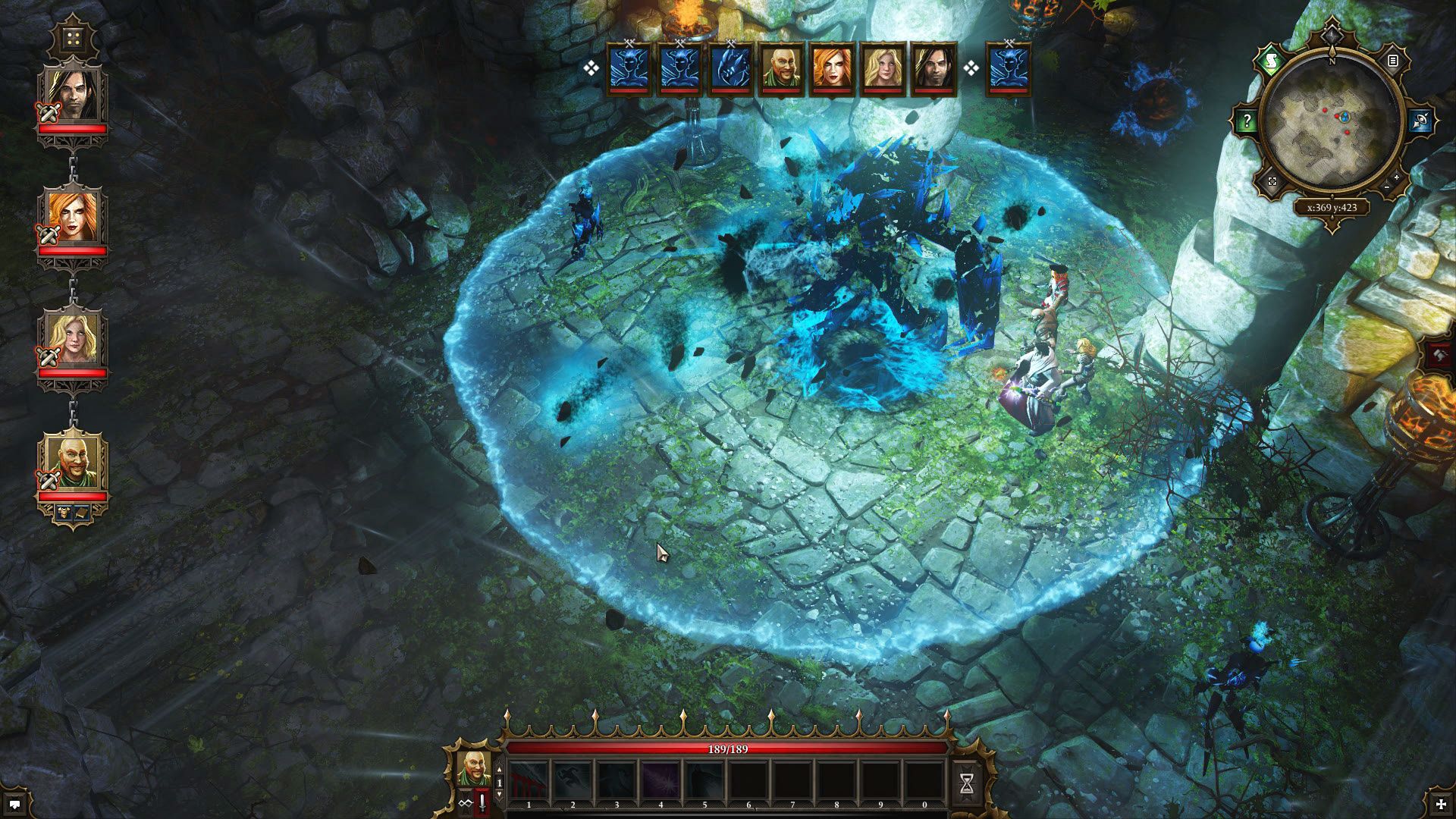
To understand the significance of this sale, one must look at the timeline of Larian’s growth. Divinity: Original Sin (2014/2015) was the project that saved the studio from financial insolvency. Following a successful Kickstarter campaign, Larian delivered an isometric, turn-based RPG that challenged the conventions of its time, specifically by emphasizing environmental interaction—using fire to clear poisonous clouds, or rain to douse elemental hazards.
- 2014: The original Divinity: Original Sin launches, receiving critical acclaim for its tactical depth.
- 2015: The Enhanced Edition arrives, featuring full voice acting, controller support, and a complete overhaul of the story and quest logs.
- 2017: Divinity: Original Sin II launches, widely regarded as one of the greatest RPGs ever made, further refining the series’ systems.
- 2023: Larian Studios releases Baldur’s Gate 3, a cultural phenomenon that solidified the studio’s position as the premier developer of deep, player-choice-driven narratives.
- 2025–2026: The studio pivots toward its next major project, a new Divinity title, while maintaining the accessibility of its back catalog through aggressive, recurring sales.
This trajectory is vital for players today. Playing the first Original Sin provides an essential look at the iterative process that led to the polished mechanics seen in Baldur’s Gate 3. It is a history lesson in game design, captured in an experience that remains as engaging today as it was a decade ago.
Why the Divinity Franchise Matters
Beyond the price tag, Divinity: Original Sin remains a titan of the genre. The game is celebrated for its "gloomy fantasy" aesthetic, which balances high-fantasy tropes with a biting, often self-aware sense of humor. Its turn-based combat system is the bedrock upon which Larian’s current success was built.
The game’s design encourages player agency in ways that many modern titles still struggle to replicate. If a player wants to solve a puzzle by stacking crates to reach a high ledge, or by teleporting an enemy into a trap, the game rarely says "no." This philosophy of "systemic design"—where the world reacts to the player’s creativity rather than forcing them into a pre-scripted path—is the hallmark of the Larian brand.
The Road Ahead: The Upcoming Divinity Reboot
The buzz surrounding the Divinity franchise has intensified following the success of Baldur’s Gate 3. Larian Studios is currently hard at work on a new, as-yet-untitled Divinity project. While the game does not yet have a release date, the anticipation is palpable.
Larian CEO Swen Vincke has been transparent about the development process, noting that the team is currently in the "living" phase—a stage where the core systems are in place, and the game is beginning to feel like a cohesive, playable experience. Vincke recently commented that this is the point where the developers can see the vision crystallizing, noting that while the game is still "rough," the core of what makes a Divinity game special is already present.
Furthermore, the studio has maintained its commitment to quality and transparency. In a recent, somewhat humorous confirmation, Technical Animation Director Ricardo Ayasta addressed the technical fidelity of the upcoming title, ensuring that even the most granular details—specifically, the game’s character models—will be "manually crafted with love." This focus on detail, even in the most unconventional areas, is a testament to the studio’s dedication to its craft.
Implications: The Risk and the Reward
Industry analysts have noted that returning to the Divinity series immediately after the gargantuan success of Baldur’s Gate 3 is a calculated risk. As noted by former Dragon Age lead developers, transitioning from a licensed IP (Dungeons & Dragons) back to a home-grown, original IP is a bold move. It requires the studio to rely on the strength of its own brand rather than the weight of a pre-existing tabletop legend.
However, the current sale suggests that Larian is playing the long game. By keeping the price of entry at $3.99, they are effectively "seeding" the market. Every player who picks up the Enhanced Edition today is a potential customer for the next major Divinity title tomorrow. It turns a one-time purchase into a brand-loyalty exercise.
Final Verdict: Why You Should Buy
If you have ever been curious about why Larian Studios is currently the most talked-about developer in the industry, there is no better starting point than Divinity: Original Sin. The game offers dozens—if not hundreds—of hours of gameplay. At its current price, the "cost per hour" of entertainment is effectively pennies.
Even if the upcoming reboot is still years away—with industry experts suggesting 2027 as the earliest realistic window—the sheer depth of the original Divinity experience is more than enough to bridge the gap. In a market where games often launch with bugs, microtransactions, and bloated price tags, the Enhanced Edition stands as a reminder of what a focused, well-supported, and lovingly crafted RPG looks like.
The current discount period ends on September 21. While history suggests the price will return, there is no reason to wait. To pass up a foundational piece of modern RPG history for the price of a cup of coffee is, quite literally, a sin. Whether you are a fan of Baldur’s Gate 3 looking for more, or a newcomer to the genre, the Divinity universe is waiting, and its door has never been wider open.

