

By the Tech & Science Editorial Desk
Updated and Expanded Report
Main Facts: The Digital Metamorphosis of Drosophila melanogaster
In the annals of computational neuroscience, few events have captured the public imagination quite as rapidly as Google’s open-source release of the complete connectome of an adult male fruit fly (Drosophila melanogaster). Mapping more than 130,000 neurons and roughly 50 million synaptic connections, the digital model represents the most detailed wiring diagram of a brain ever created.
Yet, the true marvel—and perhaps the most amusing quirk—of the modern tech community is what happened next. Less than two weeks after the high-resolution neural map went live, software engineers, data scientists, and hobbyists bypassed conventional neurological research pathways to subject the digital insect brain to the ultimate stress test: video games and chaotic software tasks.
What began as proof-of-concept experiments running DOOM and Super Mario 64 has rapidly escalated into a sprawling digital playground. Simulated fruit flies have already been repurposed as algorithmic crypto day-traders (reading candlestick charts for virtual dopamine hits) and trained to tackle complex spatial tasks like parallel parking.
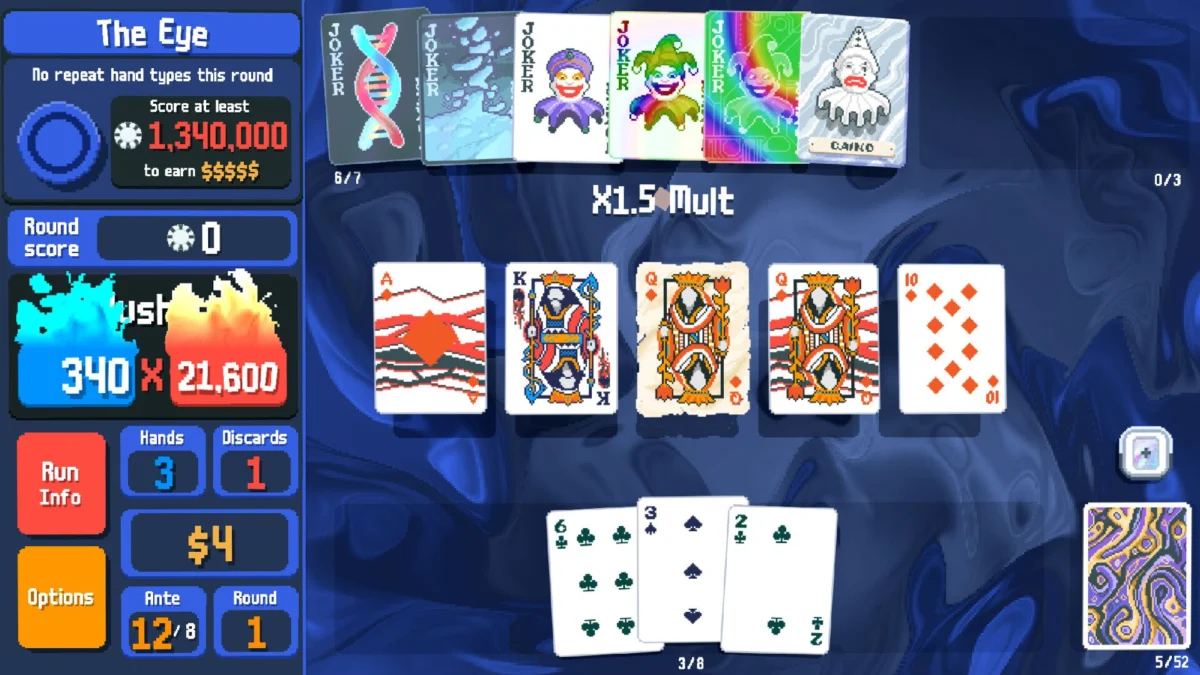
Now, the insect mind has conquered a new frontier of probabilistic chaos: the hit indie deck-building roguelike, Balatro.
According to a viral post shared within the online gaming community, a dedicated Balatro fan successfully trained the simulated Drosophila neural network using a customized reinforcement learning algorithm. Remarkably, the digital bug has achieved a functional win rate of roughly 20%—a staggering feat for an artificial intelligence architecture derived from an organism whose natural diet consists primarily of fermented fruit.
Chronology of the Connectome Craze: From Biological Blueprint to Gaming Benchmarks
The trajectory from a static scientific dataset to an autonomous poker-roguelike player unfolded with blistering velocity across late 2024 and 2026.
Phase 1: Mapping the Fly (The Foundation)
For years, researchers labored to chart the microscopic pathways of Drosophila melanogaster. When Google and its scientific collaborators finally published the comprehensive 3D neural map containing upwards of 166,000 mapped cellular nodes and functional circuits, it was heralded as a monumental leap forward for neurobiology. The goal was to better understand how sensory inputs translate into motor outputs, navigation, and basic decision-making in a biological organism.
Phase 2: The Immediate Hack (Days 1–5)
Almost instantly, software engineers seized the open-source data files. Recognizing that a neural network is, fundamentally, a complex web of nodes and weighted connections, developers converted the connectome into runnable artificial intelligence frameworks. Within days, headlines buzzed as the simulated fruit fly brain was forced to boot up DOOM. While the "gameplay" was initially primitive—mostly sporadic wandering and firing triggered by basic pixel analysis—it proved that the biological blueprint could function as an active neural controller.
Phase 3: Financial Speculation and Spatial Logic (Days 6–10)
As the community grew bolder, specialized applications emerged. One engineer mapped the virtual neurons to market feeds, turning the fly brain into a chaotic crypto day trader that executed trades based on simulated "dopamine" rewards tied to profitable candlestick charts. Simultaneously, other developers adapted the network to handle physics engines, successfully teaching the simulated insect to parallel park a car through trial-and-error reinforcement learning.
Phase 4: Entering the Roguelike Arena (The Present)
Capitalizing on this momentum, a community developer turned their attention to Balatro. Known for its intense reliance on probability, poker hand management, and exponential scoring scaling via "Jokers," Balatro presents an intellectual challenge that flummoxes many human players. By feeding game-state parameters into the fly’s sensory-equivalent nodes and mapping output nodes to card selection and discard actions, the creator watched as the digital insect slowly learned the ropes of illegal underground poker.
Supporting Data: Inside the 166,000-Neuron Architecture
To understand how a fruit fly brain navigates a complex video game, one must examine the underlying metrics of both the biological model and its digital execution.
- Neural Scale: The dataset maps over 166,000 virtual neurons (incorporating structural features of the roughly 130,000+ primary neurons plus associated central nervous system pathways).
- Synaptic Complexity: Millions of directional connections dictate how electrical signals propagate through the simulated tissue, mimicking the inhibitory and excitatory pathways of a real insect.
- Hardware Requirements: While running the full connectome natively at biological speeds requires substantial GPU acceleration, simplified algorithmic subsets can be executed on modern consumer hardware, allowing hobbyists to experiment locally.
- The Balatro Benchmark:
- Total Run Count: Initial testing batches consisting of hundreds of simulated runs.
- Current Win Rate: Steady at approximately 20% across standard stakes.
- Primary Failure Points: Over-reliance on high-risk flush builds and suboptimal Joker synergy valuation during Ante 3 and 4 transitions.
The fact that an artificial intelligence architecture modeled after an invertebrate can clear even a fraction of Balatro runs highlights the surprising versatility of biological network topologies when paired with modern machine learning wrappers.
Official Responses and Expert Perspectives
The intersection of neurobiology, open-source data, and shitposting culture has elicited a wide range of reactions from the scientific and gaming communities alike.
The Scientific Community: Fascination Mixed with Amusement
Biologists and neuroscientists have expressed a mixture of awe and bewilderment at how quickly their painstaking research has been weaponized for pop-culture experiments.
"We spent years mapping the micro-anatomy of the fly brain to unlock fundamental insights into sensory processing and behavior," notes one computational neurobiologist close to the project. "Seeing it play Balatro or trade cryptocurrency wasn’t quite on our initial grant proposal outline, but it undeniably demonstrates the robustness of the structural data. If a network modeled on a fly can grasp the mechanics of a rogue-like deckbuilder, it tells us something profound about the universal utility of recurrent neural loops."
The Gaming Community: Memes Meet Meta-Strategy
On platforms like Reddit and X (formerly Twitter), the reaction has been overwhelmingly celebratory. Threads detailing the fly’s Balatro win rate quickly accumulated thousands of upvotes, with users joking about the biological superiority of bugs over struggling human players.
"If a fruit fly can beat Ante 8, what’s your excuse?" became a popular refrain among players struggling to unlock the game’s higher difficulty tiers. Others have jokingly requested strategy guides written from the perspective of the simulated insect, complete with simulated chemical responses to drawing a Royal Flush.
Implications: What Does a Gaming Fruit Fly Mean for AI?
While the sight of a digital insect playing cards or day-trading crypto provides endless entertainment, the implications of these community-driven experiments stretch far beyond internet memes.
1. Bio-Inspired Artificial Intelligence
Traditional artificial neural networks (ANNs) are typically structured in uniform, layered architectures (such as transformers or convolutional networks). In contrast, biological brains have evolved through millions of years of evolutionary pressure to be remarkably energy-efficient, resilient, and adaptable. By utilizing real connectomes as architectural templates, researchers are discovering new ways to build AI systems that require a fraction of the power and data traditionally demanded by massive Large Language Models (LLMs).
2. The Power of Open-Source Democratization
The rapid iteration from brain map to Balatro player underscores the sheer velocity of modern open-source development. By making complex scientific datasets immediately accessible to the public, institutions inadvertently spark a decentralized R&D engine. Thousands of hobbyists working in parallel can test, break, and repurpose scientific models in ways that a single corporate or academic lab could never afford to explore in such a short window.
3. Ethical and Philosophical Horizons
As digital simulations of biological brains grow increasingly sophisticated—capable of navigating virtual environments, executing financial transactions, and engaging in strategic gameplay—philosophical questions loom on the horizon. At what point does a simulation of a biological nervous system cross the threshold into exhibiting rudimentary artificial sentience? While a fruit fly playing Balatro is operating entirely on deterministic algorithms and reinforcement loops, the rapid scaling of these technologies forces society to confront the shifting boundaries between biology and machine.
Conclusion
As the digital fruit fly continues to refine its strategy, mastering blinds and optimizing chip multipliers in Balatro, one thing is certain: the era of bio-digital crossover experiments has officially arrived. Whether it is crashing virtual crypto markets, navigating a pixelated track in Mario 64, or discarding a hand of low-value clubs, the 166,000 neurons of Drosophila melanogaster have proven that you don’t need a human prefrontal cortex to conquer modern entertainment—just an open-source connectome, a solid reinforcement learning algorithm, and a whole lot of virtual luck.

