

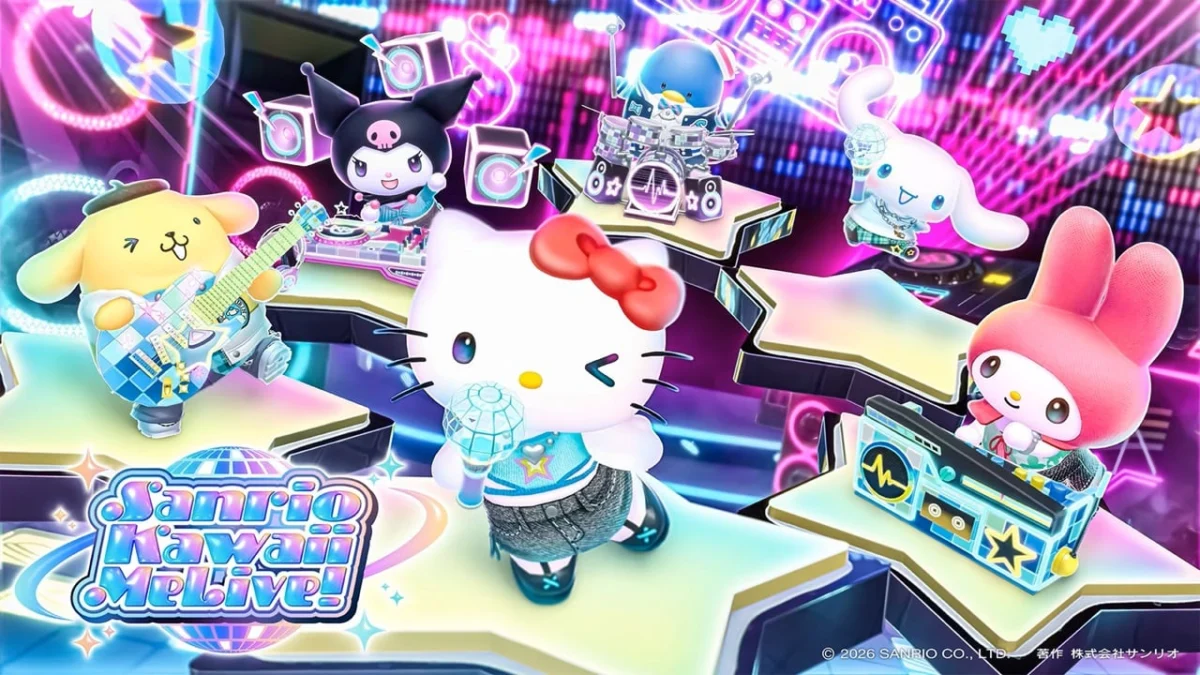
The global landscape of mobile gaming is currently undergoing a rhythmic revolution. With the meteoric rise of J-Pop and K-Pop-inspired titles dominating the charts, it was only a matter of time before the masters of cuteness—Sanrio—stepped into the spotlight. The company has officially announced Sanrio Kawaii Me Live! (affectionately referred to as Kawamira), a high-octane mobile rhythm game set to redefine how fans interact with their favorite icons.
With pre-registration now officially open, the industry is buzzing. Kawamira is not merely a tie-in; it is a full-scale musical production designed to blend the wholesome aesthetic of characters like Hello Kitty and Pompompurin with the mechanical depth of a professional-grade rhythm title.
Main Facts: What to Expect from Sanrio’s Newest Venture
Scheduled for a worldwide mobile release in January 2027, Sanrio Kawaii Me Live! aims to bridge the gap between casual fans of the Sanrio brand and hardcore rhythm-game enthusiasts. The core gameplay loop involves selecting a roster of beloved characters, customizing their wardrobes, designing elaborate stage environments, and performing in front of virtual crowds.
The title distinguishes itself through its dual-tiered gameplay system. Performance Mode is tailored for the casual player, focusing on the visual spectacle and the "kawaii" dance choreography of the characters. Conversely, Technical Mode is designed for the competitive crowd, featuring complex note-tracking and high-skill-ceiling mechanics that demand precision and rhythm.
Beyond the gameplay, the customization depth is staggering. Players can curate every detail of the performance, from the characters’ outfits to the stage lighting, pyrotechnics, and "cosmic" special effects. Whether a player wants to create a minimalist, elegant performance or a chaotic, glitter-filled spectacle, the tools are provided to make every concert a unique creative expression.
Chronology of the ‘Kawamira’ Development
The journey toward Kawamira did not happen overnight. Sanrio has spent the last several years expanding its digital presence, moving from traditional merchandise and theme parks into the interactive media space.
- Early 2025: Conceptualization phase begins. Sanrio executives identify a gap in the market for a "rhythm-first" experience that prioritizes character expression over generic gaming tropes.
- Late 2025: Initial collaboration talks begin with Universal Music. The goal was to secure a roster of high-profile Japanese artists to ensure the game’s soundtrack would resonate with the local and international music scenes.
- Mid-2026: Beta testing commences in select regions. Feedback from these sessions led to the refinement of the "Technical Mode," which was initially criticized for being too forgiving.
- Early Q4 2026: The official announcement of the game’s title, Sanrio Kawaii Me Live!, along with the reveal of the theme song, "Almond Dialogue" by ZUTOMAYO.
- Present Day: Pre-registration is now live on the Google Play Store, signaling the final countdown toward the January 2027 launch.
Supporting Data: A Soundtrack of Global Proportions
What makes Kawamira stand out in a saturated market is its commitment to high-quality audio. The game will feature a mix of iconic legacy tracks and fresh, exclusive compositions. Familiar favorites such as "KAWAII FESTIVAL" from the Sanrio Puroland parade and "Pompom Beat" by Pompompurin and Muffin are confirmed.
However, the collaboration list is what has truly captured the attention of the gaming press. Sanrio has partnered with some of the most influential names in the modern J-Pop and rock scene to provide original music:
- Soala & SHE’S: Bringing melodic, emotional depth to the game’s slower, more poignant stages.
- Lienel & Polkadot Stingray: Providing the high-energy, technical tracks that will challenge players in the "Technical Mode."
- Yabai T-Shirts Yasan & Mi-Line Hearts: Adding a touch of eccentricity and pop-punk energy to the repertoire.
The decision to feature ZUTOMAYO (Zutto Mayonaka de Ii no ni.) as the performer of the theme song is a strategic masterstroke. ZUTOMAYO’s massive, dedicated fanbase ensures that Kawamira will receive immediate attention from the Japanese music industry, effectively legitimizing the title as both a game and a musical platform.
Official Responses and Strategic Vision
In recent press briefings, Sanrio representatives emphasized that Kawamira is intended to be a "living" platform. Unlike static mobile games that launch and remain stagnant, Kawamira is designed for post-launch support, with planned updates that will introduce new characters, seasonal outfits, and additional artist collaborations.
"The goal," stated a company spokesperson, "is to provide a space where the personality of our characters can shine through the medium of dance and music. We wanted to ensure that when a player sees Pompompurin performing, they don’t just see a model on a screen; they see a performance that feels as dynamic and spirited as a real-world concert."
The developers have also addressed the technical side of the game, ensuring that the rhythm engine is calibrated for low latency—a common pain point for mobile rhythm games. By optimizing the engine, they aim to ensure that every tap and swipe feels responsive, keeping the player in sync with the high-fidelity audio tracks.
Implications for the Mobile Gaming Market
The release of Sanrio Kawaii Me Live! signals a broader shift in the industry. As mobile devices become more powerful, developers are increasingly blurring the lines between "casual" and "core" gaming. Sanrio is betting on the fact that their audience—traditionally younger or more casual—is ready for a more mechanically involved experience.
The "Kawaii" Economy
The monetization model for Kawamira is expected to revolve around the "gacha" system, a staple of the mobile rhythm genre. Players will likely collect "Live Tickets" or "Performance Items" that allow them to unlock rare outfits and effects. If the game succeeds, it could set a new benchmark for how intellectual property (IP) holders monetize their characters through interactive experiences rather than simple digital stickers or basic puzzles.
Competitive Landscape
With titles like Project Sekai and Ensemble Stars currently dominating the Japanese market, Kawamira faces stiff competition. However, Sanrio’s distinct advantage is the universal recognition of its characters. While other rhythm games rely on original, often abstract character designs, Kawamira leans on the deep, multi-generational emotional connection fans have with Hello Kitty and her friends. This "nostalgia factor" is a powerful tool for customer retention.
Conclusion: A New Standard for Sanrio
Sanrio Kawaii Me Live! is poised to be more than just a game; it is an ambitious digital stage for some of the world’s most recognizable icons. By balancing the demands of technical rhythm gameplay with the irresistible charm of the Sanrio universe, the developers have crafted a title that invites players to participate in a vibrant, musical, and thoroughly "kawaii" world.
As the industry looks toward January 2027, all eyes will be on how the mobile gaming community embraces this transition. For those who want to be part of the first wave of performers, pre-registration is currently available on the Google Play Store. Whether you are a fan of high-speed technical challenges or simply want to deck out your favorite Sanrio characters in the most ridiculous and sparkling costumes imaginable, Kawamira promises to be an essential download.
For those interested in the wider world of gaming, it is also worth noting the ongoing excitement surrounding other innovative titles, such as Crunchyroll’s Gato Roboto, which continues to demonstrate the industry’s focus on diversifying the mobile gaming experience.
Prepare your stage, calibrate your rhythm, and get ready to shine—the Sanrio concert of a lifetime is only a few months away.

