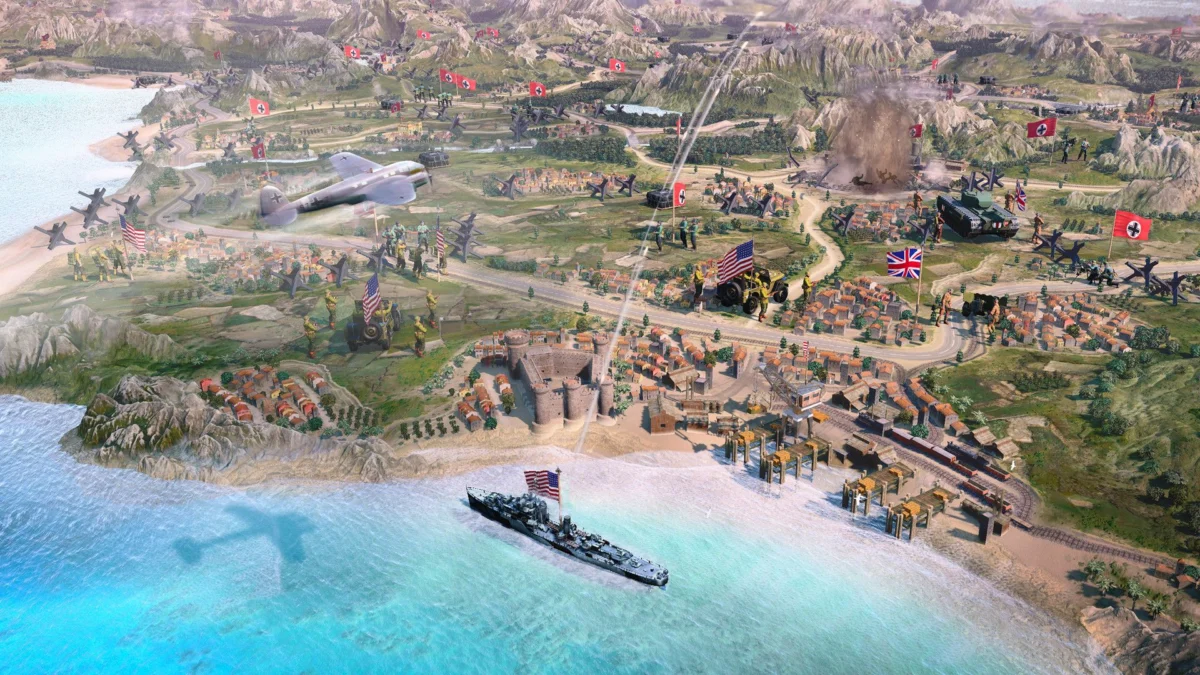
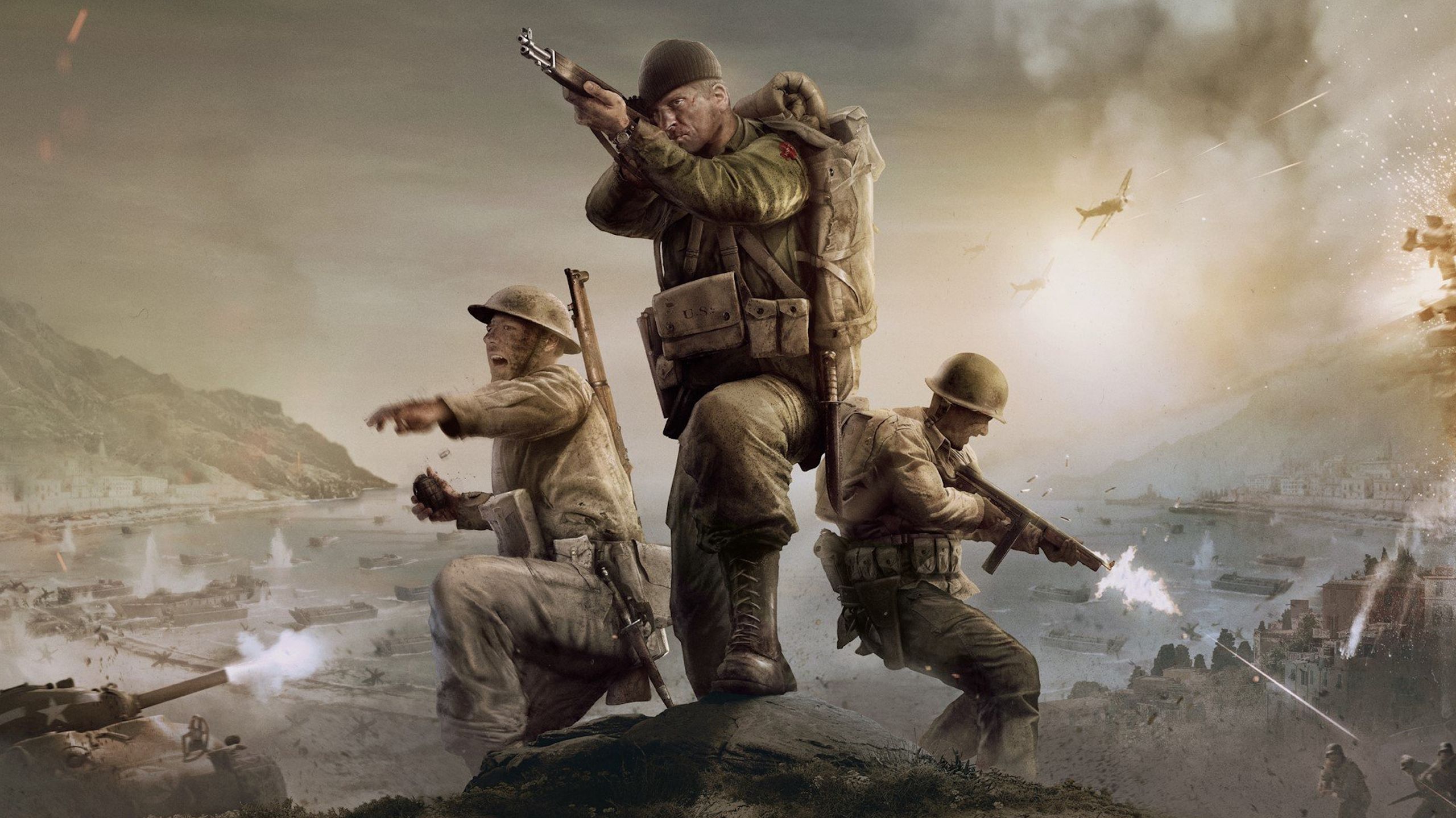
When Relic Entertainment first peeled back the curtain on the dynamic Italian campaign for Company of Heroes 3, the strategy gaming community held its collective breath. Blending the visceral, micro-intensive real-time tactical combat that the franchise is legendary for with a grand-strategy map reminiscent of Creative Assembly’s Total War series, it felt like a generational leap forward. Developer diaries showcased a sprawling theater of war where players could manage supply lines, execute amphibious landings, and outmaneuver Axis forces across the Mediterranean.
Yet, when the dust settled on its February 2023 release, the reality failed to match the soaring expectations. Plagued by technical bugs, a lack of polish, and a dynamic campaign loop that frequently left players unchallenged as enemy armies passively hunkered down, the title met with a polarized reception. Steam reviews settled into a stubborn "Mixed" consensus, forcing one of the industry’s most storied real-time strategy (RTS) developers into a prolonged period of introspection, structural reorganization, and painstaking post-launch rehabilitation.
Main Facts: The Scope of the Ambition and Its Shortcomings
At its core, Company of Heroes 3 was envisioned as the most grandiose entry in the franchise’s two-decade history. Relic aimed for unprecedented scale at launch, delivering two full, distinct single-player campaigns—the sandbox-style Dynamic Italian Campaign and the more linear, narrative-focused North African Operations—alongside multiple playable factions, overhauled destruction physics, and tactical pausing features.
However, this staggering breadth proved to be the project’s Achilles’ heel. According to Relic CEO Justin Dowdeswell, the studio bit off more than it could chew. The core concept of the Italian dynamic campaign, while brilliant in spirit, turned out to be a persistent development stumbling block that the team could not adequately resolve before the hard launch deadline.
Key pain points identified at launch included:
A Passive AI: Rather than mounting aggressive counter-offensives to retake lost Italian territory, Axis forces frequently remained idle, stripping the "dynamic" map of its strategic tension.
Technical Polish: Launch bugs, unstable framerates, and pathfinding quirks hampered an otherwise sophisticated tactical layer.
Removed Features: Player feedback during early playtests prompted Relic to excise certain experimental mechanics—such as controllable detachments—leaving some early supporters disappointed by the changes between previews and the final product.
Despite these hurdles, the game’s core RTS skirmish mechanics remained widely praised. Praised for retaining the franchise’s trademark heavy cover systems, dynamic line-of-sight mechanics, and brutal vehicle warfare, the game earned a respectable 82% in critical reviews—highlighting a profound dichotomy: Company of Heroes 3 was simultaneously a flawed, over-ambitious experiment and a fundamentally solid RTS platform.
Chronology: From Early Development to the 2.0 Turning Point
To understand how Company of Heroes 3 arrived at its current state, it is necessary to examine the timeline of its conceptualization, execution, and ongoing recovery:
Early Concept Phase: Relic conceptualizes the dynamic Italian campaign early in the development cycle, intending to fuse grand strategy with tactical RTS combat, building upon the successes of Company of Heroes 2: Ardennes Assault.
Community Playtests (2021–2022): The studio invites content creators, modders, and competitive players to interact with early builds. However, studio leadership later notes that these feedback loops occurred too late in the development cycle to fundamentally reverse foundational design missteps.
February 2023:Company of Heroes 3 officially launches on PC via Steam. While praised for its core tactical gameplay, it receives mixed user reviews due to bugs, optimization issues, and a lack of depth in the dynamic campaign map.
Post-Launch Postmortem & Recovery: Relic shifts into rapid-response mode, analyzing player telemetry and feedback to establish a rigorous patching schedule. The team focuses on stabilizing performance, refining campaign balance, and addressing quality-of-life requests.
Late 2024–2025 (The 2.0 Era): Marking the franchise’s milestones and the second anniversary of the game, Relic deploys the Company of Heroes 3 2.0 update, introducing massive free enhancements, rebalanced factions, and premium content drops alongside the wave-based roguelite standalone spin-off, Final Stand.
The Road Ahead (2027 and Beyond): Relic announces upcoming structural milestones, including the anticipated 3.0 update for Company of Heroes 3 and the ambitious development of Company of Heroes: Definitive Edition—a 64-bit remaster of the 2006 classic featuring overhauled lighting, textures, and modern quality-of-life adjustments.
Supporting Data: Community Reception and Metamorphic Updates
The trajectory of Company of Heroes 3 offers a fascinating case study in modern games-as-a-service redemption arcs. In the PC gaming sphere, launch impressions can cast a long shadow. Even as Relic systematically addressed the game’s technical shortcomings, Steam user reviews remained anchored at "Mixed," reflecting the enduring frustration of early adopters who expected a polished masterpiece on day one.
Yet, quantitative data tells a story of perseverance. The deployment of successive major updates—including major faction overhauls, sound design enhancements, and custom map integration tools—demonstrated Relic’s long-term commitment. The release of Final Stand, a wave-based roguelite mode designed to test players’ defensive capabilities under extreme duress, further diversified the game’s offerings, even if niche spinoffs occasionally struggled to win over the broader historical-strategy purist crowd.
Furthermore, Relic’s pivot toward independence—following its separation from parent company Sega—has fundamentally altered the studio’s operational ethos. Operating as an independent entity, Relic retains complete creative autonomy over its intellectual properties, allowing them to nurture Company of Heroes 3 on their own terms rather than bowing to rigid quarterly corporate metrics.
Official Responses: Accountability and the "Late-Project Fallacy"
In candid post-launch reflections, Relic leadership has been remarkably transparent about where the project stumbled. Speaking about the pressures of developing the largest entry in the franchise’s history, CEO Justin Dowdeswell offered an unvarnished assessment of the studio’s miscalculations.
"We set out to build the biggest Company of Heroes game ever," Dowdeswell notes. "More factions at launch. Two full campaigns playable at launch. I think it was an ambitious goal we set, and that showed up in some of the issues of launch around the level of polish and some of the bugs that the players were encountering. We didn’t quite land it."
Dowdeswell elaborated on the psychological trap that often ensnares large development teams during crunch periods—a phenomenon where engineers and designers rely on the hope that disparate systems will magically coalesce in the final weeks of production.
"For so many of us in the industry, things come together kind of late in the project," he explains. "So when it’s not there and you still have time, there’s this belief: well, we’ll get there, we always do. And this one, we didn’t."
When those final pieces failed to fall into place, the human cost within the studio was palpable. Years of painstaking labor by a dedicated team resulted in a reception that fell short of expectations. However, Dowdeswell emphasizes that the studio quickly moved past the initial shock to focus entirely on triage and iterative improvement.
Reflecting on the community engagement strategy, Dowdeswell acknowledges a structural flaw in how external feedback was integrated: "By the time we got to the place where we actually were ready to start sharing software, some of those decisions were so far back that it was too late to reverse them or change them, and it was also too late to really course correct by the time we knew the game had to come out."
Implications: What This Means for Relic and the RTS Genre
The turbulent journey of Company of Heroes 3 carries profound implications not only for Relic Entertainment’s future as an independent studio, but for the broader health and viability of the real-time strategy genre as a whole.
1. The High Cost of Scope Creep
For RTS developers, the pressure to innovate by grafting grand-strategy macro-management onto traditional tactical skirmishes is a recurring temptation. The Italian campaign in Company of Heroes 3 proves that players adore the idea of multi-layered strategic warfare, but executing it without compromising the tightness of the core loop is exceptionally difficult. Future developers will likely look at Relic’s experience as a cautionary tale: master the core combat loop first before expanding into sweeping campaign maps.
2. The Power of Long-Term Stewardship
Relic’s refusal to abandon ship demonstrates the vital importance of post-launch dedication. In an era where poorly performing games are frequently abandoned by publishers within months, Relic’s steady stream of updates, community-focused roadmaps, and structural overhauls have gradually transformed Company of Heroes 3 into a robust, feature-complete tactical sandbox.
3. Independence as a Creative Shield
The studio’s newfound independence from Sega provides a blank slate. Unburdened by corporate conglomerate mandates, Relic can lean into passion projects like the upcoming Company of Heroes: Definitive Edition—scheduled for 2027—which promises to honor the roots of the franchise with modernized 64-bit architecture and enhanced lighting. This nod to the past, paired with continued updates for Company of Heroes 3 (including the anticipated 3.0 patch), signals a studio that is comfortable in its own skin and deeply attuned to its core audience.
Ultimately, while Company of Heroes 3 may forever carry the bittersweet label of a flawed pioneer, its legacy is far from finished. For veterans of the genre, no other studio captures the terrifying thunder of artillery, the frantic scramble for urban cover, and the intricate chess match of World War II tactical combat quite like Relic. And as they chart their course into an independent future, the torch of RTS dominance remains firmly in their hands.