

Introduction: The Battle for the Life Sim Throne
For years, the life simulation genre has existed in a comfortable, largely unchallenged monopoly. While The Sims 4 continued to roll out expansion packs, game packs, and stuff packs to a dedicated yet occasionally frustrated player base, the community hungered for a true competitor. When Krafton announced Inzoi, powered by Unreal Engine 5 with breathtaking photorealistic graphics and deeply immersive gameplay promises, it felt like the savior the genre desperately needed.
Yet, the road to modern gaming glory is notoriously bumpy. Early access releases rarely capture the pristine vision initially pitched by developers, and Inzoi has proven no exception. Critics and life-sim veterans have noted that the game’s initial early access launch leaned heavily into trying to do everything at once, ultimately resulting in a mechanical framework that felt, to some, like a shallow imitation of Maxis’s legendary franchise. Studio head and game director Hyungjin "Kjun" Kim has openly confessed that developing a deeply systemic life simulation is far more challenging than anticipated—even admitting feelings of guilt that players essentially serve as testers while the studio ironed out foundational issues.
Despite these hurdles, Kim and his team have spent the last year refining the core experience. However, a recent Steam developer update revealed a sharp curveball: alongside the base simulation loop, Krafton is quietly engineering a completely separate, highly experimental mode titled ‘Canvastown’. Aimed at transforming how players experience digital lives, this new frontier begs the question: is Inzoi pioneering a revolutionary multiplayer sandbox, or is it dangerously running before it can walk?
Main Facts: What is ‘Canvastown’?
To understand the scale of this new undertaking, one must look at how Canvastown fundamentally shifts the paradigm of traditional life sims.
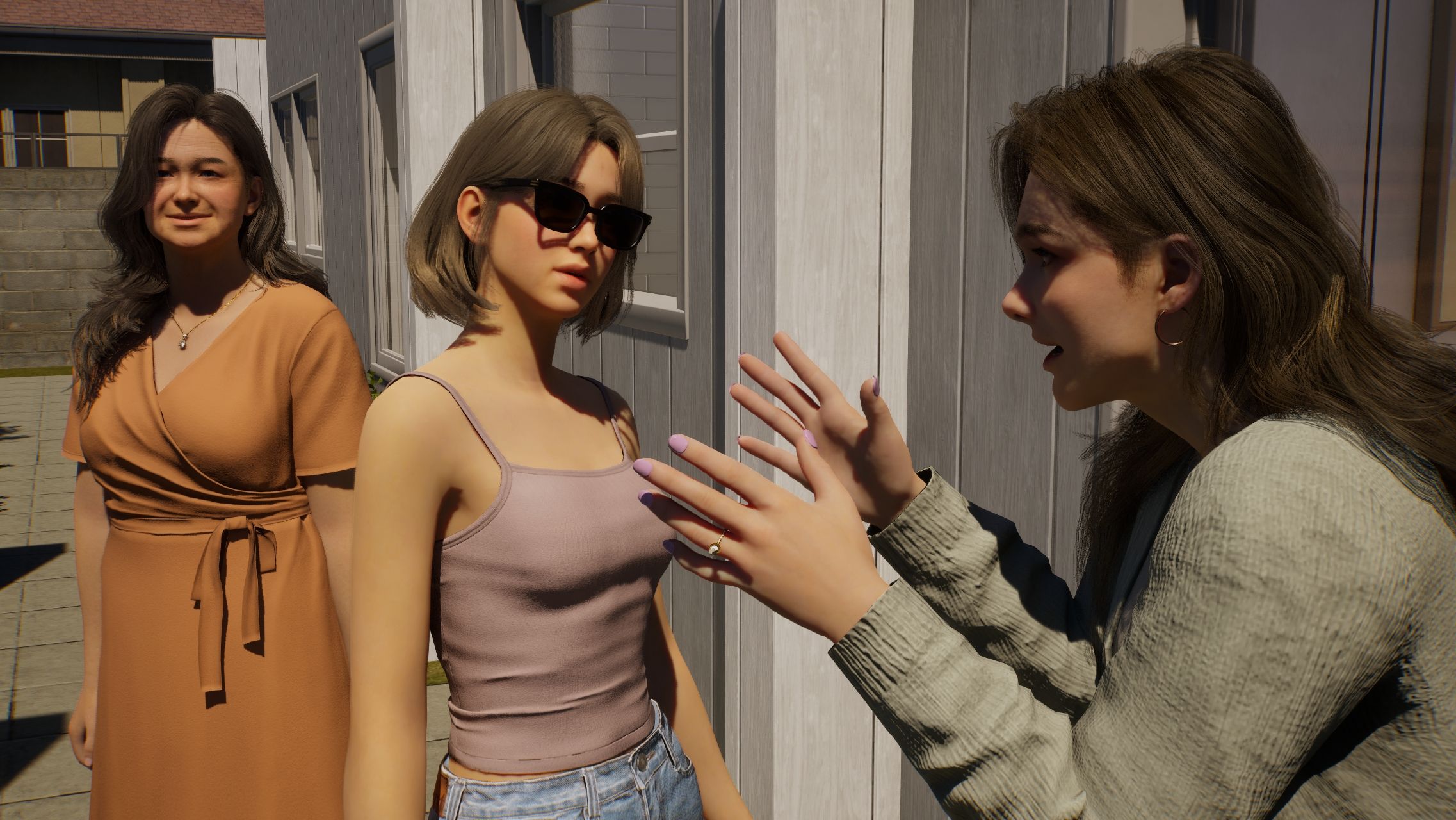
Unlike conventional simulation games where the player acts as an omniscient deity—managing multiple characters from a detached, bird’s-eye perspective—Canvastown drops the player directly into the shoes of a single character.
- Roleplaying Focus: The primary objective of Canvastown is to strip away the mundane, repetitive chores of daily life simulation and hyper-focus on cinematic, memorable moments. It is designed for players who want to drop in, experience high-impact scenarios, and enjoy the dramatic highlights.
- The ‘AR Company’ Social Hub: Players design their custom "Zoi" (the game’s equivalent of a Sim) and build a personalized home, before stepping into a dedicated online space known as the AR Company.
- Multiplayer Integration: This digital enclave accommodates roughly 50 players simultaneously, allowing them to converse, interact, and share experiences under mutual consent. While populated primarily by human-controlled avatars, the space also integrates NPC Zois to flesh out the living world.
- Director-Style Control: Kim has likened the mode’s mechanics to filmmaking, noting that players can assign roles, cast actors, and dictate scenarios as if they were directing their own cinematic features.
- Script Mod Support: Further expanding the sandbox’s potential, Canvastown will support script mods, enabling community-driven creations like fully functional mini-games (such as street racing). Kim has expressed optimism that successful community mini-games could eventually be integrated into the core single-player game.
Chronology: From Early Access Realities to the Vision of Ready Player One
The trajectory of Inzoi has been a lesson in managing massive expectations against technical realities.
Phase 1: The Hype and the Reality Check
When Inzoi was first unveiled, its hyper-realistic aesthetic turned heads across the industry. Fans envisioned a mature, visually stunning alternative to The Sims. However, when the early access build finally reached players, the reception was mixed. Reviewers pointed out that while the engine was powerful and the character creator was exceptionally detailed, the underlying gameplay lacked the deep emotional intelligence and emergent storytelling that made The Sims a multi-decade cultural phenomenon.
Phase 2: Internal Revelations
Recognizing the gaps in the simulation loop, director Hyungjin Kim took a transparent approach with the community. He admitted that launching into early access was unavoidable due to the sheer scope of the project, though he voiced regret that early adopters had to bear the brunt of ironing out foundational bugs and balancing issues. For over a year, the narrative around Inzoi was strictly about repair, optimization, and deepening the core mechanics.
Phase 3: The Shift Toward ‘Canvastown’
The announcement of Canvastown represents a pivot in the studio’s long-term roadmap. In recent communication via Steam and developer deep-dives, Kim revealed that his ultimate creative aspirations stretch far beyond a standard life sim. Drawing direct inspiration from pop culture touchstones like Ernest Cline’s Ready Player One, Kim’s vision is to build a virtual world where players can seamlessly step away from reality, enter the universe of Inzoi, and live out entirely alternative lives within a shared digital society.
Supporting Data and Development Realities
Despite the grandiose vision of a massive, multiplayer, director-driven sandbox, the studio remains grounded about the timeline and current state of the software.
During recent previews, Kim offered a candid assessment of the project’s current build status:
"Looking at the current build makes me sigh. There are so many lacking areas, and we have a very long way to go."
This blunt honesty highlights a critical piece of data for prospective players: Canvastown is not arriving anytime soon. Krafton has firmly categorized the mode as a side project, emphasizing that the core development team remains laser-focused on perfecting the primary life simulation loop. The studio is acutely aware that adding expansive multiplayer frameworks and script-mod integration atop an unstable or incomplete foundational engine would spell disaster.
Furthermore, the technical hurdle of maintaining stable synchronization for 50 players in a physics-driven, detail-heavy engine like Unreal Engine 5 should not be underestimated. The netcode required to handle synchronized animations, open-world housing modifications, and dynamic social interactions across multiple users is notoriously complex.
Official Responses and Developer Philosophy
Hyungjin Kim’s public updates have become known for their philosophical approach to game design. Rather than treating Inzoi strictly as a strategic competitor to existing titles, Kim views the project as an emotional outlet for players seeking escapism.
In explaining the genesis of Canvastown, Kim emphasized the psychological weight of everyday chores in simulation games. "The main goal of Canvastown is to get away from mundane daily life and capture memorable moments within life simulation so you can jump in and enjoy only those extraordinary moments," he noted.

By empowering players to act as virtual directors, the studio hopes to shift the burden of storytelling away from procedural generation alone and place it directly into the hands of the community. The inclusion of script mods further signals a commitment to open-source creativity, allowing modders to bend the engine into shapes the developers may never have originally intended—turning a quiet suburban life sim into an action-packed platform for user-generated content.
Implications: Is Inzoi Running Before It Can Walk?
While the theoretical potential of Canvastown is undeniably exciting, it raises pressing strategic questions about the project’s direction.
The Danger of Feature Creep
In software development, "feature creep"—the uncontrolled expansion of project scope—is a silent killer. Building a compelling single-player life sim requires immense dedication to AI routines, pathfinding, psychological modeling, and social systems. Introducing an online multiplayer roleplaying ecosystem with custom mini-game scripts and director tools requires an entirely different set of engineering disciplines. Observers are right to question whether Krafton is spreading its resources too thin, attempting to build an MMO-lite sandbox before mastering the bread-and-butter mechanics of a domestic simulator.
Stiff Competition in a Resurgent Genre
The stakes for Inzoi are higher now than they were at its initial announcement. The life sim drought is officially over. Chief among Inzoi‘s rivals is Paralives, an indie darling that has won over the community with its charming art style, innovative gridless building tools, and steady, transparent development cycle. Early access reviews for Paralives have praised it as a cohesive, highly focused experience that understands its audience intimately.
If Inzoi continues to divide its development bandwidth between fixing its core single-player simulation and chasing grand Ready Player One-style metaverse ambitions with Canvastown, it risks being outmaneuvered by leaner, more focused competitors.
Conclusion
Inzoi remains one of the most visually stunning and conceptually fascinating projects in modern PC gaming. Canvastown could ultimately prove to be a visionary masterstroke—a feature that redefines how communities interact within simulation games. However, for that dream to become a reality, Krafton must ensure that the foundation holding up the canvas is rock-solid. Until the core life sim experience matches its lofty ambitions, players and critics alike will watch this grand experiment with a mixture of awe and cautious skepticism.

