

The gaming industry finds itself at a critical inflection point midway through 2026. After a period of stagnation characterized by flat growth in live-service titles and a cooling in digital revenue, the sector is looking toward a high-stakes second half. According to the latest Global Games Market Report from industry intelligence firm Newzoo, the industry is currently navigating a "trough of transition," where the decline of aging evergreen titles is being offset only by a handful of high-performing legacy hits and the mounting anticipation of next-generation hardware and blockbuster software.
Main Facts: A Market in Flux
The first half of 2026 has provided a sobering reality check for publishers. While the industry is projected to reach an impressive $213.9 billion in total global revenue by the end of the year—a 6.1% increase year-on-year—the underlying data reveals a fractured landscape.
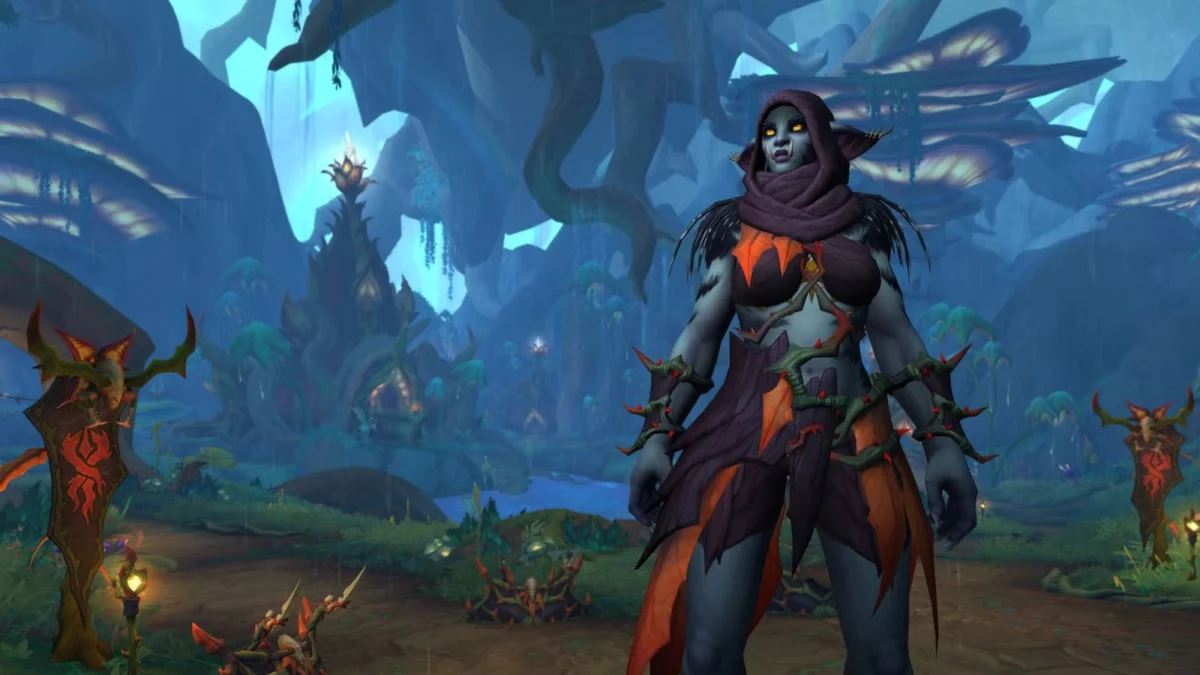
The primary driver of the current market stagnation is the performance of live-service and evergreen titles. These pillars of the industry, which dominated revenue charts throughout the early 2020s, have seen their year-over-year growth stall or decline in the first six months of 2026. Newzoo’s report highlights that growth is currently concentrated in a very narrow band of titles, including World of Warcraft, Diablo 4, Overwatch, Roblox, and select international titles published by Tencent.
Digital revenues across six key Western markets have notably declined year-on-year, a trend Newzoo attributes to the "free-to-play and annualized premium weakness" outweighing the impact of strong new releases. In simpler terms, the sheer volume of high-quality new games is not yet enough to compensate for the fatigue surrounding older, long-running live-service games that have historically provided the industry’s reliable baseline revenue.
Chronology: The Road to 2026
To understand the current state of the market, one must look at the recent trajectory of hardware and consumer behavior:
- 2025: The Plateau: The industry entered 2025 with nearly flat console player growth (0.5%). The market was characterized by a lack of "system seller" titles, leading to a general decline in hardware momentum.
- Early 2026: The Slump: The first half of 2026 continued the trend of "weakness in annualized premium titles." Digital revenue hit a wall as players retreated from aging live-service ecosystems.
- The Netflix Catalyst: The 30-minute Grand Theft Auto 6 teaser, debuted on Netflix, served as a shock to the system. Following the teaser, Nielsen IQ data recorded a sharp spike in hardware sales, with PlayStation 5 and Xbox units rising by 33% and 34% respectively in the UK.
- Mid-2026: The Transition: We are currently in the mid-year window where the market is bracing for the impact of Rockstar Games’ upcoming title and the rumored arrival of the Nintendo Switch 2.
Supporting Data: The Power of Giants
The hierarchy of the gaming world remains dominated by a few massive conglomerates, as evidenced by the Q1 2026 top-10 public games companies list. Collectively, these ten companies generated $37.4 billion in revenue, reflecting a 6.7% year-over-year growth.
The Revenue Breakdown
- Tencent: Retains its crown, with revenues growing 11.9% to $10.8 billion.
- Sony: Reported $5.2 billion in revenue, a marginal decline of 0.9%.
- Microsoft: Followed closely at $5.1 billion, with a more significant decline of 5.5%.
- Roblox: A standout performer, with a 39.3% year-on-year growth to $1.4 billion.
These figures underscore the bifurcation of the market: massive, diversified platforms like Tencent and Roblox are finding ways to scale, while traditional console giants are feeling the pressure of a saturated hardware cycle.
Furthermore, the geographic distribution of revenue remains heavily skewed toward the Asia-Pacific region, which is expected to generate nearly half of the global total at $100.7 billion. China remains the world’s single largest market at $58.1 billion, followed by the United States at $53.5 billion.
Official Responses and Market Intelligence
The consensus among market analysts is that the industry’s health for the remainder of the decade is tethered to the launch of GTA 6. Emmanuel "Manu" Rosier, Director of Market Intelligence at Newzoo, provided a blunt assessment: "Without GTA 6, console revenues would remain flat compared to 2025."
This sentiment is echoed in the strategies of major hardware manufacturers. Sony, while reporting flat Q1 sales, has signaled a cautious approach, including the controversial move to halt certain physical disc production lines—a reflection of the industry’s forced pivot toward digital-first models.
Conversely, Nintendo is expected to play a major role in expanding the generation 9 install base. While GTA 6 is the primary catalyst for the broader console market, first-party titles on the anticipated Switch 2 are expected to capture a massive segment of the "casual and family" demographic, further padding the total install base.
Implications: The "GTA 6" Effect and Future Growth
The implications of these trends are far-reaching. The industry is currently witnessing a transition where the "spenders" are becoming more concentrated, even as the overall player base grows.
1. Increased ARPPU (Average Revenue Per Paying User)
Newzoo forecasts that ARPPU will reach $129.6 this year, an increase of 1.4%. This is a crucial metric; it suggests that while it is becoming harder to acquire new players in a saturated market, the existing player base is spending more deeply within their preferred ecosystems. This "deeper spending" is the lifeline of the live-service model, even as the broader growth of those services cools.
2. The Hardware Rebound
The 3% growth in console players forecasted for 2026—a significant jump from the 0.5% in 2025—is entirely predicated on the "GTA 6" effect. Industry experts anticipate that the launch will create a "halo effect," similar to the hardware spikes seen during the mid-2010s console booms. This will likely provide the necessary momentum to carry the industry into 2027 and beyond.
3. Subscription Services as a Buffer
PlayStation Plus and other multi-game subscription services are increasingly viewed by analysts as the "safety net" for the console market. By ensuring consistent engagement even during dry spells in software releases, these services provide a predictable revenue stream that helps offset the volatility of the blockbuster-driven model.
4. Demographic Shifts
With the total global player count expected to reach 3.7 billion in 2026 (a 4.4% increase), the industry is shifting its focus toward conversion. The percentage of players categorized as "spenders" has risen from 39.4% in 2015 to 44.6% today. This suggests that the industry is successfully converting a larger portion of the casual gaming population into monetizable customers, a trend that is likely to continue as gaming becomes more integrated into social and entertainment platforms like Roblox and the growing gaming-on-Netflix initiatives.
Conclusion: A High-Stakes Second Half
The narrative for 2026 is one of survival and preparation. The market has effectively been waiting for a catalyst to break the current cycle of flat growth. With Grand Theft Auto 6 looming on the horizon, the industry expects a surge in both hardware adoption and high-end software spending.
However, the challenges remain: the "free-to-play" fatigue is real, and the reliance on a handful of massive titles highlights a potential vulnerability in the broader ecosystem. As we move into the second half of the year, the industry’s ability to sustain growth will depend not just on the success of a single blockbuster, but on the ability of publishers to re-engage a player base that is increasingly selective with their time and their wallets. The 2026 fiscal year will likely be remembered as the year the industry held its breath, waiting for the next generation of gaming to finally arrive in full force.

