

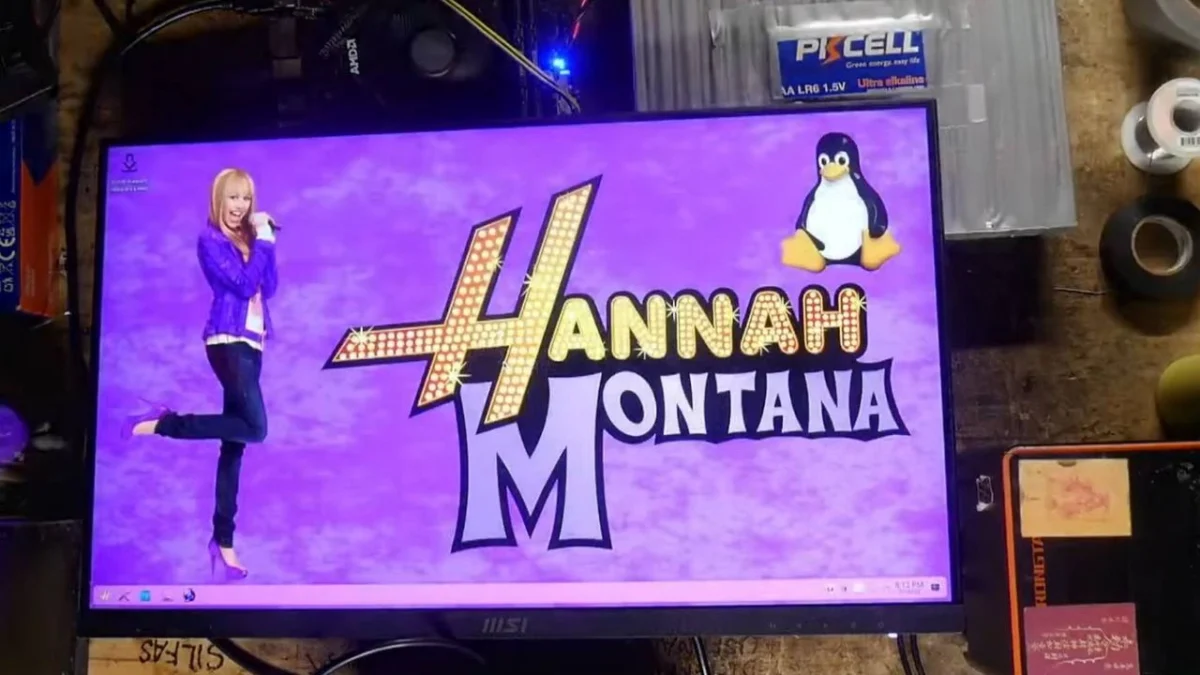
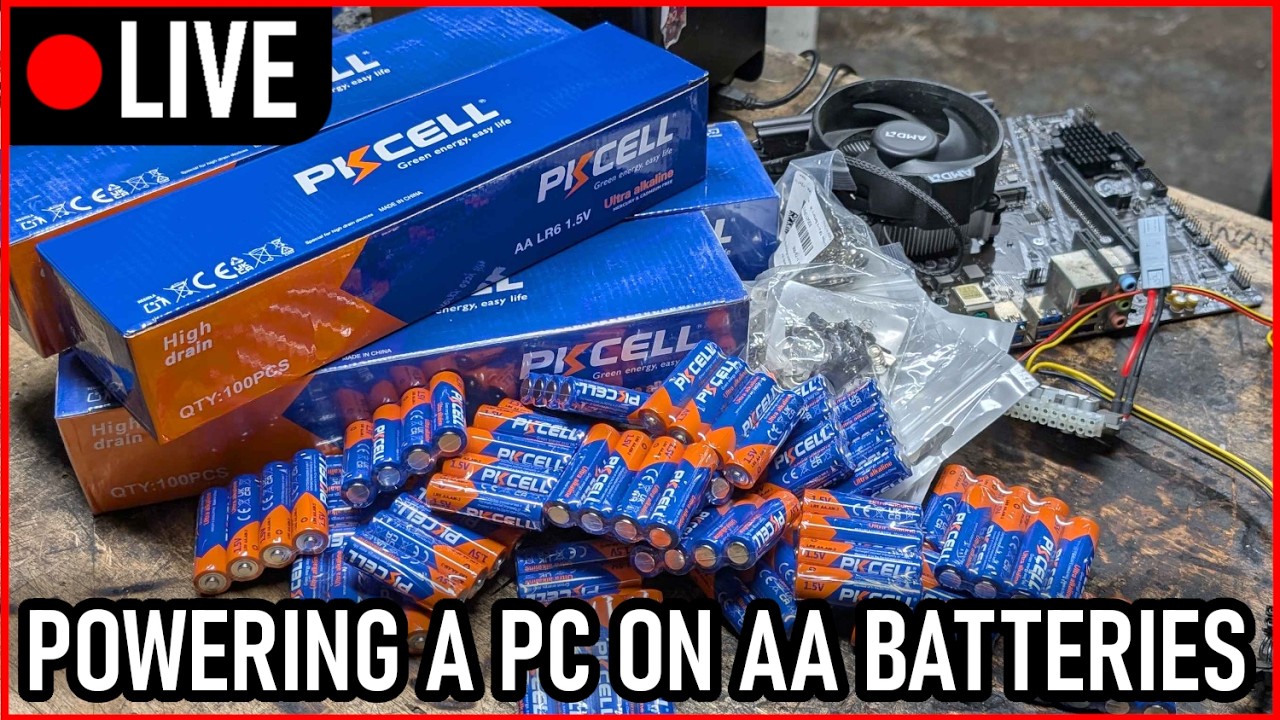
In the world of PC building, the pursuit of efficiency usually involves liquid cooling loops, undervolting, and high-tier power supply units (PSUs) boasting 80 Plus Titanium ratings. However, in a recent five-hour livestream, hardware enthusiast and content creator "Uwos Lab" decided to throw conventional wisdom out the window. Rather than plugging into a standard wall outlet, the streamer attempted to power a fully functional desktop gaming PC using nothing but hundreds of standard, off-the-shelf AA alkaline batteries.
The project, which quickly gained traction in the tech community, wasn’t just a gimmick; it was a deep dive into electrical engineering, circuit design, and the absurd limitations of consumer-grade energy storage.
The Core Concept: Engineering Under Pressure
The project’s objective was simple yet daunting: to sustain a desktop PC without a grid connection, using only non-rechargeable AA alkaline batteries. The rules were strict—no laptops, no lithium-ion substitutes, and no external power adapters.
Uwos Lab’s strategy centered on a custom-built power delivery system. "We’re going to wire eight AA in series to get 12 volts," the streamer explained during the broadcast. "And then we’re going to take 50 of those banks and wire them in parallel to get a high current, 12 volts, feed that into a DC to ATX power supply, and get our desktop online."
While the initial mathematical projections suggested that 400 batteries would be necessary to achieve stable performance, the final build utilized 192 cells. These were organized into three laser-cut wooden crates, each housing 64 batteries held together with custom clips and contact pads. The resulting battery banks were heavily reinforced with duct tape, creating a rugged, if somewhat hazardous-looking, power plant for the machine.
A Chronology of the Build
The livestream served as a real-time documentary of the trial-and-error process inherent in "mad science" hardware projects.
Phase 1: The Power Architecture
The early hours of the stream were dedicated to the grueling physical labor of connecting nearly 200 individual batteries. The primary challenge was maintaining consistent voltage while ensuring sufficient current to satisfy the power-hungry components of a desktop PC. By creating parallel banks of series-wired cells, Uwos Lab managed to stabilize the output to the necessary 12 volts required by the DC-to-ATX power supply unit.
Phase 2: The Boot Sequence
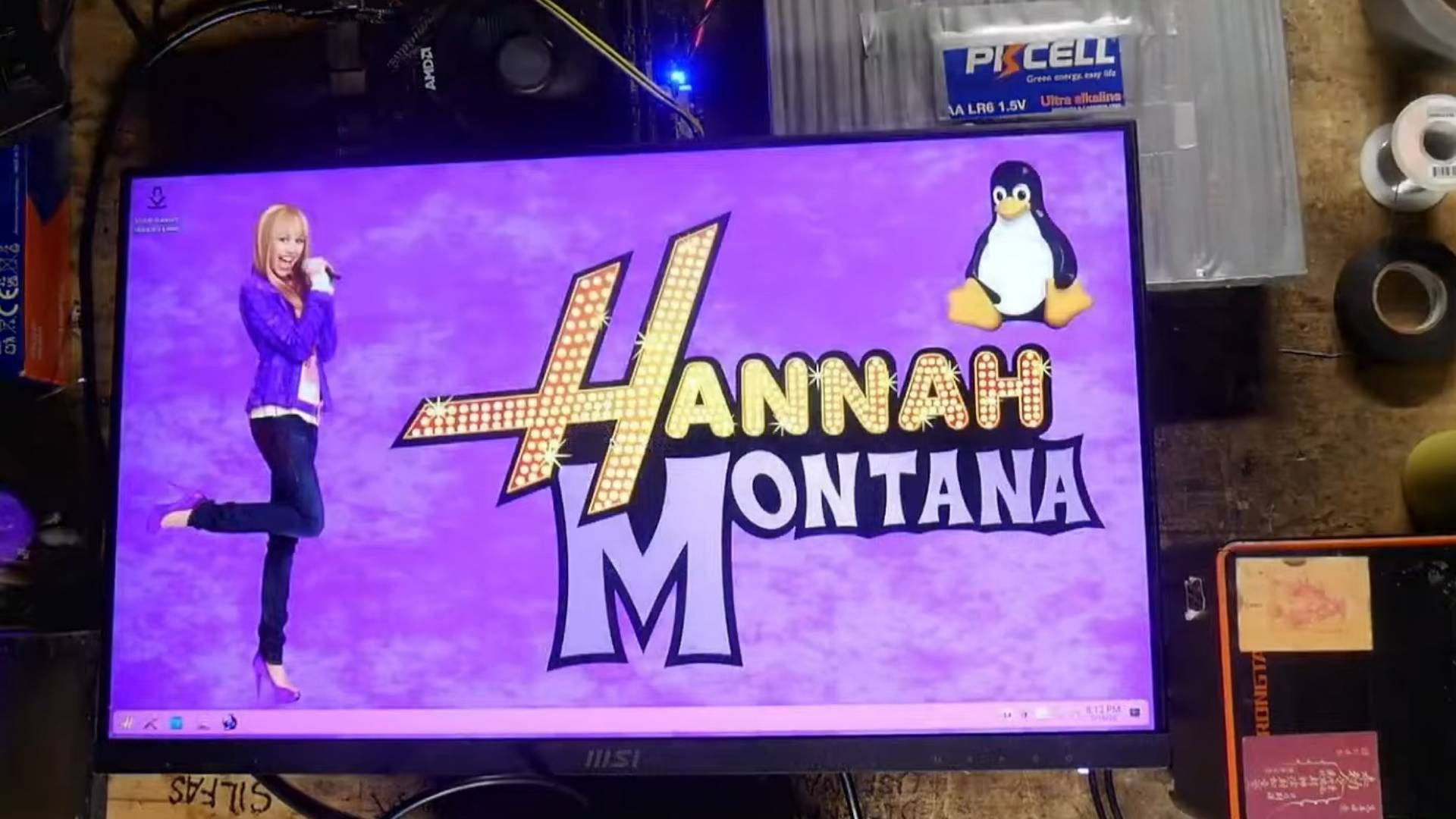
Once the power grid was assembled, the next hurdle was the software environment. The PC, based on an AM4 motherboard—likely paired with an AMD Ryzen G-series processor due to the absence of a discrete graphics card—lacked internal storage. The streamer opted for a bootable USB drive, choosing the infamous "Hannah Montana Linux" as the operating system. This choice added a layer of levity to the technical stress test, providing a unique visual backdrop to the experiment.
Phase 3: Stress Testing and Performance
With the system live, the focus shifted to load testing. The machine was pushed to its limits, with CPU utilization hovering around 98%. While the computer performed basic tasks, Uwos Lab simultaneously ran a heavy Linux stress test while live-streaming the monitor output back to their audience. The rig proved surprisingly resilient, maintaining stability under extreme load for the duration of the 30-minute demonstration.
Supporting Data and Comparative Analysis
The success of Uwos Lab’s project adds to a growing list of "absurd power" experiments that have populated the tech space throughout 2024.
The data from this experiment highlights the inherent inefficiency of alkaline chemistry for high-draw computing. Alkaline batteries are designed for low-drain devices—like remote controls or clocks—rather than the high-current demands of a processor and motherboard.
When compared to previous experiments, the consistency is striking:
- The ScuffedBits Benchmark: In March 2024, creator ScuffedBits attempted a similar feat, successfully running a gaming PC on AA batteries for 33 minutes and 19 seconds.
- Energy Density: Both projects demonstrate that while alkaline batteries can theoretically provide the necessary voltage, the rapid voltage sag—a common characteristic of these cells when subjected to high current—makes them an unsustainable choice for long-term computing.
While Uwos Lab estimated that the system could potentially run for another hour or two before the power drop becomes terminal, the project serves as a practical, albeit expensive, demonstration of why we rely on lithium-ion or grid power for modern electronics.
The Broader Implications of ‘Mad Science’
While this project might seem like a waste of batteries, it offers significant insights into the nature of modern hardware.
1. The Resilience of Modern Computing
The fact that a PC can be powered by an improvised, duct-taped array of household batteries speaks to the robustness of modern power conversion components. DC-to-ATX power supplies are remarkably forgiving when it comes to input power, provided the voltage remains within a specific range.
2. The Future of Off-Grid Computing
The fascination with these projects is not just about the batteries themselves, but the curiosity surrounding off-grid autonomy. When YouTuber Chris Doel successfully scavenged 500 lithium-ion cells from discarded vapes to power his home and workshop, he demonstrated that the future of power might lie in recycling and repurposing energy storage, rather than relying on primary (non-rechargeable) cells.
3. Sustainability and Waste
Critics of such projects often point to the environmental cost of using 192 or 400 alkaline batteries for a 30-minute demonstration. While the "mad scientist" aesthetic is engaging, it highlights the staggering environmental footprint of single-use energy. The industry shift toward modular power, solar integration, and high-density storage solutions is clearly the direction the professional sector is heading, even if the enthusiast community remains obsessed with the "will it work?" factor of improvised power.
Conclusion: The "Juice in the Tank"
Is there a future for battery-powered desktops? Not in the form of AA alkaline cells. However, the spirit of these experiments—testing the limits of existing hardware and bypassing standard infrastructure—remains a cornerstone of the DIY tech culture.
Uwos Lab’s experiment, much like the efforts of ScuffedBits and Chris Doel, proves that the barrier to entry for complex, off-grid computing is lower than one might expect, provided one has enough patience, spare parts, and a high tolerance for technical failure. As we look toward a future defined by energy efficiency and mobile computing, these experiments remind us that every machine, no matter how powerful, is ultimately beholden to the quality and consistency of its power source.
While the "Hannah Montana Linux" rig may have been retired to the scrap heap, the video documentation remains as a testament to the fact that, if you have enough duct tape and a complete lack of regard for battery manufacturers’ warnings, you can indeed make the impossible, however briefly, a reality.

