

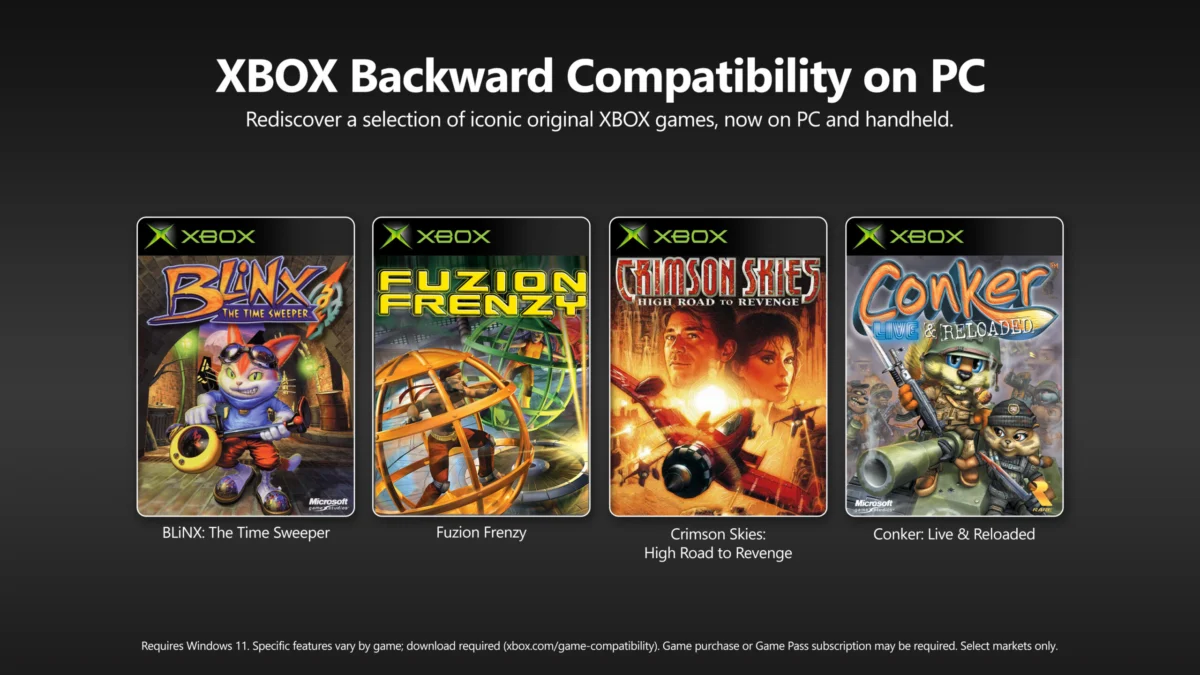
In a strategic move that seeks to redefine the relationship between legacy console titles and modern computing hardware, Xbox has officially unveiled its new "Backward Compatibility on PC" initiative. This program, announced shortly after a period of intense organizational restructuring, aims to bridge the long-standing divide between the proprietary architecture of the original Xbox and the open ecosystem of the PC.
By bringing select, historically significant titles to PC and handheld devices for the first time, Microsoft is positioning itself to address the growing demand for software preservation while simultaneously expanding the utility of its Game Pass ecosystem.
The Core Facts: Bridging the Console-PC Divide
The program officially launched this week with a curated selection of "classic original Xbox games." While the initial list of titles—which includes fan-favorite cult classics—is modest, the implications for the future of the Xbox library are substantial.
All titles launched under this program are available for individual purchase on PC and are fully integrated into the Game Pass subscription model. Crucially, Microsoft has implemented a cross-ownership policy: users who already possess a digital license for these games on their Xbox consoles will find those licenses honored on their PC accounts.
Beyond mere porting, these releases include modern quality-of-life enhancements. Players can expect customizable graphics settings, expanded language options, and refined audio configurations, effectively allowing these early-2000s titles to run at higher resolutions and frame rates than the original hardware ever permitted.
A Chronology of Xbox Preservation Efforts
The path to this announcement has been marked by a shifting internal philosophy at Microsoft regarding its own back catalog.
- The Early 2000s: The original Xbox established a massive, dedicated library, much of which became trapped on the hardware due to the console’s unique architecture.
- The Phil Spencer Era (2014–2025): Under former CEO Phil Spencer, Microsoft began prioritizing the "respect for history." Spencer frequently spoke about the risks of losing gaming history to time and hardware obsolescence. His tenure saw the successful implementation of robust backward compatibility on the Xbox One and Xbox Series X/S, which set the technical groundwork for today’s PC-focused initiative.
- 2026 Shift: Following a period of significant corporate restructuring, including the layoff of 3,200 staff members and the closure of four internal studios, the current leadership under CEO Asha Sharma has sought to stabilize the brand’s public image.
- July 2026: The official launch of "Backward Compatibility on PC" serves as the latest pillar in a broader strategy to reposition Xbox as a platform-agnostic service, following high-profile announcements regarding the Fallout franchise and collaborative projects with Obsidian Entertainment.
Official Perspectives and Future Vision
Jason Ronald, Xbox vice president of next-generation hardware and software, framed the move as the opening chapter of a long-term commitment. "This marks the beginning of a broader effort to preserve Xbox games from the past and bring them to PC over time," Ronald stated in the official announcement.
The initiative aligns with the "more exclusives" strategy championed by CEO Asha Sharma, who has emphasized that while Xbox remains committed to its console hardware, the company must be "very thoughtful" about how it manages its intellectual property in a market where PC gaming continues to surge.
While the technical nature of the porting process—whether it utilizes high-fidelity emulation or native recompilation—remains the subject of industry speculation, the shift signals a transition away from the "walled garden" approach of the early 2000s. Microsoft has confirmed that it is currently evaluating the feasibility of bringing further titles to the program, based on a mix of community demand and technical stability.
Technical Requirements and Performance
For enthusiasts looking to dive back into these classics, the barrier to entry is significantly higher than the original console hardware. Because these games are running through a compatibility layer or emulation, the system requirements are modern.
Minimum System Requirements:
- OS: Windows 10/11 (64-bit)
- Processor: Quad-core CPU at 3.0GHz
- Memory: 8GB RAM
- Graphics: NVIDIA GTX 1060 or AMD Radeon RX 580 (4GB VRAM)
- Storage: 20GB available space
Recommended Specifications:
- OS: Windows 11 (64-bit)
- Processor: Intel Core i5-12600K or AMD Ryzen 5 5600X
- Memory: 16GB RAM
- Graphics: NVIDIA RTX 3060 or AMD Radeon RX 6700 XT
- Storage: SSD required for optimal performance
These requirements suggest that Microsoft is prioritizing a stable, high-fidelity experience that utilizes modern features like upscaling and post-processing, rather than a raw, low-power simulation of the original Xbox experience.
The Implications for Game Preservation
The announcement has triggered a complex debate within the gaming community regarding the nature of "preservation."
The Argument for Accessibility
Proponents argue that Microsoft is finally providing a legal, accessible pathway to play games that have been stranded on aging hardware. By putting these games on the Windows Store and Game Pass, Microsoft is ensuring that a new generation of players can experience titles that shaped the platform’s infancy.
The Critique of Digital Dependence
However, industry analysts and preservationists remain skeptical. Critics note that by tethering these "preserved" games to a digital store, Microsoft is not creating a true, archival copy, but rather a temporary license that could be revoked. True preservation, they argue, exists in the ability to own and play media offline, without reliance on a server or a subscription service.
Furthermore, the existence of a robust community-developed emulator—which currently supports roughly 80% of the original Xbox library—raises questions about why it took a multi-billion dollar corporation over two decades to reach this milestone. If the goal is truly the protection of gaming history, critics suggest that Microsoft should look toward the open-source community’s work, which has often moved faster than the official corporate channels.
Conclusion: A Step in the Right Direction?
The launch of the "Backward Compatibility on PC" program is a double-edged sword. It provides a welcome, sanctioned, and modernized way to revisit the golden age of the original Xbox, fitting seamlessly into the lives of modern PC gamers and handheld enthusiasts.
However, as Xbox continues to navigate its post-restructuring identity, this program will be judged not by its initial launch lineup, but by its longevity and its commitment to actual ownership. If this becomes a comprehensive, permanent archive of the Xbox brand, it will be hailed as a landmark achievement in corporate responsibility. If it remains a limited, subscription-based drip-feed of content, it will likely be viewed as another marketing strategy rather than a genuine effort to save the medium from the ravages of time.
For now, the library is open. Whether it becomes a museum or a storefront remains entirely up to the trajectory of the next few years of development.

