

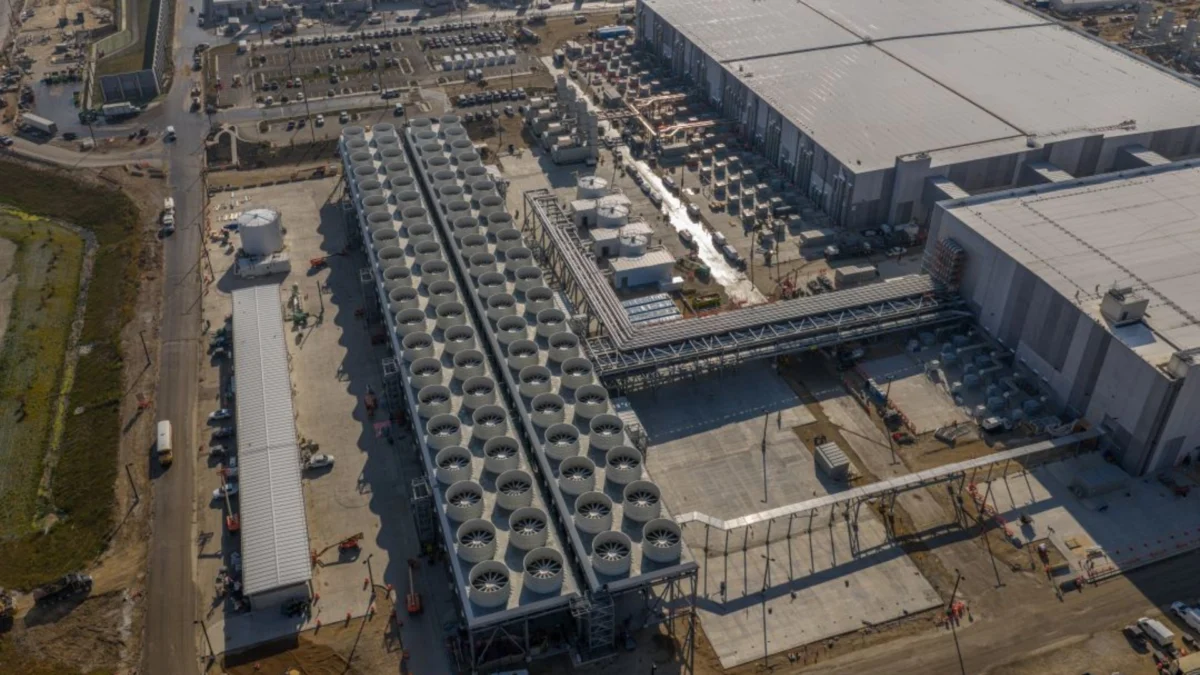
Santa Clara, CA – In a move that has sent ripples of concern and speculation throughout the tech industry, Intel Corporation has announced another round of layoffs, this time impacting its Data Center and AI Group (DCAI). This decision comes despite the semiconductor giant exhibiting signs of a significant turnaround, including a strong first-quarter financial performance and a surging stock price, fueled by growing demand for CPUs in the booming artificial intelligence sector. The latest cuts underscore CEO Pat Gelsinger’s unwavering commitment to transforming Intel into a more focused and efficient enterprise, even if it means making "tough decisions" within seemingly robust divisions.
This latest announcement is part of a broader, multi-year restructuring effort that has seen Intel’s headcount reduced by over 35,000 since early 2024. While the company maintains that these actions are crucial for its long-term success and will not impede its product roadmap or business commitments, the paradox of shedding personnel in a high-performing and strategically vital segment like the Data Center Group raises critical questions about Intel’s precise vision and the human cost of its ambitious recovery.
Main Facts: A Paradoxical Pruning
Intel’s recent disclosure of further workforce reductions within its Data Center and AI Group arrives at a peculiar juncture. On one hand, the company has been lauded for its financial resurgence, with its stock price more than tripling from a low of $23 per share to over $96 today. This positive market sentiment was reinforced by a robust first-quarter earnings report this year, where the Data Center Group itself reported impressive sales of $5.1 billion. Moreover, the burgeoning demand for processing power driven by the explosion of artificial intelligence, particularly "agentic AI" systems, positions Intel’s CPU offerings, such as its Xeon chips, as increasingly critical components in the evolving AI infrastructure.
Yet, despite these undeniable positives, Intel is pressing ahead with its streamlining initiatives. The company’s official statement to publications like Oregon Live emphasized that the Data Center Group is "aligning its organization to ensure it has the right roles and skills in place to position the business for long-term success." While Intel assured affected employees of respectful treatment and transitional resources, it notably refrained from disclosing the exact number of positions to be cut or the precise timeline for these layoffs, fueling uncertainty among its workforce. This strategic pruning of a thriving division highlights Intel’s deep-seated conviction that efficiency and targeted skill alignment are paramount, even when faced with immediate market opportunities.
Chronology: A Long Road to Recovery and Reshaping
The current wave of layoffs is not an isolated event but rather the latest chapter in Intel’s multi-year struggle to regain its footing in a fiercely competitive semiconductor landscape. The journey began in earnest with the return of CEO Pat Gelsinger in 2021, who inherited a company facing significant manufacturing delays, market share erosion, and financial underperformance in key divisions.
Early 2020s – The Genesis of "Tough Decisions": Gelsinger, upon taking the helm, quickly recognized the need for drastic measures. He famously warned employees of "tough decisions" required to steer the company back to profitability and technological leadership. This period saw Intel grappling with significant operational challenges, particularly in its data center and foundry divisions. By early 2024, the extent of these struggles became starkly apparent when the company revealed that its data center and foundry businesses had collectively incurred a staggering loss of $1.6 billion. This significant financial hit underscored the urgency of Gelsinger’s turnaround strategy, known as "IDM 2.0," which aimed to revitalize Intel’s manufacturing capabilities, expand its foundry services, and reassert its product leadership.
2024 Onwards – Initial Waves of Workforce Reduction: Following the revelations of substantial losses and Gelsinger’s strategic mandate, Intel commenced a series of widespread workforce reductions. These initial rounds of layoffs affected various departments across the company’s global operations, targeting redundancies and aiming to optimize operational costs. By the time of the latest announcement, Intel’s total headcount had been reduced by more than 35,000 employees since the beginning of 2024, demonstrating the significant scale of the restructuring effort. These cuts were often accompanied by internal communications emphasizing the need for greater agility and efficiency to compete effectively with rivals like AMD and Nvidia, as well as foundry behemoth TSMC.
Late 2025/Early 2026 – Signs of Resurgence and Paradoxical Cuts: Despite the ongoing layoffs, Intel began to show tangible signs of recovery. Investor confidence started to return, leading to a remarkable surge in its stock price, which saw its valuation more than triple. This financial upswing culminated in a strong first-quarter performance this year, exceeding market expectations and signaling that Gelsinger’s strategy was beginning to yield results. Crucially, the Data Center and AI Group, the very division now facing new layoffs, emerged as a strong performer, reporting $5.1 billion in sales for the first quarter. This juxtaposition of positive financial momentum and continued workforce reductions presents a complex narrative, suggesting that Intel’s definition of "efficiency" extends beyond mere financial distress to encompass a proactive recalibration of its organizational structure. The company appears to be using a period of strength to make further, arguably tougher, internal adjustments, rather than waiting for another downturn.
Supporting Data: A Foundation of Growth and Strategic Priorities
The decision to implement layoffs within the Data Center and AI Group, despite its strong performance, is best understood by examining the broader strategic context and supporting data that highlight both Intel’s recent successes and its future ambitions.
Financial Resilience and Market Rebound:
Intel’s financial trajectory has indeed shifted upwards. The stock’s dramatic climb from $23 to over $96 per share reflects a renewed investor confidence in Gelsinger’s IDM 2.0 strategy. This confidence is rooted in tangible improvements, including better-than-expected yields on new manufacturing nodes and a clearer roadmap for future products. The strong Q1 performance, which saw overall revenue growth, was a critical indicator that the turnaround is gaining traction. Within this, the Data Center and AI Group’s $5.1 billion in sales for the first quarter stands out as a significant contributor, underscoring its pivotal role in Intel’s current revenue generation and market presence. This group is responsible for the highly profitable Xeon server CPUs, which are the backbone of countless cloud services and enterprise data centers worldwide.
The AI Imperative and CPU Resurgence:
A key driver of Intel’s renewed optimism, and ironically, a factor in the current strategic adjustments, is the explosive growth of artificial intelligence. While the initial wave of AI infrastructure build-out was heavily dominated by GPUs (Graphics Processing Units) and high-bandwidth memory, advancements in what is termed "agentic AI" have dramatically increased the demand for CPUs. Agentic AI refers to sophisticated AI systems capable of autonomous planning, reasoning, and action, often requiring complex orchestration and inference tasks that benefit significantly from the general-purpose computing power and robust I/O capabilities of CPUs.
This shift puts Intel in an advantageous position with its formidable line of Xeon chips. The company’s upcoming Xeon 6 "Clearwater Forest" processors, for instance, are poised to bring 18A process technology to the data center, boasting up to 288 cores and 576 MB of L3 cache. Intel claims that its new Xeon 6990E offers a 30% performance advantage per thread over AMD’s 192-core EPYC 9965, indicating fierce competition and Intel’s determination to reclaim market leadership. These high-performance CPUs are not just for traditional server workloads but are increasingly vital for the "pre-processing, post-processing, data orchestration, and light inference" tasks that complement GPU-accelerated AI training and inference.
Foundry Ambitions and Advanced Nodes:
Beyond its CPU dominance, Intel’s long-term strategy hinges on its Intel Foundry Services (IFS) division, aiming to become a major contract chip manufacturer. The company is reporting significant customer interest, with potential clients possibly including Apple, for its advanced 18A and 14A manufacturing nodes. The 18A process node is particularly critical, representing a leap forward in transistor technology (RibbonFET) and power delivery (PowerVia), intended to put Intel back at the forefront of semiconductor manufacturing, potentially even surpassing TSMC by 2025. Two prospective customers are already identified for the 14A node, with commitments expected in the second half of 2026. Securing major external foundry customers is essential for Intel to amortize its massive investments in manufacturing capabilities and to diversify its revenue streams.
Entry into the AI GPU Market:
Further solidifying its comprehensive AI strategy, Intel is also developing its own AI GPU, slated for launch in the latter half of 2026. This product is designed to compete directly with established players like Nvidia’s RTX Pro 5000 GPU, signaling Intel’s intent to capture a share of the high-growth AI accelerator market, which has historically been dominated by Nvidia.
These data points collectively paint a picture of a company making strategic investments, demonstrating product leadership, and experiencing a financial resurgence. The layoffs, therefore, are not a sign of failure but rather a deliberate and arguably aggressive move to re-align resources, optimize talent, and ruthlessly pursue efficiency in the pursuit of long-term strategic goals.
Official Responses: The Language of Strategic Streamlining
Intel’s official statements regarding the latest layoffs have been consistent with corporate communications during periods of restructuring: carefully worded, forward-looking, and emphasizing strategic necessity while offering reassurance to affected employees.
In its statement to Oregon Live, Intel articulated its rationale: "As part of our broader strategy to become a more focused and efficient company, (the Data Center Group) is aligning its organization to ensure it has the right roles and skills in place to position the business for long-term success." The phrasing "focused and efficient" is a common corporate euphemism for reducing headcount and streamlining operations. It suggests a critical evaluation of existing roles and skills, implying that some positions may no longer align with the company’s evolving strategic priorities, even if the individuals in those roles were performing adequately.
The statement also included a commitment to "treating all impacted employees with respect and providing resources to support them through this transition." While this offers a degree of comfort, the lack of specific numbers regarding the extent of the job cuts or the exact timing leaves employees and the public in a state of uncertainty. This vagueness, while typical, can amplify anxiety within the organization.
Crucially, Intel also assured that "the reduction-in-force won’t affect its business commitments and plans to launch new products." This specific reassurance is vital for maintaining investor confidence and customer trust. It aims to signal that these layoffs are not a retreat or a sign of weakness in its product development pipeline, but rather a surgical adjustment designed to enhance its ability to deliver on its promises more effectively in the future. The message is clear: these are not cuts driven by failure, but by a strategic reorientation to maximize future success in a rapidly changing technological landscape. However, the exact nature of these "resources" and the specific impact on employee morale remain subjects of internal concern and external observation.
Implications: Balancing Efficiency with Morale and Market Opportunity
The implications of Intel’s latest layoffs are multifaceted, impacting its workforce, competitive standing, and long-term strategic trajectory.
Strategic Repositioning vs. Short-Term Risk:
The primary implication is Intel’s unwavering commitment to its IDM 2.0 strategy, which prioritizes efficiency and manufacturing leadership. By streamlining the Data Center and AI Group, even as it performs well, Intel signals that no division is immune from rigorous evaluation. This could be interpreted as a bold, necessary move to shed legacy inefficiencies and rapidly pivot resources towards the highest-growth areas, particularly advanced manufacturing (foundry services) and cutting-edge AI product development (Xeon, AI GPUs). The company is essentially making a calculated risk: sacrificing some immediate operational breadth for what it believes will be greater agility and profitability in the long run. The concern, however, is whether cutting into a performing division during an AI boom might inadvertently slow down innovation or hinder its ability to fully capitalize on market opportunities, especially when competing against lean, specialized rivals.
Impact on Employee Morale and Talent Retention:
Repeated rounds of layoffs, even if strategically justified, inevitably take a toll on employee morale. The uncertainty created by vague announcements about the number and timing of cuts can foster an environment of anxiety, potentially leading to a "brain drain" where highly skilled individuals, fearing future instability, seek opportunities elsewhere. This risk is particularly pronounced in the Data Center Group, which is already a strong performer and in high demand due to the AI boom. Attracting and retaining top talent is crucial for Intel’s success, and consistent layoffs, regardless of intent, can complicate these efforts, especially in a competitive market for semiconductor engineers and AI specialists. Intel’s commitment to "respect and resources" will be closely watched to see if it can mitigate these human capital risks.
Competitive Landscape and Market Perception:
Intel’s rivals, particularly AMD and Nvidia, will undoubtedly observe these developments closely. While Intel’s stock surge suggests renewed investor confidence, the layoffs could also be perceived by competitors as a sign of internal struggle or an admission that previous strategies were not efficient enough. Conversely, if these cuts lead to a more streamlined and innovative Intel, it could intensify competition. The market’s perception will hinge on whether Intel can demonstrate that these cuts genuinely enhance its ability to deliver superior products, particularly in the critical AI and foundry spaces. The successful execution of its 18A and 14A nodes, and the strong adoption of its Xeon 6 and future AI GPUs, will be key indicators of whether these "tough decisions" are paying off.
The Future of Data Center Computing:
The layoffs within Intel’s Data Center Group also highlight a broader industry trend: the relentless pursuit of optimized computing infrastructure. As AI workloads become more complex, data centers are evolving, demanding not just raw processing power but also highly specialized and efficient architectures. Intel’s move suggests an internal re-evaluation of how best to serve this evolving market – perhaps by focusing on specific high-value segments or by re-allocating talent to areas deemed more critical for future growth, such as custom silicon for hyperscalers or advanced packaging technologies.
In conclusion, Intel stands at a critical juncture. Its strategic realignment, marked by aggressive layoffs even within its strong divisions, is a high-stakes gamble. While it has shown promising signs of financial recovery and is well-positioned to capitalize on the AI boom, the long-term success of these "tough decisions" will ultimately depend on its ability to execute its ambitious product roadmap, attract and retain top talent, and convince both employees and the market that these short-term pains are necessary for a more robust and resilient future.

