

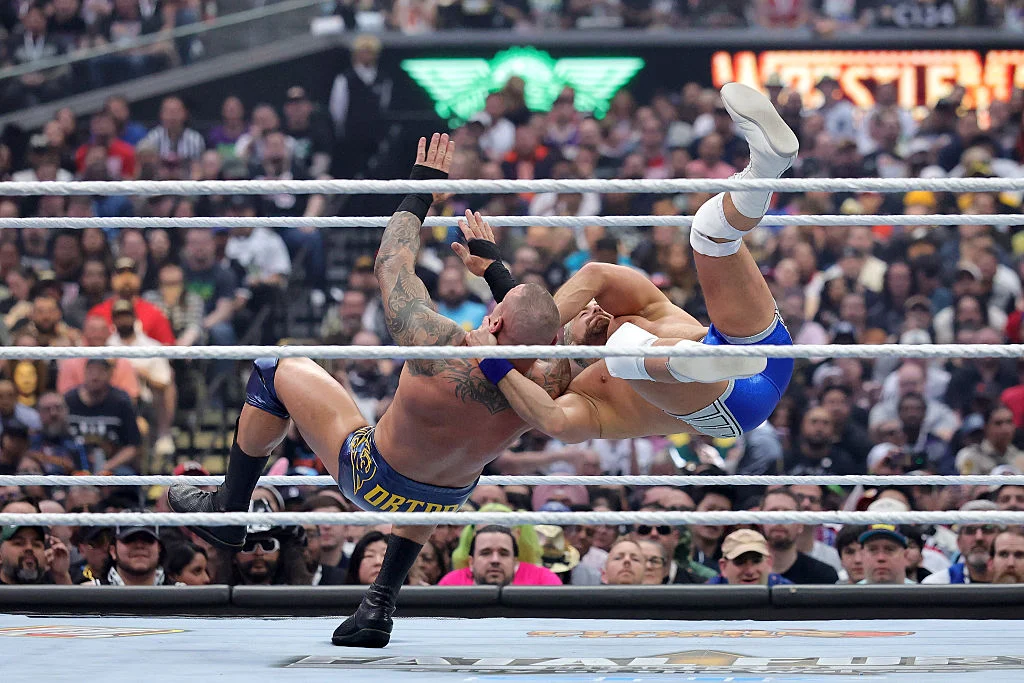
In a move that underscores the evolving convergence of professional sports entertainment and digital-first media, WWE has officially announced a groundbreaking partnership with ReelShort, the burgeoning titan of the microdrama industry. This collaboration marks the first instance of a major global sports-entertainment entity producing an original, scripted, live-action vertical series specifically designed for the rapid-fire consumption habits of mobile-first audiences.
While WWE has long mastered the art of long-form episodic television, this pivot toward the "microdrama" format represents a significant shift in strategy. By leveraging the vertical-video aesthetic that has come to define modern social media consumption, WWE aims to bridge the gap between the squared circle and the hyper-engaging world of short-form episodic narrative.
The Core Partnership: WWE Meets Micro-Drama
The collaboration, which was officially confirmed this week, will see a rotating cast of WWE Superstars stepping outside of the traditional wrestling ring and into the cinematic, high-stakes, and often melodramatic world of ReelShort. While specific plot details remain under lock and key—consistent with the secretive nature of both brands—insiders confirm that production is slated to commence in August, with an anticipated series launch scheduled for the fall.
The casting is a deliberate blend of wrestling charisma and seasoned microdrama performance. WWE is deploying a powerhouse roster, featuring the Scottish sensation Drew McIntyre, the charismatic Joe Hendry, and the formidable SmackDown mainstay Jacob Fatu. These athletes will be paired with established ReelShort veterans, including Marc Herrman, known for his work in Fiancée’s Betrayal and Dante’s Inferno, and Chase Mattson, a familiar face from productions such as Married to the Don and My Duplicated Husband.
This hybrid casting approach is intended to provide a "best-of-both-worlds" dynamic: the immense fan loyalty and natural screen presence of WWE Superstars combined with the high-octane, cliffhanger-heavy pacing that ReelShort’s core audience expects.
Chronology: From Cable TV to the Vertical Screen
To understand the significance of this move, one must examine WWE’s historical trajectory regarding digital transformation.
2005–2015: The YouTube Pioneer
Long before "creator-led" content became the gold standard for marketing, WWE was already ahead of the curve. Beginning in the mid-2000s, the promotion utilized YouTube not merely as a repository for highlight reels, but as a robust ecosystem for behind-the-scenes content and character-driven storytelling. By treating digital platforms as essential pillars of their business rather than secondary outlets, WWE cultivated a global audience that transcended traditional cable television.
2015–2024: Massive Scale and Global Reach
By the mid-2020s, the WWE YouTube channel had eclipsed 100 million subscribers, a milestone that solidified its position as one of the most-watched entertainment properties on the planet. With monthly viewership frequently eclipsing the 1 billion mark, WWE proved that wrestling fans were not just consumers of live events, but digital addicts who craved 24/7 engagement with their favorite personalities.
Late 2025: The Rise of the Individual Creator
In late 2025, WWE pivoted again, launching dedicated YouTube channels for its top-tier stars, beginning with the legendary Undertaker. This shift recognized that individual brand equity had become just as valuable—if not more so—than the umbrella brand itself. It set the stage for the current move into microdramas: if a wrestler can carry a personal YouTube channel, can they carry a scripted vertical series?
2026–2027: The Micro-Series Revolution
The current year has seen the meteoric rise of vertical micro-series, a format characterized by 60-to-90-second episodes, intense emotional stakes, and aggressive monetization strategies. With the announcement of the ReelShort partnership, WWE is signaling that it is no longer content with merely dominating the long-form market; it intends to capture the "snackable" attention of the modern smartphone user.
Supporting Data: The Digital Ecosystem
The partnership is supported by a wealth of data suggesting that the marriage of WWE’s massive reach and ReelShort’s high-engagement format is a calculated risk.
- The Reach: WWE’s primary YouTube channel boasts 113 million subscribers, providing a top-of-funnel marketing machine that few entertainment companies can match.
- The Engagement: ReelShort, meanwhile, has mastered the art of the "binge-watch." Their platform is engineered to keep users locked in through high-frequency cliffhangers and episodic release patterns that mirror the pacing of classic soap operas—a genre that, ironically, WWE has mirrored for decades.
- Market Trends: Research from the digital content sector indicates that vertical, short-form scripted series have seen a 40% increase in viewership among the 18–34 demographic over the last 18 months. As linear TV ratings fluctuate, platforms like ReelShort have emerged as the primary destination for serialized storytelling that requires less than two minutes of commitment per installment.
Official Perspectives: The Philosophy Behind the Pivot
The executives driving this partnership believe it represents a fundamental change in how brands interact with audiences.
Sammie Hao, Head of Talent & Business Development at ReelShort, emphasized the shift away from traditional advertising. "Brand partnerships are evolving beyond product placement," Hao noted in a formal statement. "We’re creating entertainment ecosystems where brands, talent, and storytelling come together to build cultural moments that audiences actively engage with and share. It’s not just about seeing a logo; it’s about participating in a narrative."
For WWE, the move is an extension of their desire to remain relevant in a fragmented media landscape. Ben Houser, Head of Original Content and Development at WWE, underscored the mission to reach new demographics. "By bringing WWE Superstars into the ReelShort cinematic world, we are creating a new storytelling experience for the WWE Universe, while reaching a fresh audience with premium content on ReelShort’s innovative platform."
The consensus among stakeholders is that the "Universe" (WWE’s term for its fanbase) is ready for a more cinematic, less constrained version of their favorite stars.
Implications: What This Means for the Future of Sports Entertainment
The implications of the WWE-ReelShort deal are manifold, extending far beyond the immediate novelty of the project.
1. The Death of Traditional Kayfabe?
Professional wrestling has long operated under the concept of "kayfabe"—the portrayal of staged events as reality. By inserting wrestlers into fictional microdramas, WWE is blurring these lines even further. Audiences will now have to distinguish between the "wrestling persona" of Drew McIntyre and a "character" he plays in a scripted drama. This could, in theory, deepen the audience’s emotional connection to the talent, allowing them to showcase their acting range beyond the ring.
2. A New Revenue Stream for Athletes
If this pilot succeeds, it creates a blueprint for WWE Superstars to pivot into acting without leaving the organization. By keeping the talent within the "WWE-branded" microdrama ecosystem, the company retains control over their IP while providing the performers with the exposure needed to cross over into mainstream television and film.
3. The "Vertical" Standard
For other sports leagues, this deal serves as a potential roadmap. If the NBA or the NFL were to follow suit, we could see professional athletes participating in short-form, scripted content that lives entirely on mobile devices. The barrier to entry for high-quality, short-form scripted content has never been lower, and WWE is proving that a major brand can maintain its identity while adapting to the "vertical" era.
4. Cultural Impact
The success of this collaboration will likely be measured by "shareability." ReelShort thrives on viral moments—scenes that are ripped from the app and posted to TikTok, Instagram Reels, and YouTube Shorts. By design, the WWE partnership is built to fuel this cycle. If the series produces even one viral moment that gains traction on social media, the partnership will be viewed as an unequivocal success.
Conclusion: The Next Chapter
As production gears up for August, the wrestling and digital media worlds are watching closely. The partnership between WWE and ReelShort is not merely a content experiment; it is a declaration that the future of storytelling is mobile, vertical, and incredibly fast-paced.
Whether this leads to a permanent expansion of WWE’s media portfolio or remains a one-off experiment, it represents a bold step forward. For a company that has spent decades defining the "sports-entertainment" genre, this latest move proves that even after nearly twenty years of digital evolution, WWE is still looking for new ways to pin its audience to the screen—one short, punchy, and dramatic clip at a time.

