

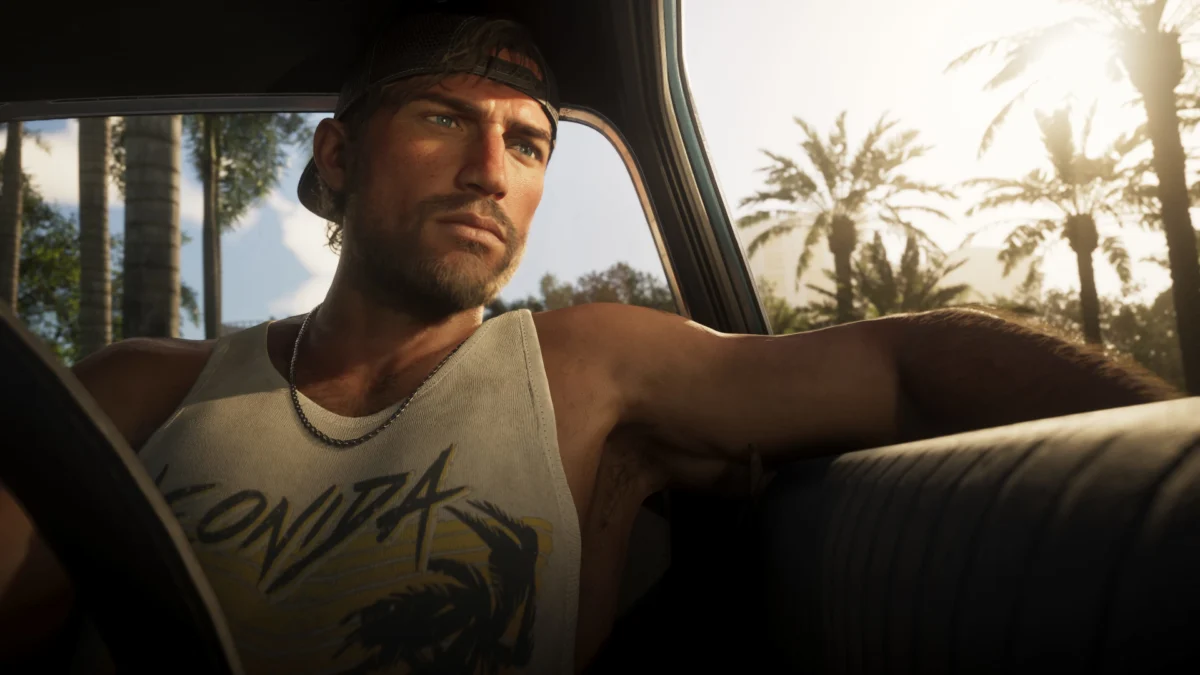
As anticipation for Grand Theft Auto 6 reaches a fever pitch, fans are scouring every frame of available footage and every whisper of developer insight for clues about what to expect. While the gaming community remains obsessed with the potential for new mechanics and the scale of the state of Leonida, a recent interview with former Rockstar Games producer John Ricchio has shifted the conversation toward the developer’s "archaeological" habits—specifically, how they treat the mountain of cut content that accumulates during the production of a massive blockbuster.
Ricchio, who served as a producer on Grand Theft Auto 5, recently appeared on the Kiwi Talkz podcast to provide a rare glimpse behind the curtain of Rockstar’s development philosophy. His insights offer a measured reality check for those hoping to see "lost" assets from previous titles make a grand appearance in the studio’s next magnum opus.
The Reality of Development: Why Content Ends Up on the Cutting Room Floor
In the high-stakes world of AAA game development, the "cutting room floor" is not just a metaphorical space; it is a graveyard of millions of dollars and thousands of man-hours. According to Ricchio, the decision to discard content is rarely born out of laziness or a lack of quality, but rather from the relentless pursuit of cohesive design.
"In a lot of cases, there’s almost never—you’re usually not limited by ideas, right?" Ricchio explains. "The more creative folks you have, the more you have tons of ideas."
This abundance of creativity often leads to a phenomenon where developers build sophisticated systems—minigames, side quests, or entire mission arcs—only to realize they don’t fit the "vibe" or the narrative pacing of the final product. Ricchio notes that Rockstar is notorious for its uncompromising standards. The studio has a history of discarding entire levels if they fail to meet the high bar set for the final game, regardless of how much effort was poured into their construction.
Chronology of Recycling: How Rockstar Has Handled Past Assets
To understand the likelihood of seeing "legacy content" in GTA 6, one must look at how Rockstar has historically handled its proprietary technology. Ricchio points out that the portability of content depends heavily on the evolution of the game engine.
The Era of Shared Tech
"If the tech is fundamentally the same, or similar enough, you can sometimes plop it in as like, ‘Hey, let’s just see how this works,’" says Ricchio. He cites the development of Grand Theft Auto 4 as a prime example. During that project, the team was able to salvage missions from a previously cancelled and unannounced project. Because the underlying technology between the two projects was compatible, the team could "re-skin" or repurpose the logic without having to build the foundational architecture from scratch.
The Shift in Modern Production
However, the "copy-paste" philosophy becomes significantly more complicated as technology advances. As Rockstar moved from the RAGE (Rockstar Advanced Game Engine) iterations used in GTA 4 and Red Dead Redemption to the highly advanced versions powering GTA 5 and Red Dead Redemption 2, the "scripting and code" became increasingly bespoke.
The implication for GTA 6 is clear: because the leap in hardware requirements and engine complexity is so vast, taking a "cut" idea from a game developed a decade ago is no longer as simple as dropping a file into a new directory. It would require significant re-engineering, which often makes it more cost-effective to simply build a new, modern equivalent from the ground up.
Supporting Data: The Scale of Abandoned Assets
The sheer volume of cut content in a game like GTA 5 was staggering. Reports from former developers have suggested that the game contained enough discarded minigames and side activities to constitute a smaller, standalone title.
- Economic Factors: Every feature added to a game adds to the QA (Quality Assurance) burden. A feature might be fun for an hour, but if it requires 500 hours of bug testing to ensure it doesn’t crash the game engine, it is often prioritized for removal.
- Narrative Consistency: In an open-world sandbox, "feature creep" is the enemy of immersion. Rockstar often removes content because it dilutes the player’s focus or creates friction in the narrative arc.
- Technical Debt: As Ricchio notes, even if a mission is "completely done," it might be built on a version of the engine that is no longer supported. Updating that code to run on the latest, more demanding hardware often costs more than creating a new feature that is optimized for the current tech stack.
The "Fast-Follow" Exception
When does Rockstar recycle content? According to Ricchio, the most common scenario is during a "fast-follow" development cycle—where a studio releases a sequel or a spin-off shortly after the original, utilizing the same engine and assets.
"I don’t think it’s very common [to reuse cut content] unless you’re doing a fast-follow," Ricchio explains. This is a critical distinction for GTA 6. Unlike the transition from GTA 3 to Vice City, or even GTA 4 to The Lost and Damned, the gap between GTA 5 and GTA 6 represents an entire generational shift in console hardware and software capabilities.
Consequently, the likelihood of finding a "cut" asset from a 2013-era development cycle appearing in the 2025 landscape of Leonida is slim. The "tech debt" barrier is simply too high.
Official Responses and Implications for GTA 6
While Rockstar Games maintains its legendary veil of secrecy regarding GTA 6, Ricchio’s commentary provides a logical framework for what we should expect. The studio is not a "recycling bin" for old ideas; it is a laboratory for new ones.
What This Means for Players
Fans hoping to find "Easter eggs" in the form of repurposed, abandoned missions from Bully, Manhunt, or early GTA drafts should temper their expectations. While Rockstar loves to sprinkle nods to its history throughout its games, these are usually deliberate thematic references rather than repurposed technical code.
The "Cool Factor" Threshold
Ricchio does leave the door slightly ajar for the exceptional: "I haven’t seen a huge need to go back and pull from old stuff unless something was just really cool, and people really want to bring the idea forward."
If an idea was so compelling that it was held in a "digital vault" for years, it is possible that the designers have finally found a way to implement it in the current generation. However, this would be an intentional design choice—a "resurrection" of an idea—rather than a lazy attempt to pad the game with leftover assets.
Conclusion: The Pursuit of Perfection
The narrative that Rockstar leaves behind mountains of "almost finished" content is a testament to the studio’s perfectionism. By prioritizing a seamless, high-fidelity experience over the inclusion of every experimental idea, the developers ensure that the final product maintains the "Rockstar polish" that has defined the industry for decades.
As we look toward the horizon for GTA 6, we should expect a game that feels entirely built for its time. While the DNA of Rockstar’s past will undoubtedly be present in the game’s humor, satirical edge, and open-world structure, the content itself will be fresh, optimized, and—most importantly—intentional. The discarded files of the past will likely remain exactly where they belong: in the history books of game development, serving as the foundation upon which the next, massive leap forward is built.

