

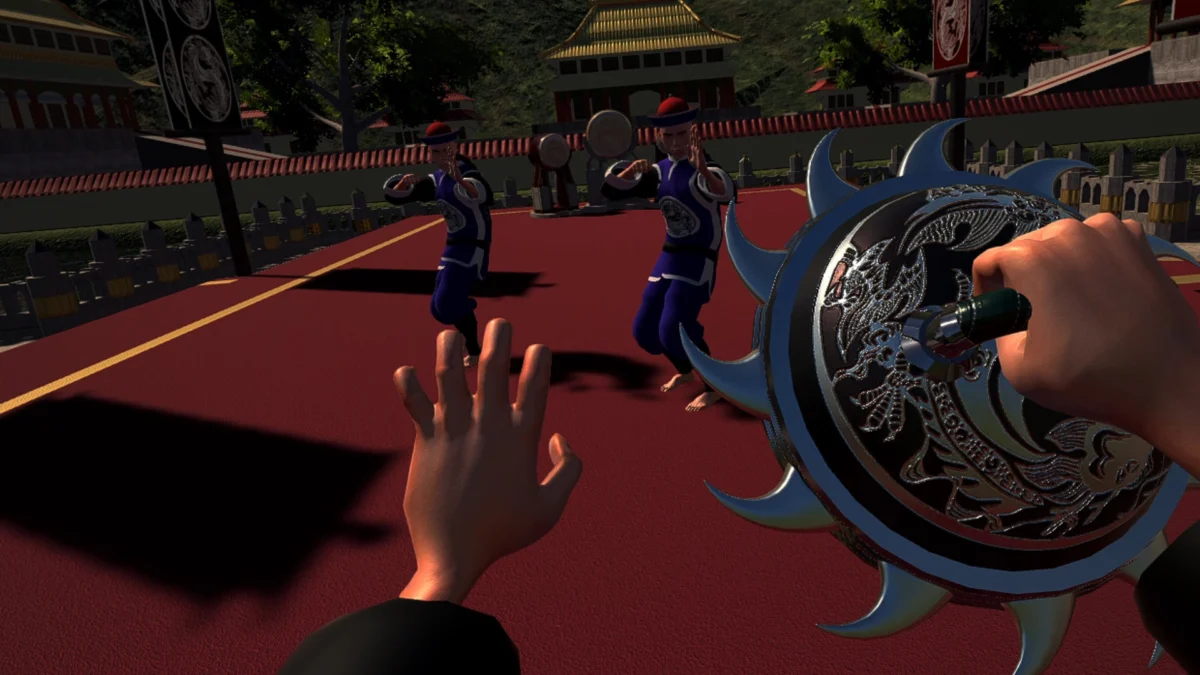
The landscape of Virtual Reality (VR) gaming has undergone a seismic shift over the past twenty-four months. Once relegated to tethered, high-cost setups that required dedicated play-spaces and expensive PC hardware, VR is rapidly transitioning into a more accessible, wireless paradigm. Leading this charge is the democratization of hardware—spearheaded by the Meta (formerly Oculus) Quest 2—and the refinement of streaming technologies like Air Link and Virtual Desktop. Amidst this technological maturation, titles that emphasize tactile engagement over arcade-style button-mashing are finding a new audience. Chief among these is Dragon Fist: VR Kung Fu, a title that eschews the typical "waggling" combat found in many early VR fighters in favor of strategic, anatomy-based martial arts.
Main Facts: The Mechanics of Virtual Combat
Dragon Fist: VR Kung Fu is a first-person fighting game that fundamentally changes how players engage with virtual opponents. Unlike traditional flat-screen fighting games that rely on complex input strings or pre-programmed combos, Dragon Fist utilizes a physics-based approach to melee combat.
The game tasks players with selecting from an expansive roster of characters, each possessing distinct archetypes, statistical profiles, and specialized martial arts maneuvers. The core gameplay loop involves navigating a gauntlet of increasingly sophisticated AI opponents. What distinguishes this title from its contemporaries is the depth of the combat engine. Players must utilize a variety of striking techniques—punches, palm strikes, and precision finger jabs—to dismantle their opponents.
The game’s intelligence system rewards tactical awareness. For instance, a well-placed finger jab to the eyes of an opponent will temporarily obscure their vision, creating an opening for a follow-up combo. Similarly, targeting an opponent’s lower ribs with a focused punch will effectively drain their stamina, preventing them from mounting an offensive counter-attack. This level of granular feedback elevates the gameplay from a simple fitness distraction to a legitimate test of skill and reaction time.
Chronology: The Rise of Accessible VR
To understand the success of Dragon Fist, one must look at the timeline of VR accessibility.
- Pre-2020: The VR market was dominated by the "Big Three": the Valve Index, the original Oculus Rift, and the HTC Vive. These devices required physical cables and room-scale sensors, creating a high barrier to entry for the average consumer.
- October 2020: The launch of the Meta Quest 2 fundamentally changed the market. By offering a standalone, wireless, and affordable headset, Meta brought VR into the living rooms of millions.
- Early 2021: Software solutions like Air Link and improved versions of Virtual Desktop allowed users to stream high-fidelity PC VR games to their wireless headsets, effectively bridging the gap between standalone hardware and high-end processing power.
- Late 2021: Dragon Fist: VR Kung Fu emerges as a breakout indie hit, perfectly timed to capitalize on the growing user base of wireless VR enthusiasts who were seeking more physically engaging and mechanically deep experiences.
Supporting Data: The Convergence of Fitness and Gaming
The integration of fitness into the gaming sector has been a primary driver of VR hardware adoption. Data indicates that a significant percentage of VR users utilize their headsets for "exergaming." Dragon Fist acts as a bridge between the hardcore fighting game community and the fitness-conscious consumer.
In a traditional fighting game, the player’s agency is limited by the controller’s button count. In Dragon Fist, the controller is the limb. Players burn calories by performing authentic martial arts motions—guarding, weaving, and throwing strikes with real-world momentum. While the game does not claim to be a replacement for professional combat training, the metabolic demand placed on the player during an extended session of Dragon Fist is significantly higher than that of traditional console gaming.
Furthermore, the game’s stamina system—which punishes reckless, frantic swinging—acts as a natural governor on play speed, forcing the user to adopt a more deliberate, rhythmic, and aerobic pace.
Official Perspectives and Community Reception
The developer behind Dragon Fist has remained vocal about the intent to prioritize "weight" and "impact" in their design philosophy. In various developer diaries and community forums, the team has emphasized that they wanted to move away from the "floaty" feeling that plagues many VR melee games.

The community response on platforms like Steam has been largely positive, with players highlighting the "depth of the roster" as a standout feature. However, the game is not without its technical hurdles. As with many VR titles, the game is subject to the limitations of current-generation room-scale tracking. Players have noted that during moments of extreme intensity, the game can occasionally struggle to keep up with rapid-fire movements.
Industry analysts point out that this is not necessarily a failure of the software, but rather a reflection of the current "tracking-to-latency" gap. As VR controllers continue to evolve, and as inside-out tracking cameras improve their refresh rates, the fidelity of titles like Dragon Fist will likely improve in kind.
Implications: The Future of VR Martial Arts
The success of Dragon Fist: VR Kung Fu carries significant implications for the future of the genre.
1. The Shift to "Serious" VR Combat
We are seeing a move away from "cartoonish" VR brawlers toward simulations that respect the laws of physics and human anatomy. This suggests a growing demand for "serious" combat games where accuracy and technique are valued over raw input speed.
2. Hardware Refinement
Titles like Dragon Fist place high demands on the player’s range of motion. This pushes the boundaries of current consumer headsets, highlighting the need for better controller ergonomics and lighter, more balanced head-mounted displays (HMDs) that can withstand high-intensity use without shifting on the user’s face.
3. The "Fitness-Gaming" Hybrid Market
The success of the game proves that gamers are willing to pay for content that serves a dual purpose: entertainment and physical exertion. Future developers will likely look to integrate biometric feedback—such as heart-rate tracking via smartwatches—directly into the UI of their combat games, allowing players to monitor their fitness progress in real-time as they fight.
4. Technical Hurdles as a Catalyst
While the occasional tracking issue serves as a frustration for some, it also acts as a catalyst for innovation. Developers are now creating clever "predictive" software algorithms to compensate for sensor blind spots, effectively "guessing" the intent of a punch even when the controller passes behind the user’s back or outside the camera’s field of view.
Conclusion
Dragon Fist: VR Kung Fu is more than just a niche fighting game; it is a microcosm of the current state of Virtual Reality. It successfully navigates the balance between accessibility and depth, providing a challenging, rewarding experience that doubles as an effective aerobic workout.
While the game occasionally faces the technical constraints inherent in current-gen hardware, its design choices—specifically the emphasis on anatomical targeting and stamina management—set a high bar for future combat titles. As the hardware continues to catch up to the developers’ ambitions, games like Dragon Fist will likely be remembered as the bridge between the experimental, early days of VR and the high-fidelity, physically immersive future of interactive entertainment. For those looking to test their reflexes and their endurance, Dragon Fist remains an essential addition to the VR library.

