

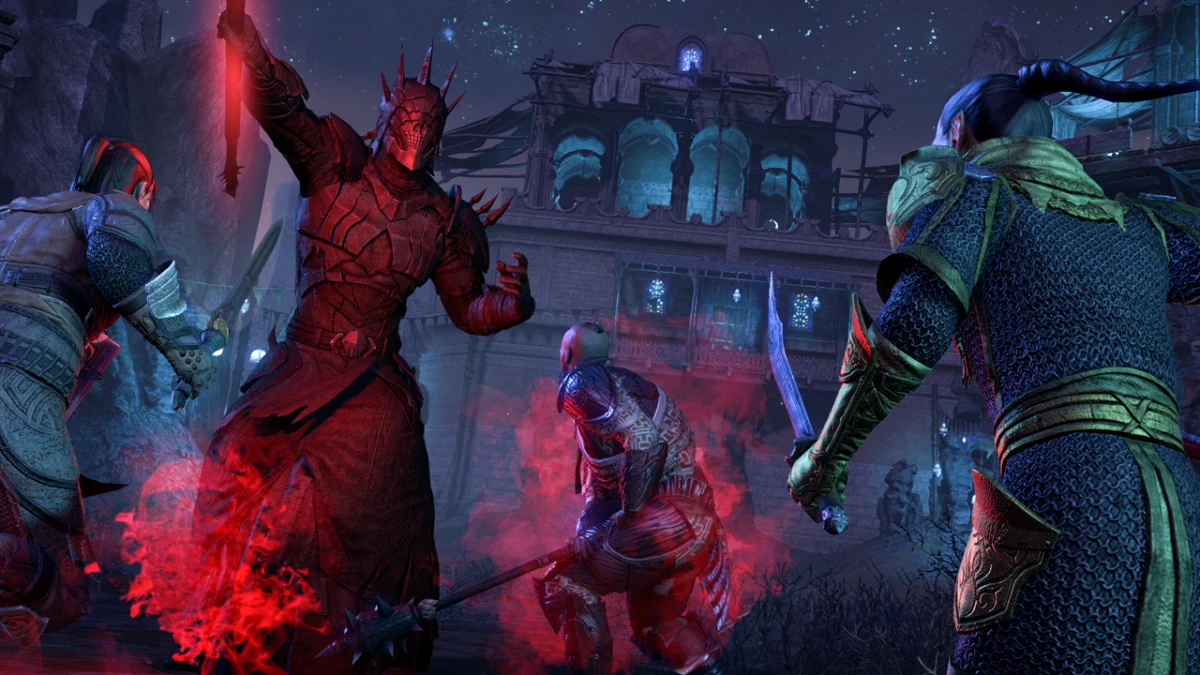
The gaming industry is currently reeling from yet another wave of mass layoffs at Microsoft’s gaming division, a move that has struck at the heart of one of the most resilient pillars of the MMO genre: ZeniMax Online Studios (ZOS). As Xbox implements a radical "reset" strategy, the human cost of these corporate maneuvers has become painfully clear, with ZeniMax Online—the developers behind the juggernaut The Elder Scrolls Online (ESO)—facing a catastrophic reduction in workforce.
While Xbox CEO Asha Sharma characterizes these cuts as a necessary evolution to pivot toward a massive, billion-player daily audience, the reality on the ground at ZeniMax suggests a more somber narrative. For many, the "reset" feels less like a strategic pivot and more like the erosion of the very talent that sustained the studio for over a decade.
A Chronology of Instability: From Project Blackbird to Today
To understand the severity of the current situation, one must look at the recent history of ZeniMax Online. This is not the studio’s first encounter with the volatility of Microsoft’s management. In 2025, the studio suffered a significant blow when Xbox cancelled Project Blackbird, a secret MMO that had been in development for nearly a decade.
The cancellation of Project Blackbird was not merely the end of a product; it was the dissolution of a dream for many veterans. Former director Matt Frior, who had dedicated years to the project, eventually departed the company, citing the 2025 "bloodbath" of layoffs as the catalyst for his exit. That initial round of cuts, part of a larger 9,000-person layoff across Microsoft’s gaming division, left the studio shaken but, according to leadership, resilient.
In January, there was a glimmer of hope. In discussions with The Elder Scrolls Online leadership—specifically executive producer Susan Kath and game director Nick Giacomini—there was a palpable sense of resolve. The team had "rallied," implementing a new seasonal structure and planning for future refreshes to keep the aging but successful MMO relevant for the next generation of players. Now, those plans have been abruptly halted.
The Human Cost: Institutional Knowledge Lost
The most harrowing aspect of these layoffs is the loss of "institutional memory." ZeniMax Online has historically been a studio defined by long-term tenure, with developers who have spent over a decade shaping the world of Tamriel.
Senior content designer Katherine Souza initially reported on Bluesky that half of the active development team—those working on content, events, and dungeons—had been let go. While Souza later clarified that she could not speak for the studio as a whole, her testimony serves as a grim representative sample of the damage.
The list of those affected reads like a "Who’s Who" of ZeniMax’s history:
- Mike Finnigan (Associate Design Director): A 15-year veteran who had a hand in every major gameplay element, including trials, dungeons, and event zones.
- Gina Bruno (Senior Community Engagement Manager): A 19-year veteran who served as the bridge between the developers and the massive ESO player base.
- Page Branson (Senior QA Tester), Elisabeth Whyte (Senior User Researcher), and Dustin Thurston (Senior Software Engineer): All integral parts of the infrastructure that kept The Elder Scrolls Online running smoothly.
When a studio loses individuals with nearly two decades of experience, it loses more than just labor; it loses the design philosophy and technical nuance that made the game successful in the first place.
Official Responses and the "Reset" Strategy
The official stance from Microsoft regarding these cuts is framed through the lens of extreme corporate ambition. Under the direction of CEO Asha Sharma, the company is pushing for a reach of one billion daily players. To critics and industry analysts, this target seems detached from the reality of the PC and console gaming market—a market that, at its absolute peak on platforms like Steam, struggles to reach a fraction of that number.
In response to the recent layoffs, the The Elder Scrolls Online team issued a brief, sobering update on the game’s official forums:
"Looking beyond Season One, the roadmaps we previously shared will be shifting. We want to take the time to evaluate the work in front of us and then lock down an updated schedule. While we’d love to share concrete details today, stepping back to get our plans straight will let us come back to you with a clear timeline."
This statement is a tacit admission that the studio is currently in a state of triage. The ambitious content plans, meant to push the game toward its 30-year anniversary, are now subject to a "shifting" roadmap. The language is diplomatic, but the implication is clear: the studio is currently incapable of maintaining its previously promised pace of development.
Implications for the Future of ESO
The immediate future of The Elder Scrolls Online is now shrouded in uncertainty. For a live-service game, momentum is everything. Players expect a consistent cadence of dungeons, story updates, and seasonal events. When a development team is slashed by half, the ability to deliver that content on time—let alone at the same level of quality—is severely compromised.
Furthermore, there is the psychological impact on the remaining staff. Watching colleagues with 15 to 19 years of tenure be dismissed in a "reset" creates an environment of anxiety and burnout. It becomes difficult to foster creative innovation when the underlying message from corporate leadership is that the game’s current success is insufficient, or worse, expendable.
Beyond the internal struggles, there is the broader question of corporate responsibility. The layoffs are occurring not because The Elder Scrolls Online failed, but because of macro-level fiscal decisions. Microsoft’s aggressive acquisition strategy, combined with massive spending on AI initiatives, has created a scenario where profitable studios are being cannibalized to offset losses elsewhere.
The Industry Paradox: Growth vs. Sustainability
The current state of ZeniMax Online serves as a microcosm for the broader malaise affecting the gaming industry. We are witnessing a period where the "big tech" approach to gaming—prioritizing massive, recurring revenue and hyper-scale growth—is clashing violently with the artisanal, community-focused nature of game development.
When Microsoft acquired ZeniMax Media, it was sold as a way to bolster the Xbox Game Pass ecosystem. However, the subsequent years have demonstrated that being under the "Xbox umbrella" does not guarantee stability. Instead, it has subjected legendary studios to the whims of quarterly earnings calls and the pressure to monetize every interaction to an extreme degree.
The irony is that, according to Microsoft’s own leadership, the reason for these layoffs is that games are "not monetized enough." This logic creates a self-fulfilling prophecy: by gutting the teams that make the games beloved, they ensure the long-term health of the product is damaged, which in turn leads to lower engagement, and eventually, more "resets."
Conclusion: A Future in Flux
As the dust settles at ZeniMax Online, the community is left waiting to see what version of The Elder Scrolls Online will emerge from this restructuring. The studio’s remaining developers are undoubtedly doing their best to hold the line, but they are doing so under circumstances that are arguably the most difficult in the game’s history.
For the players, the message is one of patience and concern. For the industry, the message is a warning: there is a limit to how much a studio can be stretched before it snaps. The talent that built The Elder Scrolls Online into a genre-defining success was built over years of steady, dedicated work. That talent is now being dispersed, leaving behind a hollowed-out structure that must now face the daunting task of reinventing itself while its foundations are being torn away.
Ultimately, the story of ZeniMax Online is a testament to the fact that, in the modern corporate gaming landscape, institutional knowledge is rarely valued as much as short-term efficiency. As the studio looks to the future, it does so not in spite of the challenges, but in the shadow of a corporate machine that seems increasingly indifferent to the human cost of its "resets."

