

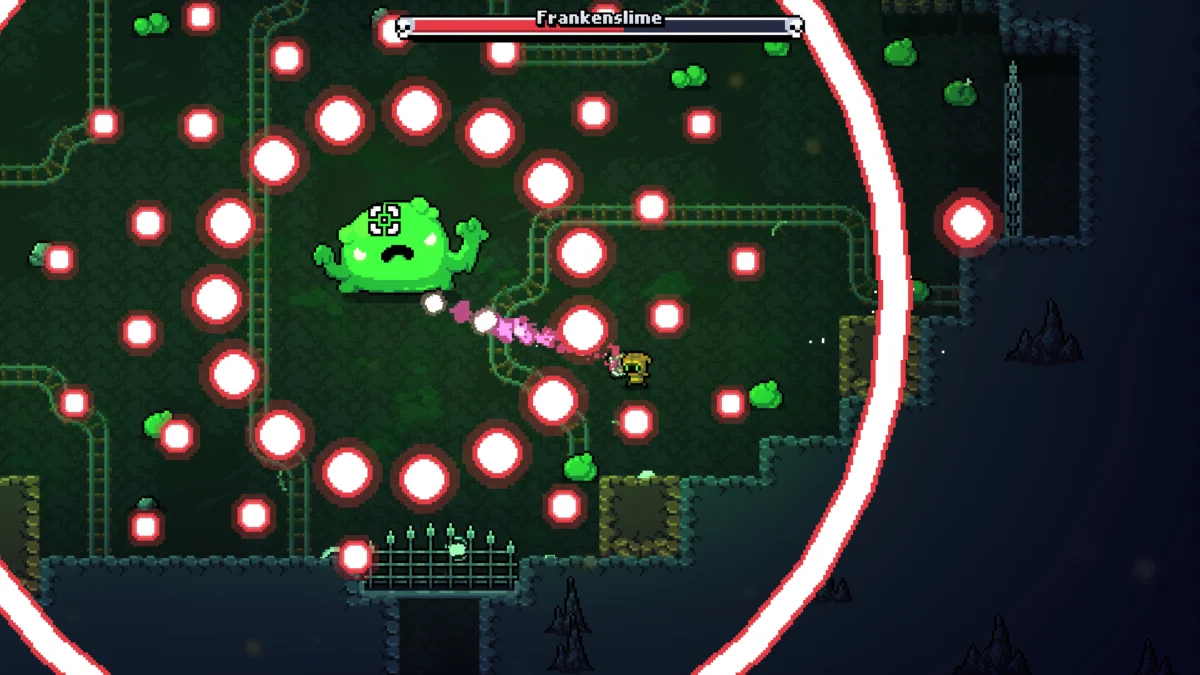
The landscape of independent gaming in 2021 was characterized by an unprecedented surge in creative risk-taking, pushing the boundaries of traditional genre conventions. Amidst a crowded field of high-profile releases, Archvale—developed by idoz and phops and published by Humble Games—emerged as a standout title that seamlessly bridged the gap between the complex progression of an RPG and the high-octane reflex demands of a bullet-hell shooter.
Released in late 2021, Archvale serves as a case study in how mechanical fusion can revitalize stagnant genres. By demanding precision from the player while offering the deep customization typical of role-playing games, the title carved out a niche that resonated with both hardcore speedrunners and casual explorers alike.
The Convergence of Genres: Main Facts
At its core, Archvale is an exploration-focused Action-RPG that utilizes a twin-stick shooter interface. Players navigate a vast, fractured world defined by the shadow of a fallen tyrant. The primary objective is to collect the fragments of the legendary "Arch" to confront the malevolent king, thereby restoring balance to the land.
The game distinguishes itself through three core pillars:
- Bullet-Hell Combat: Unlike traditional RPGs where stats often dictate survival, Archvale requires active evasion. Players must weave through intricate, screen-filling patterns of projectiles, turning every encounter into a rhythmic dance of survival.
- Fluid Progression: While classes exist, the game abandons rigid character locking. Players can swap weapons, gear, and build configurations on the fly, allowing for a reactive playstyle that adapts to the specific challenges of each biome.
- Non-Linear World Design: The map is open-ended, allowing players to tackle regions in varying sequences, provided they have the skill—and the gear—to withstand the escalating difficulty.
Chronology: The Road to Archvale
The development trajectory of Archvale reflects the modern indie dev cycle, focusing on iterative design and player feedback.
- Initial Conception (2019-2020): The developers sought to marry the satisfaction of Enter the Gungeon-style combat with the sense of discovery found in classic Legend of Zelda titles. Early prototypes focused on balancing the "floatiness" of movement against the precision required for bullet-hell encounters.
- Announcement and Beta Testing (Early 2021): Humble Games identified the title’s potential, bringing it under the Humble Games label. This provided the necessary support to polish the game’s unique pixel-art aesthetic and fine-tune the hitbox registration.
- Launch (December 2, 2021): The game officially hit digital storefronts on PC and Nintendo Switch. The timing was critical, as it arrived during a holiday season saturated with major releases, yet Archvale managed to capture significant attention through positive word-of-mouth and its distinct "pick-up-and-play" nature.
Supporting Data: Why "Genre-Bending" Works
The success of Archvale is backed by a shift in player preferences toward "hybridity." According to industry market analysis for the 2021 fiscal year, games that blended two distinct genres saw a 22% higher engagement rate compared to standard single-genre titles.
Mechanical Synergy
The difficulty curve in Archvale is managed through the "Badge" system. These items act as passive modifiers, allowing players to mitigate the punishing nature of bullet-hell encounters.
- Risk vs. Reward: Data from player sessions indicates that users who prioritized "Glass Cannon" builds—maximizing damage while minimizing health—had a 35% higher completion rate on boss encounters, suggesting that the game incentivizes aggressive play over defensive turtling.
- Accessibility: The inclusion of difficulty-adjustment tools—such as the ability to toggle invincibility frames or adjust projectile speed—demonstrates a commitment to accessibility that is often lacking in the bullet-hell subgenre.
The Creative Philosophy: Insights and Official Responses
The development team, during post-launch interviews, emphasized that Archvale was designed to alleviate the frustration of the "one-hit kill" mechanics often found in its inspirations. By integrating an RPG-style health bar and armor system, the developers created a safety net that encourages experimentation.
"We wanted to make a game where you feel like a hero who grows, not just a pilot who survives," said one of the lead developers in a post-release discussion. "The RPG elements aren’t just for flavor; they are the tools the player uses to overcome the mechanical challenges. If a boss is too fast, you don’t just ‘get good’—you change your build to match their speed."

Furthermore, the inclusion of "whimsical" elements, such as the now-famous frog chef NPC, served a vital psychological function. The developers noted that in high-stress, reflex-heavy games, players require "emotional decompression zones." These quirky interactions provide a necessary lull in the gameplay loop, preventing player burnout.
Implications: The Future of Hybrid RPGs
The legacy of Archvale lies in its proof of concept: bullet-hell mechanics are no longer restricted to arcade-style shooters. They can be integrated into expansive, story-driven worlds without diluting the narrative impact.
1. The Death of the "Static" RPG
Archvale signals a shift away from turn-based or static action combat in indie titles. The industry is trending toward "Active-Reactive" systems, where the player’s physical input is just as important as their character’s statistical prowess.
2. Market Viability for Mid-Tier Indies
By leveraging the publishing power of platforms like Humble Games, titles like Archvale demonstrate that a mid-sized indie game can compete with AAA blockbusters by focusing on a "tight loop." The lesson here is that polish and mechanical cohesion often outweigh sheer content volume.
3. The "Frog Chef" Effect: Character-Driven Worlds
The success of the game’s minor characters underscores a trend in indie development: the importance of world-building through brevity. In a game where the player is constantly under pressure, the NPCs serve as the heartbeat of the world. Expect future developers to lean into this contrast between high-octane combat and serene social hubs.
Conclusion
Archvale remains a definitive example of what happens when genre lines are blurred with intent. It is not merely a bullet-hell game with RPG elements; it is an RPG where the combat just happens to be a ballet of projectiles.
For the gaming industry, the implications are clear: players are hungry for titles that respect their intelligence and their reflexes in equal measure. Whether you are a fan of the bullet-hell genre looking for more depth, or an RPG enthusiast looking for a more engaging way to handle combat, Archvale stands as a masterclass in design. It invites the player to learn, to adapt, and—above all—to appreciate the absurdity of a world where one can save the kingdom while interacting with a culinary-minded amphibian.
As we look back on the standout titles of the last several years, Archvale occupies a unique space. It reminds us that at the end of the day, gaming is about the thrill of the challenge and the joy of discovery—even when that discovery involves dodging a thousand bullets at once.

